
1. Introduction
Consumption of high fat, sugar and salt (HFSS) food and drink is not in line with UK Government healthy eating guidelines (such as The Eatwell Guide) and continuous consumption of excess calories can lead to weight gain over time. In Northern Ireland, 64% of adults and 26% of children are living with overweight or obesity, according to Health Survey Northern Ireland: First Results 2023/24 and Health Survey (NI) First Results 2019/20 respectively. Data from the National Diet and Nutrition Survey 2019 to 2023 (NDNS) shows that saturated fat, sugar and salt intakes exceed guidelines across all age groups. At the same time, fruit and vegetable consumption remains low, with the vast majority of both adults and children failing to meet the 5-a-day recommendation.
To improve the food environment and reduce the risk to public health associated with overconsumption of food and drink that is HFSS, policies have been introduced in England, and legislated for in Wales (coming into force March 2026) and in Scotland (coming into force October 2026) (The Food (Promotion and Placement) (England) Regulations 2021, The Food (Promotion and Presentation) (Wales) Regulations 2025, The Food (Promotion and Placement) (Scotland) Regulations 2025 respectively), to restrict the promotion of HFSS foods and drinks in the retail and out of home (OOH) sectors. OOH refers to businesses that sell pre-cooked food sold in settings to be consumed outside of the home, for example, restaurants, cafes and takeaways. In Northern Ireland, the FSA’s Making Food Better programme (Making Food Better Programme) works with local food businesses to reduce calories, sugar, salt and saturated fat in the food they produce, sell or serve, and to promote responsible portion sizes and healthier product reformulation.
In England, legislation was introduced to restrict the promotion of HFSS products by location and volume; and restrict free refill promotions on sugar-sweetened HFSS beverages. The location restrictions apply to retail businesses with 50 or more employees and with a store size of 2,000 ft2 or greater and came into force on 1 October 2022. The volume restrictions apply to retail businesses with 50 or more employees and came into force on 1 October 2025. Restrictions on free refill promotions of HFSS beverages apply to OOH businesses with 50 or more employees and came into force on 1 October 2025. In Wales, legislation similar to that in place in England, will come into force from March 2026. In addition to the location and volume promotion restrictions, the Scottish Government also consulted on restricting meal deals and temporary price reductions in both retail and OOH businesses (Restricting promotions of food and drink high in fat, sugar or salt - proposed regulations: consultation). However, the Scottish Government has recently announced they will align with policy in England and Wales and legislation to restrict promotions will come into force from October 2026.
It is necessary to conduct research to fully understand the food business landscape and the location of various business types in Northern Ireland. Mapping of businesses will assist with an assessment of those that would be in scope of the criteria used in England, Wales and Scotland to restrict promotions and to understand any variation with levels of deprivation.
This research may inform policy to restrict the promotion of HFSS products in businesses across Northern Ireland.
1.1. Aim of the study
The aim of this study was to map the food retail and out of home environment in Northern Ireland and determine the number of businesses that may be impacted by applying the current promotion restrictions in England, also legislated for in Wales (coming into force in March 2026) and in Scotland (coming into force October 2026), to the Northern Ireland setting. The findings of the research will be shared internally across the FSA, with cross government stakeholders, and with retailers as part of ongoing stakeholder engagement work in this policy area.
2. Methodology
The high-level methodology followed is set out below:
-
Identify relevant businesses.
-
Separate businesses into food retail (grocery and non-grocery retailers) and OOH
-
Group together businesses that are part of wider chains or franchises.
-
Identify businesses with 50 or more employees.
-
Identify floor area of food retail business premises.
-
Identify business premises that would be in scope of location restrictions on HFSS product promotions (see Section 2.1).
-
Identify business premises that would be in scope of volume restrictions on HFSS product promotions (see Section 2.1).
-
Identify business premises that would be in scope of restrictions on free drink refill promotions (see Section 2.1).
-
Assign each business to associated geographies (see Section 2.2.1).
-
Identify secondary schools.
-
Create 400m radius circular buffer zones around secondary schools (representing an approximately 5-minute walk) and count businesses within buffers.
-
Explore trends against geography, deprivation and settlement types.
2.1. In scope of restrictions
For the purposes of this study, a business is regarded as being ‘in scope’ of restrictions if it complies with the criteria within The Food (Promotion and Placement) (England) Regulations 2021, detailed below. See Section 2.2.3 for further details on employee numbers.
Location restrictions:
-
Retail businesses with 50 or more employees and with a relevant floor area of 2,000ft2 or greater.
-
A sensitivity study has also been undertaken to assess those with a store size of 3,000 ft2 or greater to align with the criteria for stores subject to limited opening on Sunday as detailed in The Shops (Sunday Trading &c.) (Northern Ireland) Order 1997.
Volume price restrictions:
- Retail businesses with 50 or more employees.
Restrictions on free drink refills:
- OOH businesses with 50 or more employees.
Due to limitations with the methodology used, any statistics or references to the number or proportion of premises in scope of restrictions should be interpreted as estimates rather than definitive counts.
Note that England legislation defines ‘relevant floor area’ as the internal floor area of so much of a store as consists of or is comprised in a building, excluding any part of the store which any of the following are true:
-
Is not used for displaying goods or for serving customers in connection with the sale of goods.
-
Is used mainly for the preparation or sale of food intended for immediate consumption, whether on or off the premises (including, for example, a coffee shop or a canteen).
-
Is a room used for consultation with customers in connection with any medical services (such as pharmacy or opticians’ services) offered in the store.
-
Is occupied by a business other than the business primarily responsible for managing and operating the store (‘a concession’), but only where the concession operates its own payment facilities.
2.2. Data sources, filtering and transformation
The data used in this study are detailed in the following sections, along with discussion of any limitations if applicable.
2.2.1. Geographies
In this study, Local Government Districts (LGDs) are used to present aggregated results, as these are the largest geographies used in the most recent Census 2021.
As deprivation is highly localised, NISRA present deprivation rankings using the geographies captured by Super Output Area (SOA) and Small Area (SA) boundaries (see Section 2.2.6 below). The larger SOA boundaries have been used in the assessment of deprivation in this study to extract generalised conclusions.
2.2.2. Relevant businesses
Businesses relevant to this study were captured from the Food Standards Agency Food Hygiene Rating Scheme (FHRS). Mobile retailers, or those with no address were excluded from this study.
Businesses were separated into two categories:
-
Retailers that sell food and drink, which included:
-
Grocery retailers i.e. retailers that sell food and drink as a primary purpose of their business; for example, supermarkets, convenience stores, butchers, fishmongers, grocery stores at filling stations, farm shops, sweet shops, fruit and vegetable shops.
-
Non-grocery retailers i.e. retailers that sell food or drink, even if this is not a primary purpose of their business; for example, DIY stores, pharmacies, clothes stores, homeware stores and discount retailers.
-
OOH businesses:
-
Businesses that sell pre-cooked food ready for immediate consumption, on or off the premises.
-
This included: restaurants, cafes, takeaways, bakeries, ice cream shops, sandwich shops, hotels and pubs.
-
This excluded: bed and breakfasts, sports clubs and nightclubs.
Spatial analysis was undertaken to assign each business to the relevant geographic area for the geographic boundary types (LGD, SOA). It was noted that the coordinates and/or postcodes stated do not always accurately capture the exact location of the business premises. This is unlikely to significantly alter the conclusions of this study; however, it should be considered when exploring specific geographies in detail.
2.2.3. Chain businesses
Businesses that are part of chains, franchises or symbol groups were identified and grouped together by the overarching business. Henceforth these are denoted ‘chain businesses’ in this report.
A range of franchise and symbol group agreements exist in Northern Ireland, however for the purposes of this research, the definition of a franchise or symbol group has been aligned to that stipulated in The Food (Promotion and Placement) (England) Regulations 2021. In these circumstances, franchisees trading as a business under a franchise agreement, no matter how formal or informal, where the total sum of employees operating under the franchise are 50 or more, would be considered a business in scope i.e. this will include businesses associated with a symbol group such as Spar or Centra, even if the business is independently owned.
The identification accounted for various spellings of the businesses found in the FHRS data (for example use of ‘&’ or ‘and’). It was noted that often different FHRS categories were used for businesses of the same chain. This study captured all relevant chain businesses even if stated across multiple FHRS categories.
2.2.4. Employee numbers
Businesses were categorised as either micro/small (less than 50 employees), medium (50-250 employees) or large (over 250 employees). As accurate information was not readily available for every business captured, the following approach was utilised:
-
Identify businesses that are part of well-known NI/Ireland/UK/Global chains, franchises and symbol groups. Assign these to the large category of employees.
-
Identify businesses that have multiple premises but are not well-known large chains. Assign these to the micro/small or medium category of employees based on the type of business and number of premises.
-
Assign all remaining businesses to the small/micro category.
The retail landscape in Northern Ireland is comprised of well-known large chains and many small, independent micro businesses. Hence, while the above approach has limitations, it is deemed appropriate to produce an overall picture of businesses across Northern Ireland that may be within scope of food promotion restrictions.
2.2.5. Secondary schools
School data was downloaded from the Department of Education online school database. This was subsequently filtered to only include schools with types detailed as ‘Secondary’ or ‘Grammar’. Independent schools were not included in this study.
Coordinates for each of the schools were provided separately by the Department of Education. Note that these are point locations that are not necessarily at the centre of a school, nor do they account for specific access/egress locations.
2.2.6. Settlement types
Settlement types for each SOA are taken from NISRA Technical Guidance on production of official statistics for Settlements and Urban-Rural Classification, which defines the types as:
-
Urban: where 90-100% of the SOA’s population was within a settlement of 5,000 people or more.
-
Rural: where 90-100% of the SOA’s population was within the open countryside or a settlement of less than 5,000 people.
-
Mixed: where the proportion of the SOA’s population in an urban settlement was between 10-90%.
2.2.7. Deprivation
The ranks of the Multiple Deprivation Measure (MDM) for SOAs were sourced from the NISRA Northern Ireland Multiple Deprivation Measure 2017 (NIMD2017) study.
Deprivation is extremely localised and highly variable, hence in this study, the most and least deprived 20th percentile SOAs have been assessed to explore potential differences. Note that there are approximately 10% more SOAs classified as urban in the most deprived 20th percentile compared to the least deprived 20th percentile.
2.2.8. Business premises floor area
Floor areas for food retailer premises were taken from Land and Property Services (LPS) Enhanced Non-Domestic Property Data. The LPS Enhanced Non-Domestic Property Data contains information based on a Unique Property Reference Number (UPRN) for each business, along with address details. The FHRS data does not contain UPRNs, hence the address of each business was used to cross-reference against the LPS data.
For expediency, only food retail businesses that were identified as having 50 or more employees were cross-referenced. The floor areas recorded were categorised into premises that were over 2,000 ft2 and those over 3,000 ft2.
In some instances, the business address stated in FHRS did not link to any addresses in the LPS data. In addition, often more than one business can be found at the same address, particularly those located in shopping centres. In these cases, the floor area was not captured.
To ensure there were no gaps in the analysis, extrapolation techniques were used to estimate the total number of premises that were over 2,000 ft2 and 3,000 ft2 for each chain business, based on scaling factors (separate factors for grocery retailers and non-grocery retailers) calculated from the overall distribution of premises that were successfully cross-referenced. Further details can be found in Annex A.
Note that the floor area in the Enhanced Non-Domestic Property Data is defined as, ‘The enclosed area of a building within the external walls taking each floor into account, measured in square metres, in line with the RICS Code of Measuring Practice.’ As such, the floor areas in this analysis will be bounding and likely to be larger than the relevant floor area used in the England legislation, as defined in Section 2.1.
3. Results
3.1. All food retail and out of home businesses
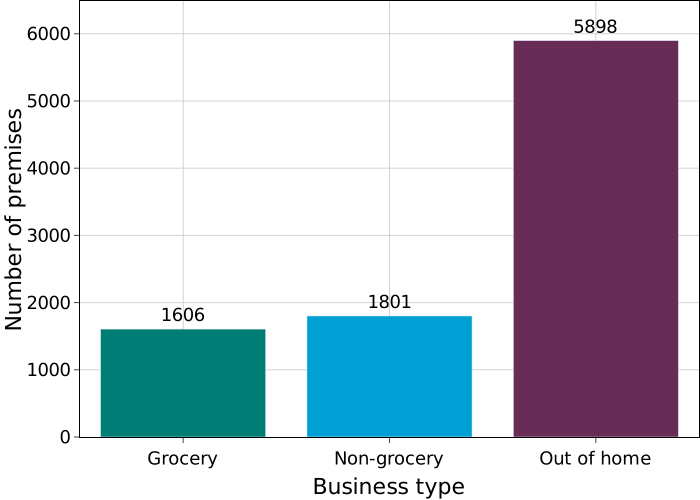
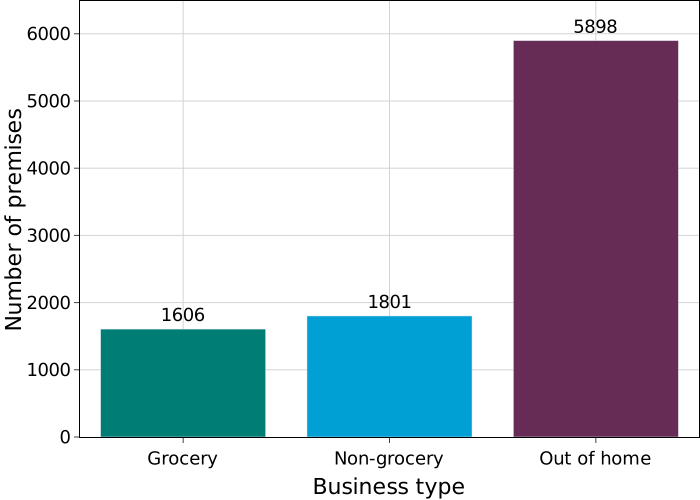
Across Northern Ireland, there are 1,606 grocery retail premises, 1,801 non-grocery retail premises and 5,898 OOH business premises, as shown in the figure below.
3.2. Grocery retailers
In this study, grocery retailers are those that sell food and drink as a primary purpose of their business, for example, supermarkets, convenience stores, butchers, fishmongers, grocery stores at filling stations, farm shops, sweet shops, fruit and vegetable shops. Grocery retail premises are defined as ‘in scope’ of location restrictions if they have 50 or more employees with a store size of 2,000 ft2 or greater. Results for grocery retail premises that would be in scope of location restrictions are detailed in Section 3.2.2.
As detailed in Section 2.2.8, it was not possible to determine the floor areas of all premises. Therefore, this study only presents the estimated total number of premises across Northern Ireland that fall within the scope of location restrictions, and no breakdown is provided by geography, settlement type, deprivation level, or proximity to secondary schools.
Grocery retailers are defined as ‘in scope’ of volume restrictions if they have 50 or more employees. Results for grocery retail premises that would be in scope of volume restrictions are detailed in Sections 3.2.3-3.2.6. These provide more details on the variations with geography, settlement type, deprivation and premises close to secondary schools.
3.2.1. Summary of grocery retailers in scope of restrictions
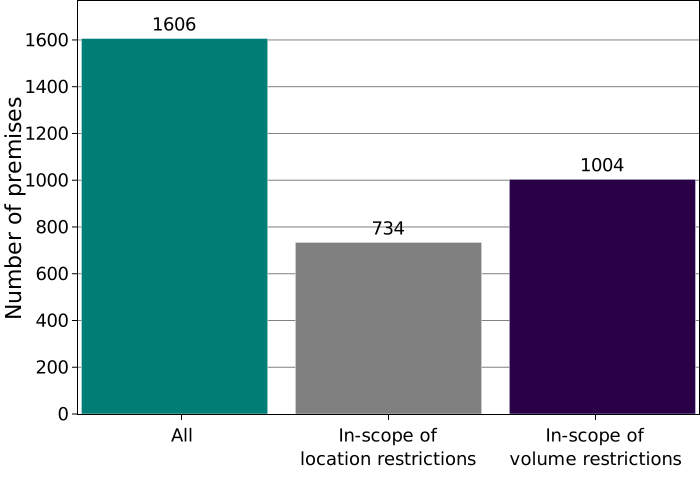
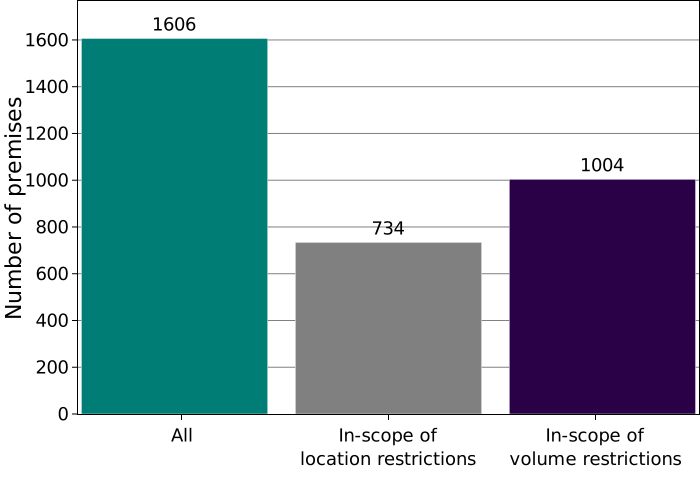
The total number of grocery retail premises assessed was 1,606.
734 premises were estimated to belong to businesses with 50 or more employees with floor areas of 2,000 ft2 or greater and therefore would be in scope of location restrictions (45.7% of the total premises assessed).
1,004 premises were found to belong to businesses with 50 or more employees and therefore would be in scope of volume restrictions (62.5% of the total premises assessed).
The figure below shows the number of grocery retail premises that would be in scope of both location and volume restrictions.
3.2.2. Grocery retailers in scope of location restrictions
734 premises were estimated to belong to businesses with 50 or more employees with floor areas 2,000 ft2 or greater and therefore would be in scope of location restrictions (45.7% of the total premises assessed).
A sensitivity analysis was undertaken to assess the effect of raising the floor area criteria for businesses to be in scope of location restrictions from 2,000 ft2 to 3,000 ft2. This aligns with the criteria in Sunday trading legislation (The Shops (Sunday Trading &c.) (Northern Ireland) Order 1997). 584 premises were estimated to belong to businesses with 50 or more employees with floor areas 3,000 ft2 or greater (36.4% of the total premises assessed).
As detailed in Section 2.2.8, the floor areas included are broad estimates. The total number of premises is based on extrapolated data, so the results above should be seen as indicative rather than exact.
3.2.3. Grocery retailers in scope of volume restrictions by Local Government District
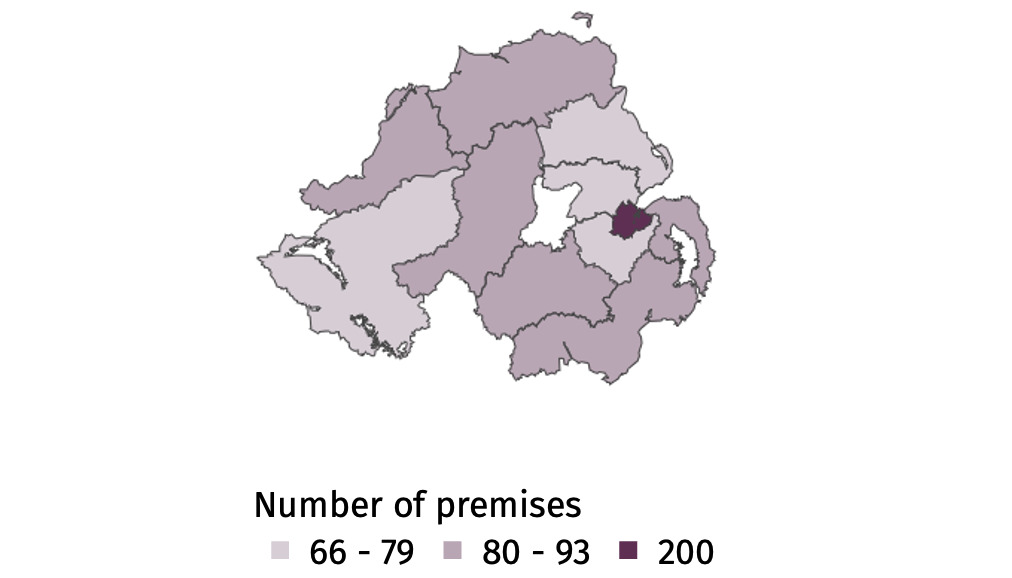
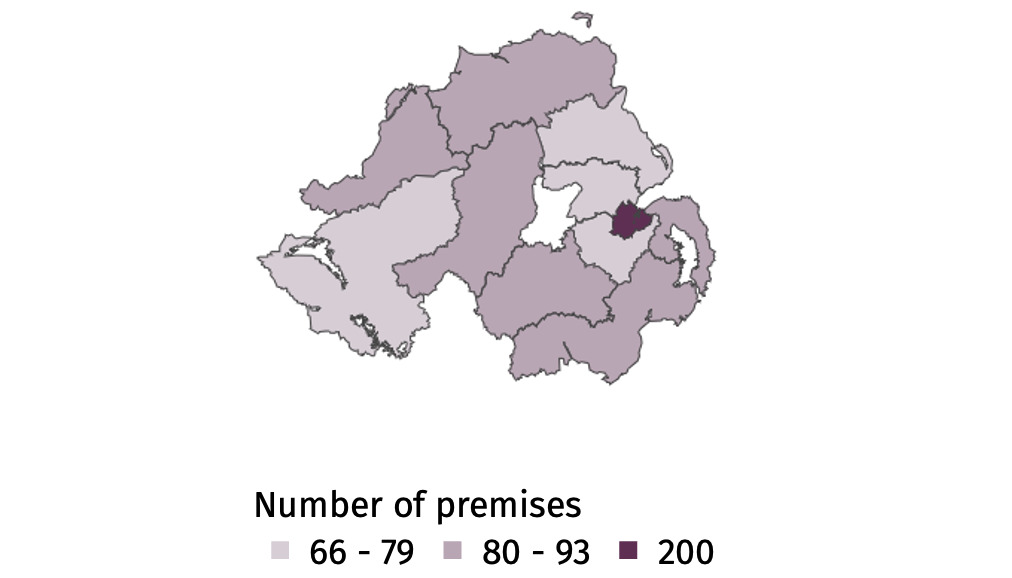
The total number of grocery retail premises for each of the LGDs are shown in the table and map below.
As most grocery retailers across NI belong to a large chain or franchise or are affiliated with a symbol group, the majority of premises would be in scope of volume restrictions. Newry, Mourne and Down has the lowest percentage of grocery retail premises that would be in scope of volume restrictions (51.6% of grocery retail premises in the LGD), whereas Belfast has the highest percentage (74.9% of grocery retail premises in the LGD).
3.2.4. Grocery retailers in scope of volume restrictions by settlement type
The total number of grocery retail premises by settlement types are shown in the table below.
For all settlement types, there are at least 56% of premises that would be in scope of volume restrictions due to the majority of businesses being part of large chains or small businesses trading under a franchise or symbol group agreement, where the total sum of employees operating under the franchise are 50 or more.
3.2.5. Grocery retailers in scope of volume restrictions by deprivation
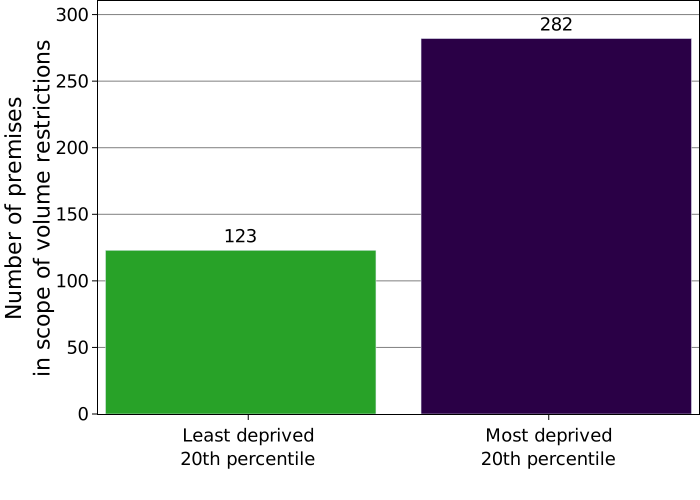
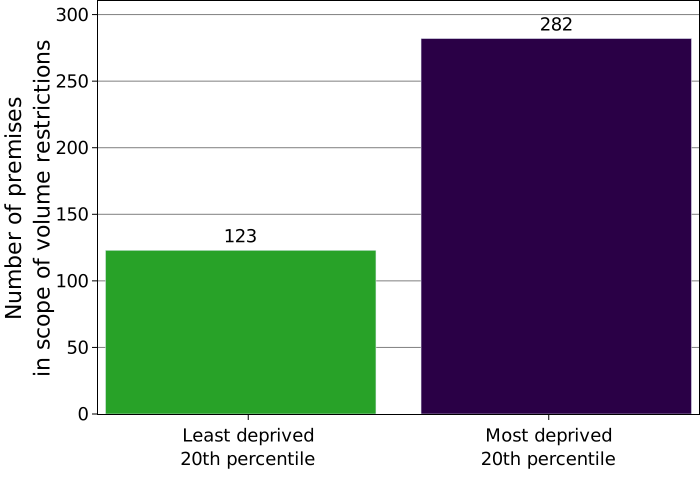
The total number of grocery retail premises for areas within the most and least deprived 20th percentile SOAs are shown in the table and figure below. Note that there are approximately 10% more urban SOAs in the most deprived 20th percentile compared to the least deprived 20th percentile.
There are more than double the number of grocery retail premises in the most deprived SOAs compared to the least deprived SOAs. Since the total population is similar in the most and least deprived 20th percentiles, this means there are more than double the number of premises per person across the most deprived SOAs compared to the least deprived SOAs.
Although there are more grocery retail premises in the most deprived SOAs compared to the least deprived SOAs, a higher percentage of premises in the least deprived SOAs would be in scope of volume restrictions.
3.2.6. Grocery retailers in scope of volume restrictions close to schools
217 grocery retail premises (13.5% of the total premises assessed) were found to be located within 400m radius of a secondary school (approximately 5-minute walk). Of these, 134 premises belong to businesses with 50 or more employees and therefore would be in scope of volume restrictions (8.3% of the total premises assessed).
3.3. Non-grocery retailers
In this study, non-grocery retailers are those that sell food or drink, even if this is not a primary purpose of their business, for example, DIY stores, pharmacies, clothes stores, homeware stores and discount retailers.
Non-grocery retail premises are defined as ‘in scope’ of location restrictions if they have 50 or more employees with a store size of 2,000 ft2 or greater. Results for non-grocery retail premises that would be in scope of location restrictions are detailed in Section 3.3.2.
As detailed in Section 2.2.8, it was not possible to determine the floor areas of all premises. Therefore, this study only presents the estimated total number of premises across Northern Ireland that fall within the scope of location restrictions, and no breakdown is provided by geography, settlement type, deprivation level, or proximity to secondary schools.
Non-grocery retailers are defined as ‘in scope’ of volume restrictions if they have 50 or more employees. Results for non-grocery retail premises that would be in scope of volume restrictions are detailed in Sections 3.3.3-3.3.6. These provide more details on the variations with geography, settlement type, deprivation and premises close to secondary schools.
3.3.1. Summary of non-grocery retailers in scope of restrictions
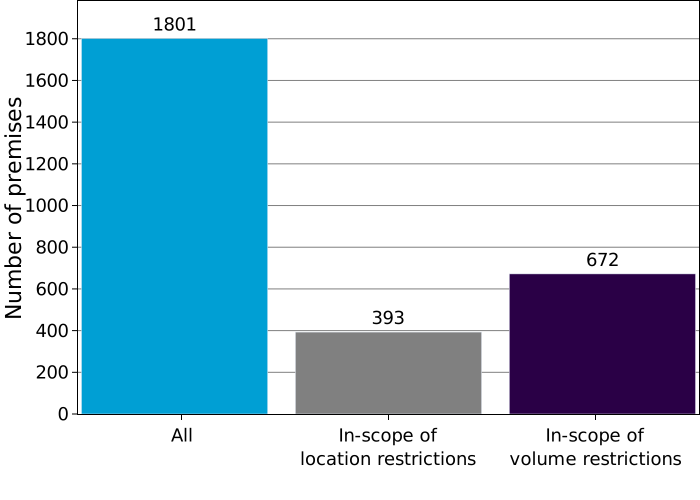
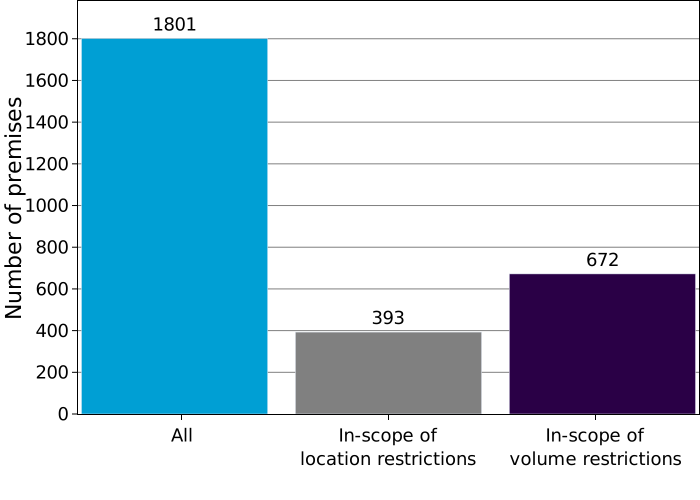
The total number of non-grocery retail premises assessed was 1,801.
393 premises were estimated to belong to businesses with 50 or more employees with floor areas 2,000 ft2 or greater and therefore would be in scope of location restrictions (21.8% of the total premises assessed).
672 premises were found to belong to businesses with 50 or more employees and therefore would be in scope of volume restrictions (37.3% of the total premises assessed).
The figure below shows the number of grocery retail premises that would be in scope of both location and volume restrictions.
3.3.2. Non-grocery retailers in scope of location restrictions
393 premises were estimated to belong to businesses with 50 or more employees and with floor areas 2,000 ft2 or greater and therefore would be in scope of location restrictions (21.8% of the total premises assessed).
A sensitivity analysis was undertaken to assess the effect of raising the floor area criteria for businesses to be in scope of location restrictions from 2,000 ft2 to 3,000 ft2. This aligns with the criteria in Sunday trading legislation (The Shops (Sunday Trading &c.) (Northern Ireland) Order 1997). 299 premises were estimated to belong to businesses with 50 or more employees and with floor areas 3,000 ft2 or greater (16.6% of the total premises assessed).
As detailed in Section 2.2.8, the floor areas included are broad estimates. The total number of premises is based on extrapolated data, so the results above should be seen as indicative rather than exact.
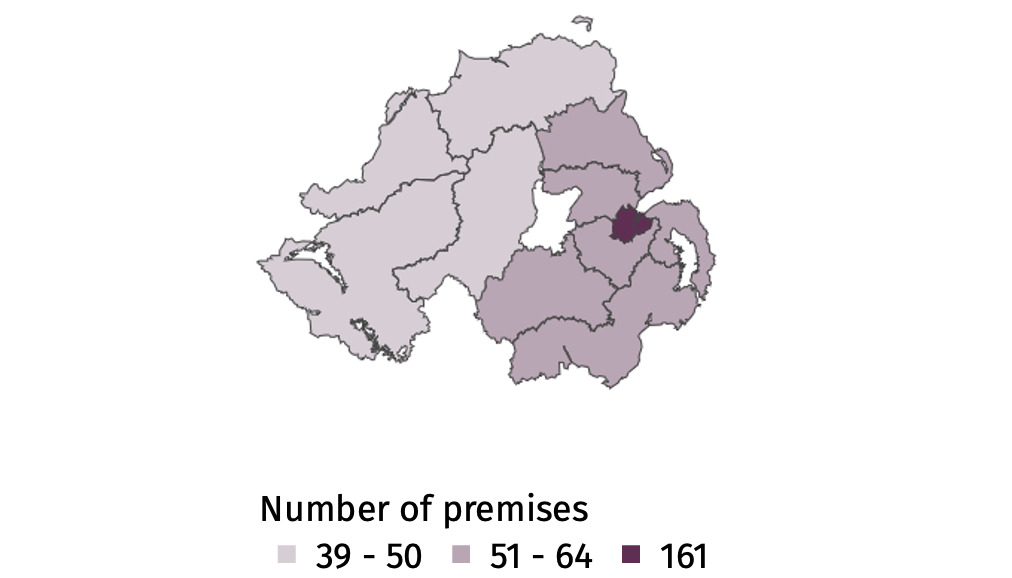
3.3.3. Non-grocery retailers in scope of volume restrictions by Local Government District
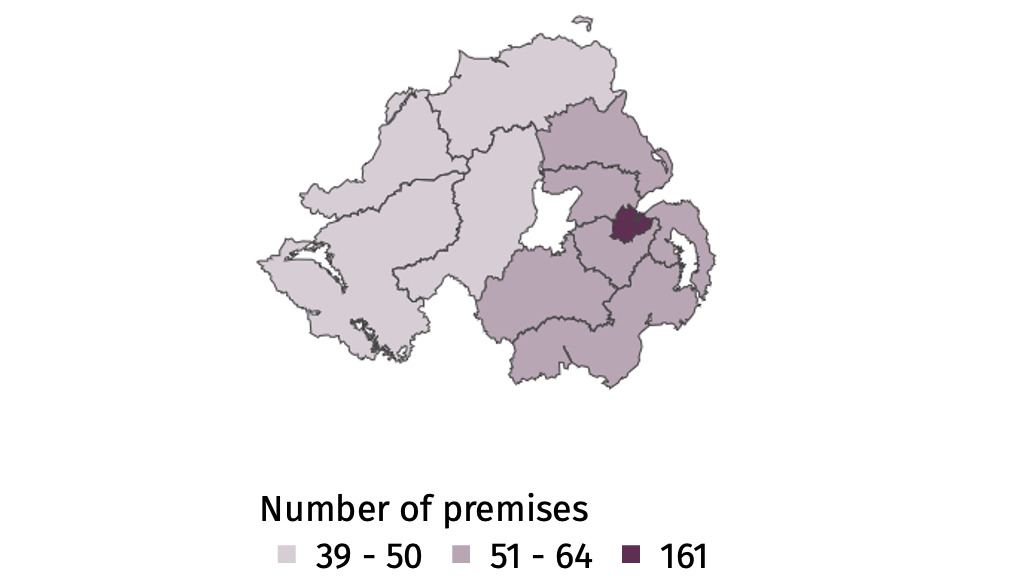
The total number of non-grocery retail premises for each of the LGDs are shown in the table and map below.
Armagh City, Banbridge and Craigavon, Causeway Coast and Glens, and Fermanagh and Omagh are the only LGDs with less than 30% of non-grocery retail premises that would be in scope of volume restrictions. Over 50% of non-grocery retail premises in Lisburn and Castlereagh would be in scope of volume restrictions.
3.3.4. Non-grocery retailers in scope of volume restrictions by settlement type
The total number of non-grocery retail premises by settlement types are shown in the table below for SOAs.
Rural areas have a lower percentage of premises that would be in scope of volume restrictions compared to urban and mixed urban/rural areas. This is expected, as rural areas typically have a higher percentage of small, independent retailers compared to urban and mixed urban/rural areas.
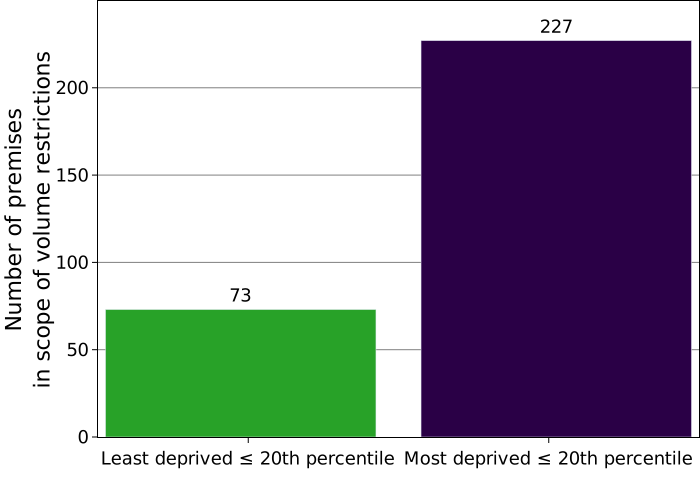
3.3.5 Non-grocery retailers in scope of volume restrictions by deprivation
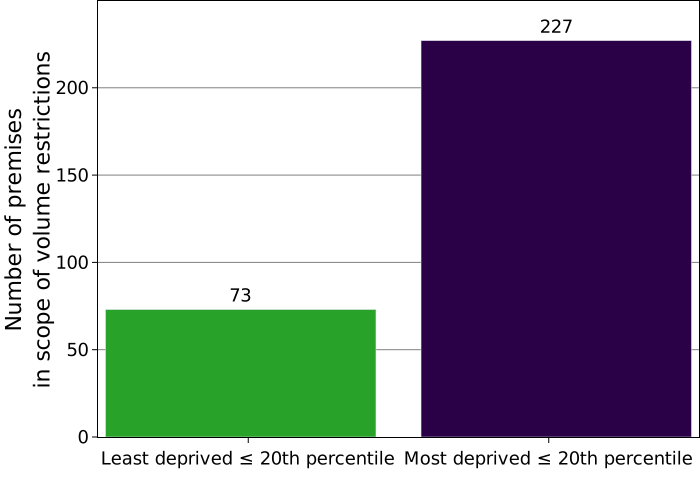
The total number of non-grocery retail premises for areas within the most and least deprived 20th percentile SOAs are shown in the table and figure below. Note that there are approximately 10% more urban SOAs in the most deprived 20th percentile compared to the least deprived 20th percentile.
There are almost four times the number of non-grocery retail premises in the most deprived SOAs compared to the least deprived SOAs. Since the total population is similar in the most and least deprived 20th percentiles, this means there are almost four times the number of premises per person across the most deprived SOAs compared to the least deprived SOAs.
Although there are more non-grocery retail premises in the most deprived SOAs compared to the least deprived SOAs, a higher percentage of premises in the least deprived SOAs would be in scope of volume restrictions.
3.3.6 Non-grocery retailers in scope of volume restrictions close to secondary schools
285 non-grocery retail premises (15.8% of the total premises assessed) were found to be located within 400m radius of a secondary school (approximately 5-minute walk). Of these, 109 premises belong to businesses with 50 or more employees and therefore would be in scope of volume restrictions (6.1% of the total premises assessed).
3.4. Out of home businesses
OOH businesses are those that sell pre-cooked food that is ready for immediate consumption, on or off the premises. In this study, the businesses included were: restaurants, cafes, takeaways, sandwich shops, bakeries, ice-cream shops, hotels and pubs.
OOH businesses are defined as ‘in scope’ of restrictions on free drink refill promotions if they have 50 or more employees. Results for OOH businesses that would be in scope of restrictions on free-refill promotions are detailed in Sections 3.4.1-3.4.5. These provide more details on the variations with geography, settlement type, deprivation and premises close to secondary schools.
3.4.1. Summary of out of home businesses in scope of restrictions
The total number of OOH premises assessed was 5,898.
641 premises were found to belong to businesses with 50 or more employees and therefore would be in scope of restrictions on free drink refill promotions (10.9% of the total premises assessed). The low number of premises that would be in scope is due to the majority of OOH businesses in Northern Ireland being small, independent businesses, typically with less than 50 employees.
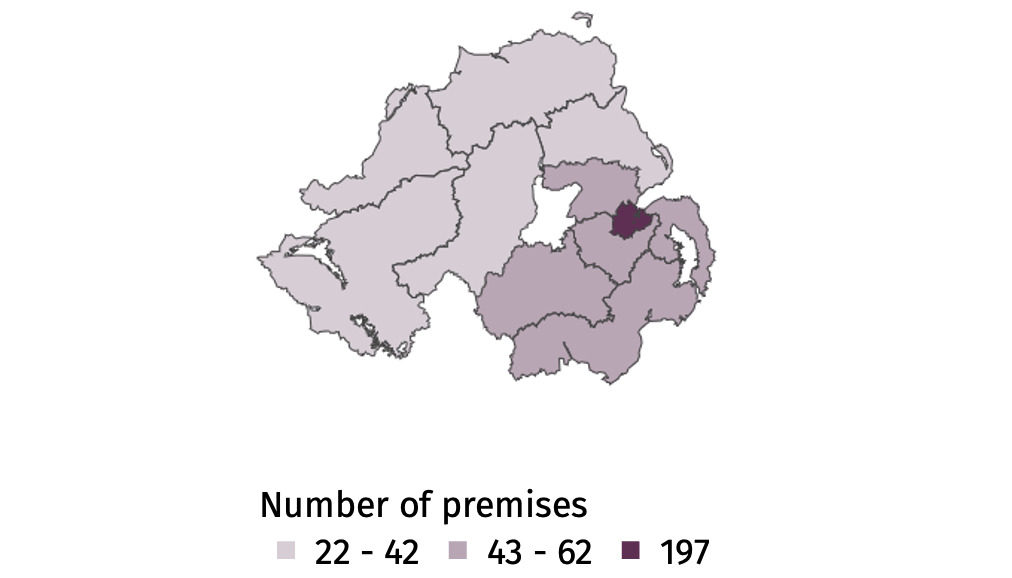
3.4.2. Out of home businesses in scope of restrictions on free drink refill promotions by Local Government District
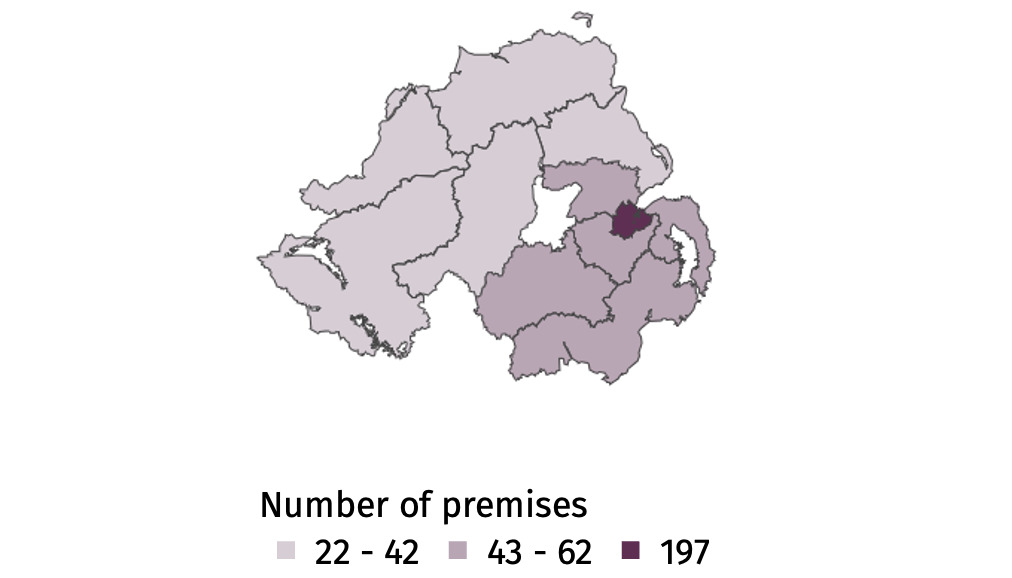
The total number of OOH premises for each of the LGDs are shown in the table and map below.
Less than 15% of OOH premises would be in scope of restrictions on free drink refill promotions for all LGDs apart from Antrim and Newtownabbey. The lowest percentage of premises that would be in scope of restrictions on free drink refill promotions is found in Fermanagh and Omagh (5.7%).
3.4.3. Out of home businesses in scope of restrictions on free drink refill promotions by settlement type
The total number of OOH premises by settlement types are shown in the table below for SOAs.
Rural areas have very few premises that would be in scope of restrictions on free drink refill promotions. This is expected as OOH businesses with over 50 employees are typically located in urban areas.
3.4.4. Out of home businesses in scope of restrictions on free drink refill promotions by deprivation
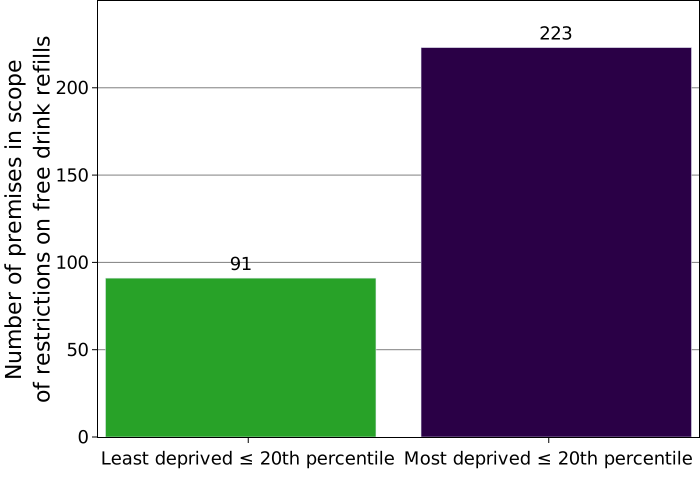
The total number of OOH premises for areas within the most and least deprived 20th percentile SOAs are shown in the table and figure below. Note that there are approximately 10% more urban SOAs in the most deprived 20th percentile compared to the least deprived 20th percentile.
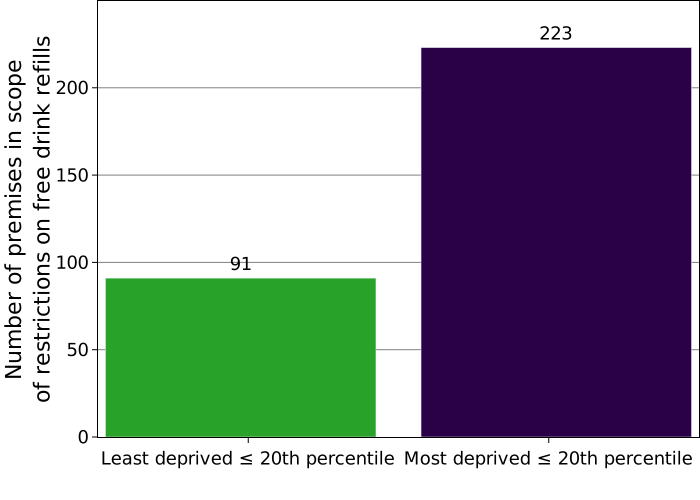
There are twice as many premises that would be in scope of restrictions on free drink refill promotions in the most deprived SOAs compared to the least deprived SOAs. Since the total population is similar in the most and least deprived 20th percentiles, this means there are twice the number of premises per person across the most deprived SOAs compared to the least deprived SOAs.
Although there are more OOH premises in the most deprived SOAs compared to the least deprived SOAs, a higher percentage of premises in the least deprived SOAs would be in scope of restrictions on free drink refill promotions.
3.4.5. Out of home businesses in scope of restrictions on free drink refill promotions close to secondary schools
884 OOH premises (15.0% of the total premises assessed) were found to be located within 400m radius of a secondary school (approximately 5-minute walk). Of these, 99 premises belong to businesses with 50 or more employees and therefore would be in scope of restrictions on free drink refill promotions (1.7% of the total premises assessed).
3.5. Limitations and further considerations
This study provides a useful initial evidence base for Northern Ireland, however there are several limitations that should be noted:
-
The FHRS data does not provide detailed information about each business, such as its specific business type and if it belongs to a chain, franchise or symbol group. Therefore, in this study, only businesses that state their association with a chain or franchise in their business name were identified as those with over 50 employees. As such, there may be a number of premises, particularly grocery retail premises, that would be in scope of location and volume restrictions that have not been identified in this assessment.
-
As detailed in Section 2.2.3, franchisees trading as a business under a franchise agreement, no matter how formal or informal, would be considered to have the number of employees of the overarching franchise. This interpretation also applies to symbol group retailers, even though many of these businesses are independently owned and their contracts with the symbol groups may not include access to the group’s promotional offers.
-
Estimation of premises’ floor areas has been undertaken using a conservative approach that will over-estimate the number of premises that would be in scope of location restrictions.
-
The use of a circular buffer zone around secondary schools is simplistic and does not account for the location of access/egress points into each school, or if businesses are open during, or close to school hours.
4. Discussion
This study has provided an overview of grocery retailers, non-grocery retailers and OOH businesses in Northern Ireland, and has identified those premises that could fall within scope of legislation to restrict the promotion of HFSS food and drink currently in force in England (The Food (Promotion and Placement) (England) Regulations 2021), and legislated for in Wales (coming into force March 2026) and in Scotland (coming into force October 2026).
4.1. Grocery retailers
The results show that almost half of grocery retail premises would be in scope of location restrictions and almost two thirds would be in scope of volume restrictions. This indicates that the policy may have a wide-reaching impact on the sector, particularly in how HFSS products are promoted and displayed. Volume restrictions could significantly reduce the use of multi-buy promotions, while location restrictions may require changes to store layouts, especially in high-traffic areas like checkouts and store entrances.
Recent Kantar data (Grocery Market Share) shows that three large retailers, which also have a significant presence in Northern Ireland, account for over 55% of the total grocery market share across Great Britain. This high level of market concentration suggests that there is likely to be a high level of consumer exposure to HFSS promotion restrictions if applied in Northern Ireland. As these retailers are already in scope of the legislation in England, they may have existing systems and processes in place which could support compliance. This means that the policy has strong potential to influence consumer purchasing behaviour and support public health objectives. However, the scale of the policy implications also underscores the need for careful implementation. Retailers will need clear guidance and sufficient time to adapt. Smaller or independent stores, including those that operate under a franchise or symbol group, may have less capacity and support to make rapid operational changes.
Almost two thirds of grocery retail premises have been identified as having 50 or more employees. However, many of these businesses are affiliated with larger chains, either by selling their products or operating under franchise or symbol group agreements. Under the current legislation in England (The Food (Promotion and Placement) (England) Regulations 2021) all these businesses would be considered to have the number of employees of the overarching chain, hence are not exempt from restrictions. These working arrangements in Northern Ireland may need to be explored in further detail.
Across all LGDs, between 51.6%-69.0% of grocery retailer premises would be in scope of volume restrictions, except Belfast where almost three quarters (74.9%) of premises would be in scope. Belfast also has the highest number of total grocery retailer premises. Belfast is likely to experience the greatest implications from volume restrictions, both in terms of the number of businesses that would be in scope and the potential reach of the policy on consumer purchasing behaviour. This suggests that local enforcement and support mechanisms may need to be scaled accordingly to manage the higher volume of businesses that would be in scope in this area.
Urban areas have a higher concentration of grocery retail premises that would be in scope of volume restrictions, likely due to greater store density and population size. This suggests that the policy may have a more pronounced effect in urban settings, where changes in promotional practices could reach a larger number of consumers.
The most deprived areas have over double the number of grocery retail premises that would be in scope of volume restrictions compared to the least deprived areas. This means the policy may have greater reach in communities with higher levels of deprivation, potentially supporting efforts to reduce health inequalities. However, consideration must be given to whether the restrictions would have implications on food affordability for consumers in the most deprived areas. While volume promotions on HFSS products are often perceived as helping households manage food costs, evidence suggests they can lead to increased overall spending and poorer dietary outcomes, particularly through unplanned purchases of less healthy foods (Impact assessment for restricting volume promotions for high fat, sugar, and salt (HFSS). To enhance the policy’s outcomes, retailers should be encouraged to shift promotional strategies toward healthier food and drink options. This could help maintain a sense of affordability while also contributing to improved diets and reduced health inequalities.
The promotion restrictions introduced in England and due to be introduced in Wales and Scotland apply only to volume-based promotions (for example ‘buy one, get one free’) and do not include temporary price reductions which are an increasingly popular type of promotion (see for example Rapid evidence review). Kantar data shows that consumers in NI purchase nearly six times more HFSS products on money off promotions (or temporary price reductions) than on volume promotions. Given this evidence, there may be merit in exploring whether these should also be considered within the scope of any potential future restrictions to ensure the policy is comprehensive and effective. It is also important to note that retailers will still be able to promote non-HFSS products, which could help maintain access to value while supporting healthier choices.
In the Northern Ireland context, deprivation levels are generally higher than in other UK nations (A deprivation index for the UK: exploring spatial variations within and between nations). It is also highly localised, meaning individuals may live in a more deprived area but shop in a less deprived one. This spatial dynamic may influence the reach of the policy and should be considered when interpreting the findings.
217 (13.5% of total premises assessed) grocery retail premises were found to be located within 400m radius of a secondary school (approximately 5-minute walk), with over half of these (8.3% of total premises assessed) that would be in scope of volume restrictions. This suggests that although the policy may contribute to improving the food environment around schools, potentially reducing young people’s exposure to promotions for less healthy food, any impact may be limited.
4.2. Non-grocery retailers
The results show that over one fifth of non-grocery retail premises would be in scope of location restrictions and over one third would be in scope of volume restrictions. While the overall implications may be smaller than for grocery retailers, non-grocery businesses are still part of the wider retail landscape affected by the policy.
While detailed market share data for non-grocery retailers selling food in Northern Ireland is limited, HFSS products are commonly sold in a range of retail settings beyond traditional grocery stores, including pharmacies, clothing shops, DIY stores, homeware stores and discount retailers. These products are often placed in high-visibility areas such as checkouts and aisle ends, making them a frequent part of impulse purchases (see for example Availability, placement, marketing & promotions of HFSS content foods in traditional non-food retail environments and Restricting price and location promotions of high fat, sugar and salt (HFSS) products – Policy Position). Therefore, HFSS promotions in non-grocery settings are likely to play a role in shaping consumer behaviour. This suggests that HFSS promotion restrictions may still have meaningful reach in the non-grocery sector, particularly if targeted at high-traffic areas.
There is variation across LGDs in non-grocery retail premises that would be in scope of volume restrictions, ranging from between one quarter to just over one half. This highlights the importance of local context in understanding and managing the implications of the policy, particularly if local councils are tasked with supporting implementation and enforcement.
Urban areas tend to have larger numbers and percentages of non-grocery retail premises that would be in scope of volume restrictions compared to rural and mixed urban/rural. As with grocery retailers, urban areas may see more visible changes in retail practices and consumer experience.
The most deprived areas have over three times the number of non-grocery retail premises that would be in scope of volume restrictions compared to the least deprived areas. This suggests the policy may contribute positively to addressing health inequalities, but it is important to monitor for unintended consequences on perceived affordability for consumers in the most deprived areas.
285 (15.8% of total premises assessed) non-grocery retail premises were found to be located within 400m radius of a secondary school (approximately 5-minute walk), with less than half of these (6.1% of total premises assessed) that would be in scope of volume restrictions. While the proximity of these businesses to schools suggests a potential influence on young people’s food choices, the relatively low proportion that would be in scope of restrictions may limit the extent to which the policy shapes the food environment around schools.
4.3. Out of home businesses
The results show that over one tenth of OOH businesses would be in scope of restrictions on free refill drink promotions. However, it is important to note that not all of these businesses offer free refills so the actual reach of the policy may be limited. As the proportion of businesses captured by the policy is smaller than in retail, other options could be considered to strengthen the policy’s outcomes on the food environment.
The OOH food sector in Northern Ireland is dominated by small, independent businesses, with relatively few large chains operating at scale. Consumer spending in the OOH sector continues despite ongoing cost-of-living pressures (NISRA NI Index of Services). According to the Consumer Council’s Northern Ireland Household Expenditure Tracker for Q3 2024, the lowest earning households in Northern Ireland had an average discretionary income of just £51.45 per week. However, The Food Standards Agency’s research Food and You 2: Northern Ireland Wave 7-8 Key Findings found that 62% of respondents in Northern Ireland had eaten in or taken food out from a cafe, coffee shop or sandwich shop in the past four weeks, 58% had eaten in a restaurant, and 56% had ordered a takeaway, highlighting the regularity of eating out across the population. This indicates that, despite ongoing financial pressures and constrained household budgets, dining out continues to represent a valued aspect of consumer behaviour in Northern Ireland. Given the nature of the OOH market in NI, future policy approaches may need to go beyond free refill restrictions and consider alternative levers to support healthier food environments in this sector.
There is variation across LGDs in OOH premises that would be in scope of restrictions on free refill drink promotions, ranging from around one twentieth to just over one sixth. The implications of this policy are likely to be uneven across Northern Ireland, depending on the local concentration and type of food businesses. In areas with a higher proportion of premises captured by the policy, the restrictions may lead to more noticeable changes in consumer experience and business practices, particularly in fast food outlets, cafes, and casual dining venues where free refills are more common.
Urban areas tend to have larger numbers and percentages of OOH premises that would be in scope of restrictions on free refill drink promotions compared to rural and mixed urban/rural. This means the policy may have more visible effects in cities and towns, where fast food and chain dining outlets who tend to offer free refills are more concentrated.
The most deprived areas have over twice the number of OOH premises that would be in scope of restrictions on free refill drink promotions compared to the least deprived areas. This may help reduce health inequalities by restricting access to unlimited high-sugar drink promotions, but it is important to monitor for unintended consequences on perceived affordability for consumers in the most deprived areas.
884 (15.0% of total premises assessed) OOH premises were found to be located within 400m radius of a secondary school (approximately 5-minute walk), with just over one tenth (1.7% of total premises assessed) of these would be in scope of restrictions on free refill drink promotions. This indicates that the potential implications of this policy on the food environment around schools, particularly in relation to free refills, may be limited. However, there may be opportunities to explore how future approaches could support healthier food environments in these settings.
5. Conclusions
This study provides a comprehensive overview of the retail and OOH environment in Northern Ireland, highlighting the potential reach and implications of introducing restrictions on food promotions similar to those in England, Scotland and Wales. The findings suggest that this type of policy could have wide-reaching implications, particularly in urban and more deprived areas, where a higher number of businesses would be in scope of restrictions. This could support public health objectives and help reduce health inequalities by limiting exposure to promotions for less healthy products. To improve the food environment, retailers should consider increasing promotions on healthier food items, particularly in more deprived areas, where there would be a higher density of food businesses in scope of HFSS promotion restrictions. As well as making healthier food more affordable, this would contribute to the reduction of health inequalities.
While the policy may have greater reach in urban and more deprived areas in Northern Ireland, it may still have implications in rural areas and the least deprived areas. In rural settings, although a smaller proportion of businesses would be in scope, the policy may still influence promotional practises in these regions, particularly among smaller retailers that operate under a franchise or symbol group model.
However, the variation across Local Government Districts, business types, and socio-economic contexts underscore the importance of tailored implementation and support. Independent retailers, especially those affiliated with symbol groups or franchises, may face particular challenges and will require clear guidance to ensure compliance without disproportionate burden.
The proximity to secondary schools of some premises that would be in scope also suggests potential to shape the food environment for young people, though the relatively small proportion of businesses may limit this effect. Future policy development in this area could consider broader aspects of the OOH sector beyond the current focus on free refills.
Overall, the evidence suggests that promotion restrictions could play a meaningful role in reshaping the food environment in Northern Ireland. However, careful planning, stakeholder engagement, and robust monitoring will be essential to ensure the policy is effective, proportionate, and equitable.
Acknowledgements
FS900579
We would like to acknowledge the contributions of the following people and organisations to the delivery of this research project:
-
Dr Gareth Davis
-
Freya Sharpe
-
Katie McFarland
-
Jennifer McGonagle
-
Fionnuala Close
-
Steve Pimlott
-
Khushal Thakrar
-
Ben Barnard
-
Lewis Keogh