
This is a joint FSA and FSS publication.
1. Introduction
The Food Standards Agency (FSA) and Food Standards Scotland (FSS) have undertaken a safety assessment for CBD isolate extracted from hemp (Cannabis sativa) under the novel foods legislation, assimilated Regulation (EU) 2015/2283. To support the safety assessment, the Advisory Committee on Novel Foods and Processes (ACNFP) provided the advice outlined in this opinion to the FSA and FSS.
The evaluation by the ACNFP assessed the food safety risks of the novel food and its production, in line with Article 7 of assimilated Commission Implementing Regulation (EU) 2017/2469. The regulatory framework and the technical guidance put in place by the European Food Safety Agency (EFSA) for full novel food applications is retained as the basis and structure for the assessment (EFSA NDA Panel, 2016).
Following the review by the ACNFP in September 2024, further information was requested concerning the toxicology data, in order to address information gaps in the initial dossier. The final advice from the Committee was agreed at the 173rd ACNFP meeting, allowing the FSA and FSS to complete the risk assessment.
The document outlines the conclusions of the FSA and FSS on the safety of isolated CBD as a novel food.
2. Assessment
2.1. Identity of the novel food
The novel food is a synthetic cannabidiol (CBD) isolate in the form of a white to off-white crystalline powder of purity equal to or greater than 98% CBD. Information to support this characterisation was provided for six batches of the novel food.
CBD is characterised by the chemical formula: C21H30O2; molecular mass: 314.46 g/mol; CAS number: 13956-29-1; IUPAC name: 2-[(1R,6R)-3-methyl-6-prop-1-en-2-ylcyclohex-2-en-1-yl]-5-pentylbenzene-1,3-diol.
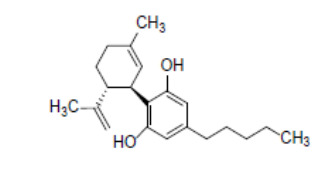
Confirmation of its identity and purity was provided by High Performance Liquid Chromatography (HPLC).
2.2. Production Process
The CBD isolate is manufactured using a multi-step process under controlled conditions.
Certificates of analysis for raw starting materials used in the chemical synthesis process were provided to demonstrate the effectiveness of the controls at this point in the process. The details of the commercially sensitive extraction process were shared and reviewed by the ACNFP.
The process begins with menthadienol and ethyl olivetolate as the primary starting materials, which undergo mixing, filtration and distillation steps with catalysts present, resulting in the formation of the desired synthetic >98-102% pure CBD form.
The ACNFP considered whether the use of solvents as processing aids resulted in residues that require highlighting to risk managers. To assess the safety of the solvent residues that remain in the novel food, comparison was made to residue limits for other consumed products as detailed in Table 1.
The evidence presented (see Table 2 below) on composition indicates compliance with the specification for residues of solvents. When considered at the level of consumption, the evidence suggests the levels of solvent residues in the novel food are below those which would represent a safety concern.
The production process has characterised the potential hazards and detailed the corresponding control measures sufficiently.
2.3. Compositional information
Results from analysis of six independent batches of the novel food demonstrated that the CBD content is produced consistently. The data is presented in Tables 2 to 6 below.
The data presented in Table 3 indicates that CBD content is consistently above 98% purity, with negligible amounts of starting materials detected across the six representative batches.
It is recognised that the detection and characterisation of cannabinoids in a range of food matrices is an evolving area, and there are yet to be internationally recognised methods. The limitations of analytical methodology available have been subject to discussion in the Joint ACNFP and COT CBD Subgroup and remain a source of uncertainty in the assessment.
Analytical data concerning the microbiological content from three independent batches of the novel food was reported and can be found in Table 4. The process in manufacturing this novel food uses several alcohol-based solvents, mixing, filtration and distillation steps, which may mitigate the level of microbes present within the final product. The product specification includes microbial parameters. The microbiological data presented confirm that the novel food does not raise a safety concern and consistently meets the proposed microbial specification levels.
It is expected that novel food products comply with the legal requirements for heavy metal contaminants in food. Analytical data, presented for six independent batches of the novel food, demonstrated that heavy metals were present in low quantities and below established EU limits where applicable (applicable for Arsenic, Cadmium, Mercury and Lead) (Table 5).
Results from the residual solvent analysis for six independent representative batches of isolated CBD are presented in Table 6. The data show that the isolated CBD is able to consistently comply with the specifications set for residual solvents within the final product.
Δ9-THC as a potential contaminant in the novel food
The extraction process may result in cannabinoids other than CBD remaining in the product as contaminants. Table 3 presents the compositional analysis of representative batches of cannabidiol (CBD) isolate. In particular, delta-9-tetrahydrocannabinol (Δ9-THC, a controlled drug within the UK), and its precursor acid, tetrahydrocannabinolic acid (THCA), were analysed due to the potential for toxic effects resulting from their consumption. Other minor cannabinoids which occur at contaminant levels also have the potential to play a role in the toxicity of CBD-containing novel food products; these require due consideration and monitoring to ensure the novel foods remain safe. The robustness, accuracy, and precision of the methods used were considered in interpreting the data on Δ9-THC and other potential contaminants and judged appropriate in this case.
To understand the impact on food safety of trace levels of contamination with Δ9-THC, the Joint ACNFP and COT Subgroup on CBD reviewed the relevant scientific literature and considered both the UK ACMD (Advisory Council on the Misuse of Drugs) advice on THC in consumer products and the 2015 European Food Safety Authority (EFSA) Panel on Contaminants in the Food Chain’s (CONTAM Panel) scientific opinion on the risks for human health from the presence of THC in milk and other products of animal origin.
This resulted in a joint statement of the ACNFP and COT on Δ9-THC as a contaminant in CBD and hemp derived products. This identifies a safe upper level of THC contamination of 1 µg/kg bw/day or 70 µg/day for a healthy adult below which adverse effects are not expected to occur.
The analysis for Δ9-THC as a potential contaminant in the novel food was declared as “not detected” in any of the five batches tested (Table 3), with a limit of quantification of 0.05% (w/w).
Once adjusted to reflect the proposed use of CBD at a total dose of 10 mg per day, the levels of Δ9-THC detected in the novel food were below the safe upper intake level of 1 µg/kg bw/day or 70 µg/day for a healthy adult. This level does not present a concern in terms of consumer safety for the novel food under the proposed conditions of use.
To ensure Δ9-THC levels remain consistently low in the production of CBD, THC and its precursor acid combined should be a standard substance included in the specification as relevant to all batches produced.
The data presented did not indicate any additional hazards for inclusion in the specification.
2.4. Stability
The stability of the novel food was assessed in real time under ambient conditions (25°C and 60% relative humidity) in three batches for 270 days. Results showed that the novel food meets the specification criteria for CBD and other cannabinoid content stability over this time period.
The stability of the synthetic CBD was assessed under accelerated conditions (40oC and 75% relative humidity) in three batches for 180 days. Results confirmed that the novel food meets the specification criteria for CBD content and no changes in appearance, water content and impurity levels are seen over this time period. The Δ9-THC content was also tested and no significant changes in the levels of Δ9-THC were observed.
The data provided supports the stability of CBD isolate for a period of at least 9 months.
2.5. Specification
The specification parameters reported in Table 7 were assessed using internationally recognised methods or determined using internally developed and validated methods. The results of the compositional analysis are detailed in Tables 2 to 6 and indicate the novel food can be produced consistently to the specification.
The information provided has been deemed sufficient for the specification of CBD and appropriately characterises the novel food seeking authorisation.
2.6. History of use
Hemp has been widely consumed in the UK and EU as a seed oil, in tea and as an alternative to hops in beer. Extracts of hemp, including CBD, and synthetic CBD have not been widely consumed and are considered novel foods. While CBD products are widely available on the UK high street, indicating some consumption of CBD as a food, at the time of publication, no previous applications for CBD have yet received authorisation as a novel food.
As detailed in the COT review of the literature, there has been use of both hemp derived and synthetic forms of CBD for medicinal purposes. These provide an indication of the toxicological effects that should be explored in the testing regime – primarily effects on liver, thyroid and potential impacts on reproductive organs. Also reported are behavioural effects such as somnolence (sleepiness) (COT, 2020).
As reported in the COT review of the publicly available data on CBD and summary data on a medicinal product, signs of adverse effects on the liver were observed at doses of CBD as low as 5 mg/kg bw/day in patients and healthy human volunteers; this dose is equivalent to 350 mg in a 70 kg adult. The data in the literature also suggested that humans might be more sensitive to the adverse effects of CBD in the liver than laboratory animals.
Somnolence effects were noted at doses ≤10 mg/kg bw/day in human studies. Inhibitory drug-drug interactions have also been observed with some medications when CBD is co-administered at doses of 1 mg/kg bw/day (equivalent to 70 mg in a 70 kg adult); the likelihood of effects at lower doses has not been determined (COT, 2020). Based on the COT assessment, therefore, the FSA concluded in February 2020 that 1 mg/kg bw/day, or 70 mg in a 70 kg adult, was a pragmatic upper level of intake above which there would be clear concerns about safety.
It is noted that the doses used for medicinal purposes are higher than those proposed for food use. The purpose of an assessment for medicines authorisation is different to that for food and this is reflected in the data requirements. Unlike medicines, there is no risk-benefit context in foods, with the requirement instead being that the products are safe.
Within the literature, further human studies utilising chemically-derived CBD provides further evidence of a history of synthetic CBD use (Izgelov et al., 2020; Klotz et al., 2019; Stero Biotechs Ltd., 2020; Wheless et al., 2019). A review by Heuestis et al., 2019 of cannabidiol adverse effects and toxicity notes that, while CBD is not risk-free, severe adverse events occur at doses higher than those recommended for human pharmacotherapies, which are prescribed to treat forms of epilepsy.
The data on previous consumption of CBD suggest areas for careful consideration in the toxicological review to understand potential effects at the lower doses used in foods.
2.7. Proposed use and anticipated intake
The intended use is food supplements as defined by GB legal requirements (The Food Supplements (England, Scotland and Wales) Regulations 2003) in a range of forms.
The applicant initially proposed a use level of 70 mg/day CBD for the novel food in adults, excluding pregnant or lactating women. As a result of consultation with the applicant, the proposed uses have been updated to reflect the provisional acceptable daily intake (ADI) for the use of ≥98% pure form CBD established at 10 mg per day (ACNFP and COT, 2023). The proposed maximum use levels for the novel food are outlined in Table 8.
It is noted that consumers may be exposed to CBD from a range of food categories. The standard methodology for calculating exposure for a novel food would explore intake from a range of sources and ensure that exposure via the proposed uses would not exceed any safety level identified when consumption of the food category was analysed. It is noted that for CBD there are already many products available. The assessment has been made on the basis of identification of a maximum level of CBD that can be consumed per day. As such proposed uses will only be considered safe within the assessment when below a maximum of 10 mg of CBD per day from all sources.
Concerns were raised by the Committee regarding the potential for foreseeable misuse of CBD if consumed in multiple formats on a single day. This is because of the increased risk of consuming CBD above the provisional ADI. The scope of the assessment is restricted to the uses proposed and any further uses or additional food categories would be subject to the change in conditions of use process.
Risk managers must consider whether consumers would benefit from information on the CBD content of foods in order to ensure their consumption does not exceed the maximum intake of 10 mg per day for a healthy adult.
As recommended in the ACNFP and COT statement on CBD of 98% purity, “The provisional ADI is recommended, subject to the existing advice to consumers that pregnant and breastfeeding women and people taking any prescription medication should avoid the consumption of CBD if possible. Consumers on regular medications should seek advice from a medical professional before using any type of CBD food product. In addition, children and prospective parents trying for a baby are advised against consumption of CBD, as are those who are immunosuppressed, due to remaining data gaps and residual uncertainties concerning the safety of CBD for these groups of consumers.” (ACNFP and COT, 2023).
The ACNFP explored the potential for foreseeable misuse of the novel food. It was noted that the availability of multiple formats of the novel food could create conditions where exposure estimates are exceeded. It is highlighted to risk managers that they may wish to consider whether risk management measures are needed beyond those in the food supplements regulation to ensure consumers are aware of the provisional ADI of 10 mg CBD/day for the product, a dose at which it is considered that no adverse effects would be expected.
It is also strongly recommended that risk managers consider how consumers can be supported to manage their intake appropriately within the safe limits identified and appreciate the nature of the potential risks at higher doses, for uses that are not in dosed forms.
The food supplement products are to be labelled in accordance with the labelling requirements of Food Supplements (England) Regulations 2003 and the equivalent legislation in the nations of GB. The ACNFP recommended that the applicant’s proposed warning labelling be updated to include information on not exceeding the safe limit of 10 mg/day for a 70 kg healthy adult, and that the product is not suitable for use under the age of 18, or for use during pregnancy or breastfeeding, as well as information on its suitability for people taking medication or who have existing health conditions.
2.8. Absorption, distribution, metabolism and excretion (ADME)
The absorption, distribution, metabolism and excretion (ADME) of CBD are known to be complicated by the food matrix and are currently still being defined by professional bodies.
The oral bioavailability of CBD is low, indicating that it is not absorbed to any notable extent following ingestion (Mechoulam et al., 2002). Published works report the bioavailability of CBD to be between 13 and 19% (Grotenhermen, 2003) or 6% (Hawksworth & McArdle, 2004). The low systemic availability was demonstrated by Martin-Santos et al., 2012 and further supported by a literature search, which identified the pharmacokinetics of CBD in humans (Millar et al., 2018). The COT statement on CBD of 2020 noted that although CBD has low fasting bioavailability (<10%), consumption with food could increase CBD uptake by, for example, 5-fold if eaten with a high fat meal. As such the potential for matrix effects that impact bioavailability cannot be ruled out.
Following oral absorption, CBD is extensively metabolised in the liver. This rapid first pass metabolism contributes to the low oral bioavailability reported in the literature (Taylor et al., 2018; WHO, 2018). In vitro studies indicate that CYP3A4 and CYP2C19 are the primary hepatic enzymes responsible for first-pass metabolism of cannabidiol; however, several other hepatic cytochrome P450 isoforms (CYP1A1, CYP1A2, CYP2C9, CYP2D6, and CYP3A5) have also demonstrated a capability of metabolising cannabidiol (Jiang et al., 2011; Zendulka et al., 2016).
The metabolism of CBD is thought to follow two separate pathways. One is P450-mediated, in which cannabidiol is metabolised into its major metabolite 7-COOH-CBD. This is followed by further metabolic reactions which yield the minor metabolites of CBD, including 6-OH-CBD (Devinsky et al., 2018; Taylor et al., 2018). The other involves decarboxylation (Kraemer et al., 2019). The resultant metabolites are predominantly excreted in faeces and urine (Hawksworth & McArdle, 2004; WHO, 2018).
Multiple dosing with CBD is associated with a steady state concentration up to 2-fold accumulation of CBD in plasma when compared with a single dose (Taylor et al., 2018). Minimal evidence of plasma accumulation has been reported in dosing studies over 5–9 days (Millar et al., 2018; Sellers et al., 2013; Stott et al., 2013).
The pharmacokinetics of CBD have also been systematically reviewed by Millar et al., 2018 in 24 studies, most of which assessed the administration of CBD at doses of 5–20 mg/day. This correlates to a low dose application similar to this CBD novel food application. With oral administration, single doses of 5.4 and 10 mg CBD achieved peak serum concentrations (Cmax) of 0.9 and 2.5 ng/mL. The time to maximum concentration (Tmax) was approximately 1 hour, with a half-life between 1 to 3 hours. Given the intended use of this CBD, with an approximate half-life of 1 to 3 hours, with a total clearance of 6 hours, there are no significant concerns of accumulation (Millar et al., 2018).
The ADME data provides context for interpreting the toxicological data. It is noted that the bioavailability of CBD is typically low but can be affected by the matrix. It was also noted that the potential for CBD to accumulate in the body has not been examined based on the data supplied. This also suggested the food context for CBD could impact whether the CBD present in the ingredient is more, or less, bioavailable. This has been taken into account when considering the additional uncertainty factors used for setting the provisional ADI.
2.9. Nutritional information
The ACNFP sought clarification of the potential for the presence of antinutritional factors from the preparation. It was noted that hemp can contain a range of substances that could impact the digestion and absorption of nutrients from the diet. These include phytic acid (which can negatively affect the bioavailability of dietary and endogenous minerals and proteins), tannins (which can interrupt the absorption of iron), trypsin inhibitors (which can affect protein digestion), and saponins (which at larger quantities cause gastric irritation and increase the permeability of the intestine).
The product is highly purified as indicated in the information on the composition. There is no presence of other components that would impact the digestion or absorption of nutrients from the diet.
The data on nutritional composition confirms that CBD has no caloric or nutritional value. The application is not intending that CBD replace another food in the diet. Consumption of the novel food at the proposed use levels is not expected to be nutritionally disadvantageous for consumers.
2.10. Toxicological information
Toxicological studies on CBD relied upon by the applicant, and the respective study reports are unpublished and claimed as confidential and proprietary data. They were considered essential in the assessment of the safety of the novel food and were reviewed by the ACNFP. The way in which data on systemic toxicity was managed and interpreted in the context of the provisional ADI is explained in the sub chronic toxicology section below (Section 2.10.2).
2.10.1. Genotoxicity
Genotoxicity studies on CBD relied upon by the applicant were stated to be GLP compliant for the OECD TG 471 and 487 studies. However, the Committee noted an absence of appropriate sign off for these studies, and hence administrative provenance to assure data integrity and study quality cannot be verified. Furthermore, the absence of the in vitro mammalian cell micronucleus study results in a data gap in the genotoxicity safety assessment for the novel food. The data necessary to rectify these omissions and deficiencies was requested but not provided.
It was noted that the applicant also provided studies to assess the genotoxicity of the novel food. These included a reverse mutation assay and a micronucleus test. Neither showed an increase in micronuclei or revertants respectively compared to historical controls, with or without activation under the conditions tested. This data provided provenance and quality assurance information for the studies. As such information was provided to suggest the novel food was not genotoxic under the conditions tested.
2.10.2. Sub-chronic toxicity
The Joint Subgroup of the ACNFP and COT, formed to address questions in relation to the safety of CBD, cannabinoids and hemp-derived ingredients and considered the data submitted in support of this novel food application.
The EFSA Guidance on the preparation and presentation of an application for authorisation of a novel food in the context of assimilated Regulation (EU) 2015/2283 as adopted for use in GB, highlights the expectation that studies are conducted according to GLP principles.
A Repeated Dose 90-Day Oral Toxicity Study in rats relied upon by the applicant but did not provide adequate evidence that the study was conducted according to GLP principles. A redacted version of the study was provided. Reassurance that the study had been conducted within the principles of GLP and that appropriate quality assurance procedures were in place was sought on behalf of FSA and FSS but was not provided. The Subgroup’s view was that this study was insufficient to support the toxicological safety of this CBD isolate. A data gap therefore remains in the evidence base for this novel food.
2.11. Allergenicity
This CBD isolate comprises >98% CBD and the production process for CBD does not introduce any risk of allergenic potential. As a chemical entity, the potential for IgE mediated food allergy is unlikely.
Given CBD as a substance is not considered allergenic, the allergenicity assessment considered whether the other 1% of the novel food’s composition was likely to be allergenic or elicit food allergic reactions. It was noted that none of the raw materials or processing aids used in the production process are derived from or contain any of the allergenic food ingredients specified under assimilated Regulation (EU) No 1169/2011 on the provision of food information to consumers. This suggests the potential to elicit reactions in those sensitive to those foods is unlikely.
The novel food is unlikely to trigger allergic reactions in the target population under the proposed conditions of use.
3. Discussion
The novel food is a synthetic CBD ingredient containing >98% CBD produced using a multi-step manufacturing process.
This CBD isolate is intended to be used as a food ingredient in food supplements for adults excluding pregnant and lactating women and other specifically identified vulnerable groups at a defined intake for each product type of up to 10 mg CBD per day; it is not intended to replace any food.
The ACNFP reviewed the scientific dossier provided by the applicant, alongside data relied upon by the applicant to demonstrate the safety for this CBD isolate, and has advised that the safety of the novel food was not proven. The applicant relied upon a reverse mutation study, a micronucleus test and a Repeated Dose 90-Day Oral Toxicity Study in rats, but did not demonstrate that these were conducted according to GLP principles. A redacted version of the study was provided. In the absence of adequate quality assurance, however, it should not be relied upon for risk assessment purposes.
Reassurance that the study had been conducted within the principles of GLP and appropriate quality assurance procedures were in place for the results to be considered reliable was requested but was not provided. ACNFP therefore advises that issues of data integrity and study quality exist, and this study should not be used to support the toxicological safety of this CBD isolate. A data gap remains in the applicant’s evidence for this novel food.
4. Conclusions
The FSA and FSS have undertaken a review of this CBD isolate using the scientific dossier provided, in addition to data relied upon by the applicant, and consider that the safety of this novel food has not been proven. Appropriate quality information on the genotoxicity and sub chronic toxicity need to be provided by the applicant to support the safety of the novel food. The additional information was requested and not provided; as such a conclusion has been reached on the available information.
Abbreviations
Acknowledgements
The members of the ACNFP during the course of the assessment who were; Dr Camilla Alexander White, Dr Anton Alldrick, Dr Kimon Andreas Karatzas, Alison Austin, Professor George Bassel, Dr Mark Berry, Dr Christine Bosch, Professor Dimitris Charalampopoulos, Dr Meena Cush, Dr Catharina Edwards, Professor Susan Fairweather-Tait, Dr Sophie Foley, Professor Paul Frazer, Dr Hamid Ghoddusi, Professor Andy Greenfield, Professor Wendy Harwood, Professor Huw D. Jones, Dr Ray Kemp, Dr Elizabeth Lund, Professor Harry J. McArdle, Mrs Rebecca McKenzie, Dr Lynn McIntyre, Professor Clare Mills, Dr Antonio Peña-Fernández, Dr Isabel Skypala, Professor Lesley Stanley, Professor Hans Verhagen, Dr Maureen Wakefield, and Professor Bruce Whitelaw.
To note, interests were received from members of the ACNFP: Dr Alldrick declared a potential interest relating to his previous employment and this was considered a potential conflict and as a result he was not present for discussions of CBD by the Committee. Emeritus Prof Harry McArdle declared an interest from his work with EFSA’s novel food Committee in considering data requirements for CBD. While not seen as a conflict, to avoid Prof McArdle being subject to information that would influence his EFSA work, it was agreed that he would not be present in discussions for CBD by the ACNFP but could supply comments for consideration by the Committee upon review of the minutes.