
Executive Summary
This report synthesises existing evidence on consumers’ self-reported food safety behaviours in the home and assesses how these behaviours have changed between 2020 and 2025. It addresses two core questions:
-
What percentage of consumers report practising certain behaviours related to personal hygiene, cross-contamination, cooking, cleaning, chilling, use-by-dates and other relevant household behaviours (including financially motivated changes)? [1]
-
Have there been any notable changes in these behaviours between 2020 and 2025?
While many of the behaviours discussed are thought to influence the risk of foodborne disease (FBD), the data in this report cannot be used to explain changes in overall rates of FBD, or the reasons why a given behaviour has changed. The findings in this report describe patterns in self-reported behaviour only and do not provide evidence of any causal or statistical relationship with FBD rates. No conclusions should be drawn about whether changes in behaviour have contributed to increases or decreases in FBD.
In addition, figures from different data sources are not directly comparable due to differences in methodology and question wording. Findings should therefore be interpreted as trends within each data source, rather than comparisons across them, and within the strengths and limitations of each method (see Annex A). In particular, the Tracking surveys use an online quota sampling approach, meaning the results should not be generalised to the whole population.
Key findings
Overall, most food safety behaviours explored in this report have remained broadly consistent across their respective tracking periods.
The findings below highlight behaviours where the available data shows the greatest evidence of a change (meeting the criteria set out in the method section). All differences are statistically significant at the 5% level (p<0.05), although in many cases the absolute change in percentage points is relatively small.
‘Slight’ refers to statistically significant changes of less than 10 percentage points (also marked with ‘**’) and ‘notable’ refers to changes of 10 percentage points or more.
Personal hygiene
In Food and You 2:
-
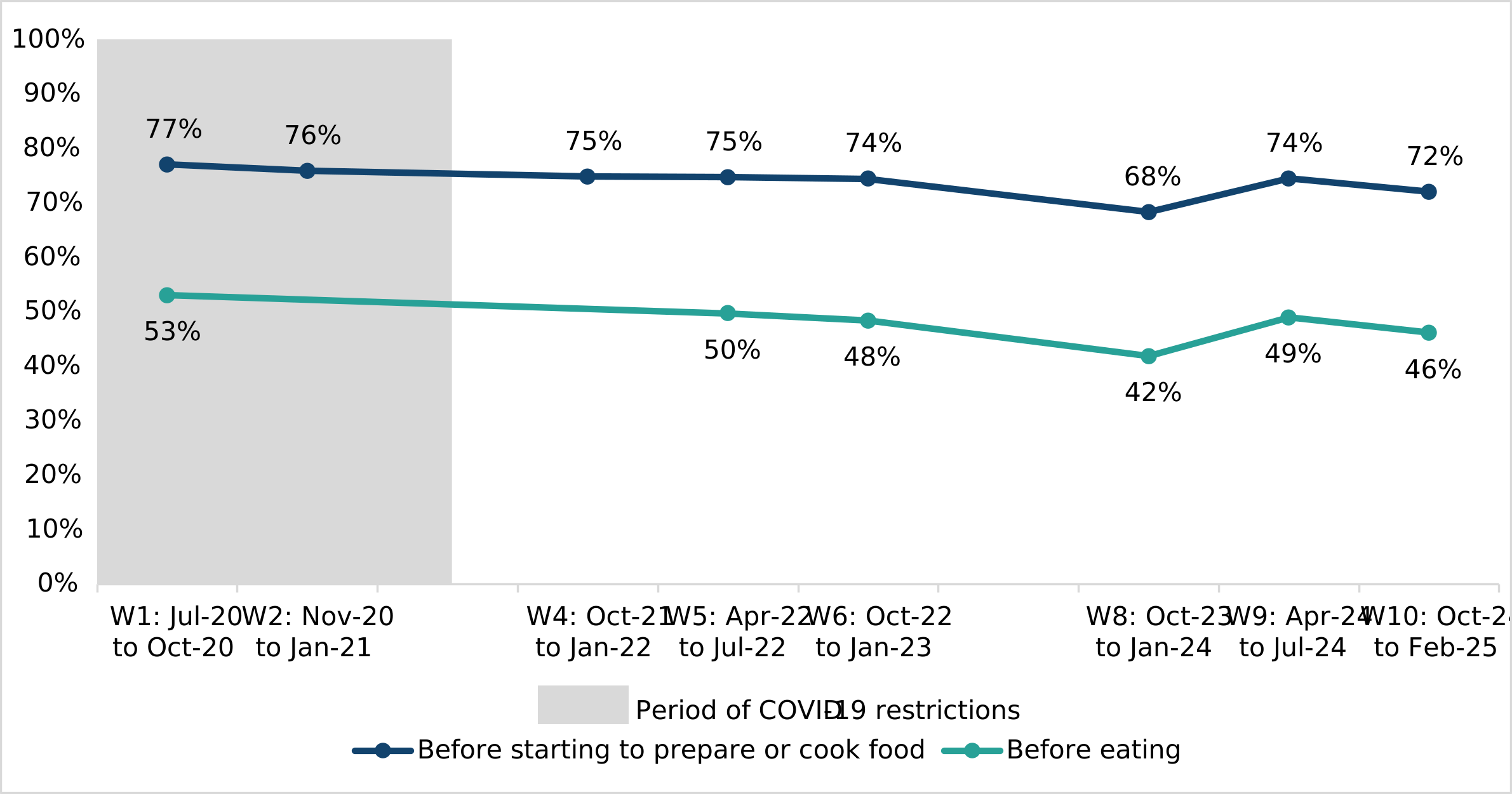
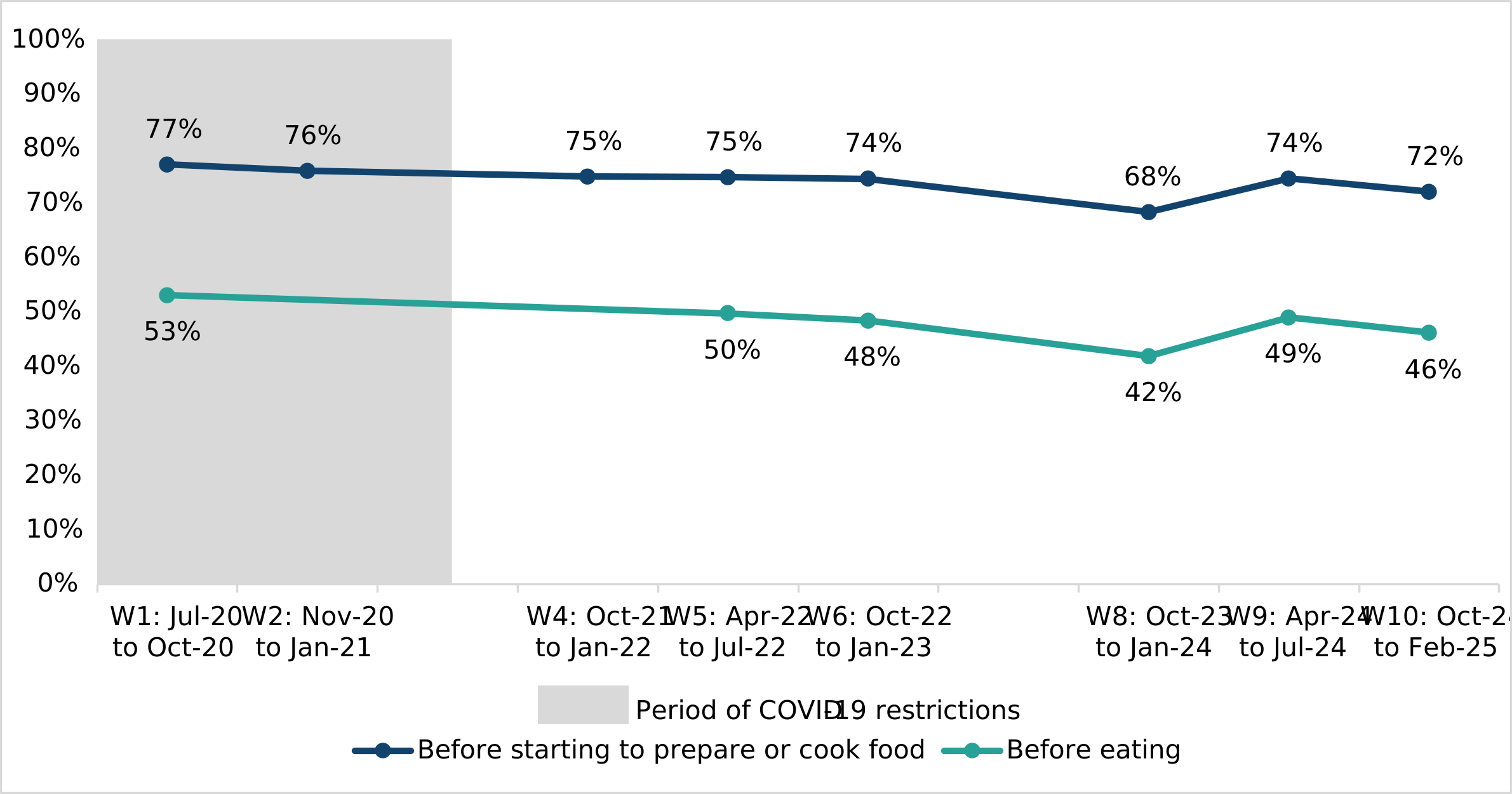
There was a slight decrease in the percentage of respondents who reported they always wash their hands before cooking or preparing food from 77% in Wave 1 (July 2020 to October 2020) to 68% in Wave 8 (October 2023 to January 2024)**. This increased slightly to 74% in Wave 9 (April to July 2024), remaining comparable in Wave 10 (October 2024 to February 2025) (72%).
-
There was a notable decrease in the percentage who reported they always wash their hands before eating from 53% in Wave 1 (July 2020 to October 2020) to 42% in Wave 8 (October 2023 to January 2024). This increased slightly to 49% in Wave 9 (April to July 2024)**, remaining comparable in Wave 10 (October 2024 to February 2025) (46%).
In the Consumer Handwashing Tracker:
-
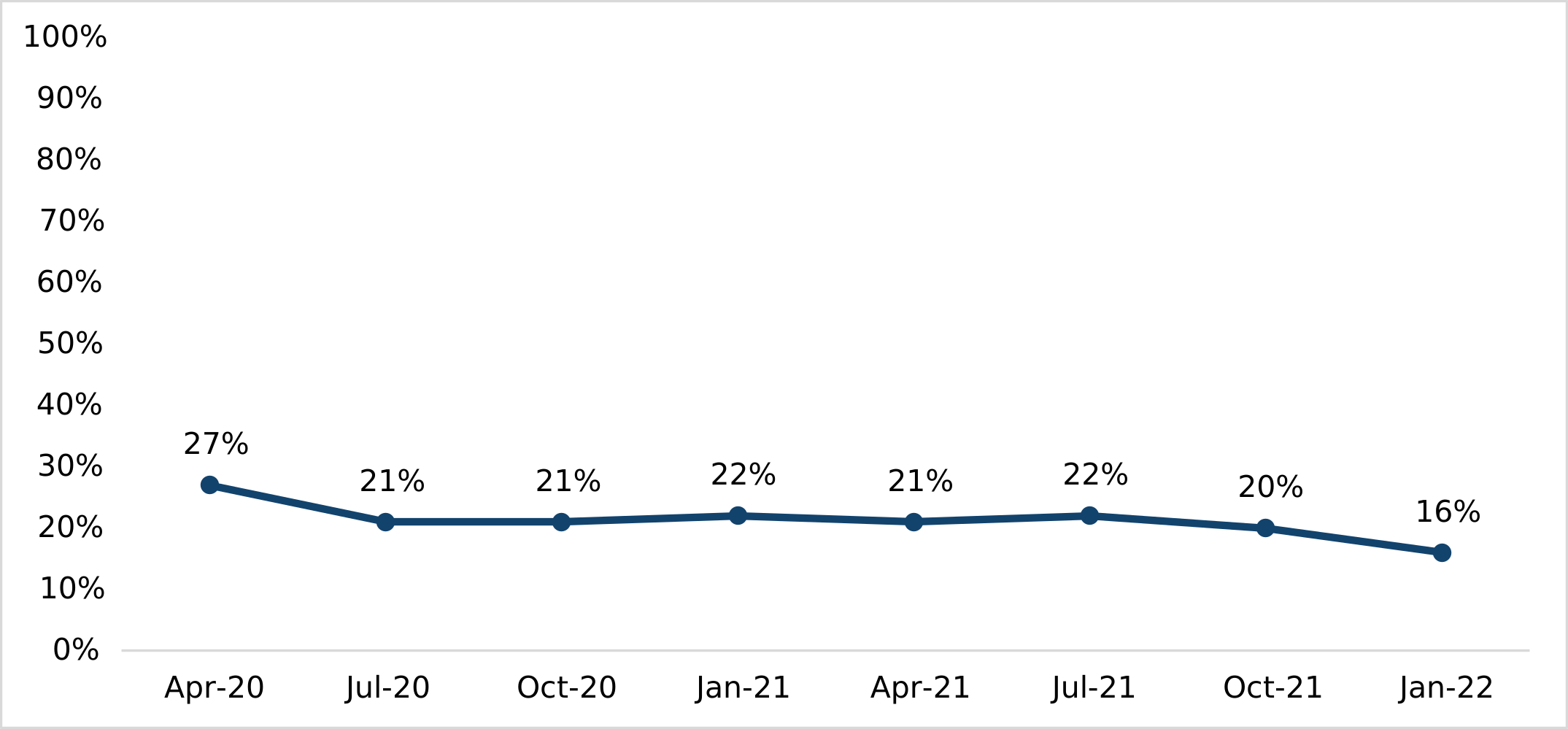
There was a notable decrease in the percentage of those who reported they always wash their hands with soap and warm water when they are at home from 27% in April 2020 to 16% in January 2022.
-
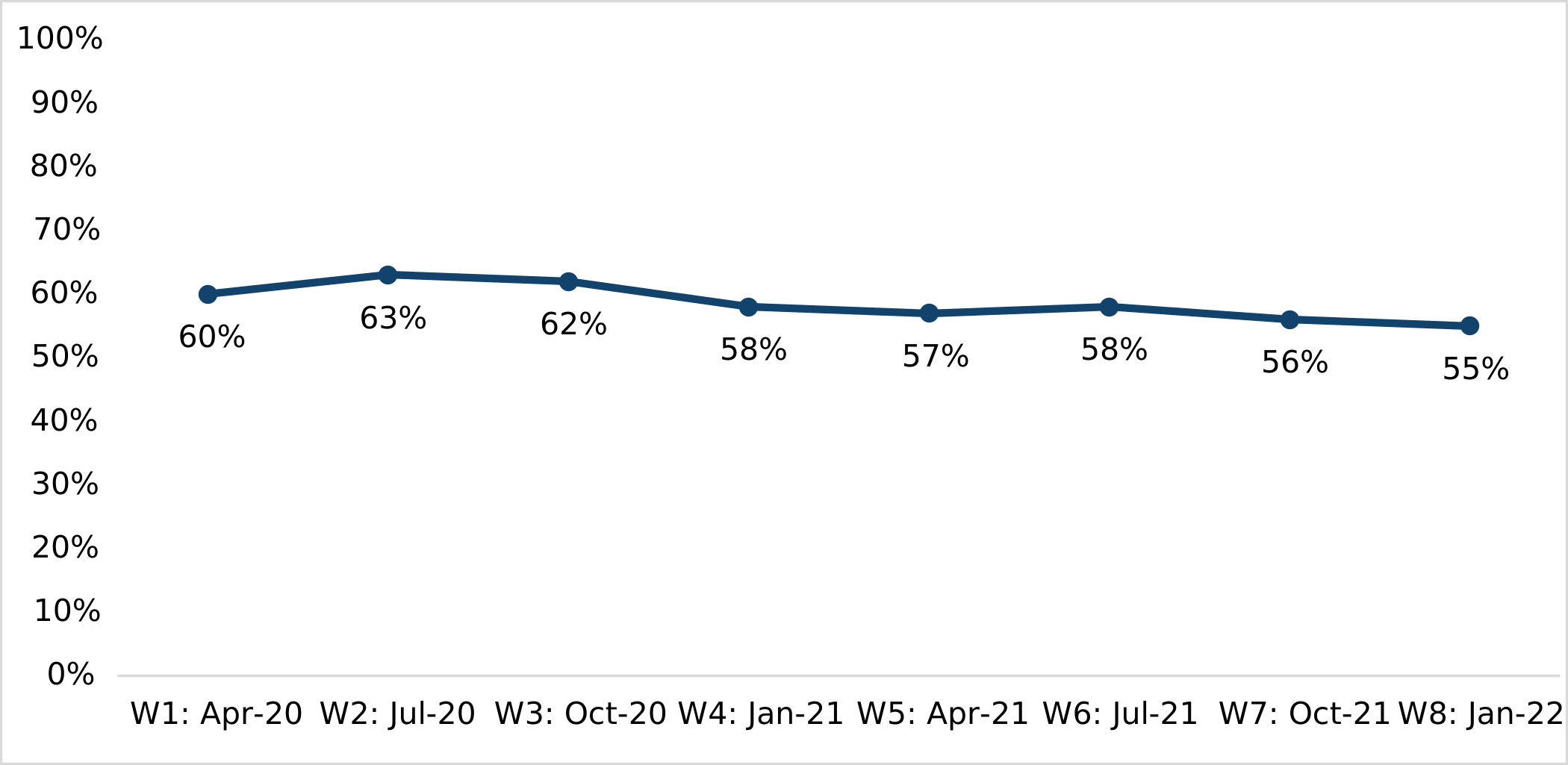
There was a slight decrease in the percentage of respondents reporting they wash their hands for at least 20 seconds between July 2020 (63%) and January 2022 (55%)**.
Cross-contamination
In Food and You 2:
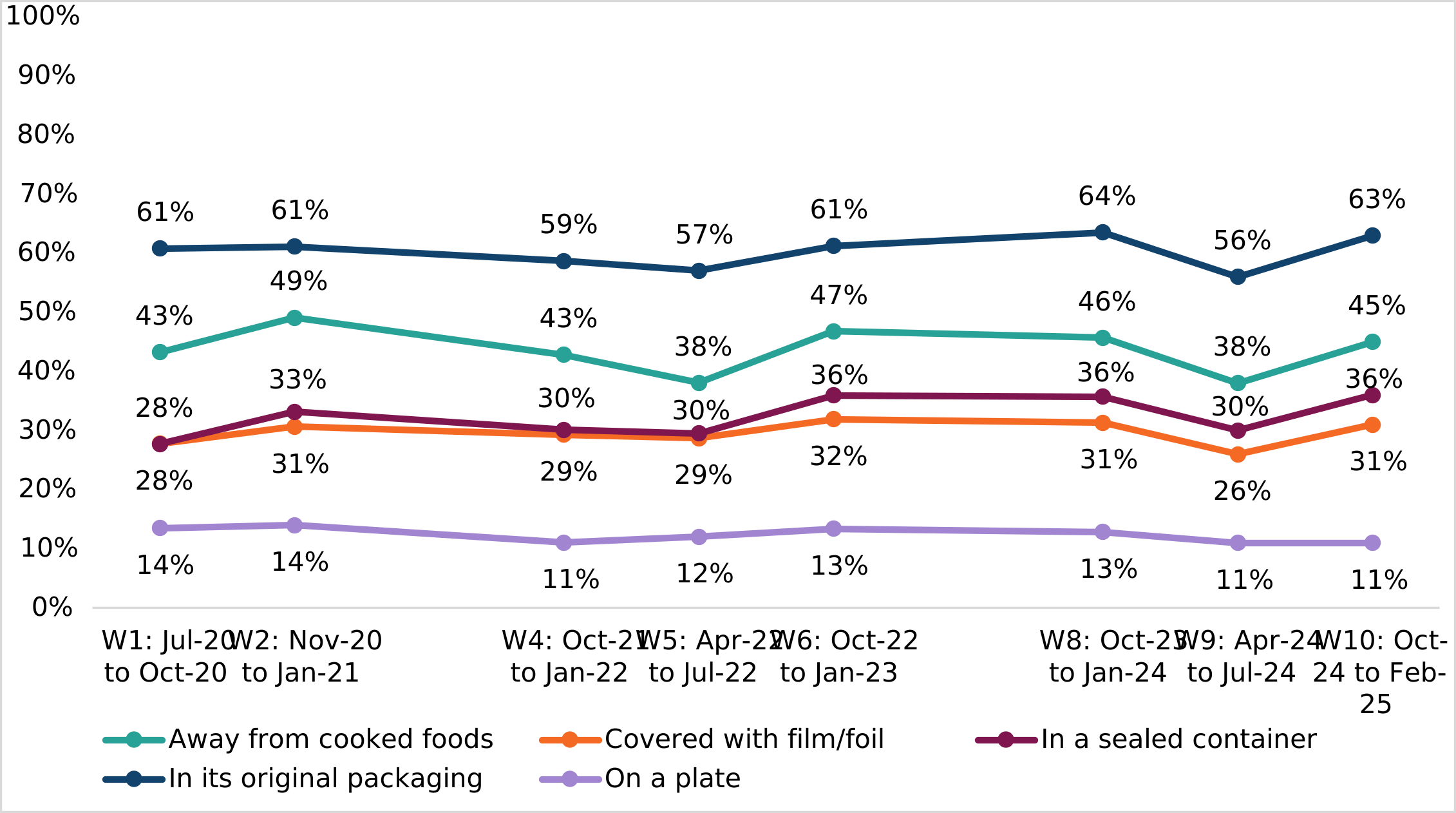
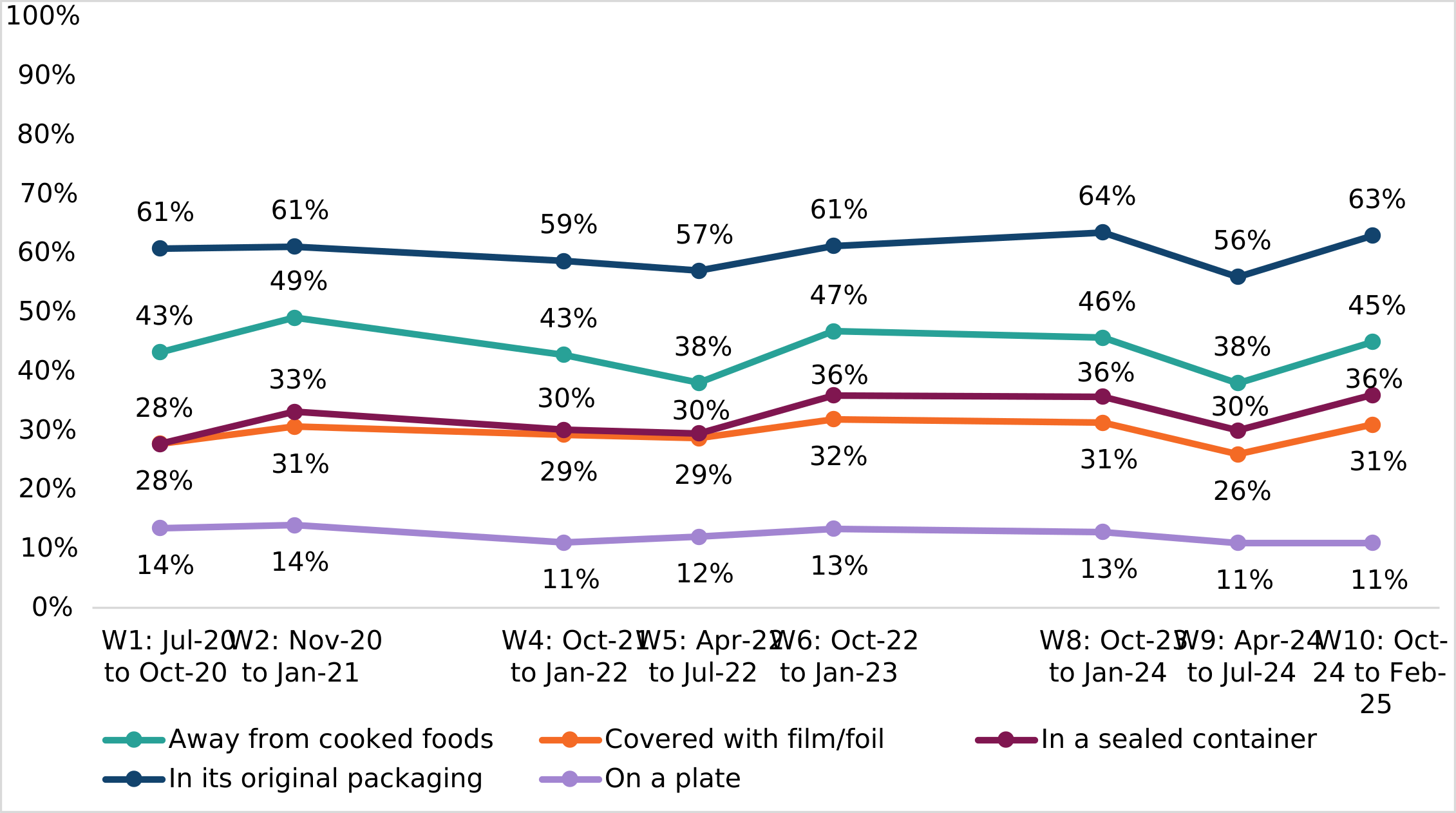
- Overall, there was a slight increase in the percentage of respondents reporting they stored raw meat or poultry in the fridge in a sealed container between Wave 1 (July to October 2020) (28%) and Wave 10 (October 2024 to February 2025) (36%)**. Several storage practices, including the use of sealed containers, showed a slight decrease in Wave 9 (April to July 2024) that was not sustained in Wave 10.
Cooking
In Food and You 2:
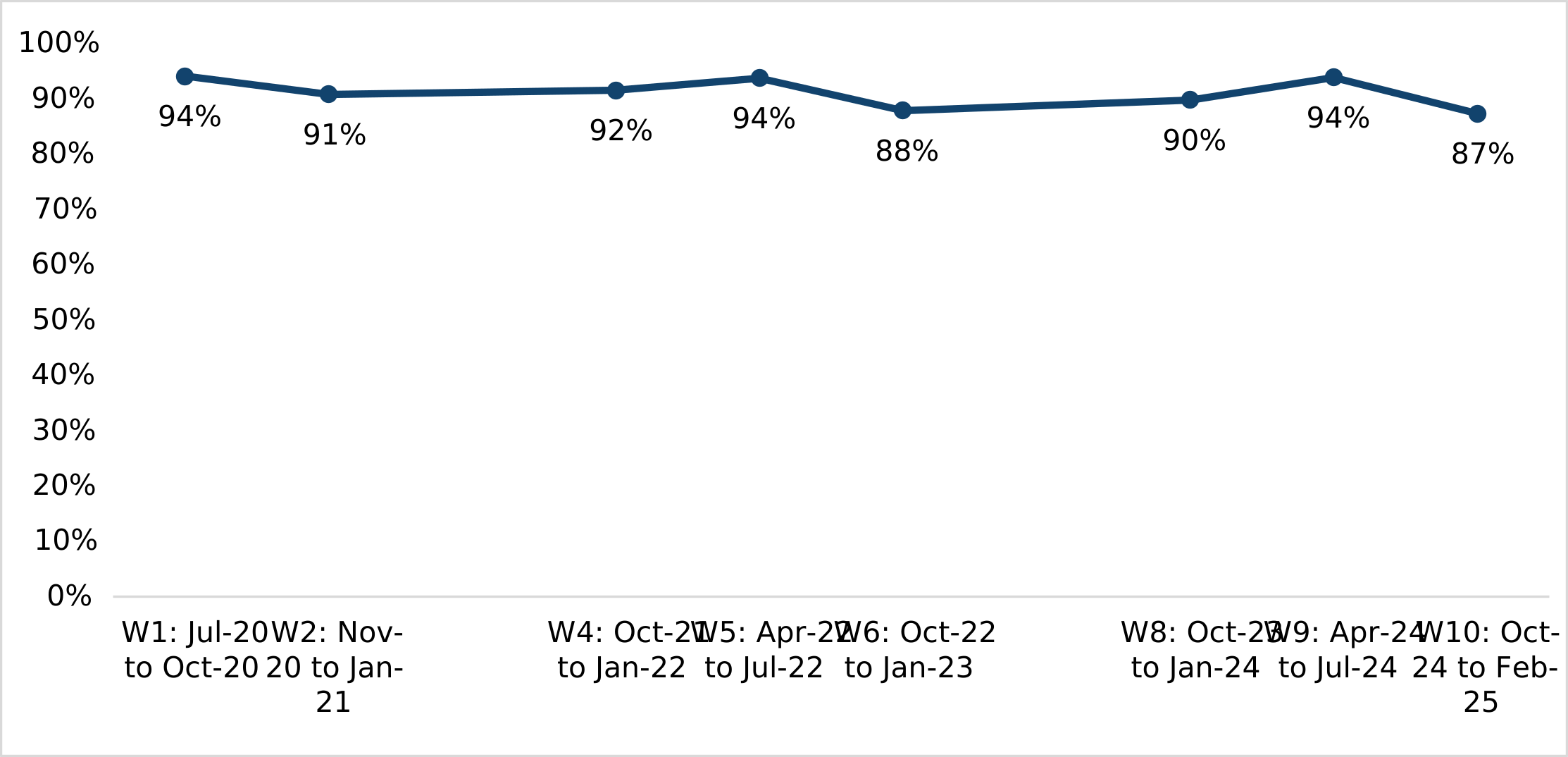
- There was a slight decrease in the percentage of respondents who stated they never eat chicken or turkey when it is pink or has pink or red juices, from 94% in Wave 1 (July to October 2020) to 87% in Wave 10 (October 2024 to February 2025)**, although there has been slight variation across waves and the overall percentage remained around nine in ten (87%-94%).
Use-by dates
In Food and You 2:
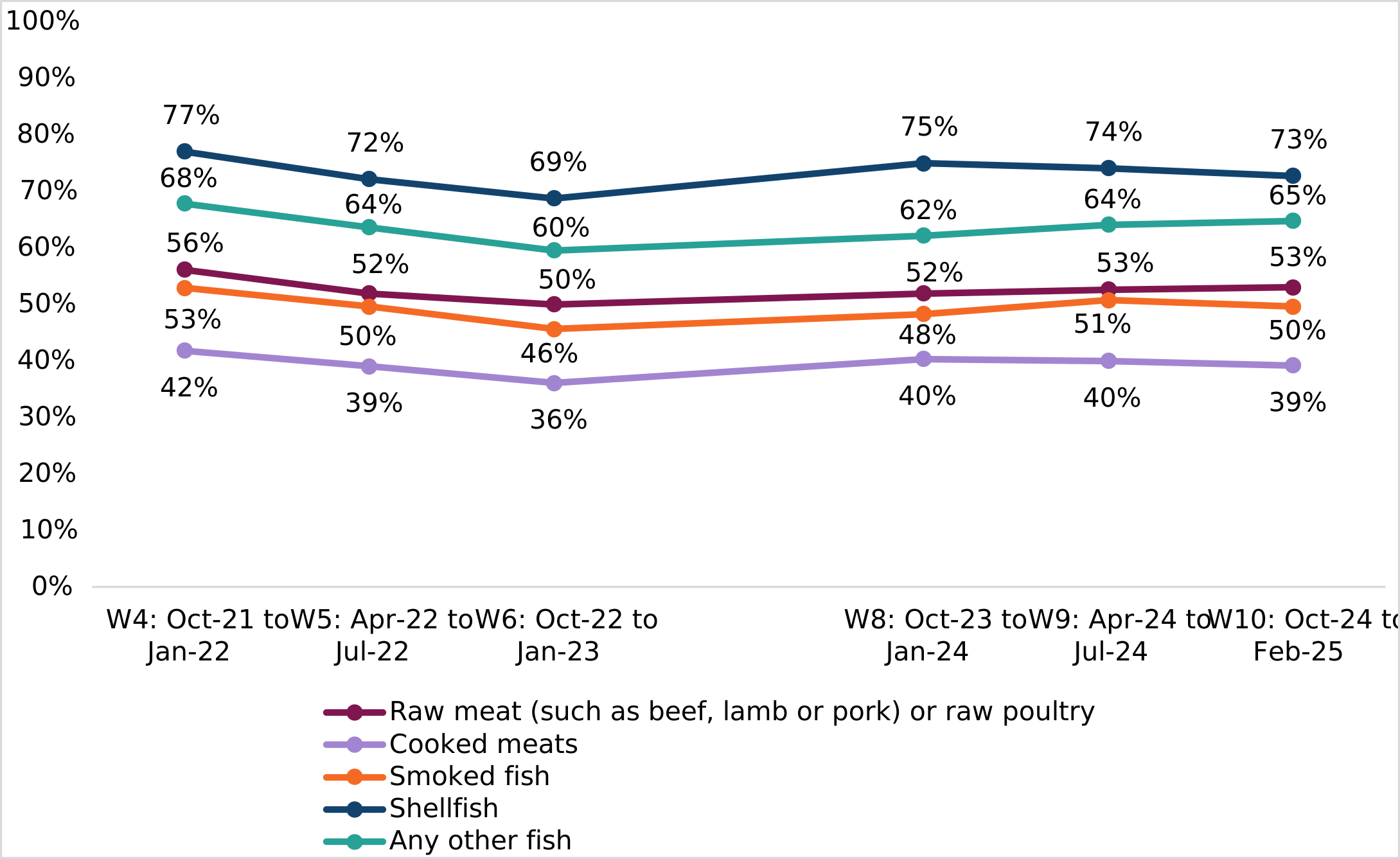
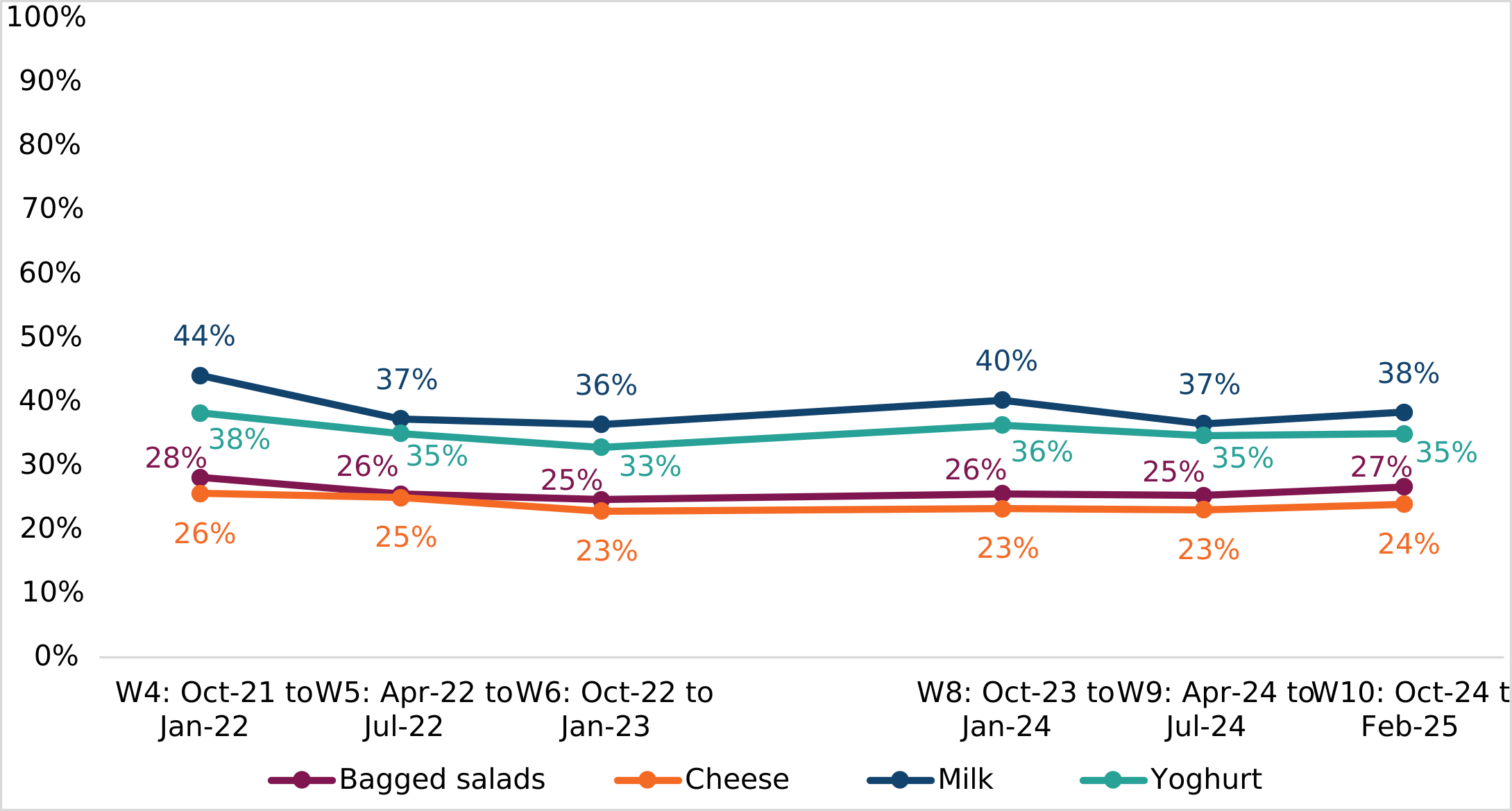
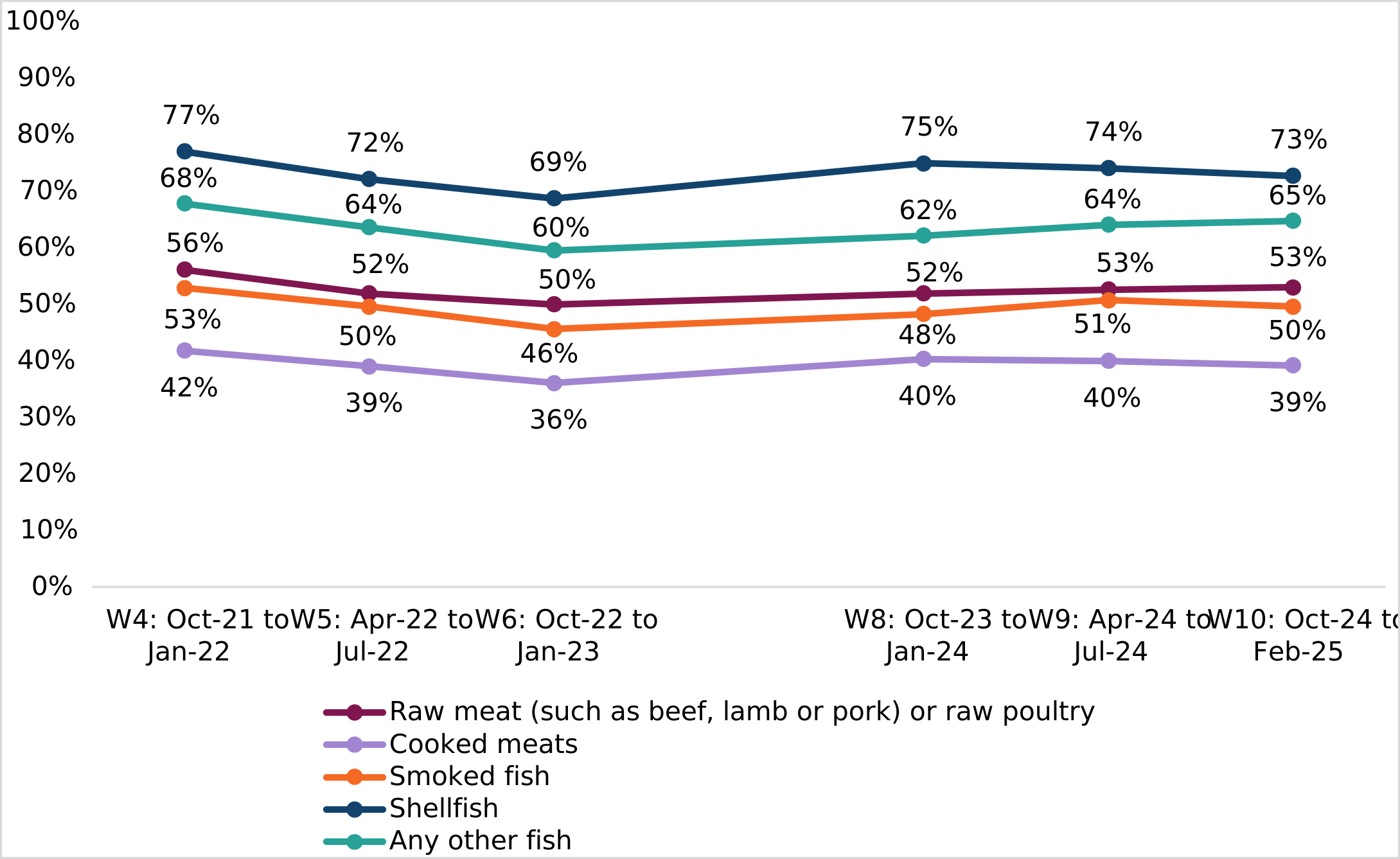
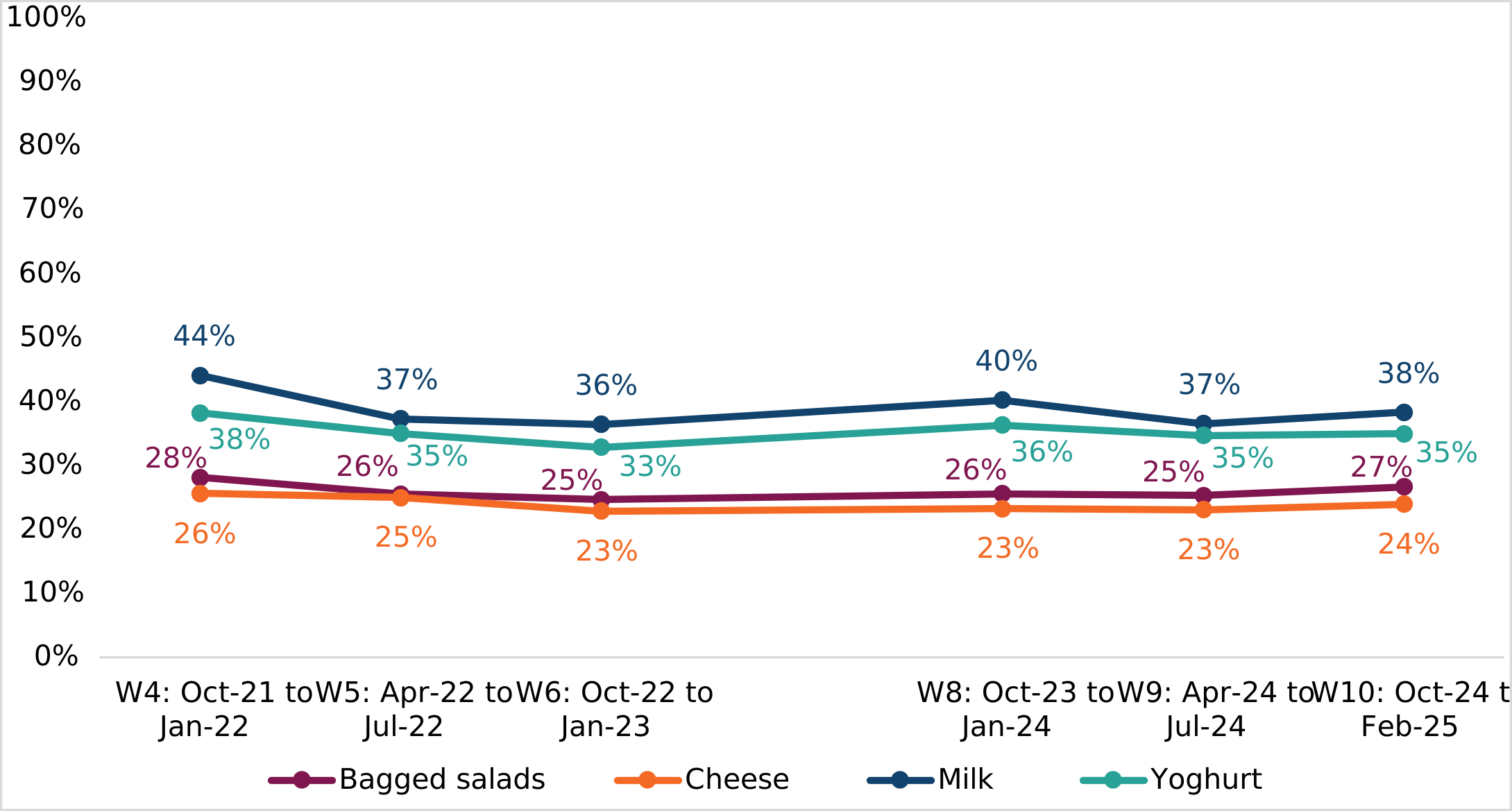
- There was a slight decrease between Wave 4 (October 2021 to January 2022) and Wave 6 (October 2022 to January 2023) in the percentage reporting they would not eat certain foods after their use-by date. This included raw meat (56% to 50%), cooked meat (42% to 36%), smoked fish (53% to 46%), shellfish (77% to 69%), any other fish (68% to 60%), milk (44% to 36%) and yoghurt (38% to 33%)**. By Wave 10 (October 2024 to February 2025), the percentage of respondents reporting they would not consume most of these foods after their use-by date returned to levels comparable with Wave 4. However, for a small number of foods, such as milk, there was a small but sustained decrease over time.
In the Consumer Insights Tracker:
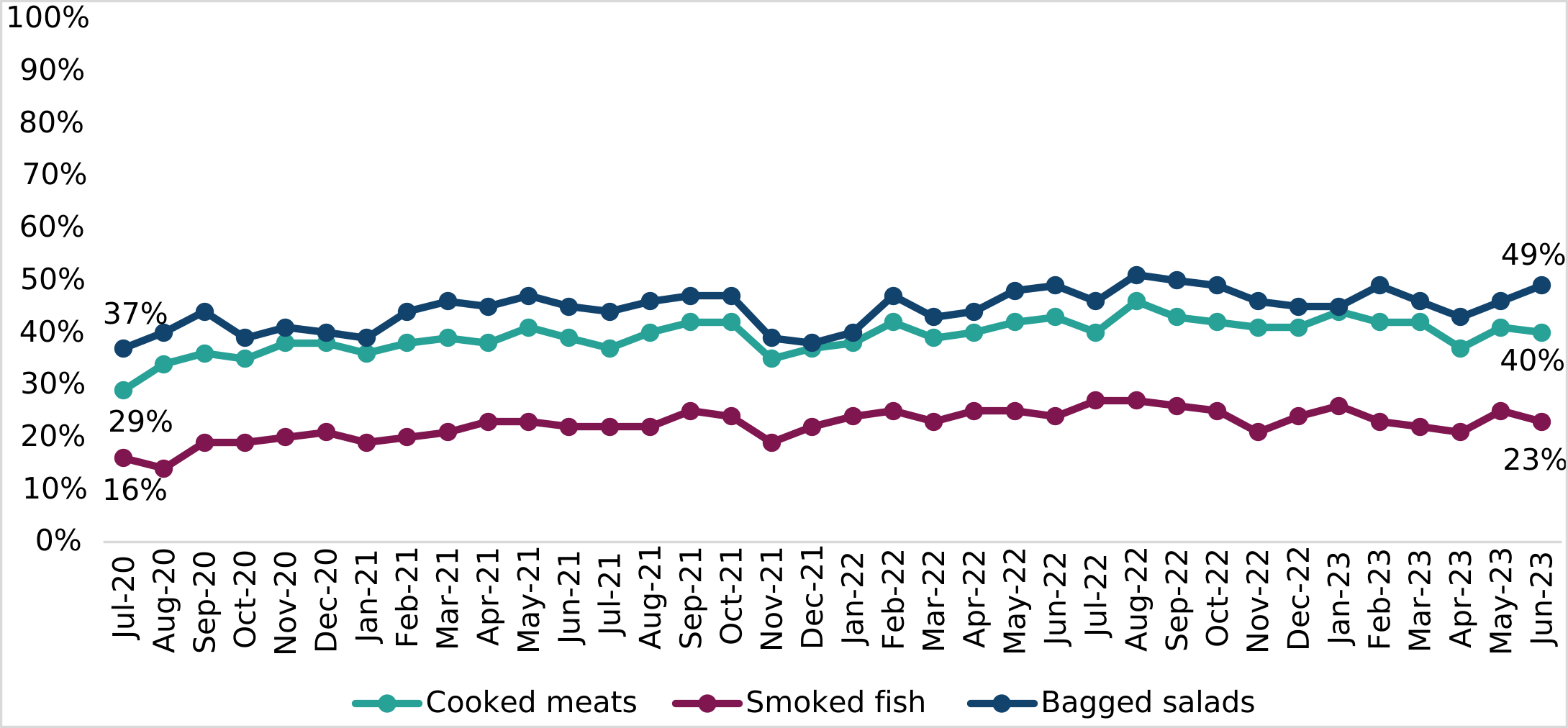
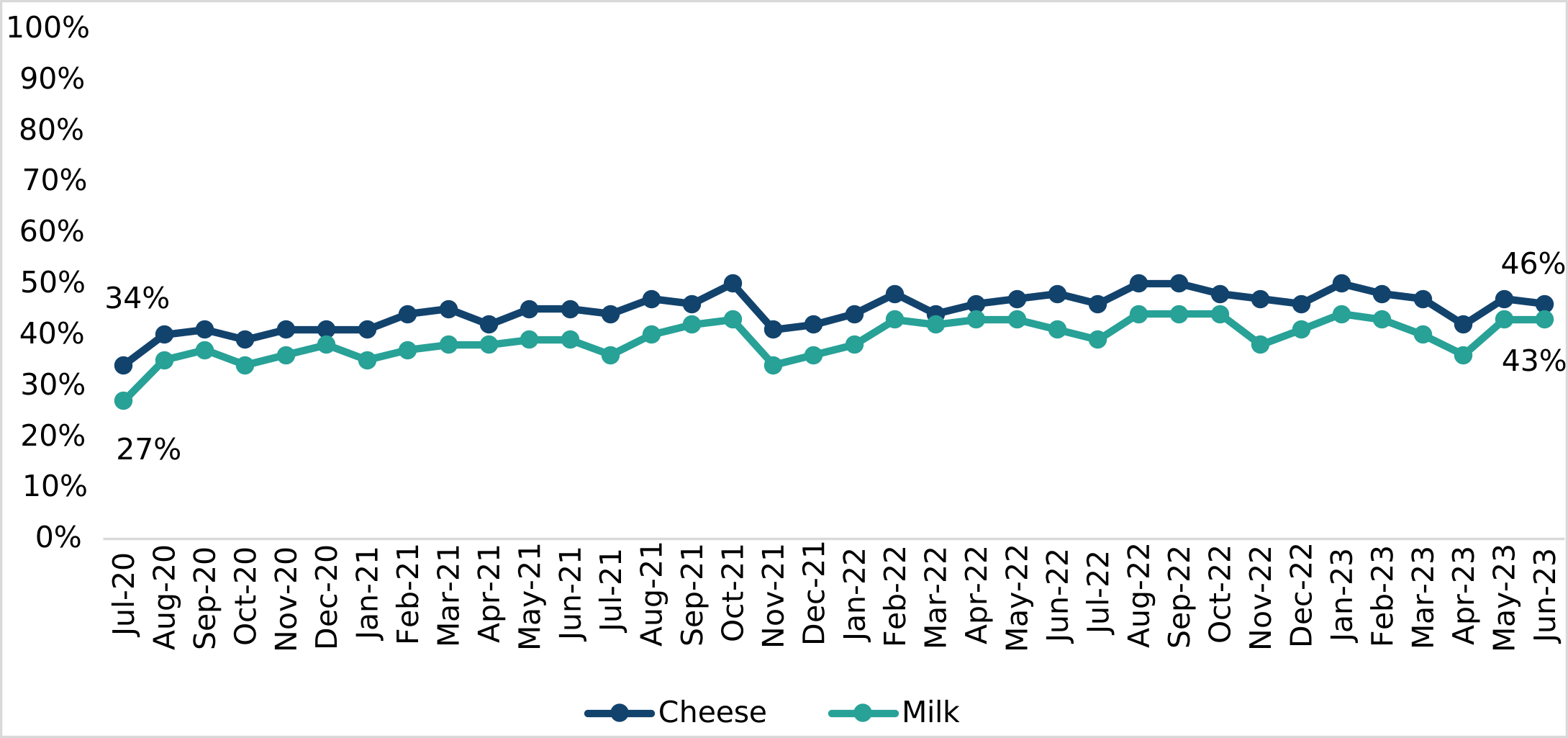
- Despite some variation month to month, between July 2020 and June 2023 there was a notable increase in the percentage of respondents reporting they had eaten the following foods past their use-by date in the past month: bagged salads (from 37% to 49%), cooked meats (29 to 40%), cheese (34% to 46%) and milk (27% to 43%). As well as a slight increase in the percentage of respondents reporting they had eaten smoked fish past its use-by date (16% to 23%).
Financially motivated changes
In Food and You 2:
- There were slight increases between Wave 6 (October 2022 to January 2023) and Wave 7 (April 2023 to July 2023) in the percentage of respondents reporting they had engaged in certain behaviours for financial reasons, for example eating food past its use-by date (12% to 21%)**, and keeping leftovers for longer before eating them (13% to 20%)**, before notably decreasing by Wave 9 (April 2024 to July 2024) (to 11% and 10% respectively).
Other changes
In Food and You 2:
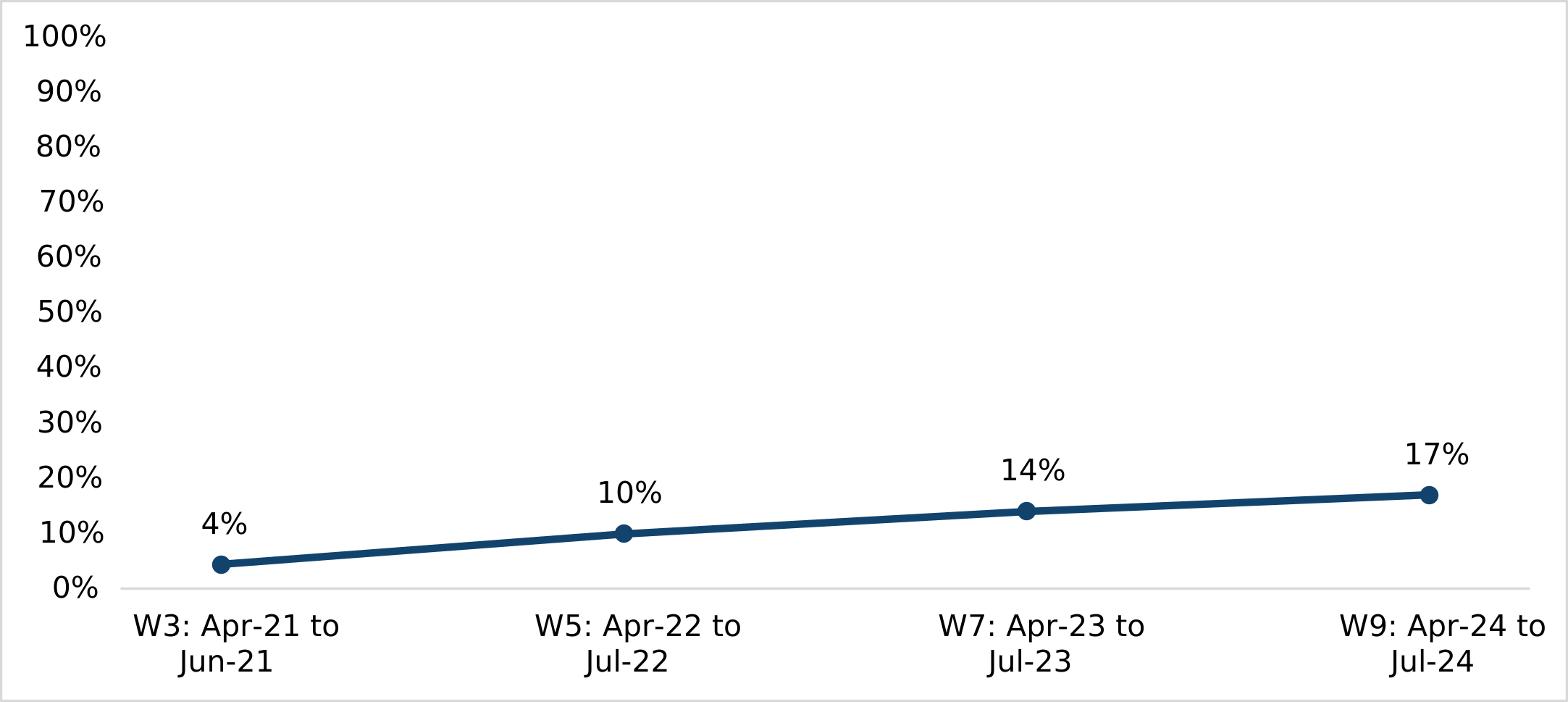
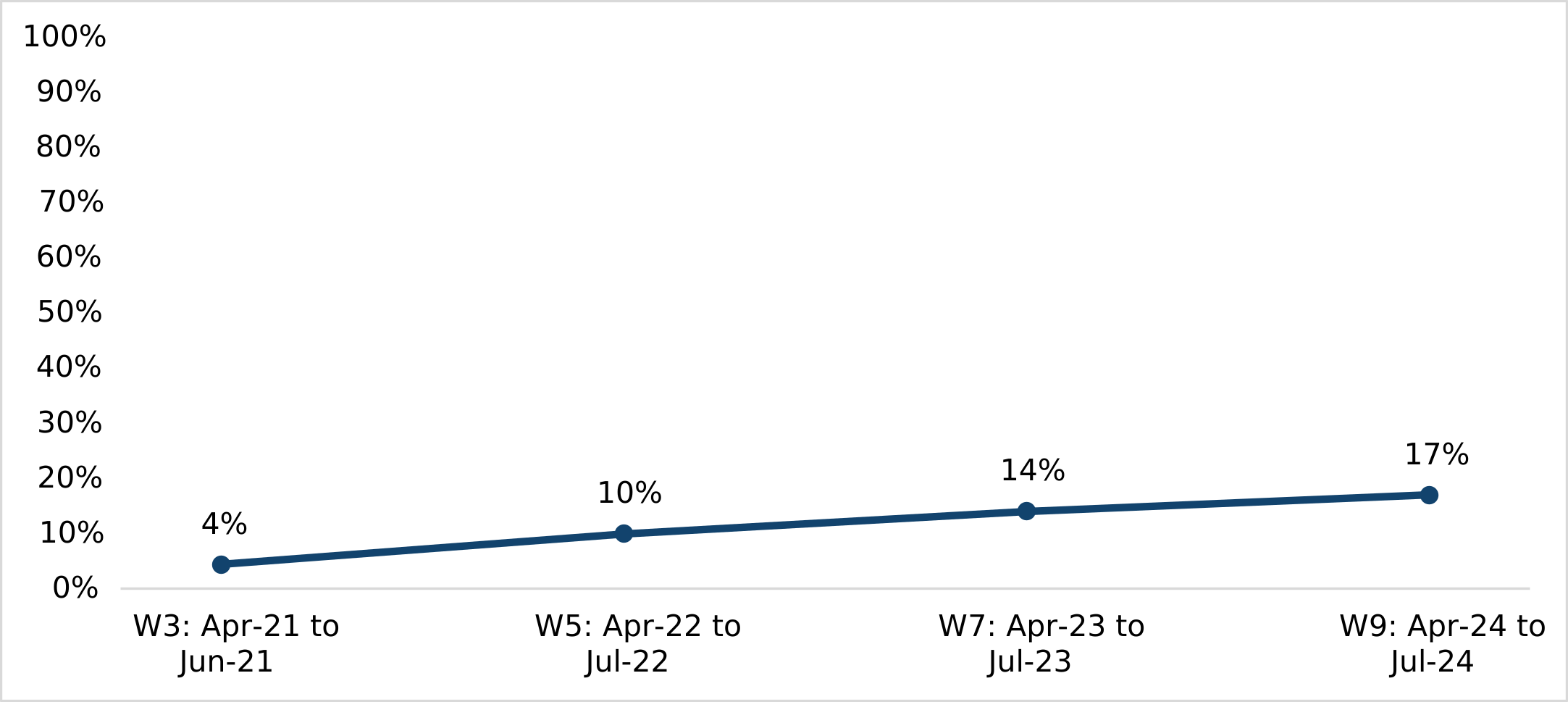
- There was a notable increase in the percentage of respondents reporting they had ordered food or drink online through a food sharing app (e.g. Too Good to Go or Olio) from 4% in Wave 3 (April to June 2021) to 17% in Wave 9 (April to July 2024).
Conclusion
Overall, most of the tracked behaviours included in this report have remained broadly stable over time, with only a small number of slight or notable shifts. Where changes are observed, for example, in some handwashing practices, intentions and behaviours related to use-by dates and leftovers and the growing use of food-sharing apps, these should be interpreted within the wider social and economic context of the period. For instance, earlier waves were conducted during the Covid-19 pandemic, and later waves coincided with the cost-of-living crisis.
Taken together, these findings support continued focused, evidence-based communications on basic food safety controls, such as handwashing, chilling, use-by dates, and continued monitoring to detect any sustained shifts in behaviours. While it is not possible to directly link changes in these behaviours to overall FBD rates, improvements in such behaviours are likely to reduce the risk of FBD. Future research could help identify which behaviours should be prioritised for strengthened messaging, for example through expert elicitation, and examine how emerging behaviours, such as handling raw pet food, may affect food safety in the home.
Introduction
The Food Standards Agency
The Food Standards Agency (FSA) is a non-ministerial government department responsible for food safety and protecting consumers’ interests in relation to food. The FSA operates across England, Wales and Northern Ireland. The FSA’s fundamental mission is ‘Food you can trust’, which means a food system in which:
-
Food is safe
-
Food is what it says it is
-
Food is healthier and more sustainable
Purpose of report
The purpose of this report is to synthesise existing data on consumer behaviours related to food safety in the home and assess whether there have been changes in these reported behaviours between 2020 and 2025. The key questions this report seeks to answer are:
-
What percentage of consumers report practising certain behaviours related to personal hygiene, cross-contamination, cooking, cleaning, chilling, use-by dates and other relevant household behaviours (including financially motivated changes)?
-
Have there been any notable changes in these behaviours between 2020 and 2025?
Part of the FSA’s interest in consumer behaviour relates to its role in the risk of foodborne disease (FBD). Everyday practices in food preparation, storage, and consumption can influence the risk of an individual experiencing FBD. A recent expert elicitation conducted by the FSA highlighted that poor food hygiene in home kitchens, riskier behaviours, and changes in consumer preferences and consumption patterns may all impact incidence of FBD (Kintz et al., 2024).
Behaviours
The behaviours included in this report were identified in part through the above expert elicitation, and supplemented by the FSA’s Foodborne Disease policy and science teams. They include behaviours related to:
-
Personal hygiene (e.g. hand washing)
-
Cross-contamination (e.g. washing chopping boards between uses, washing raw chicken, storing raw meat and poultry in the fridge correctly)
-
Cooking (e.g. heating and reheating food, consumption of less than thoroughly cooked meat and eggs)
-
Chilling (e.g. checking fridge temperatures, storing leftovers)
-
Use-by dates (e.g. checking use-by dates before cooking, eating foods past their use-by dates)
-
Financially motivated changes (e.g. changes to a range of cooking and eating behaviours for cost-saving reasons)
-
Wider changes (e.g. pet ownership, use of food sharing apps)
The report outlines the existing evidence for each behaviour, including prevalence and changes over time. The findings in the report do not establish a causal relationship between these behaviours and any incidence of FBD (see methods for more detail).
Data sources
The report primarily draws on the following previous FSA consumer research:
Food and You 2 (Waves 1 – 10, 2020-2025)
Food and You 2 is an official statistic and provides high quality, nationally representative estimates. It is a large-scale, methodologically robust survey, using random probability sampling. From 2020 to 2025 it was conducted biannually using a push-to-web methodology. Around 6,000 adults in England, Wales, and Northern Ireland participated in each wave.
Online panel surveys
These surveys provide timely insights but use online quota samples, meaning results are not strictly nationally representative and may be subject to biases, for example the exclusion of those without internet (see notes for interpretation and Annex A for further information).
-
Consumer Insights Tracker (2021 – present): A monthly online survey of around 2,000 adults tracking food-related behaviours and attitudes. Due to methodological changes (further explained in Annex A), data collected from July 2023 is not directly comparable with earlier data. Data pre-and-post July 2023 has been presented separately in this report.
-
Consumer Handwashing Tracker (2020 – 2022): A quarterly online survey of around 2,000 adults tracking self-reported handwashing behaviours during the pandemic.
-
Covid-19 Tracker (2020 – 2021): A monthly online survey of around 2,000 adults monitoring food-related attitudes and behaviours during the pandemic.
In-depth behavioural and qualitative research
These offer a rich contextual understanding of real world behaviours but are based on smaller, non-probability samples and are not designed to produce population estimates.
-
Kitchen Life 2 (2021 – 2022): A behavioural research project observing real-life food safety practices in 70 households and 31 food business kitchens using surveys, interviews, fridge/freezer thermometers and video capture.
-
Qualitative research into the consumption of food with expired ‘use-by’ dates (2021): exploring why people sometimes eat food after the use-by date, drawing on a rapid evidence review and in-depth research with 30 participants across England, Wales and Northern Ireland.
Please see Annex A for a detailed description of these key data sources. The report also incorporates data on pet ownership and feeding from the People’s Dispensary for Sick Animals (PDSA) and Office for National Statistics (ONS) to supplement the FSA’s evidence base.
Other FSA data sources not included in this report
Earlier data (pre 2020) can be found in the Food and You Waves 1 to 5 report (2010 to 2018). Although this survey contains similar questions to Food and You 2, the data is not directly comparable due to a change in survey methodology.[2] Food and You (2010 to 2018) has not been included in this report as it is outside the period of interest. The above report provides a comprehensive summary of trends from 2010 to 2018.
Context
This report focuses on data collected from 2020 to 2025. This period coincides with significant social and economic events in the UK. Earlier waves were conducted following the UK’s exit from the EU in 2020, and during the Covid-19 pandemic from 2020 to 2023. More recent waves have been conducted during the cost-of-living crisis.
The first Covid-19 national lockdown came into force in March 2020, with governments across the UK implementing a variety of measures and restrictions throughout the remainder of 2020 and the first half of 2021 (Institute for Government, 2022). This included stay-at-home orders, closure of hospitality venues, restrictions on overseas travel, and limits on social contact. The majority of restrictions were lifted in July 2021, with all remaining restrictions lifted in February 2022.
From late 2021, prices for essentials (such as food and energy) began rising faster than household incomes, marking the start of the ‘cost-of-living crisis’. Inflation hit a 41-year high of 11.1% in October 2022 (House of Commons Library, 2026b), with food and non-alcoholic drink inflation peaking at 19.1% in March 2023 (Office for National Statistics, 2026), the highest since 1977 (Office for National Statistics, 2024a). By May 2024, inflation fell to 2.0%, meeting the Bank of England’s target (Office for National Statistics, 2024b), and remained relatively stable throughout 2025 (around 3-4%). However, in 2025 households still faced a much higher cost of living compared to 2021, due to the cumulative effect of rising prices over the preceding years. Low-income households were particularly affected, with falling real-term incomes and rising material deprivation and food poverty (House of Commons Library, 2026a).
Both the pandemic and the cost-of-living crisis affected how consumers shopped for, cooked, and ate food.[3] When interpreting trends over time, it is therefore important to keep this context in mind, as these wider influences will likely have affected how some consumers behave.
Method
The research included in this report provides valuable insights into self-reported food safety behaviours in the home. While some of these behaviours are thought to influence the risk of FBD, due to the nature of the available data, no conclusions about the relationship between FBD and consumer behaviour can be drawn. Any apparent relationship between consumer behaviour and FBD rates may be entirely coincidental, even if changes occurred at the same time and in the same direction. The findings in this report should therefore be interpreted as describing changes in self-reported behaviour only; they do not establish a causal or statistical relationship with FBD. No conclusions should be drawn about whether any observed changes in behaviour have contributed to recent increases or decreases in FBD.
All differences highlighted in this report are statistically significant at the 5% level (p<0.05). For more information about the tests used and assumptions, please see Annex A. In the main findings section, the available data for each behaviour is summarised for each source. The commentary centres on the overall trend across the given tracking period, rather than each wave-to-wave difference. Small changes (less than 10%) observed between only one or two discrete waves are not highlighted unless they form part of a sustained pattern or materially affect the overall interpretation. The following descriptive conventions have been used:
-
‘Stable’, ‘comparable’ or ‘no change’ is used to describe where no statistically significant differences between waves are observed.
-
‘Broadly stable’ is used to describe patterns with no clear upward or downward trend. The first and last data points in the time series are comparable, and any statistically significant differences between intervening waves are small (less than 10 percentage points). Typically, the range is given, and waves that are significantly higher or lower are noted.
-
‘Notable’ is used to describe statistically significant differences of 10 percentage points or more.
-
‘Slight’ or ‘small’ is used to describe statistically significant differences of less than 10 percentage points. Where statistically significant differences are less than 10 percentage points, they are indicated with a double asterisk (**).
Trends are typically reported where there is comparable data for three waves or more, except for the use of chopping boards and defrosting meat, which have comparable data for two waves only. Data for all questions asked in each survey is published in the respective data tables. Further information and links are available in Annex A.
Findings are included in the key findings and summaries for each section if it is:
-
A notable change between data points of 10 percentage points or more, or
-
A small cumulative change of 5 percentage points or more across multiple waves in the same direction, or
-
A small change of 5 percentage points or more observed across multiple similar measures (for example, different types of food).
Provided that the behaviour meets at least one of the following criteria:
-
The behaviour is directly relevant to food safety.
-
The behaviour change represents a shift in relation to FSA guidance - either toward or away from safer practice.
-
The behaviour is judged to be relevant to policy or communications.
Notes for interpretation
This report draws on data collected between 2020 and 2025. Due to changes in stakeholder needs and question wording over time, the available time series data varies for different questions and behaviours. For some Food and You 2 questions, postal responses have been excluded, and findings for these questions are based on online responses only. This approach is used to maintain a consistent base and enable longer-term trend analysis. Details of the base description and size are provided throughout the report.
Figures from the different data sources are not directly comparable, even when a similar question is asked. This is due to differences in methodology and changes between question wording and/or response options.
Where appropriate, data from consumer surveys is supplemented with data from more targeted behavioural research.
Many of the findings presented in this report are drawn from self-administered surveys and should be interpreted with care. All surveys are subject to a range of potential sources of error. These include sample imbalances, and variations, in respondents’ interpretation of survey questions and response options. Furthermore, self-reported measures may be subject to biases, including:
-
Recall bias, as participants may not accurately recall details of events that happened in the past.
-
Social desirability bias, as respondents may change their answers to look better to others or feel better about themselves, meaning socially desirable behaviours (e.g. handwashing) may be overreported and socially undesirable (e.g. not handwashing) behaviours underreported (Larson, 2019).
Additionally, online surveys, such as the Consumer Insights Tracker and Consumer Handwashing Tracker, are not fully representative of the population. For instance, those who do not have internet access are excluded. Online panellists sign up and opt in to take part in these online surveys, meaning they can be more engaged in certain issues. This can make precise measures for some attitudes and behaviours difficult to obtain.
The findings presented should be interpreted within the context of the strengths and limitations for each method. Further details and links to technical reports can be found in Annex A).
Main findings
Personal hygiene
Summary
This section uses data from Food and You 2 (2020-2025), and the Consumer Handwashing Tracker (2020-2022) on self-reported hand hygiene practices. This includes handwashing methods and duration, and frequency of handwashing in key situations (such as before cooking or preparing food, before eating, after handling raw meat, and after contact with pets)[4] [5].
Key findings include:
-
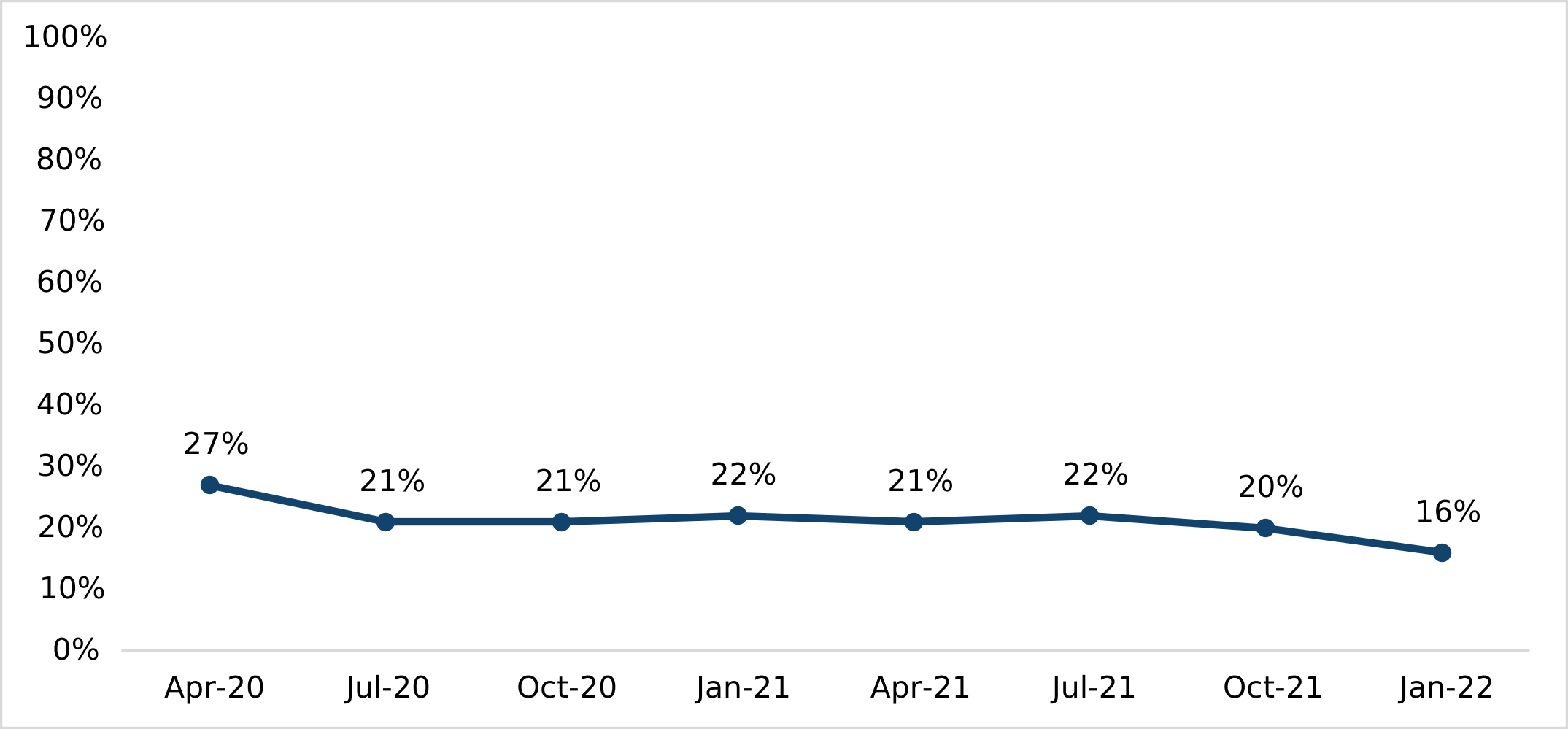
There was a notable decrease in the percentage of those who reported they always wash their hands with soap and warm water when they are at home from 27% in April 2020 to 16% in January 2022 (Consumer Handwashing Tracker)
-
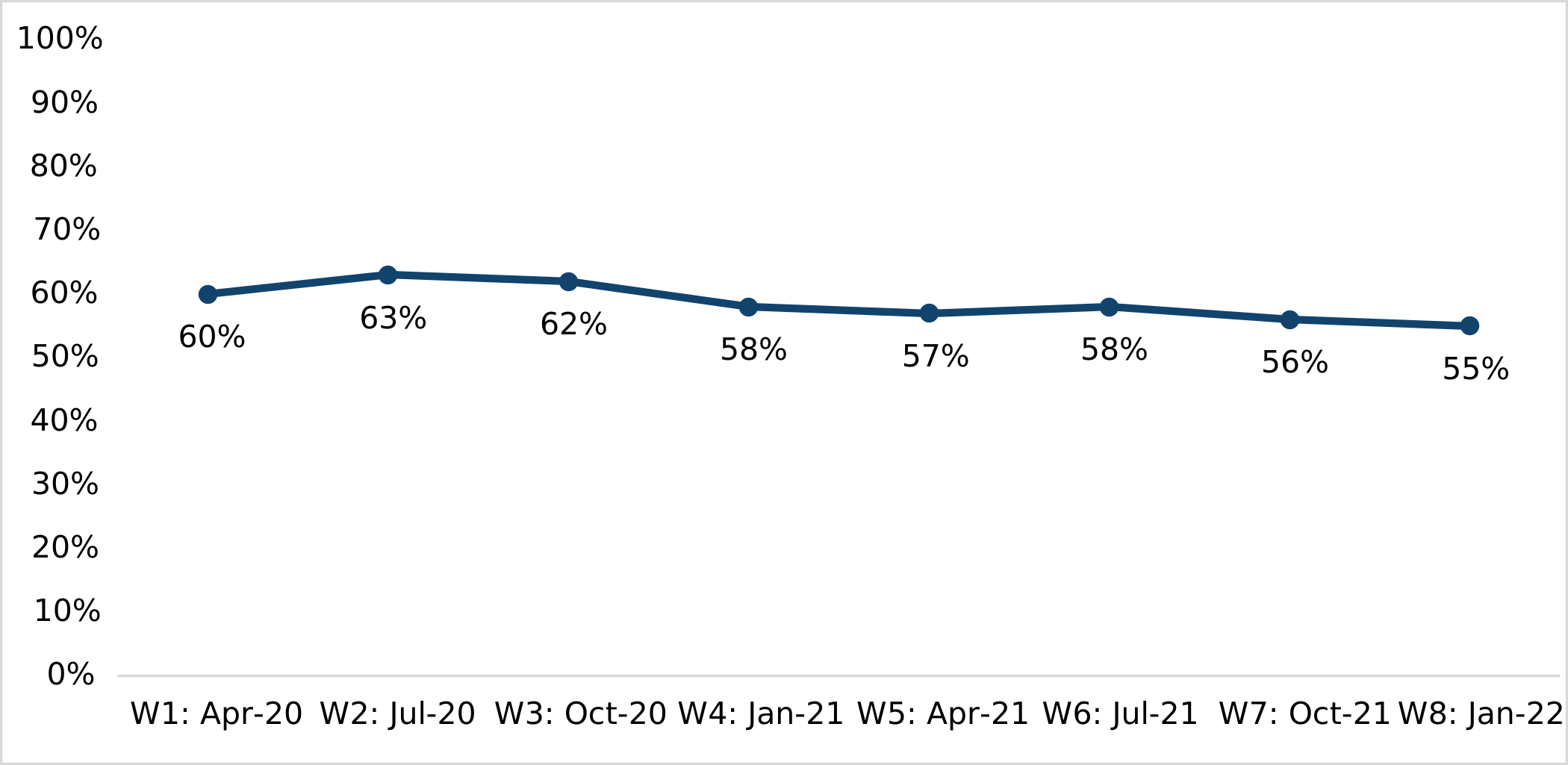
There was a slight decrease in the percentage of respondents reporting they wash their hands for at least 20 seconds between July 2020 (63%) and January 2022 (55%)** (Consumer Handwashing Tracker).
-
There was a slight decrease in the percentage of respondents who reported they always wash their hands before cooking or preparing food from 77% in Wave 1 (July 2020 to October 2020) to 68% in Wave 8 (October 2023 to January 2024)**. This increased slightly to 74% in Wave 9 (April to July 2024)**, remaining comparable in Wave 10 (October 2024 to February 2025) (72%) (Food and You 2).
-
There was a notable decrease in the percentage who reported they always wash their hands before eating from 53% in Wave 1 (July 2020 to October 2020) to 42% in Wave 8 (October 2023 to January 2024). Followed by a slight increase to 49% in Wave 9 (April to July 2024)**, remaining comparable in Wave 10 (October 2024 to February 2025) (46%) (Food and You 2).
Handwashing methods
The Consumer Handwashing Tracker indicates respondents were most likely to report washing their hands with soap and warm water, compared to other methods. However, there was a notable decrease in the percentage of those who reported they always wash their hands with soap and warm water when they are at home from 27% in April 2020 to 16% in January 2022 (Figure 1). Data is not available after January 2022, as the project concluded after that wave of fieldwork.
Time spent washing hands
The Consumer Handwashing Tracker also asked how long respondents spend washing their hands at home. There was a slight decrease in the percentage of respondents reporting they wash their hands for at least 20 seconds between July 2020 (63%) and January 2022 (55%)** (Figure 2). Data is not available after January 2022, as the project concluded after that wave of fieldwork.
Handwashing before cooking and eating
Food and You 2 asked respondents how often they washed their hands before preparing or cooking food, and before eating.
There was a slight decrease in the percentage of respondents who reported they always do this from 77% in Wave 1 (July 2020 to October 2020) to 68% in Wave 8 (October 2023 to January 2024)**. This increased slightly to 74% in Wave 9 (April to July 2024)**, remaining comparable in Wave 10 (October 2024 to February 2025) (72%) (Figure 3).[6]
Similarly, there was a notable decrease in the percentage who reported always washing their hands before eating from 53% in Wave 1 (July 2020 to October 2020) to 42% in Wave 8 (October 2023 to January 2024). Followed by a slight increase to 49% in Wave 9 (April to July 2024)**, remaining comparable in Wave 10 (October 2024 to February 2025) (46%) (Figure 3).[7]
Data collection for Waves 1 to 3 of Food and You 2 took place during the height of the COVID-19 pandemic, when public health messaging was strongly reminding people to wash their hands to stop the spread of the virus. Later waves (Waves 5 to 10) were collected after restrictions had eased. This context is useful for interpreting the trends. It is possible the higher figures in earlier waves may have been influenced by the prominence of these reminders during the pandemic, while the longer-term decrease could reflect less focus on handwashing once the pandemic was over.
Handwashing after handling raw meat
Food and You 2 also asked respondents how often they washed their hands immediately after handling raw meat, poultry or fish. Between Wave 1 (July 2020 to October 2020) (88%) and Wave 10 (October 2024 to February 2025) (89%), the percentage of respondents reporting they ‘always’ washed their hands immediately after handling raw meat, poultry or fish remained broadly stable (87% - 89%).[8]
Although the vast majority of respondents reported always washing their hands after handling raw meat, poultry or fish in the above surveys, observational data from Kitchen Life 2 indicates that handwashing with soap after touching meat, fish, or poultry was inconsistent among observed households (see box below). [9]
Handwashing after contact with pets
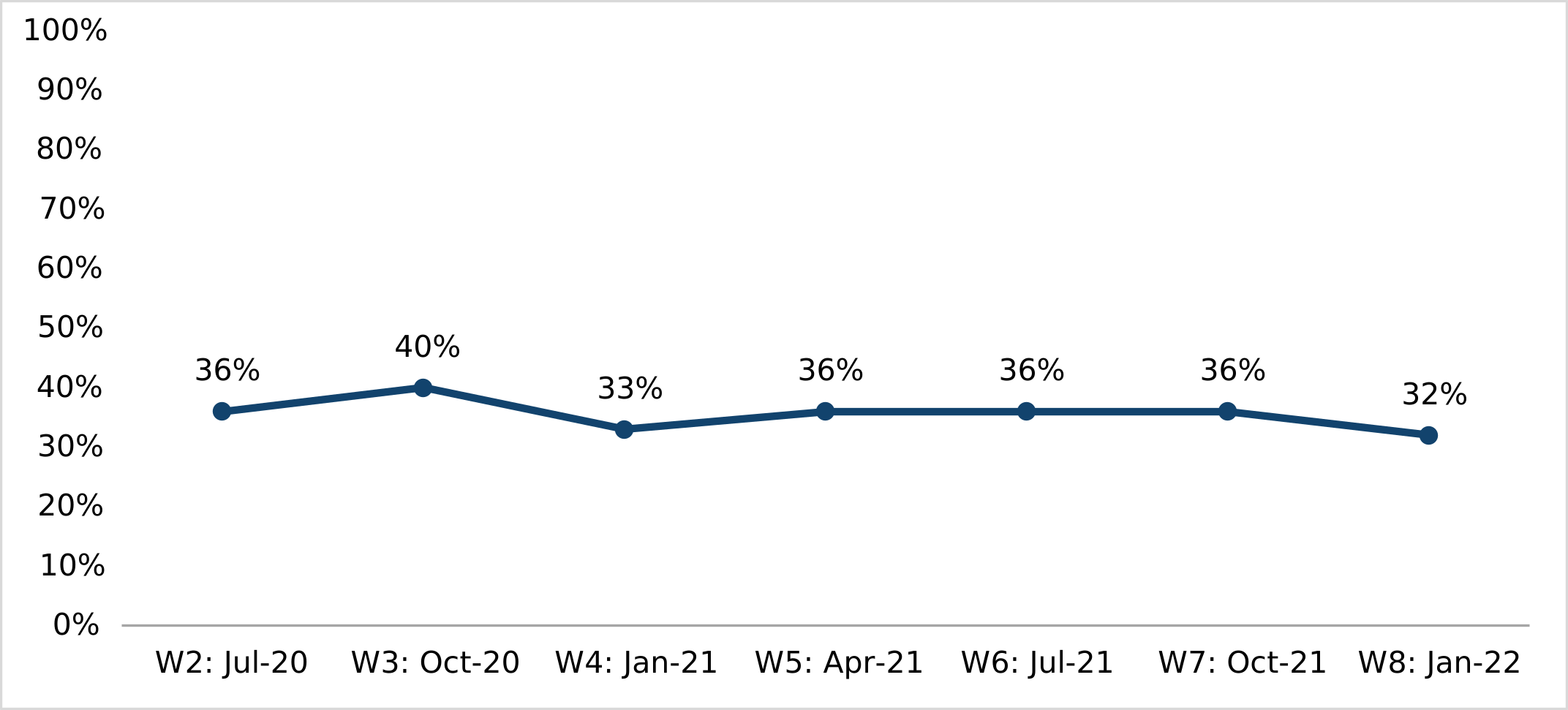
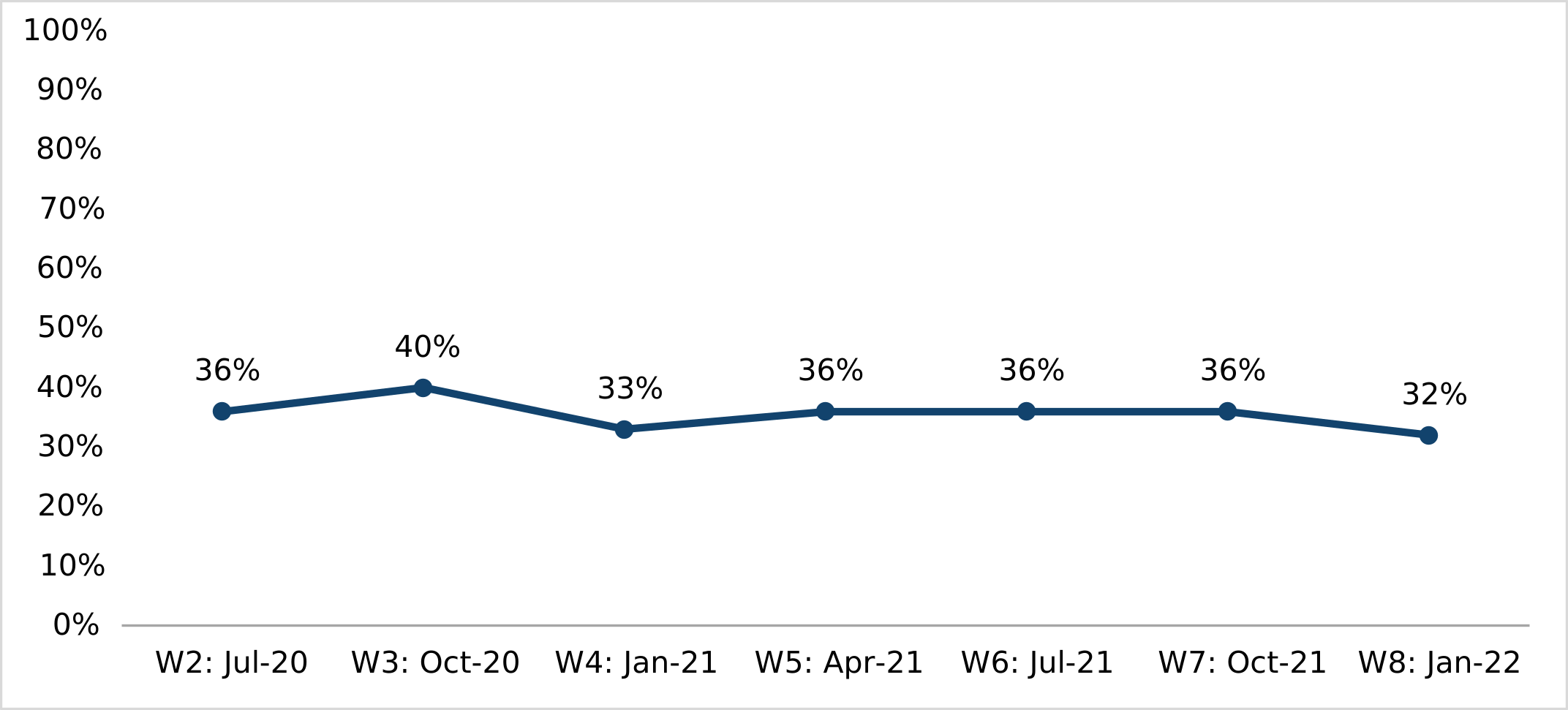
Data on handwashing after contact with pets is more limited. However, in the Consumer Handwashing Tracker, the percentage of respondents with pets who reported always washing their hands after contact with animals varied slightly over the tracking period. This was highest at 40% in October 2020 and lowest at 32% in January 2022 (Figure 4), indicating a small overall downward shift across the timeseries. Data is not available after January 2022, as the project concluded after that wave of fieldwork.
Cross contamination
Summary
This section draws on data from Food and You 2 and Kitchen Life 2 to explore behaviours relevant to cross-contamination, including the use of the same chopping boards for raw meat, fish, or poultry and other foods; washing raw chicken; and different methods used for storing of raw meat, fish, or poultry in the fridge.
Key findings include:
- Overall, there was a slight increase in the percentage of respondents reporting they stored raw meat or poultry in the fridge in a sealed container between Wave 1 (July to October 2020) (28%) and Wave 10 (October 2024 to February 2025) (36%)**. Several storage practices, including sealed containers, showed a slight dip in Wave 9 (April to July 2024) that was not sustained.
Chopping board use
In Food and You 2, respondents were asked how they typically use chopping boards when preparing a meal with raw meat. There was no change between Wave 5 (April to July 2022) (53%) and Wave 9 (April to July 2024) (54%), with the majority of respondents reporting they use a different chopping board for raw meat and other foods in both waves. Fewer than one in ten (8%-9%) reported they use the same chopping board for preparing raw meat and other foods (without washing the board).[10] Please note that comparable data is only available for this question for Wave 5 and Wave 9 of Food and You 2.
Observational data from Kitchen Life 2 shows that direct reuse of a chopping board for meat, fish or poultry (raw/cooked) and then other ready-to-eat foods was rare. However, the washing practices observed were inconsistent, and unwashed boards were frequently used as part of the worksurface, with other items (such as utensils and pans) being placed on them, increasing the risk of cross-contamination (see box below).
Washing raw chicken
In Food and You 2, there was no change in the percentage of respondents who reported washing raw chicken at least occasionally between Wave 5 (April to July 2022) (39%) and Wave 10 (October 2024 to February 2025) (39%), with around two in five (38%-40%) reporting this across all waves where this was asked.[11] Please note that comparable data is only available for this question from Wave 5 onwards.
Storing raw meat and poultry in the fridge
Food and You 2 asks how respondents store raw meat and poultry in the fridge.
Across the tracking period from Wave 1 (July to October 2020) to Wave 10 (October 2024 to February 2025), trends in how respondents reported storing raw meat and poultry in the fridge differed by practice. Although a slight decrease was observed in Wave 9 (April to July 2024) across most measures, these were short-term fluctuations rather than sustained changes (Figure 5).
For example, the percentage of respondents reporting that they stored raw meat and poultry in the fridge in its original packaging remained broadly stable (57%-64%), with a slightly lower percentage reporting this in Wave 5 (April to July 2022) (57%) and Wave 9 (April to July 2024) (56%) compared to most other waves**.
Across the full tracking period from Wave 1 to Wave 10, there was a slight increase in the percentage of respondents who reported they store raw meat and poultry in the fridge in a sealed container (from 28% to 36%)** and covered with film/foil (from 28% to 31%)**. As above, a small decrease was observed in Wave 9 for both behaviours. However, these appear to be short-term fluctuations within an overall slight upward trend.
In contrast, there was a slight decrease in the percentage who reported they store raw meat and poultry in the fridge on a plate across the full tracking period (from 14% in Wave 1 to 11% in Wave 10)**.
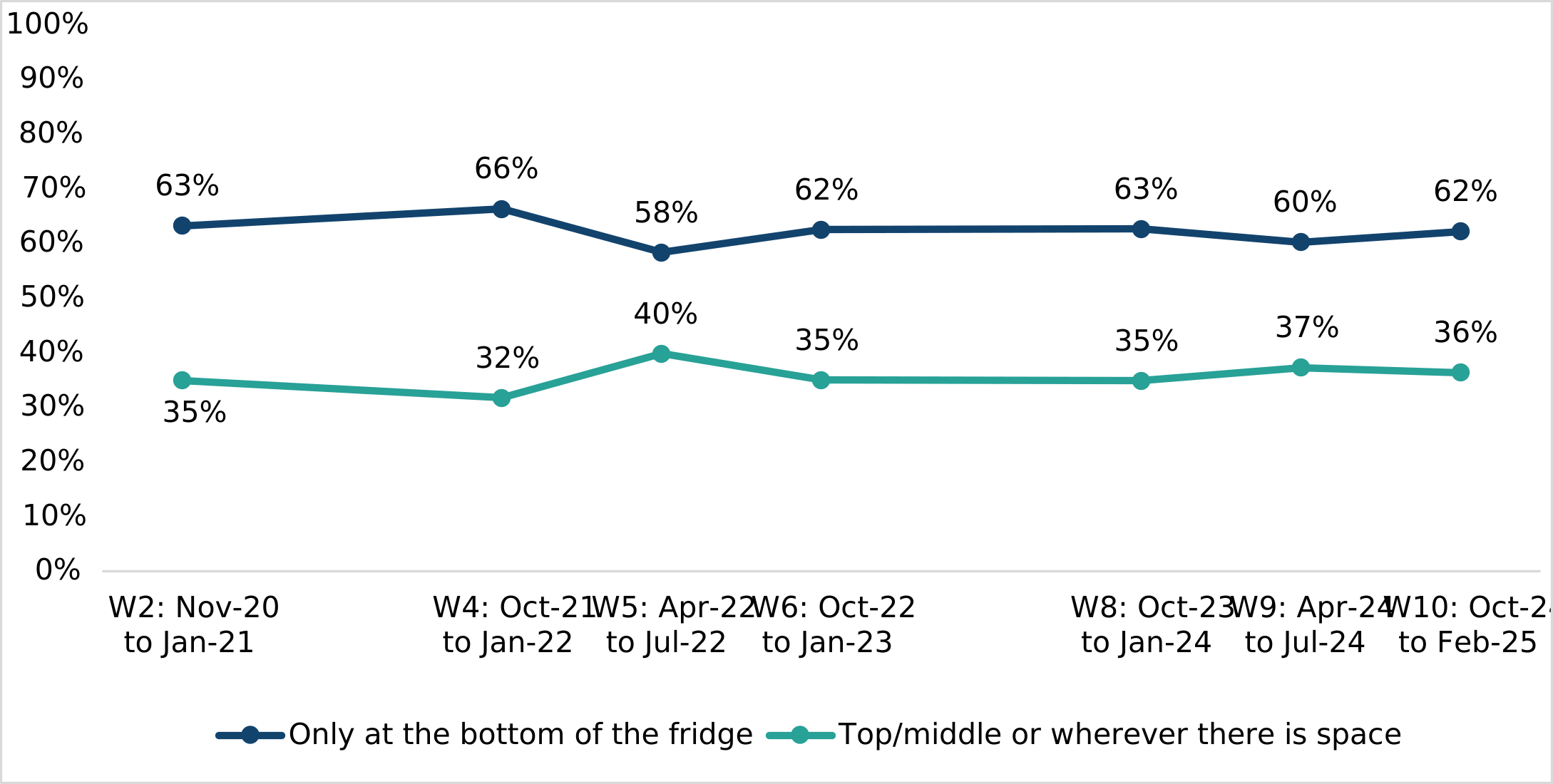
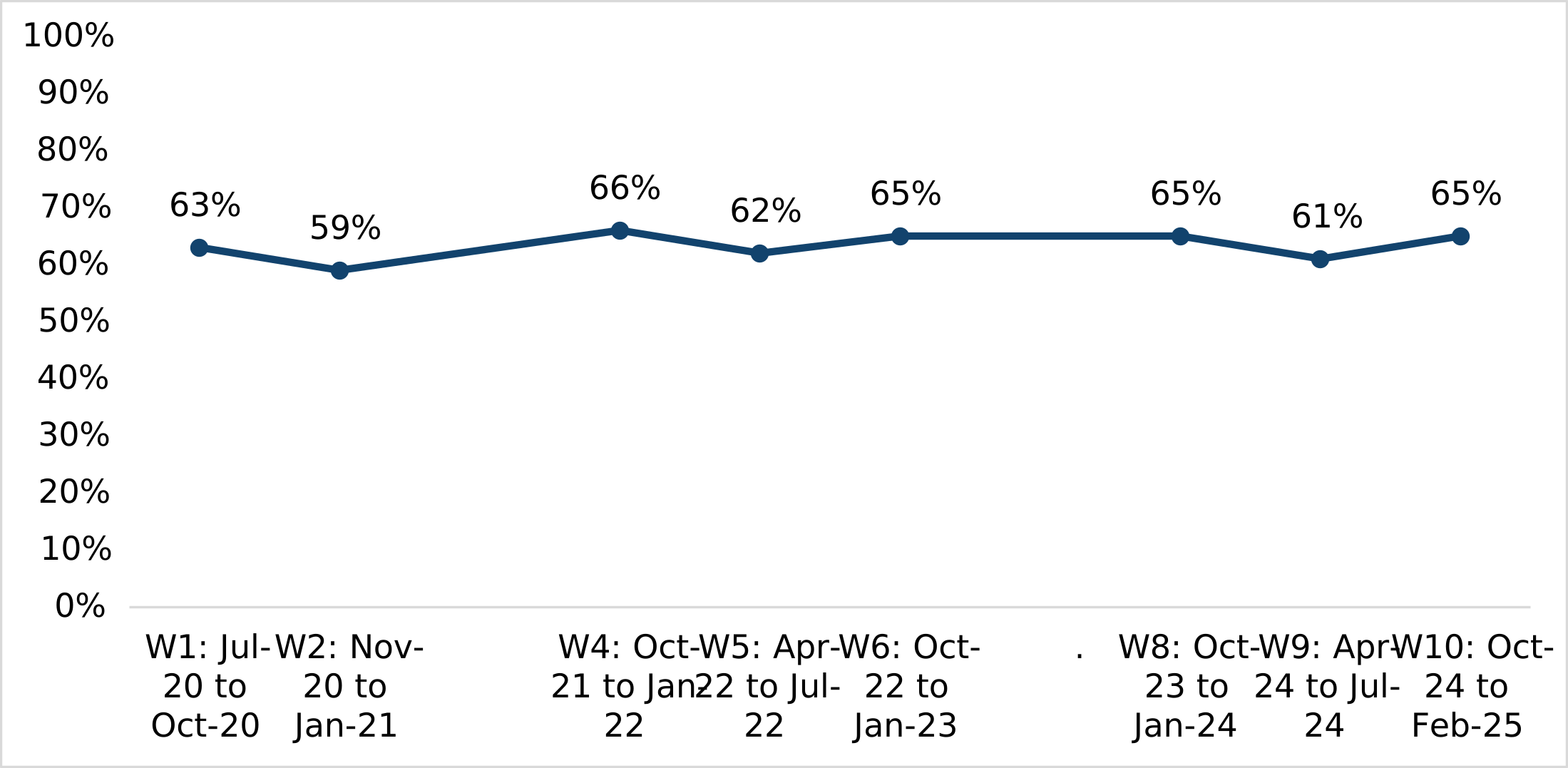
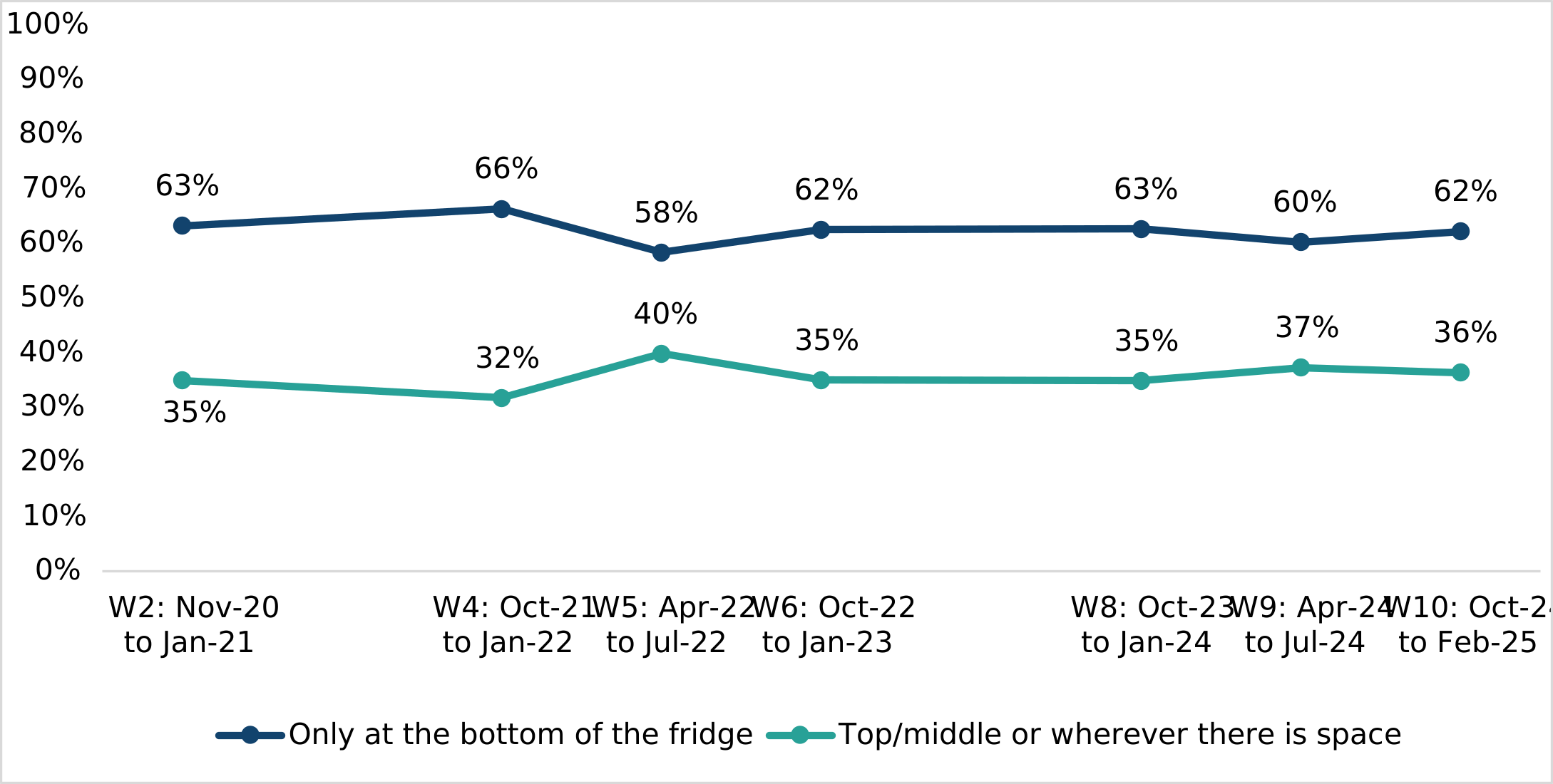
Food and You 2 also asks respondents where in the fridge they store raw meat and poultry. Between Wave 2 (November 2020 to January 2021) (63%) and Wave 10 (October 2024 to February 2025) (62%), the percentage of respondents who reported they only store raw meat and poultry at the bottom of the fridge remained broadly stable (58%-66%). A slightly greater percentage of respondents reported this in Wave 4 (October 2021 to January 2022) (66%) compared to most other waves** (Figure 6).
Cooking
Summary
In this section Food and You 2 (2020-2025) data is used to explore self-reported behaviours related to cooking and heating food, including reheating leftovers, and eating undercooked meat.
Key findings include:
- A slight decrease in the percentage of respondents who stated they never eat chicken or turkey when it is pink or has pink or red juices, from 94% in Wave 1 (July to October 2020) to 87% in Wave 10 (October 2024 to February 2025)**, although there were slight variations between waves and the overall percentage remained around nine in ten (87%-94%) (Food and You 2).
Heating food until it is steaming hot
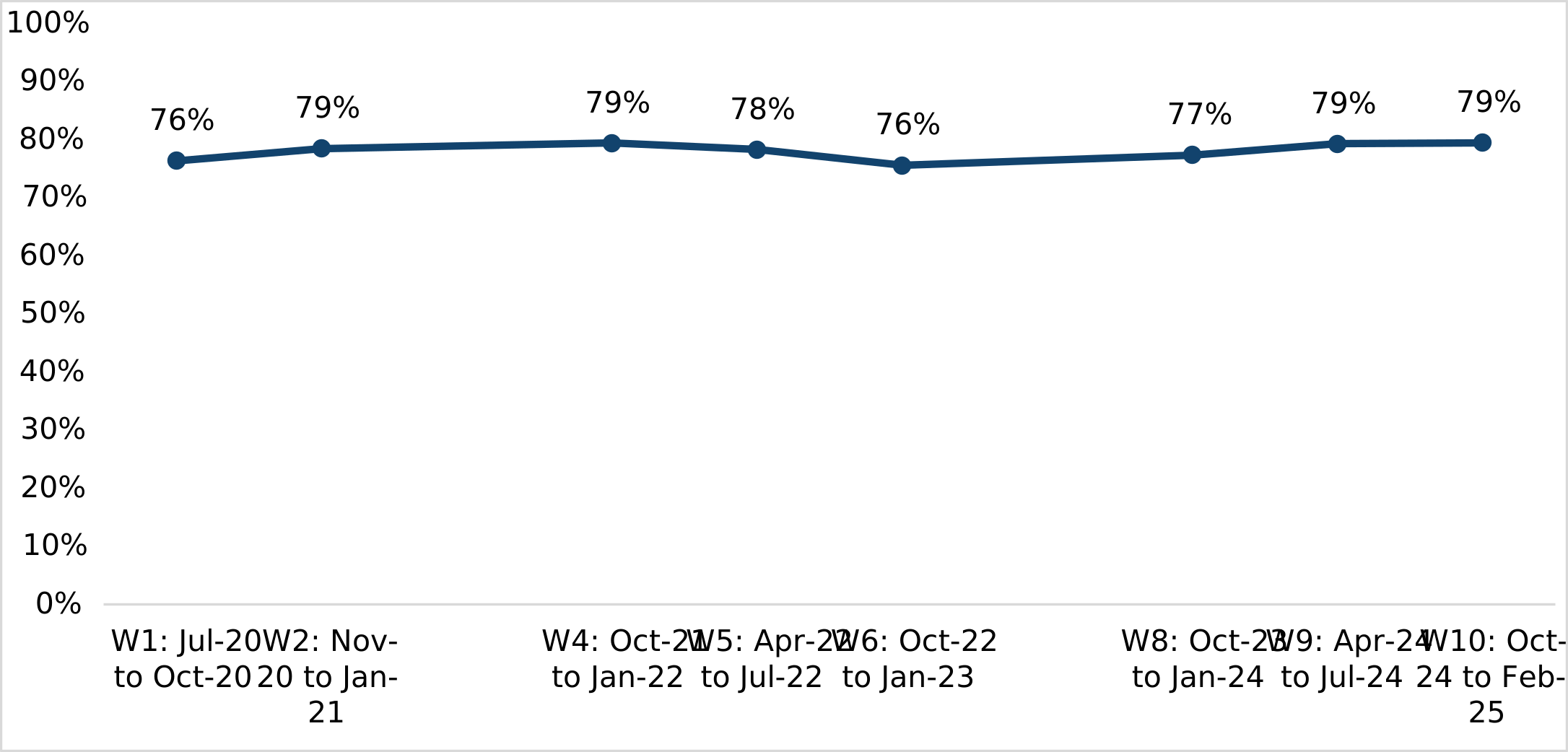
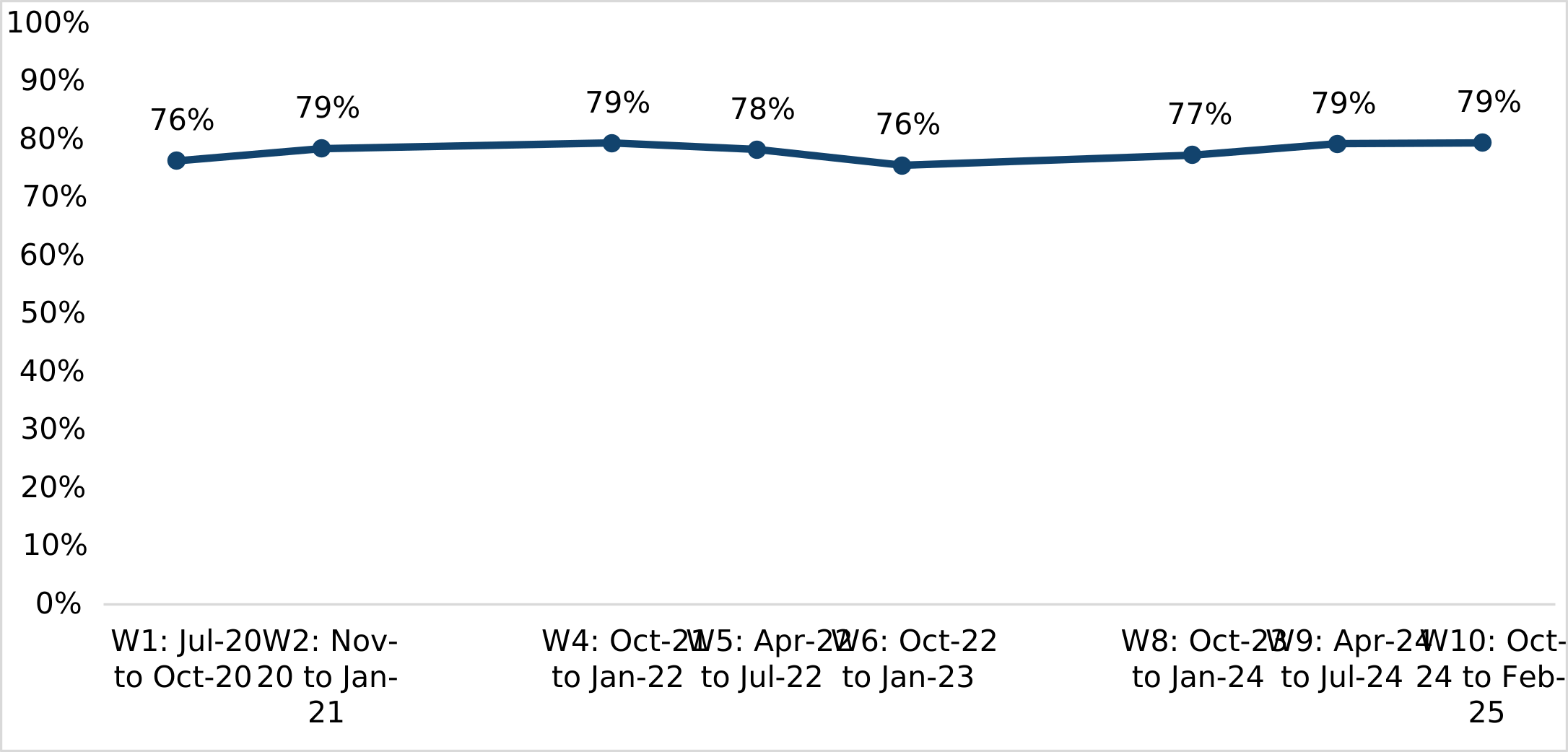
Food and You 2 respondents were asked how often they cook food until it is steaming hot and cooked all the way through. Across the full tracking period there was a slight increase in the percentage of respondents who stated they always do this from 76% in Wave 1 (July to October 2020) to 79% in Wave 10 (October 2024 to February 2025)**, although this has shown some slight variation between waves and the overall percentage remained around eight in ten (76%-79%) (Figure 7).
Reheating leftovers
Food and You 2 asked respondents how often they would consider reheating food. Between Wave 1 (July to October 2020) (83%) and Wave 10 (October 2024 to February 2025) (81%), the percentage of respondents reporting they would reheat food only once remained broadly stable. Across all waves, around eight in ten respondents (79%-83%) reported this, with a slightly lower percentage in Wave 2 (November 2020 to January 2021) and Wave 8 (October 2023 to January 2024) (both 79%)**.[12]
Undercooked meat
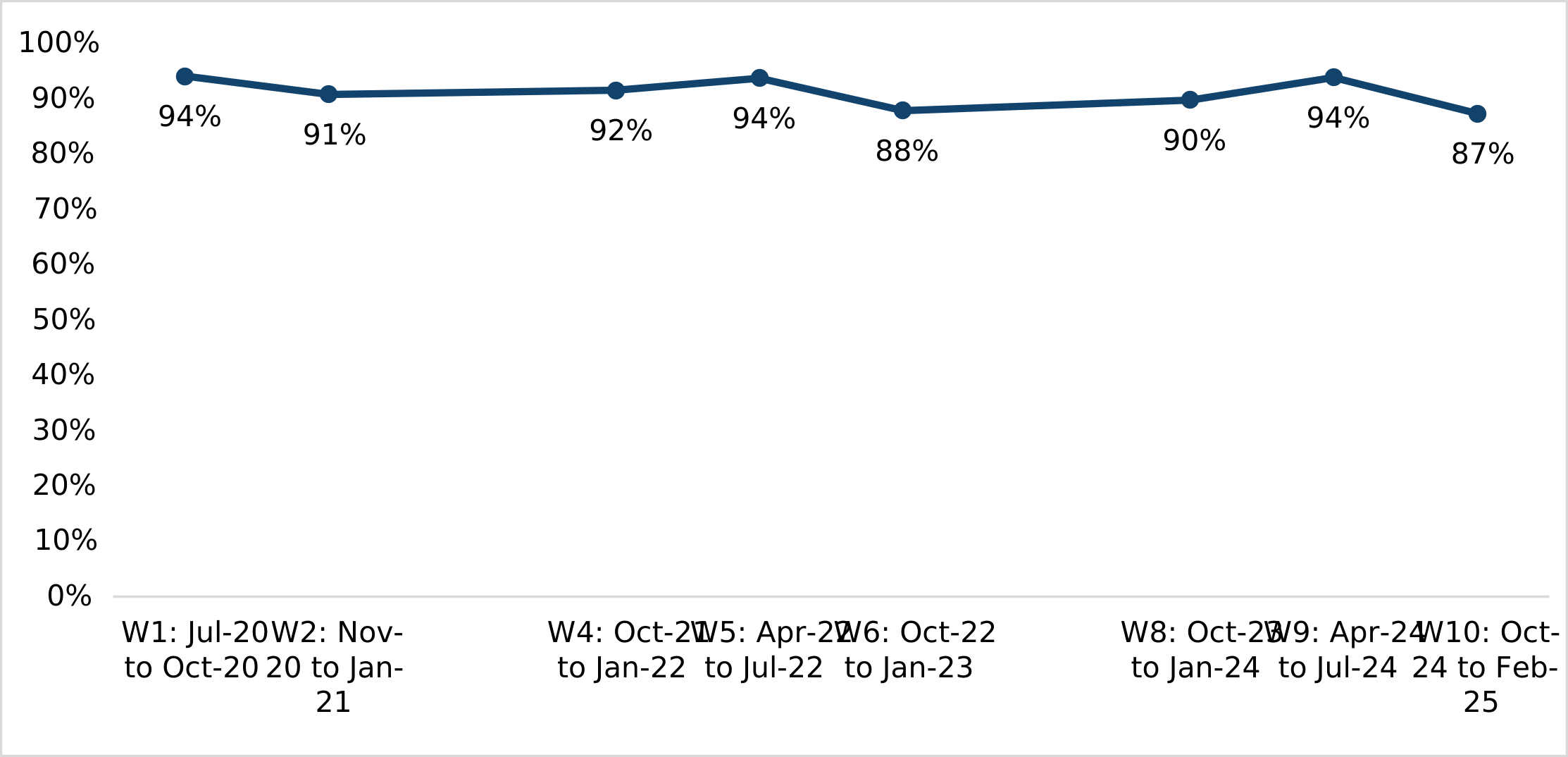
In Food and You 2, respondents were asked how often they eat chicken or turkey when it is pink or has pink or red juices. Across the full tracking period there was a slight decrease in the percentage of respondents who stated they never do this from 94% in Wave 1 (July to October 2020) to 87% in Wave 10 (October 2024 to February 2025)**, although there were small variations between waves and the overall percentage remained around nine in ten (87%-94%) (Figure 8).
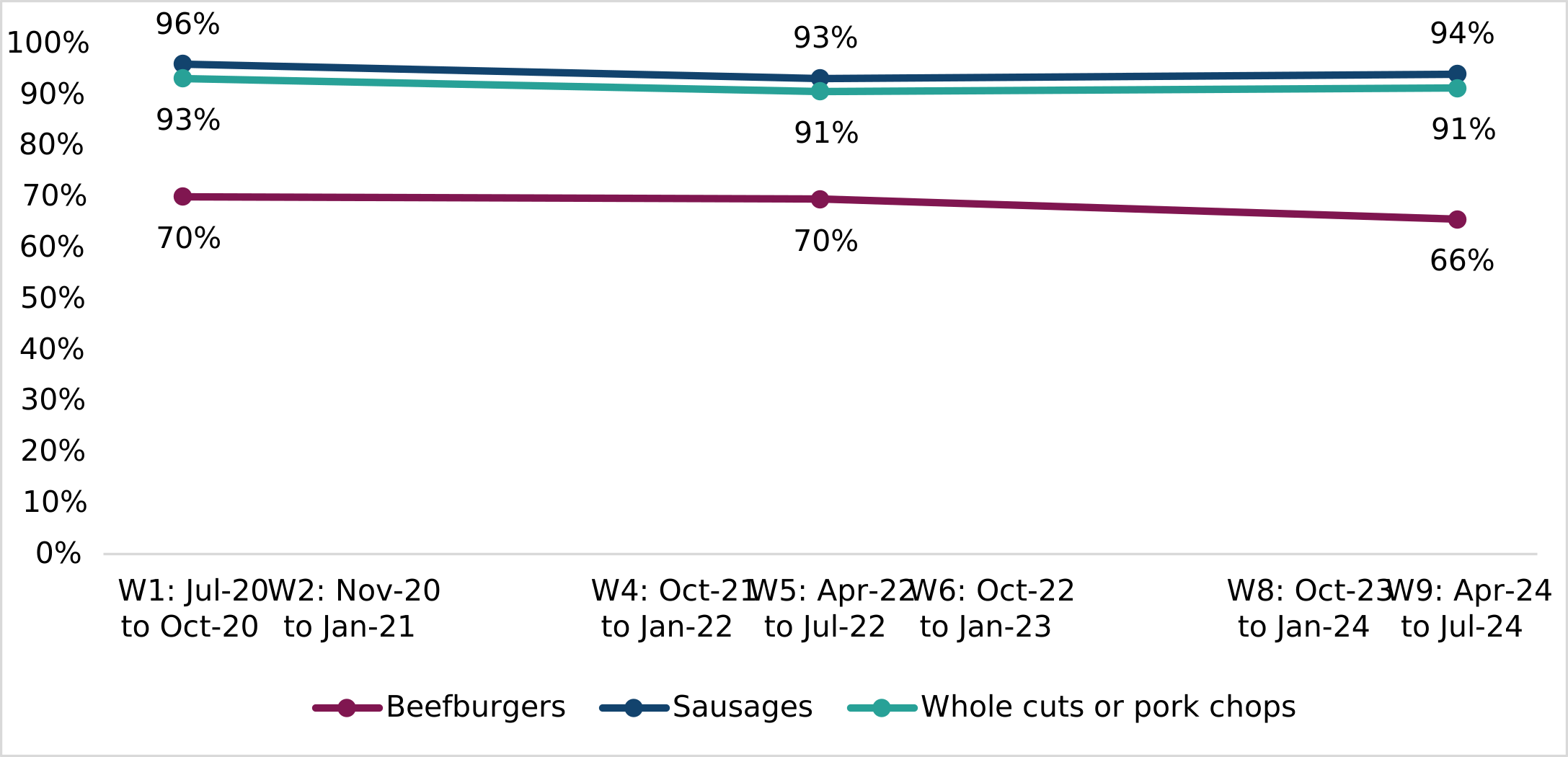
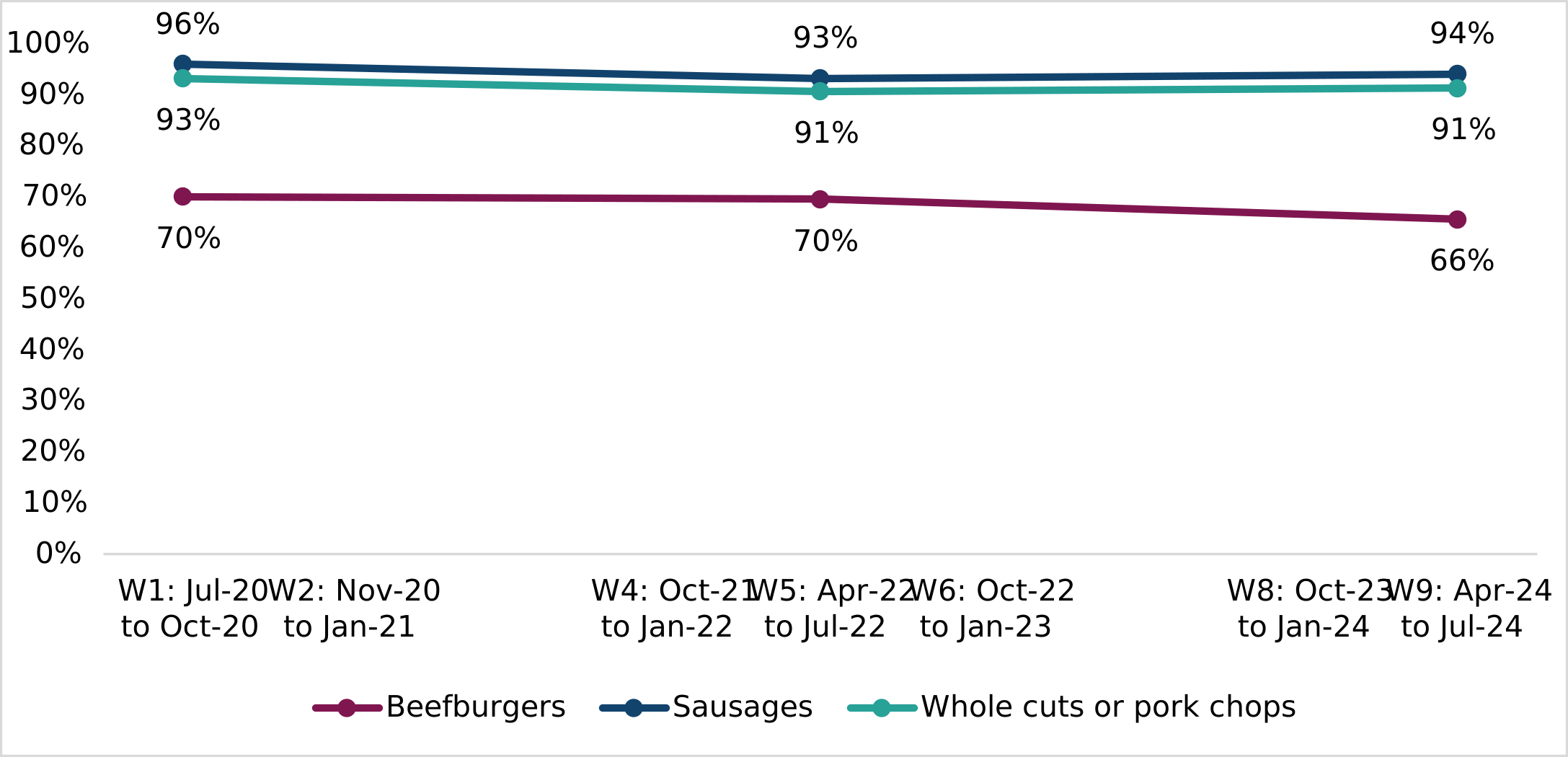
In Waves 1, 5 and 9 of Food and You 2, respondents were also asked how often they eat various other meats when they are pink or have pink or red juices. There was a slight decrease in the percentage of respondents who reported they never eat sausages when they are pink, or have pink or red juices between Wave 1 (July to October 2020) (96%) and Wave 5 (April to July 2022) (93%)**, before remaining stable in Wave 9 (April to July 2024) (94%).
Similarly, there was a slight decrease in the percentage of respondents who said they never eat whole cuts of pork or pork chops when they are pink, or have pink or red juices between Wave 1 (93%) and Wave 5 (91%)**, remaining stable in Wave 9 (91%).
The percentage of respondents who said they never eat beef burgers when the meat is pink, or has pink or red juices, remained stable at 70% between Waves 1 and 5, before slightly decreasing to 66% in Wave 9** (Figure 9).
Chilling
Summary
This section draws on data from Food and You 2 and Kitchen Life 2 to explore self-reported and observed behaviours related to cooling, storing and defrosting food safely.
While some small changes were observed in these behaviours across the time series, none met the criteria for inclusion as key findings. They did not represent notable changes of 10 percentage points or more, cumulative shifts of at least 5 percentage points across multiple waves, or consistent changes across similar measures (see method section).
Fridge temperature
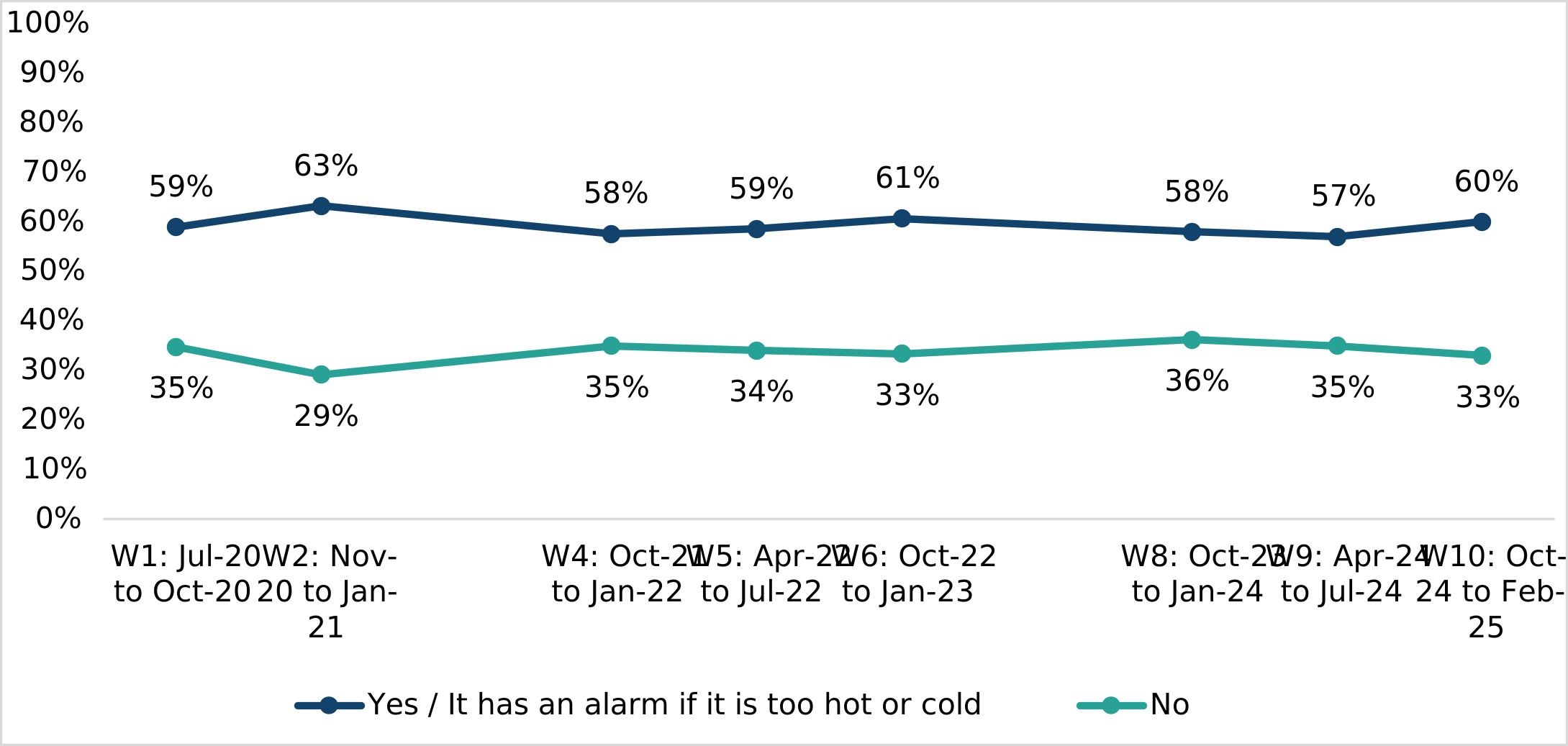
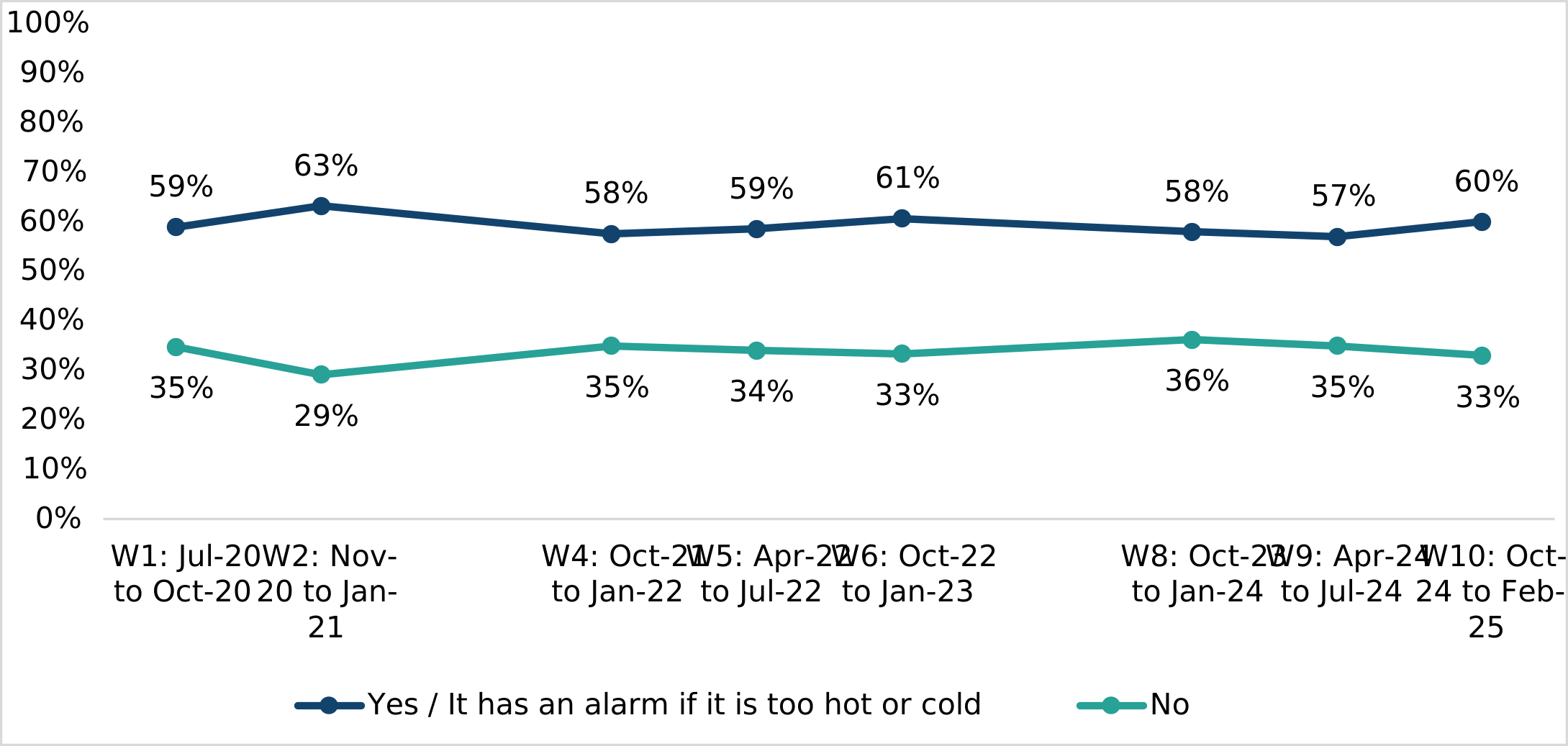
Between Wave 1 (July to October 2020) and Wave 10 (October 2024 to February 2025) of Food and You 2, the percentage of respondents who said they, or someone in their household, ever checks the temperature of their fridge or does not need to as it has an alarm remained broadly stable (57%-63%), with a slightly higher percentage reporting this in Wave 2 (November 2020 to January 2021) (63%) compared to other waves** (Figure 10).
Food and You 2 respondents were also asked what temperature they think the inside of a fridge should be. Between Wave 1 (July to October 2020) (62%) and Wave 10 (October 2024 to February 2025) (60%), the percentage of respondents who reported the temperature of the inside of a fridge should be between 0 and 5 degrees Celsius remained broadly stable (59%-62%).[13]
Although many respondents in Food and You 2 knew what the correct temperature of their fridge should be, observational data from Kitchen Life 2 found that many observed households had fridges with an average temperature above 5°C (see box below).
Storing leftovers
In Food and You 2, respondents were asked about behaviours related to storing and consuming leftovers.
There was no change in the percentage of respondents who reported putting leftovers in the fridge or freezer within one to two hours of cooking between Wave 1 (July to October 2020) (41%) and Wave 9 (April to July 2024) (42%). Around two in five reported doing this (41%–42%) in each wave this was asked.[15]
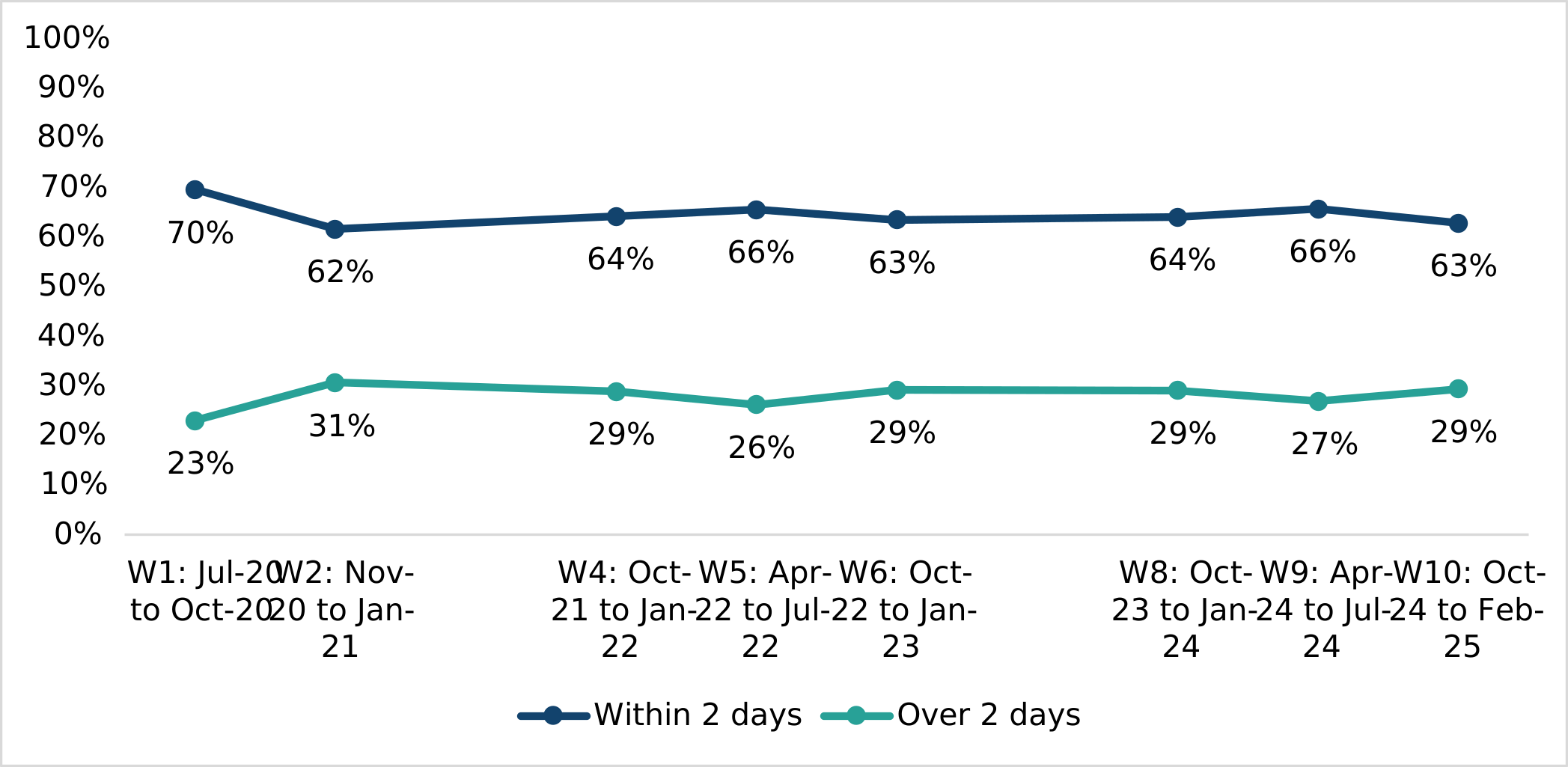
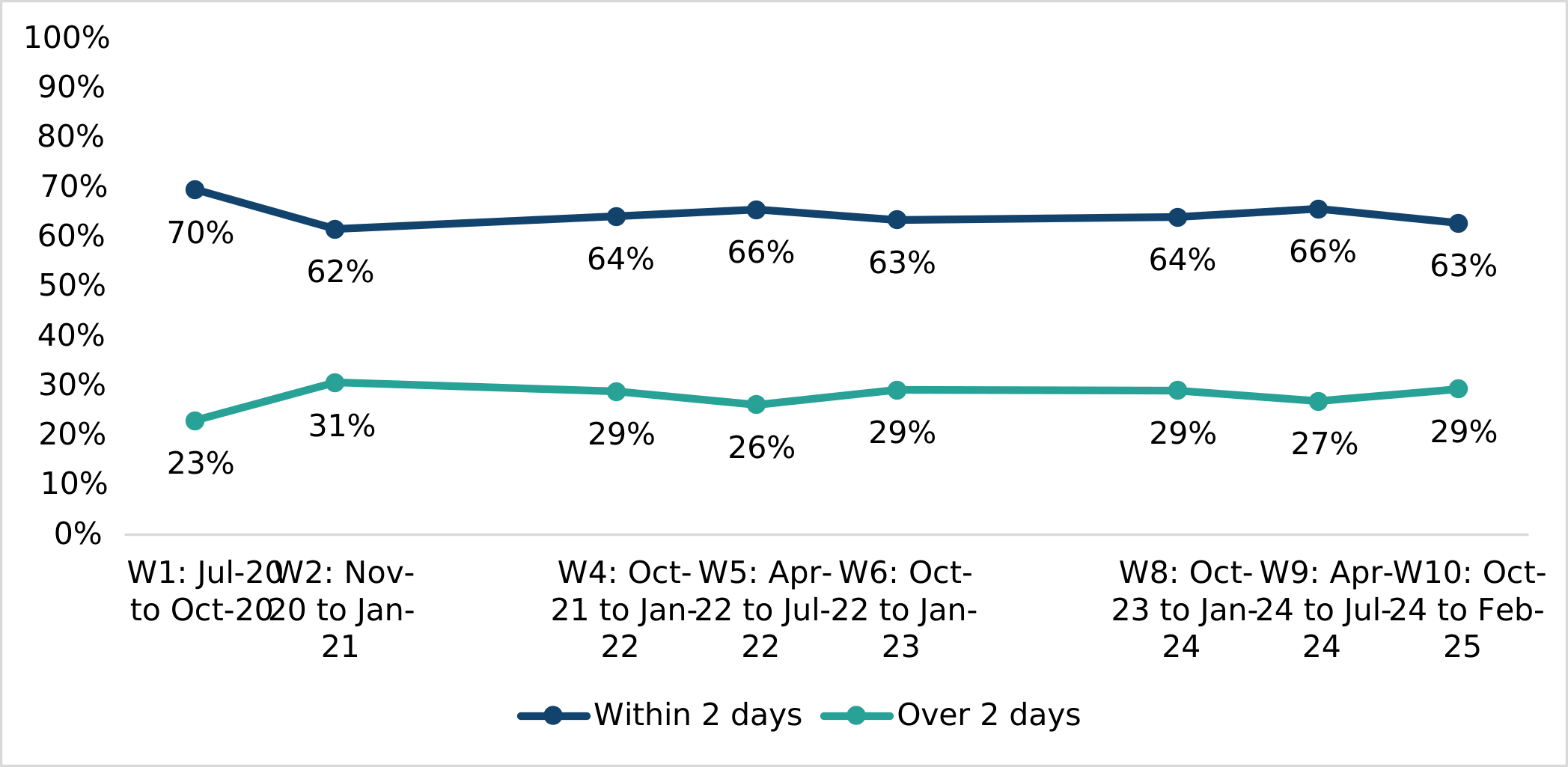
Most respondents reported the latest they would consume leftovers stored in the fridge was within two days (62%-70%). There was a slight increase in the percentage of respondents reporting they would eat leftovers after more than two days from 23% in Wave 1 (July to October 2020) to 31% in Wave 2 (November 2020 to January 2021)**. Since then, between Wave 2 (31%) and Wave 10 (October 2024 to February 2025) (29%), the percentage reporting this has remained broadly stable (26%-31%) (Figure 11).
Defrosting meat
In Food and You 2, respondents were asked how they typically defrost frozen meat or fish. The percentage of respondents reporting they typically leave meat or fish to defrost at room temperature remained comparable between Wave 5 (April to July 2022) (45%) and Wave 9 (April to July 2024) (41%)[16]. Please note that earlier comparable data is not available for this question.
Use-by dates
Summary
This section includes Food and You 2 (2020-2025) and Consumer Insights Tracker (2020-2023) data related to checking use-by-dates before cooking, and eating foods past their use-by-date. This is supplemented with insights from a behavioural study carried out by the FSA, which explored why consumers may engage in this risky behaviour.
Key findings include:
-
Despite some variation month to month, between July 2020 and June 2023 there was a notable increase in the percentage of respondents reporting they had eaten the following foods past their use-by-date in the past month: bagged salads (from 37% to 49%), cooked meats (29 to 40%), cheese (34% to 46%) and milk (27% to 43%). There was also a slight increase in the percentage of respondents reporting they had eaten smoked fish past its use-by date (16% to 23%)** (Consumer Insights Tracker).
-
There was a slight decrease between Wave 4 (October 2021 to January 2022) and Wave 6 (October 2022 to January 2023) in the percentage reporting they would not eat certain foods after their use-by-date. This included raw meat (56% to 50%), cooked meat (42% to 36%), smoked fish (53% to 46%), shellfish (77% to 69%), any other fish (68% to 60%), milk (44% to 36%) and yoghurt (38% to 33%)**. By Wave 10 (October 2024 to February 2025), most figures returned to levels comparable with Wave 4. However, for some foods, such as milk, the small decrease was sustained over time (44% in Wave 4 to 38% in Wave 10)** (Food and You 2).
Checking use-by-dates before cooking or preparing food
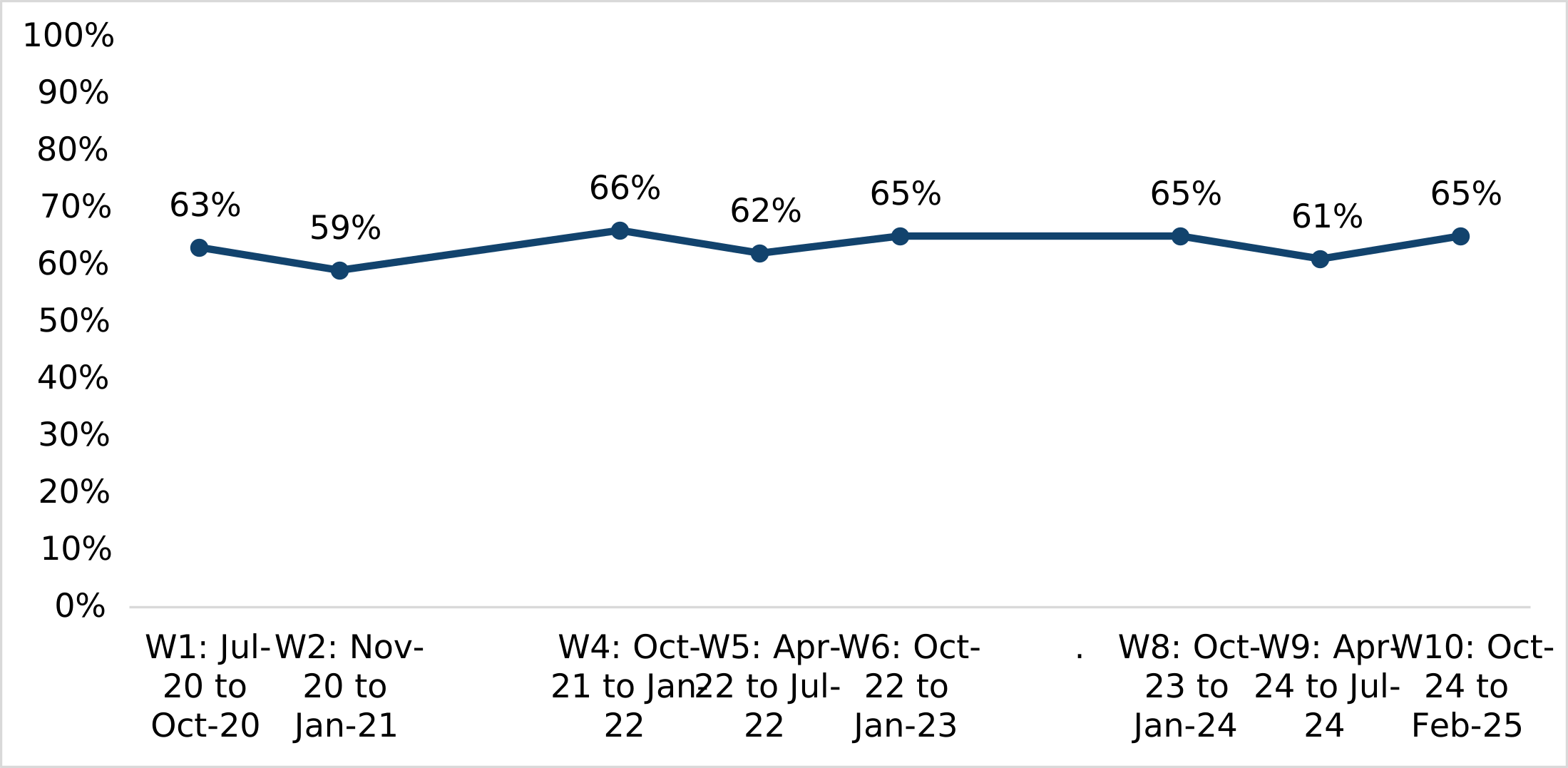
In Food and You 2, respondents were asked how often they check use-by-dates when they are about to cook or prepare food. Between Wave 1 (July 2020 to October 2020) (63%) and Wave 10 (October 2024 to February 2025) (65%), the percentage of respondents reporting they always do this remained broadly stable (59%-66%), with a slightly lower percentage in Wave 2 (November 2020 to January 2021) (59%) and Wave 9 (April to July 2024) (61%) compared to most other waves** (Figure 12).
Eating food past its use-by date
Both Food and You 2 and the Consumer Insights Tracker ask about consumer behaviours regarding eating food past its use-by-date. The Consumer Insights Tracker explored self-reported behaviours by asking respondents if they had consumed specific foods after their use-by date in the previous month. In contrast, Food and You 2 explores respondents’ willingness to eat certain foods beyond their use-by date, rather than their recent behaviours.
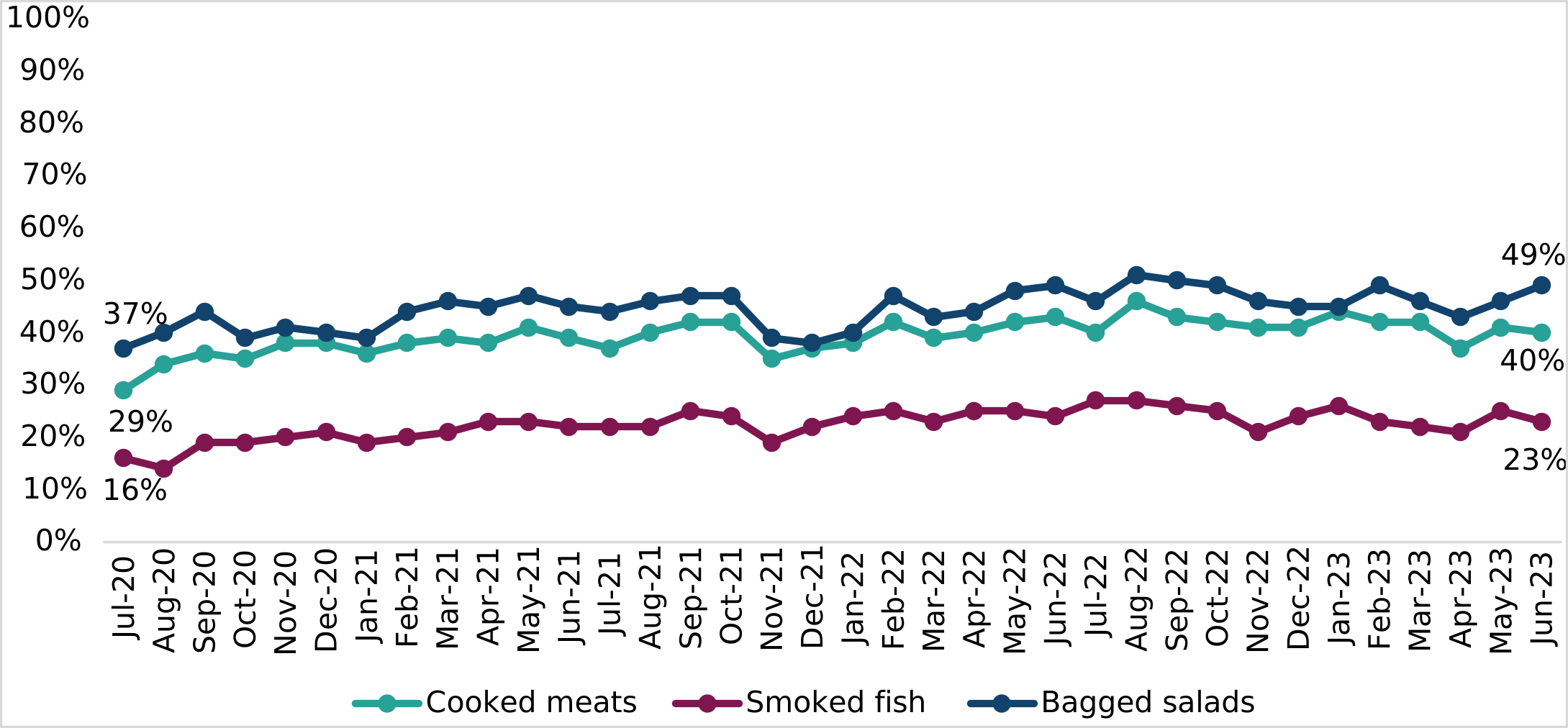
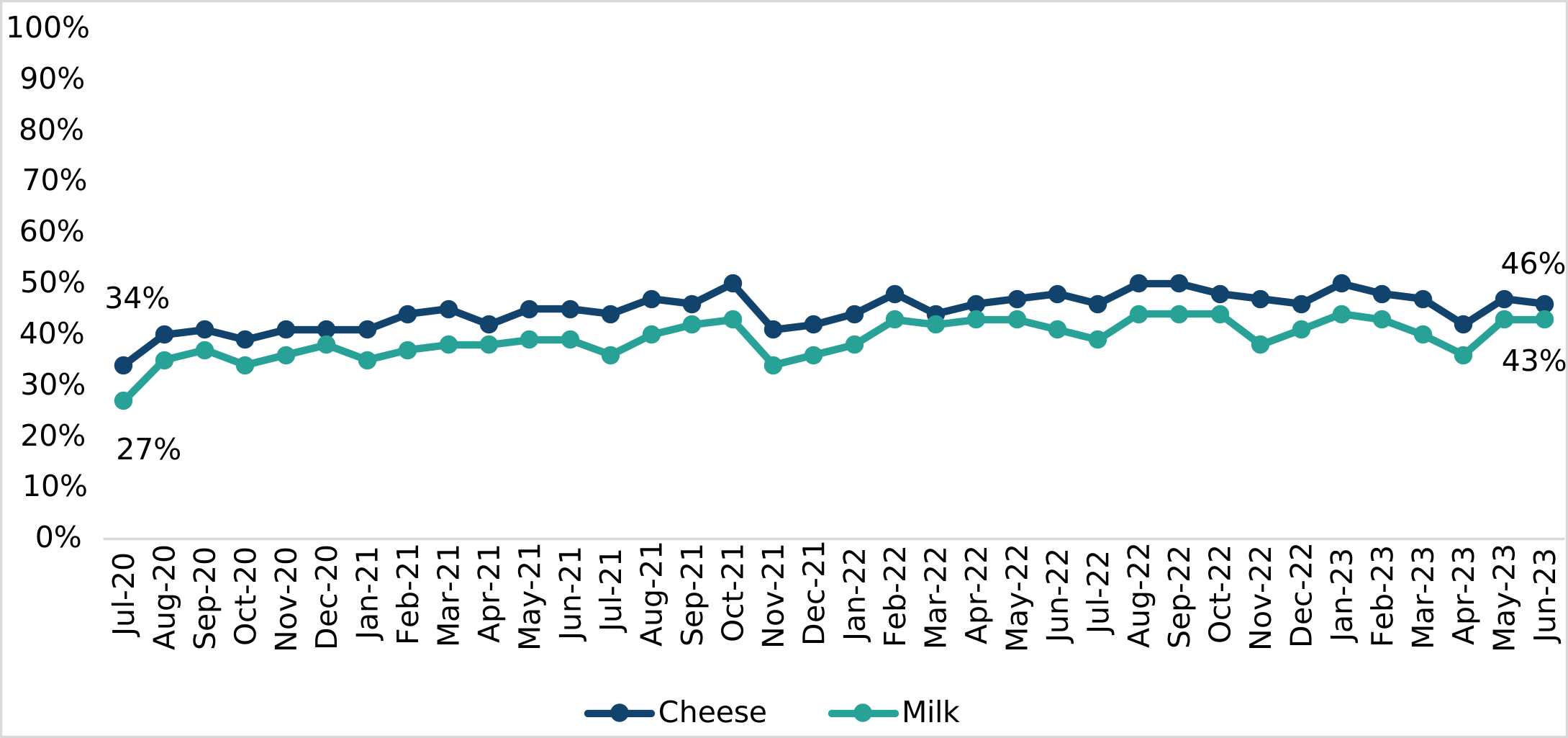
Despite some variation month-to-month, the Consumer Insights Tracker suggests an overall increase across the tracking period (July 2020 to June 2023) in the percentage of respondents reporting they, or someone in their family, had eaten a range of foods past their use-by date in the past month. This included a notable increase for bagged salads (from 37% to 49%), cooked meats (29% to 40%), cheese (34% to 46%) and milk (27% to 43%). There was also a slight increase for smoked fish (from 16% to 23%)** (Figures 13 and 14).
In Food and You 2, there was a slight decrease between Wave 4 (October 2021 to January 2022)[17] and Wave 6 (October 2022 to January 2023) in the percentage reporting they would not be willing to eat a range of foods after their use-by date. This included raw meat (from 56% to 50%), cooked meat (42% to 36%), smoked fish (53% to 46%), shellfish (77% to 69%), any other fish (68% to 60%), bagged salads (28% to 25%), milk (44% to 36%) and yoghurt (38% to 33%)** (Figures 15 and 16).
From Wave 8 (October 2023 to January 2024) through to Wave 10 (October 2024 to February 2025), the percentage reporting they would not consume most of these foods after their use-by date returned to figures comparable with Wave 4. However, the percentage reporting they would not consume yoghurt, milk and shellfish after their use-by date remained slightly lower in Wave 10 than in Wave 4, indicating a slight downward trend for these foods over the full tracking period** (Figures 15 and 16).
Behavioural research suggests a range of reasons individuals may consume food after its use-by date, including confusion about date labels, reliance on sensory checks and past experiences, as well as concerns about food waste and cost (see box below).
Changes in cooking and eating behaviours for financial reasons
Summary
This section explores self-reported changes to cooking and eating behaviours for financial reasons[18], drawing on data from Food and You 2 (from 2020-2023) and more recently the Consumer Insights Tracker (from 2023-2025).
Key findings include:
- Slight increases between Wave 6 (October 2022 to January 2023) and Wave 7 (April 2023 to July 2023) in the percentage of respondents reporting they had engaged in certain behaviours for financial reasons, for example eating food past its use-by date (12% to 21%)**, keeping leftovers for longer before eating them (13% to 20%)**, before notably decreasing by Wave 9 (April 2024 to July 2024) (to 11% and 10% respectively).
Eating food past its use-by date
Food and You 2 respondents were asked if they had eaten more food past its use-by date, for financial reasons, in the last 12 months. The percentage of respondents reporting they had done this increased slightly from 12% in Wave 6 (October 2022 to January 2023) to 21% in Wave 7 (April 2023 to July 2023)**, before notably decreasing to 11% by Wave 9 (April 2024 to July 2024)[19]. Please note this question was not asked in any other waves so comparable data is not available.
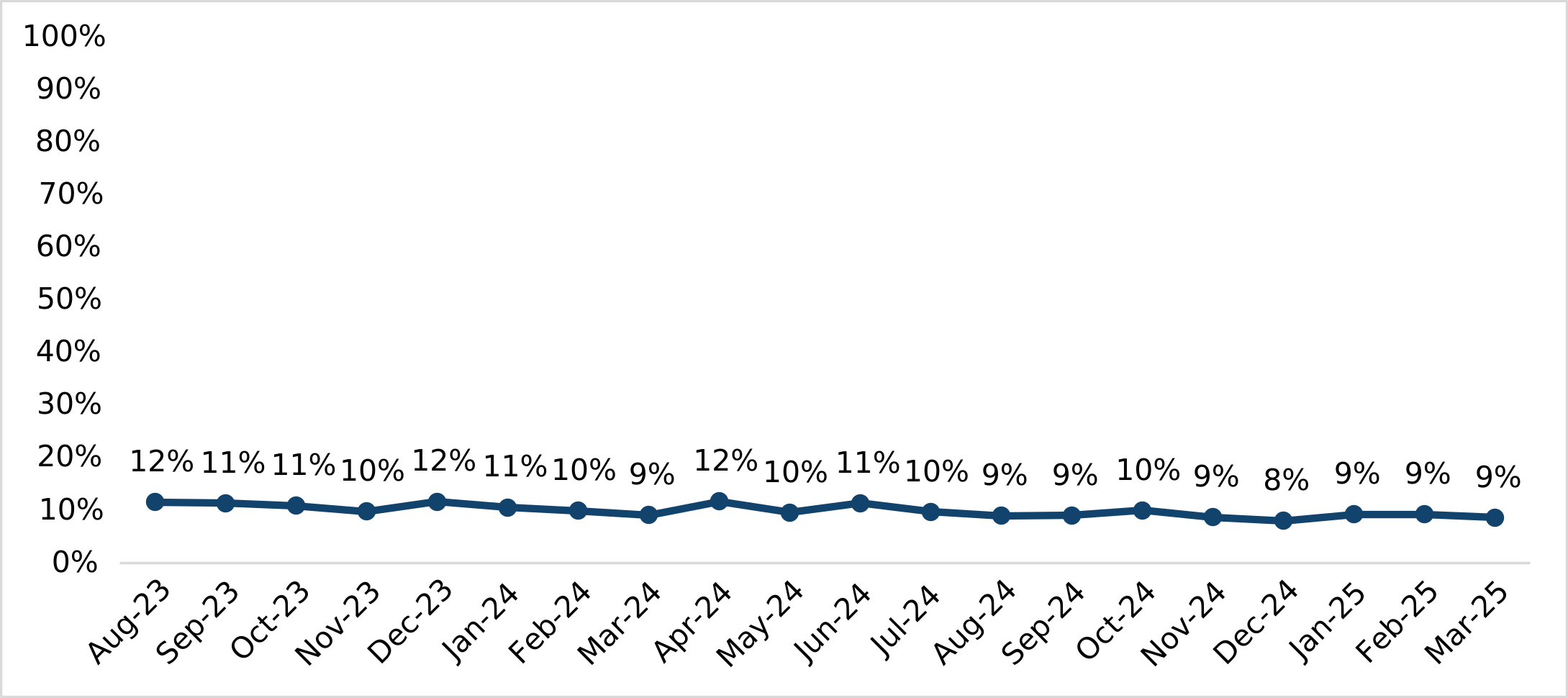
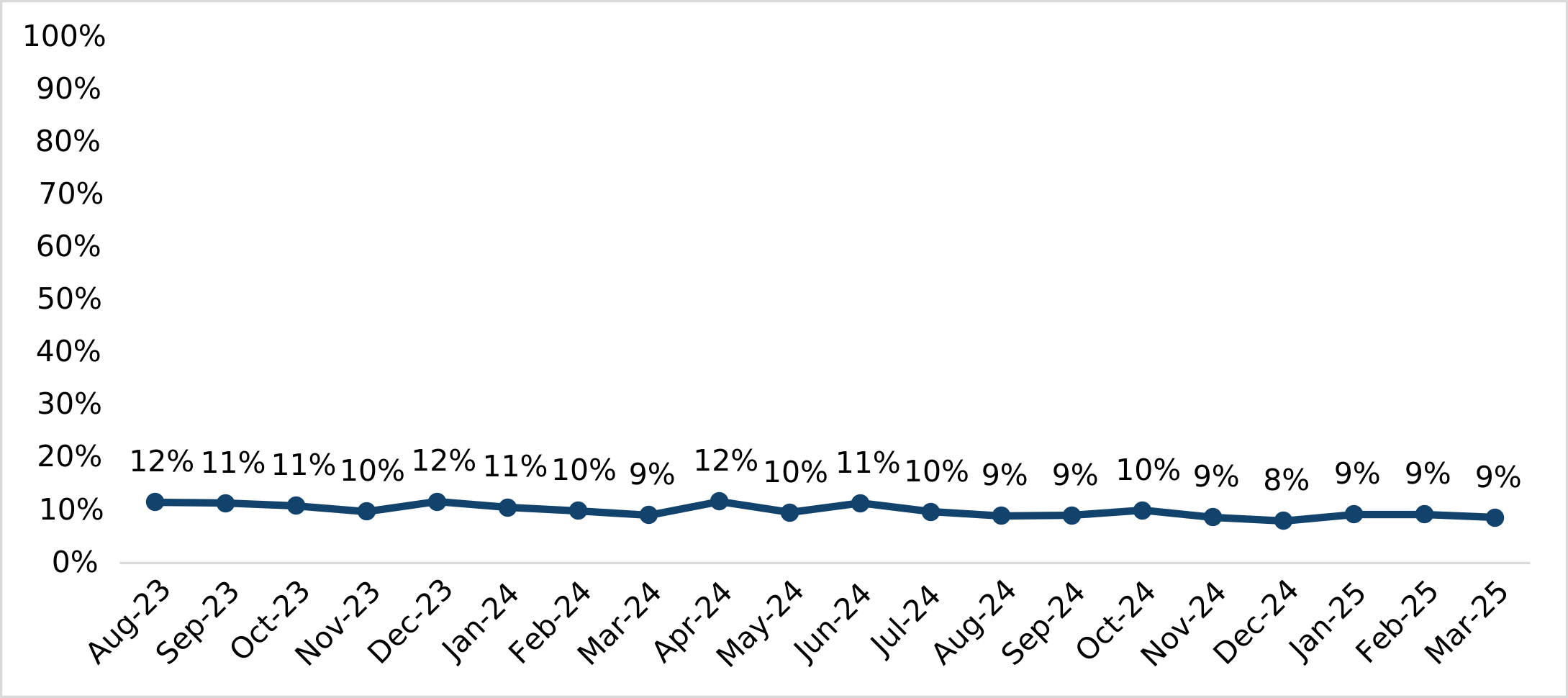
Between August 2023 and March 2025 the Consumer Insights Tracker asked respondents if they had eaten food past it’s use-by date because they could not afford to buy food in the last month[20]. During this period there was a slight decrease in the percentage of respondents reporting that they or someone in their household had done this in the past month (12% in August 2023 to 9% in March 2025)** (Figure 17). [21]
Batch cooking
In some waves of Food and You 2, respondents were asked if they had prepared more food to be kept as leftovers or cooked in batches more, for financial reasons in the last 12 months. The percentage of respondents reporting they had done this increased slightly from 29% in Wave 6 (October 2022 to January 2023) to 33% in Wave 7 (April 2023 to July 2023), before decreasing slightly to 26% by Wave 9 (April 2024 to July 2024)**[22]. Please note this question was not asked in any other waves, so comparable data is not available.
Cooking from scratch
Earlier waves of Food and You 2 (Wave 2: November 2020 to January 2021 to Wave 4: October 2021 to January 2022) asked if respondents had cooked food from scratch in the last month. There was no change between waves, with most respondents (59%-62%) reporting they cooked from scratch every day or most days[23]. Please note this question was not asked in any other waves so comparable data is not available.
In more recent waves of Food and You 2, respondents were asked if they had cooked food from scratch more in the last 12 months, for financial reasons. Around a quarter (25-27%) of respondents reported that they had cooked from scratch more for financial reasons, with no change between Wave 6 (October 2022 to January 2023) (25%) and Wave 9 (April 2024 to July 2024) (27%).[24] Please note this question was only asked in Waves 6, 7 and 9, so earlier comparable data is not available.
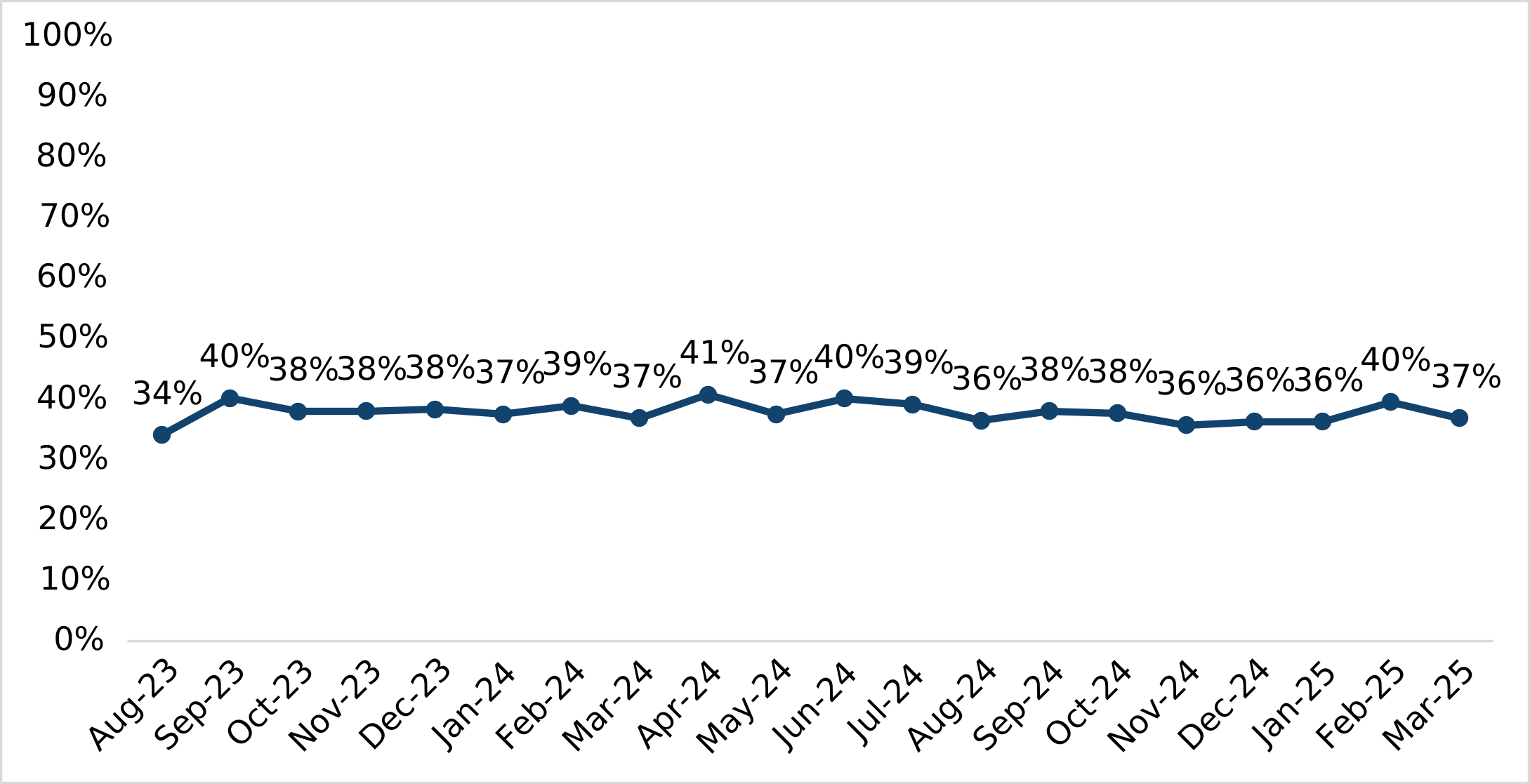
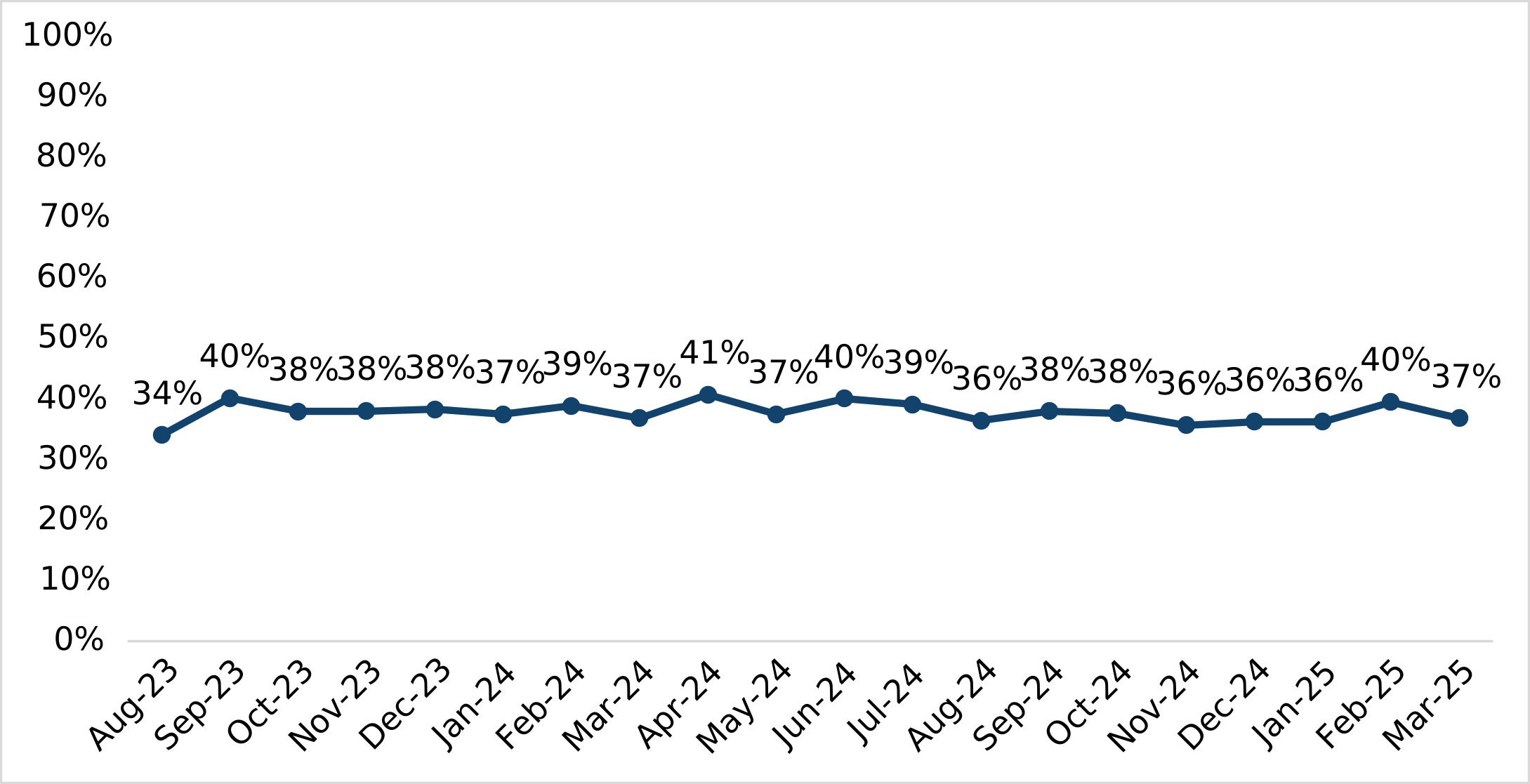
Between August 2023 and March 2025, the Consumer Insights Tracker asked respondents if they had cooked or prepared food from scratch to save money in the last month[25]. Between the start and the end of the tracking period, the percentage of respondents reporting this behaviour remained broadly stable (34% - 41%)** (Figure 18).
Cooking temperature and time
In Waves 6, 7 and 9 of Food and You 2, respondents were asked if they had changed the length of time or temperature food is cooked at for financial reasons in the last 12 months. The percentage of respondents reporting they had done this increased slightly from 2% in Wave 6 (October 2022 to January 2023) to 4% in Wave 7 (April 2023 to July 2023)**, before slightly decreasing to 2% by Wave 9 (April 2024 to July 2024)**.[26] Please note this question was not asked in any other waves, so earlier comparable data is not available.
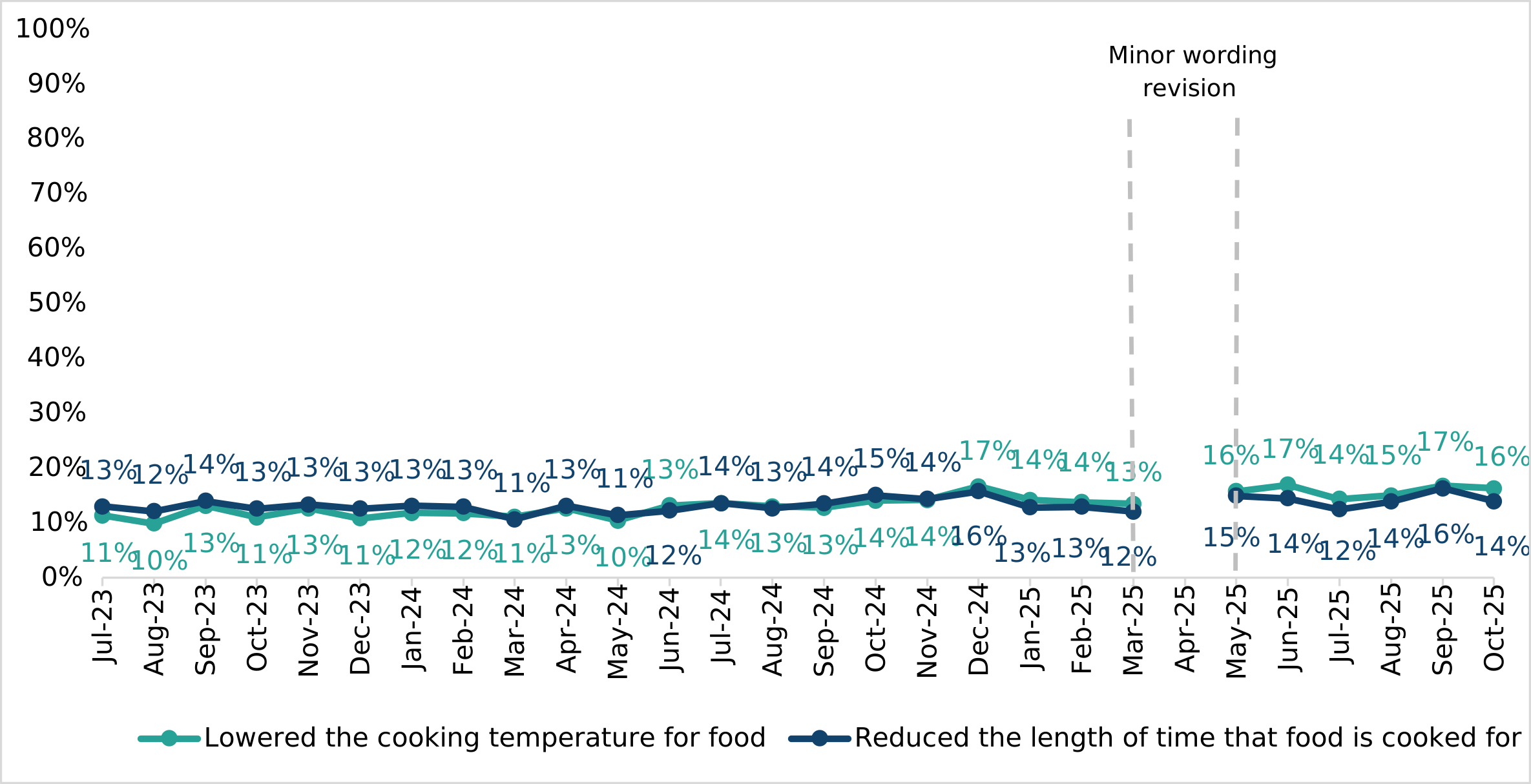
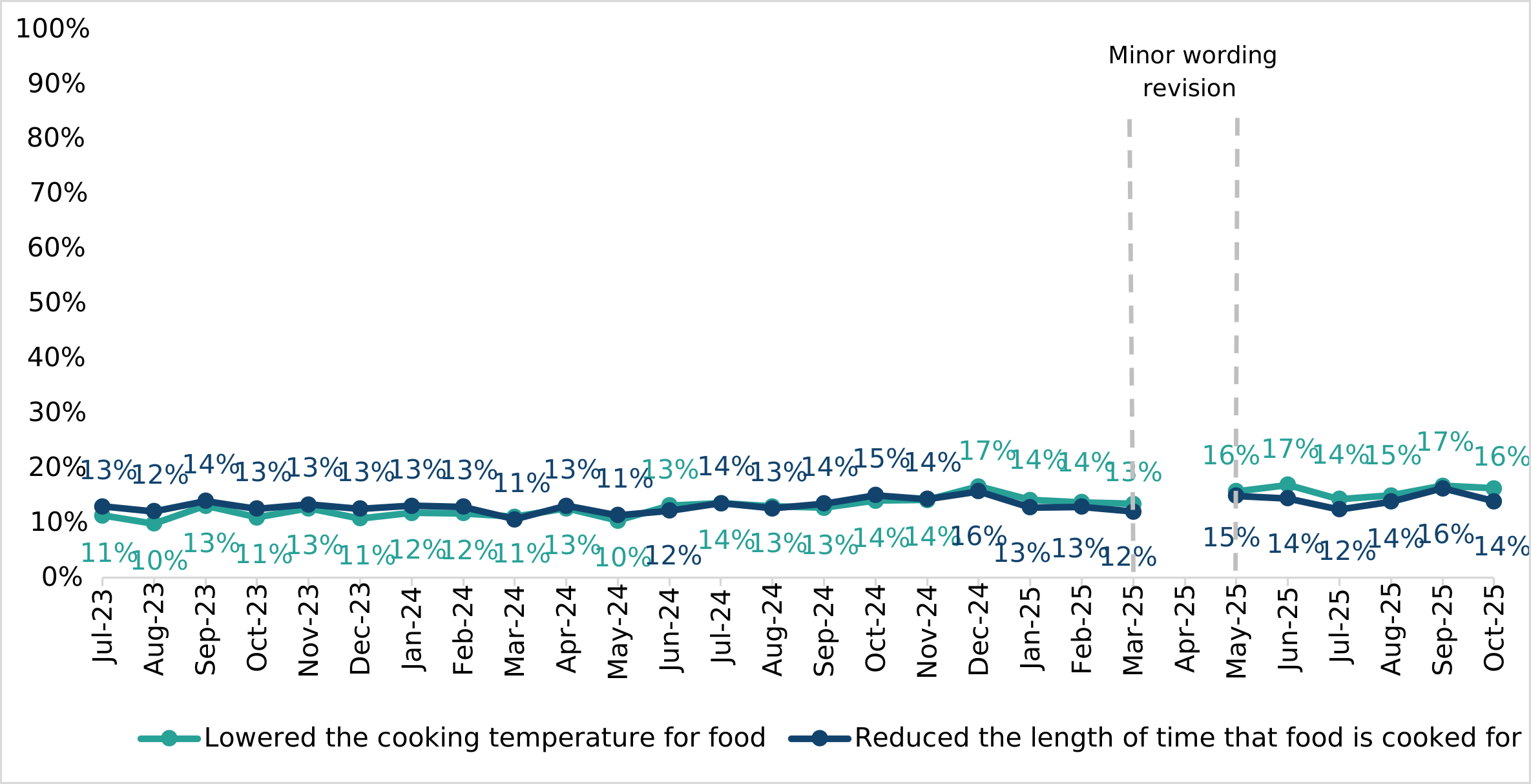
The Consumer Insights Tracker monitored changes in cooking behaviours to reduce energy bills and save money from July 2023 to October 2025.[27] During this period, the percentage of respondents who said they had reduced the length of time that food is cooked for in the last month varied slightly between waves (12%-16%)**, with no clear upward or downward trend (Figure 19).
However, there was a slight increase in the percentage of respondents reporting they had lowered the cooking temperature for food to save money between July 2023 (11%) and March 2025 (13%)**. From May 2025 onwards, levels remained broadly stable within a higher range (14%-17%) (Figure 19).
Using cheaper cooking methods
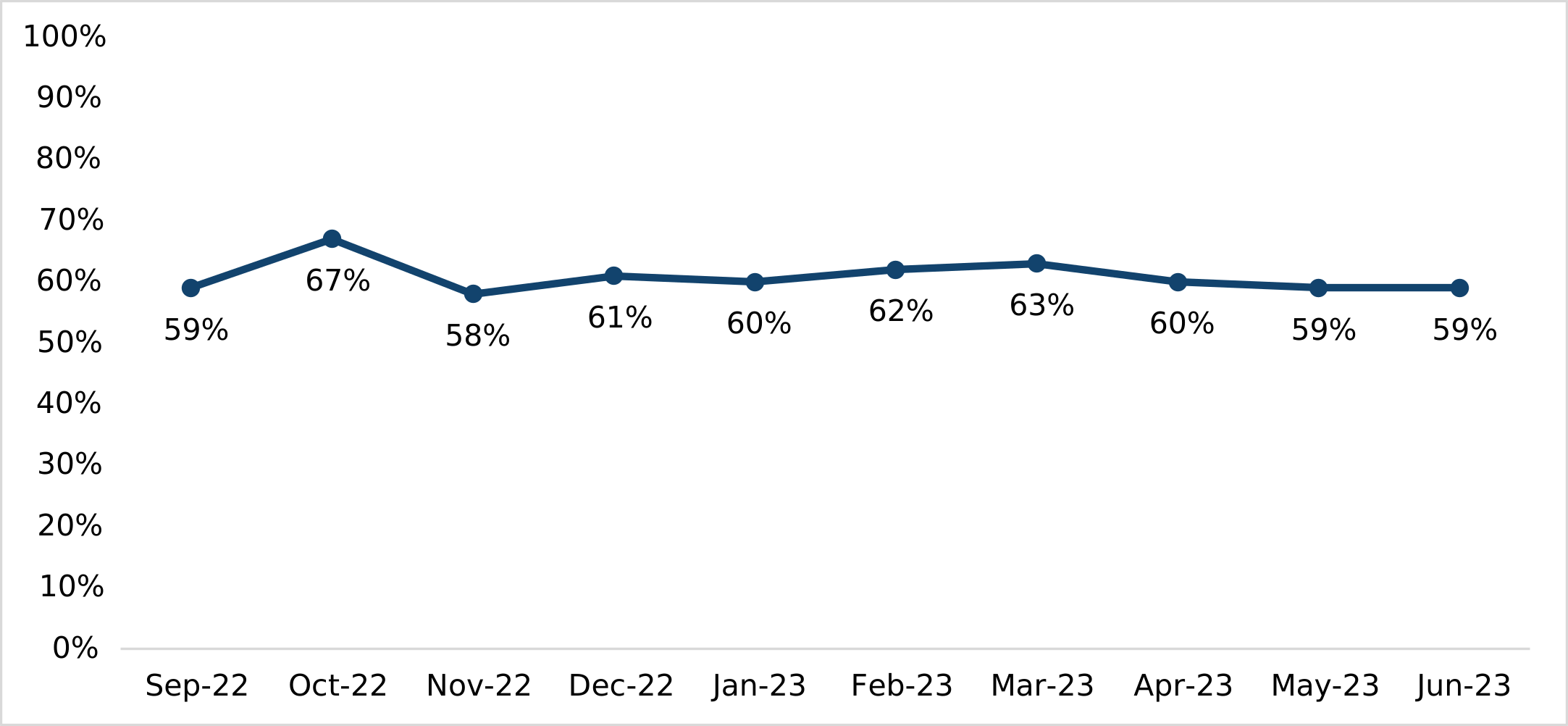
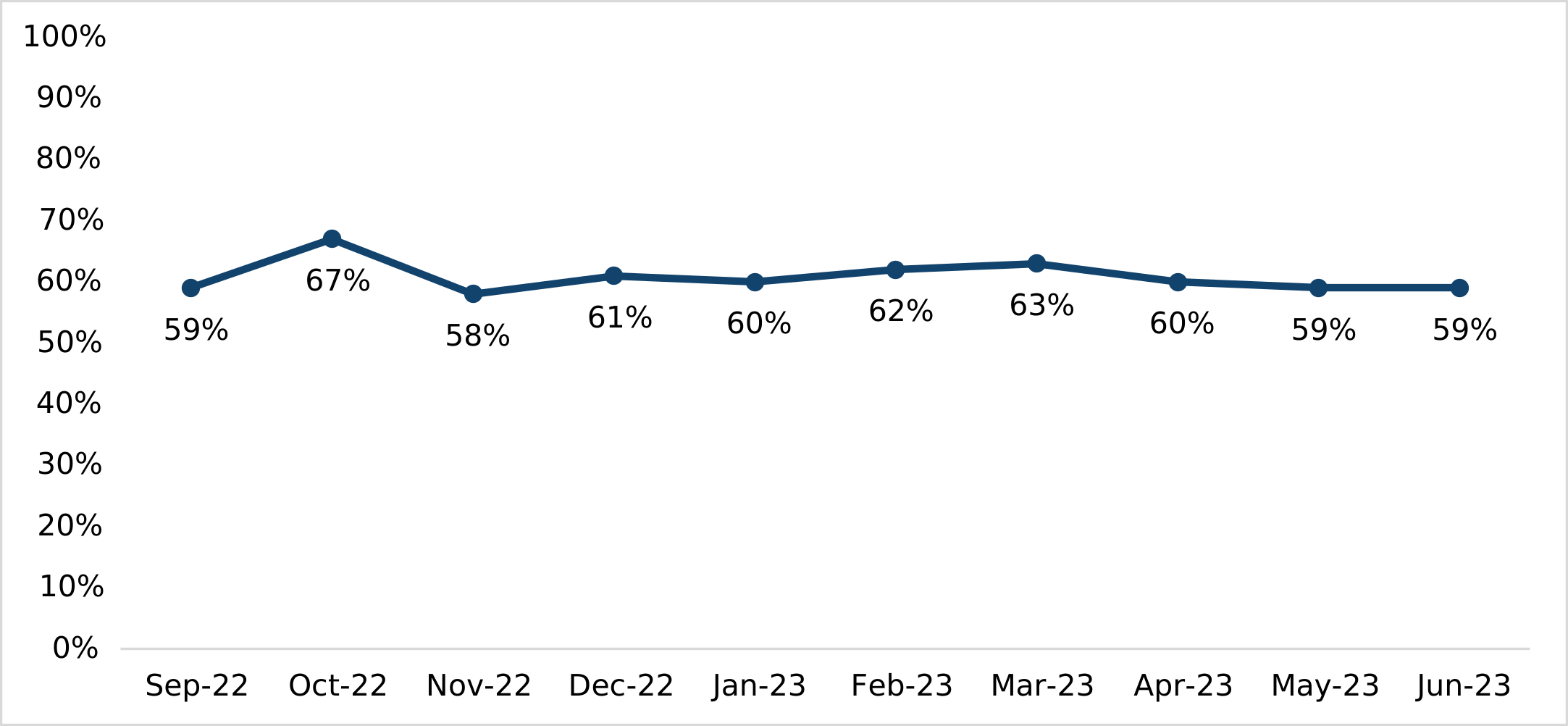
Between September 2022 and June 2023, the Consumer Insights Tracker asked respondents if they had used cheaper cooking methods (e.g. a hob, a microwave, an air fryer or a slow cooker) instead of an oven to heat or cook food in the last month. The percentage of respondents reporting this behaviour remained broadly stable over the tracking period (59% in both September 2022 and June 2023). Around six in ten respondents reported this behaviour in each wave, except for October 2022, where there was a slight increase in the percentage reporting this (67%)** (Figure 20).
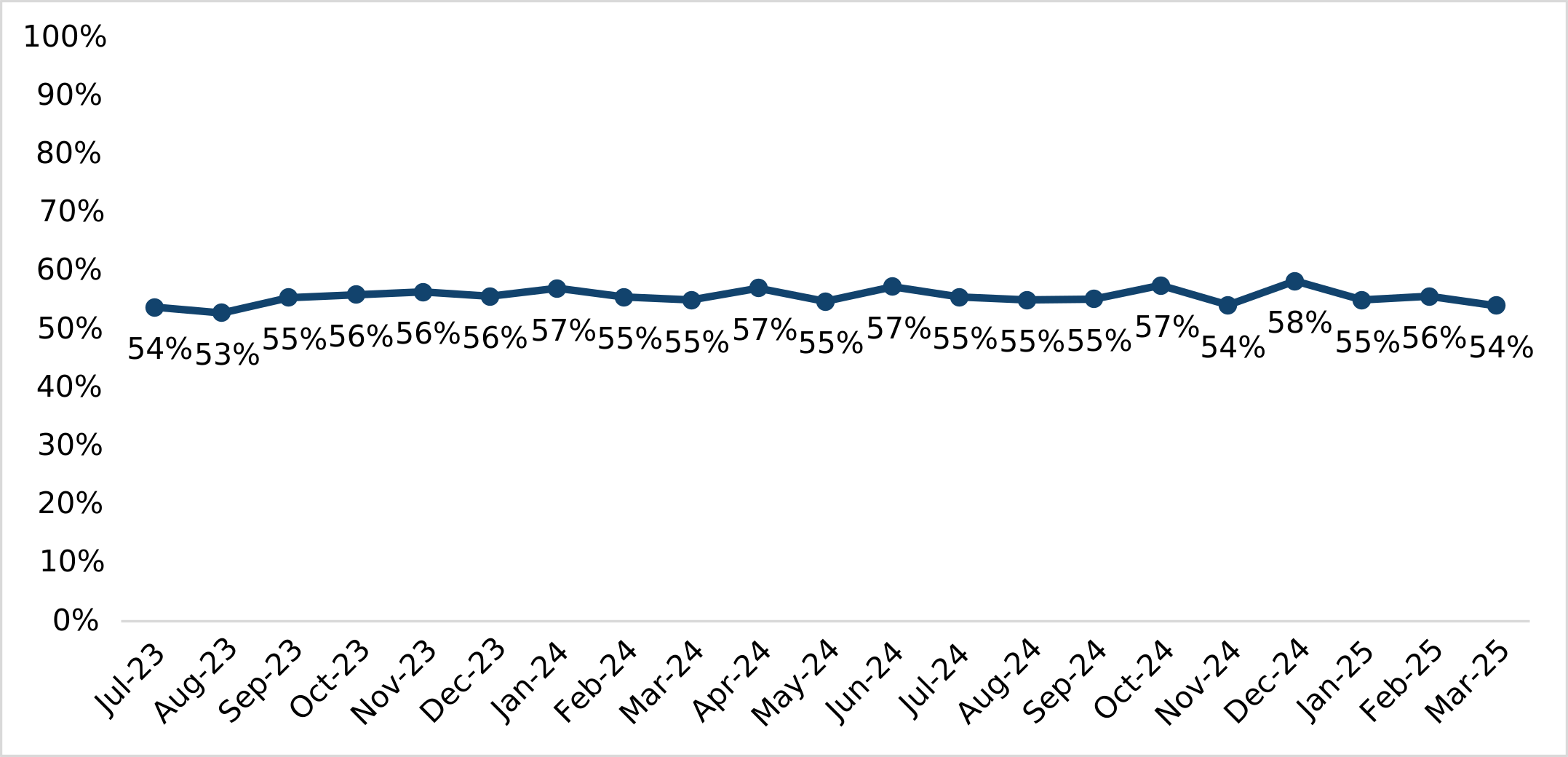
A similar question was also included in the Consumer Insights Tracker from July 2023 to March 2025[28]. The percentage of respondents reporting they or someone in their household had used cheaper cooking methods in the last month remained broadly stable over the tracking period (54% in both July 2023 and March 2025), despite some slight variation between waves (53%-58%)** (Figure 21).
Storing food
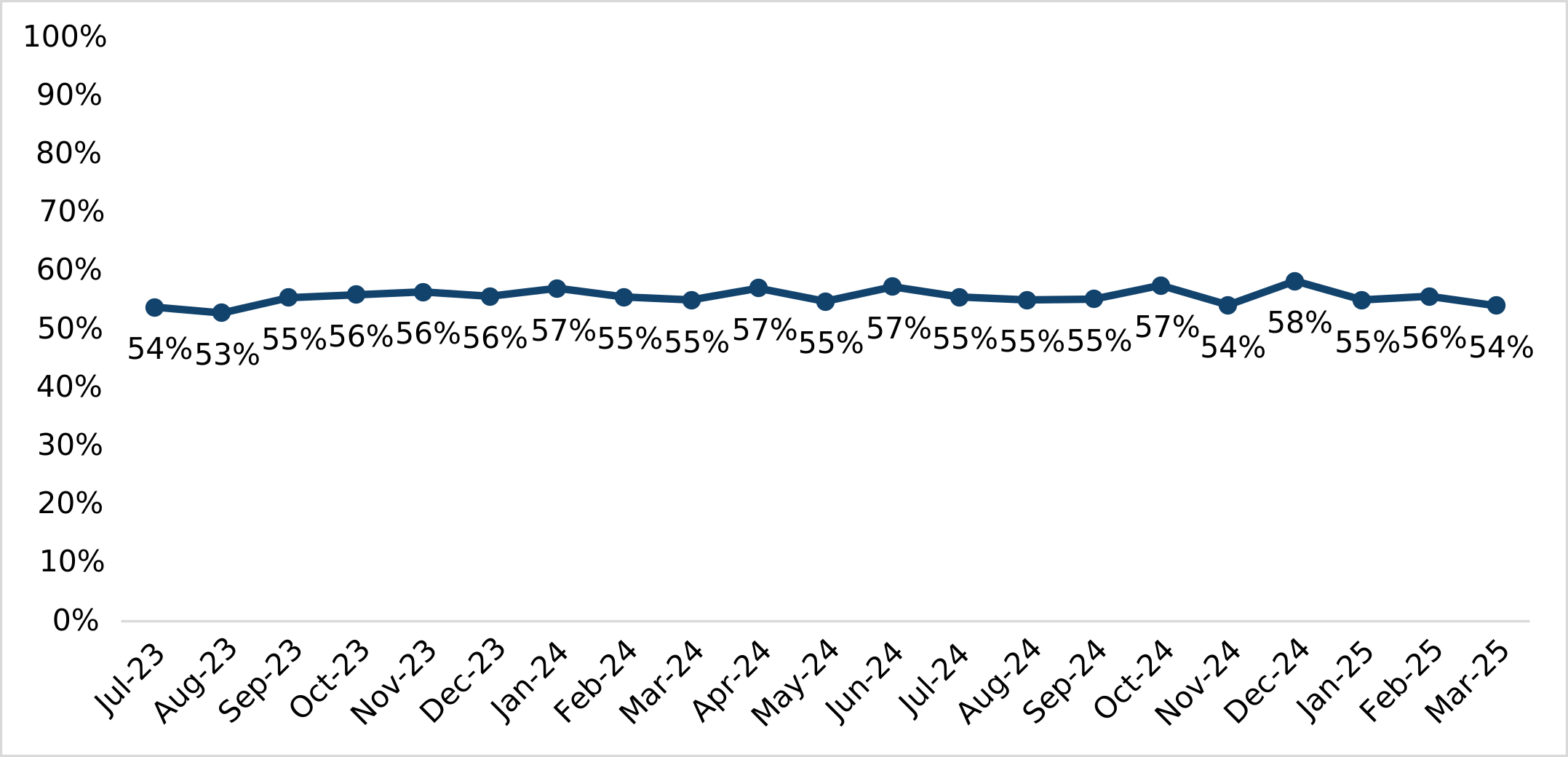
In Waves 6, 7, and 9 of Food and You 2, respondents were asked if they had changed the setting on the fridge or freezer for financial reasons in the last 12 months. There was a slight increase in the percentage of respondents reporting this behaviour between Wave 6 (October 2022 to January 2023) (3%) and Wave 7 (April 2023 to July 2023) (5%)**, before slightly decreasing to 2% in Wave 9 (April 2024 to July 2024)**.[29]
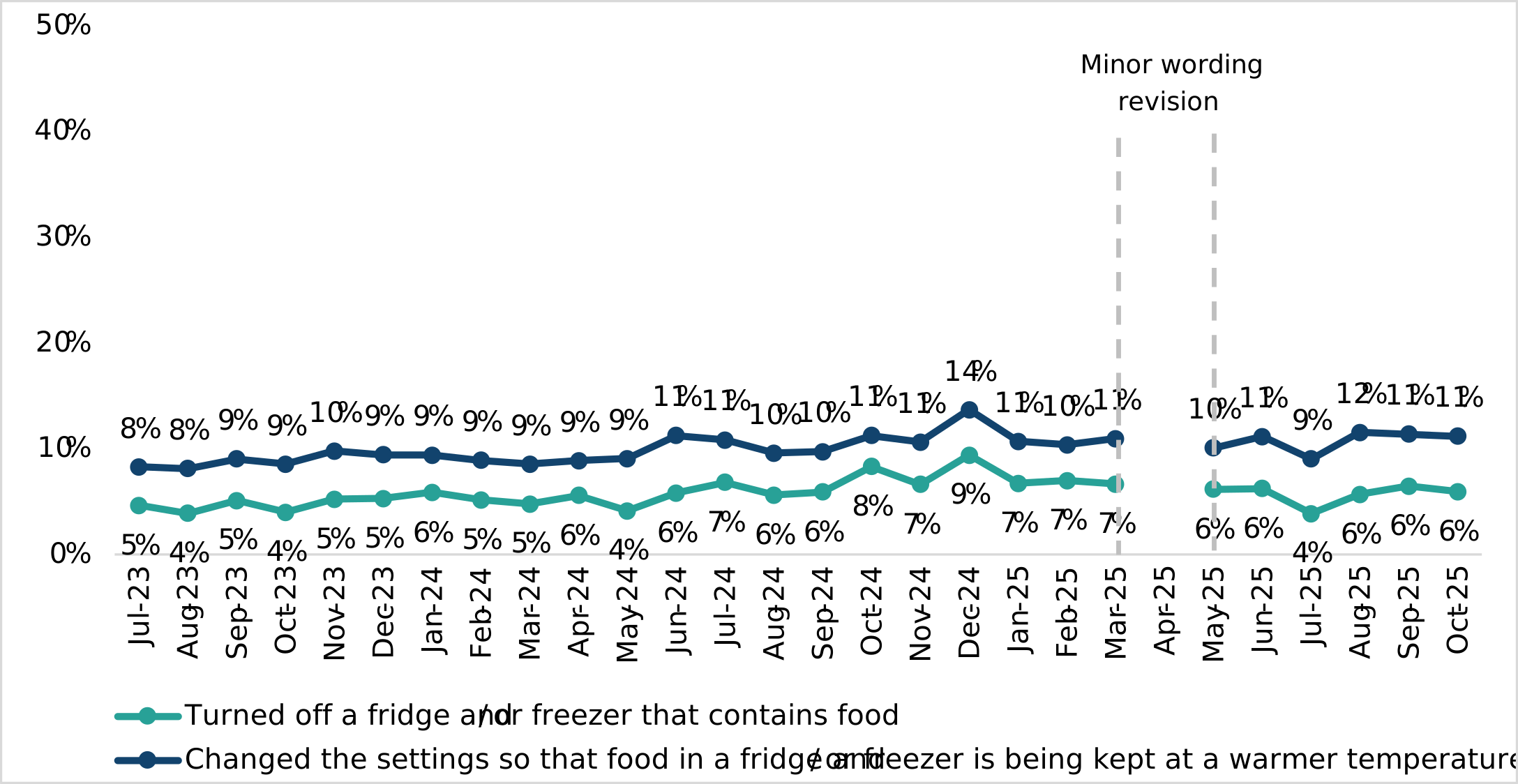
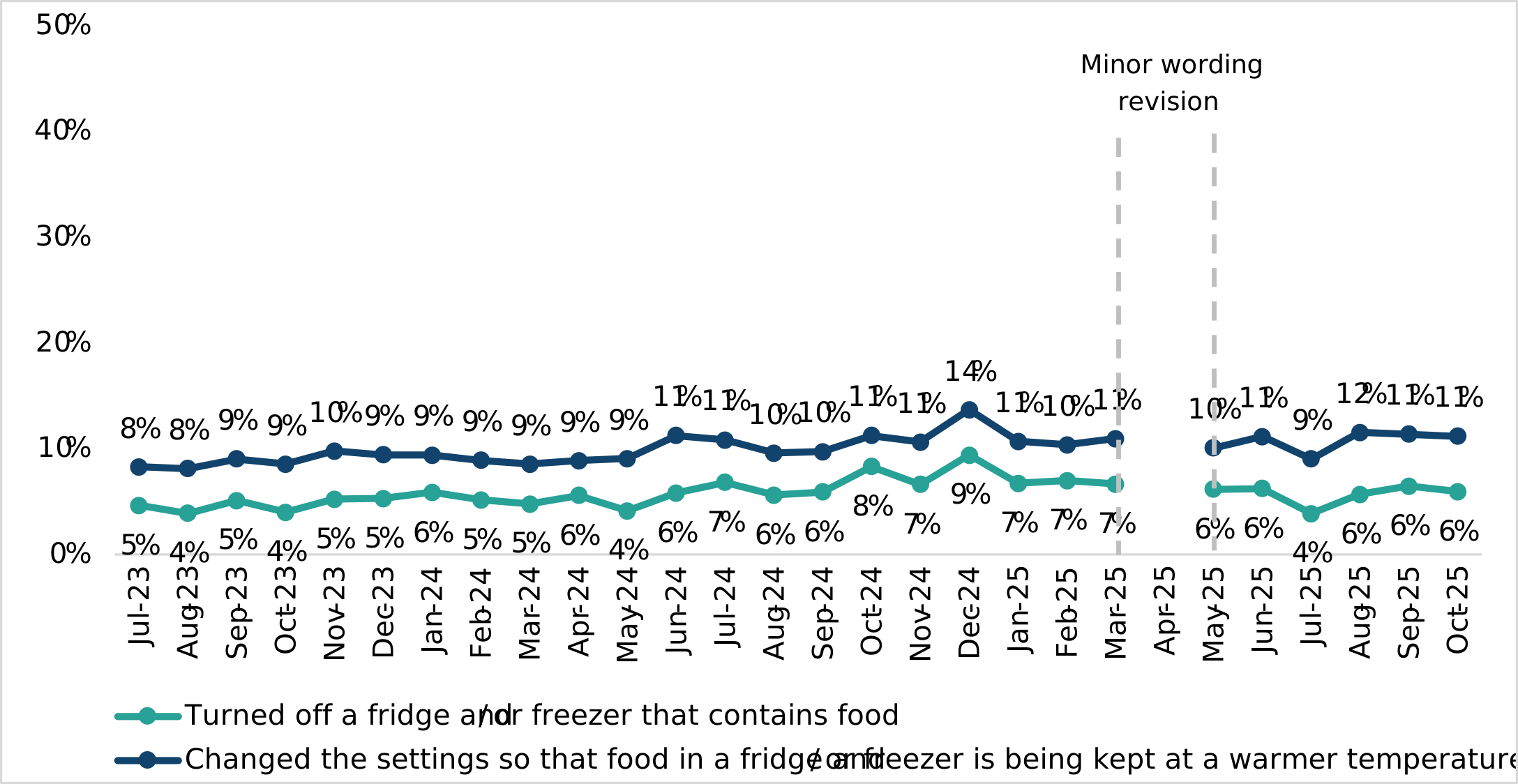
More recently, the Consumer Insights Tracker has monitored similar behaviours[30]. Between July 2023 and March 2025 there was a slight increase in the percentage of respondents reporting they had turned off a fridge or freezer containing food (5% to 7%)** and changed settings on a fridge or freezer so that food is being kept at a warmer temperature (8% to 11%)**. Both behaviours then remained broadly stable between May 2025 and October 2025 (4%-6% and 9-12% respectively) (Figure 22).
From May 2025 to October 2025, the Consumer Insights Tracker also asked respondents if they or someone in their household had stored food that should be refrigerated outside the fridge to save money in the last month. During this period around one in ten respondents reported this each month (10%-14%)[31], however longer-term trends for this behaviour are not available.
Leftovers
In Wave 6, 7, and 9 of Food and You 2, respondents were asked if they had kept leftovers for longer before eating for financial reasons in the last 12 months. The percentage of respondents reporting they had done this increased from 13% in Wave 6 (October 2022 to January 2023) to 20% in Wave 7 (April 2023 to July 2023)**, before a notable decrease to 10% by Wave 9 (April 2024 to July 2024)[32]. Please note this question was not included in any other waves so earlier comparable data is not available.
Other changes
The following section summarises a small number of wider behaviours that relate to consumers’ consumption and purchasing of food, or to other household practices that might influence the food safety environment, such as pet ownership and pet feeding. These behaviours sit outside the core areas outlined so far, and were included following expert and policy input, reflecting areas where the FSA has an emerging interest or where increases in prevalence has been reported in recent years.
Raw (unpasteurised) milk
Food and You 2 respondents were asked how often they consume raw (unpasteurised) milk. There were no changes in the percentage of respondents reporting they ever consume raw milk between Wave 1 (July 2020 to October 2020) (10%) and Wave 9 (April 2024 to July 2024) (12%), with around one in ten respondents reporting this in each wave this was asked (10%-12%)[33].
Food sharing apps
In Food and You 2, respondents were asked if they had ever ordered food or drink online using food sharing apps (e.g. Olio or Too Good to Go). Olio and Too Good to Go are platforms where users can purchase unused or surplus food close to its use-by date either for free or at a heavily discounted rate. There was a notable increase in the percentage of respondents reporting use of these apps from 4% in Wave 3 (April to June 2021) to 17% in Wave 9 (April to July 2024) (Figure 23). Further research would be required to understand to what extent the use of food-sharing apps influences consumers’ food safety behaviours.
Pet ownership
The following data draws on external sources to provide an indication of pet ownership and the types of pet food used. Due to the available data, it considers a slightly longer time period. Further research would be required to understand the extent to which consumers follow food safety practices when handling raw pet food.
Annual estimates published by the People’s Dispensary for Sick Animals (PDSA) indicate a gradual increase in the population of dogs in the UK from 8.2 million in 2011 to 11.1 million in 2025 (PDSA, 2025b)[34], the percentage of survey respondents reporting they own a dog also increased slightly during this period (from 23% to 30%)[35] (PDSA, 2024, 2025a).
Meanwhile, the estimated UK population of cats has remained broadly stable over time, despite some fluctuations (10.5 million in 2025). In 2025, 24% of survey respondents reported owning a cat, this figure has remained stable since 2014 but is slightly lower than in 2011 (27%).
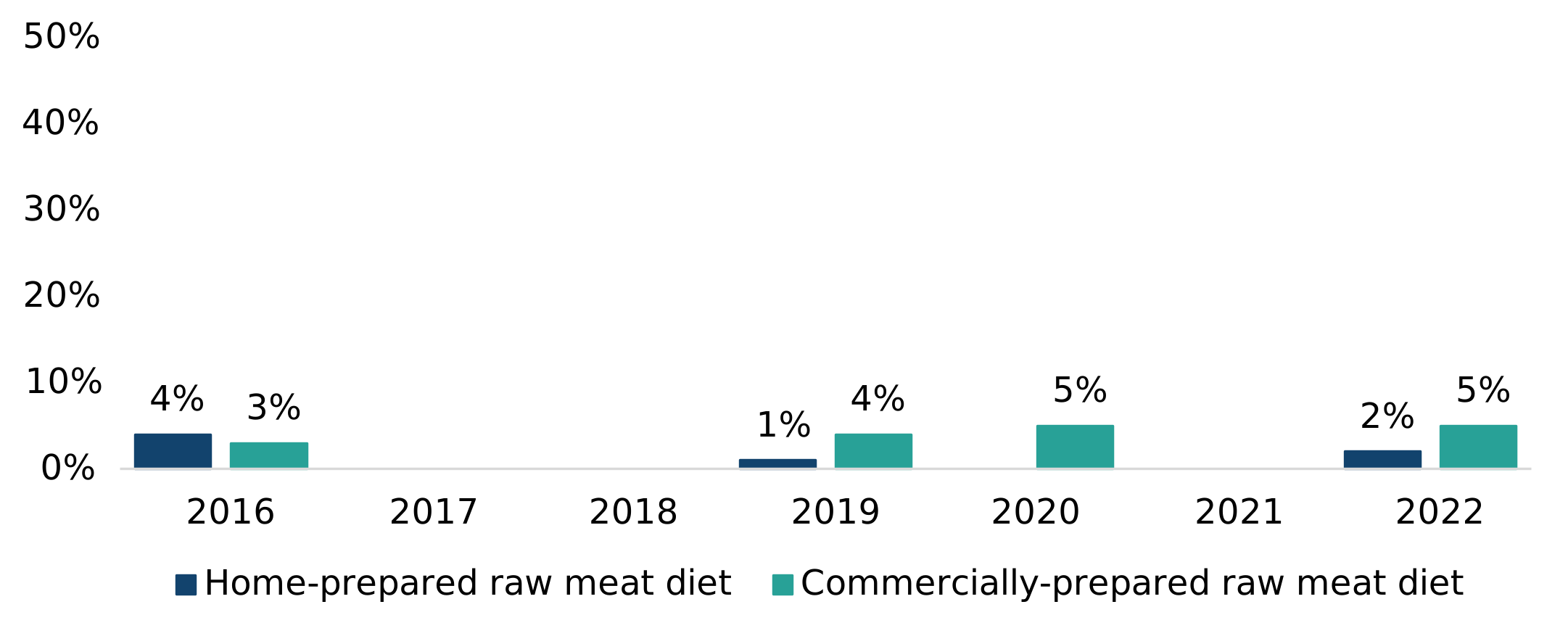
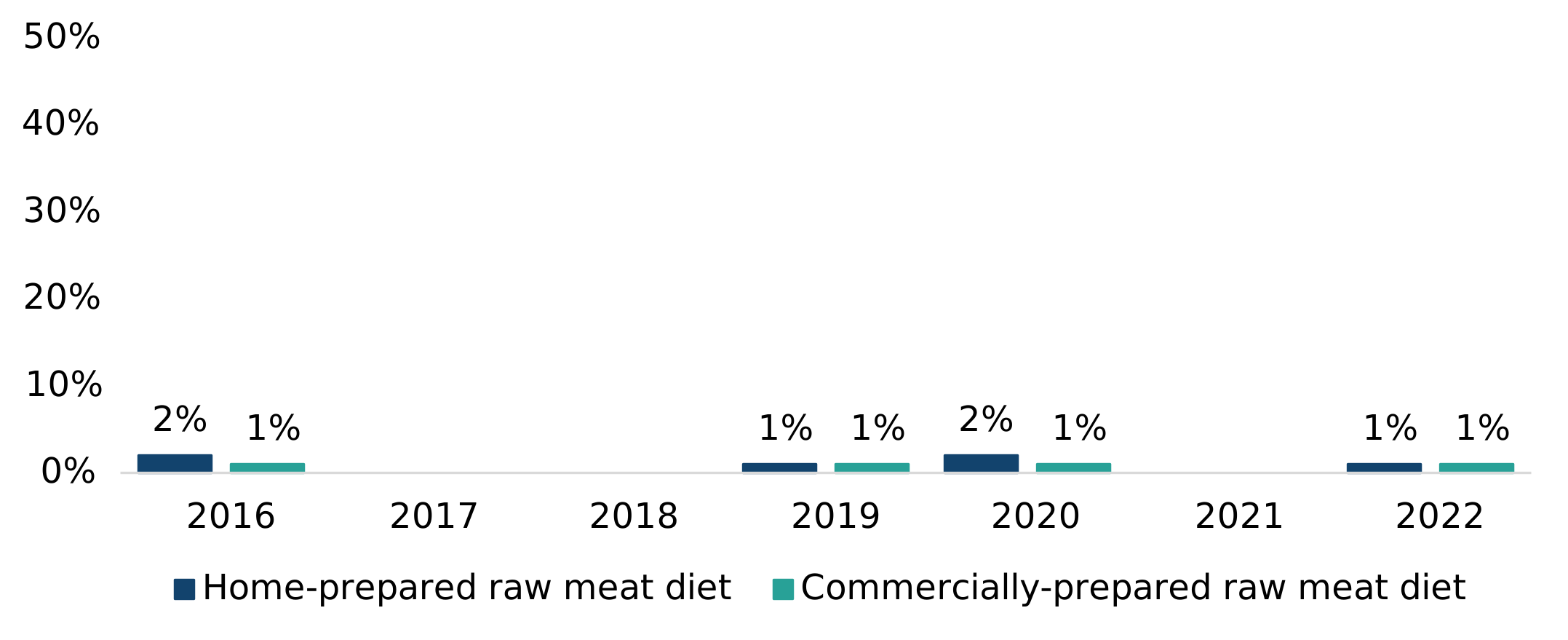
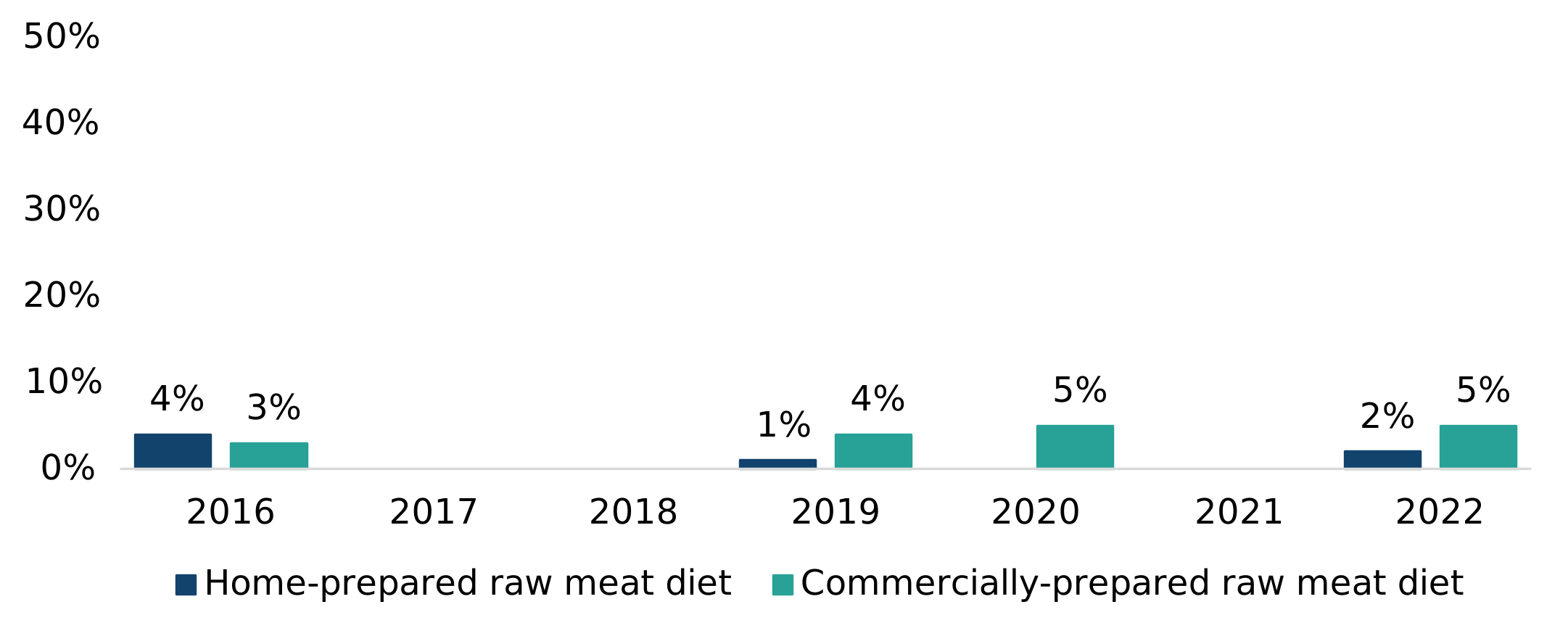
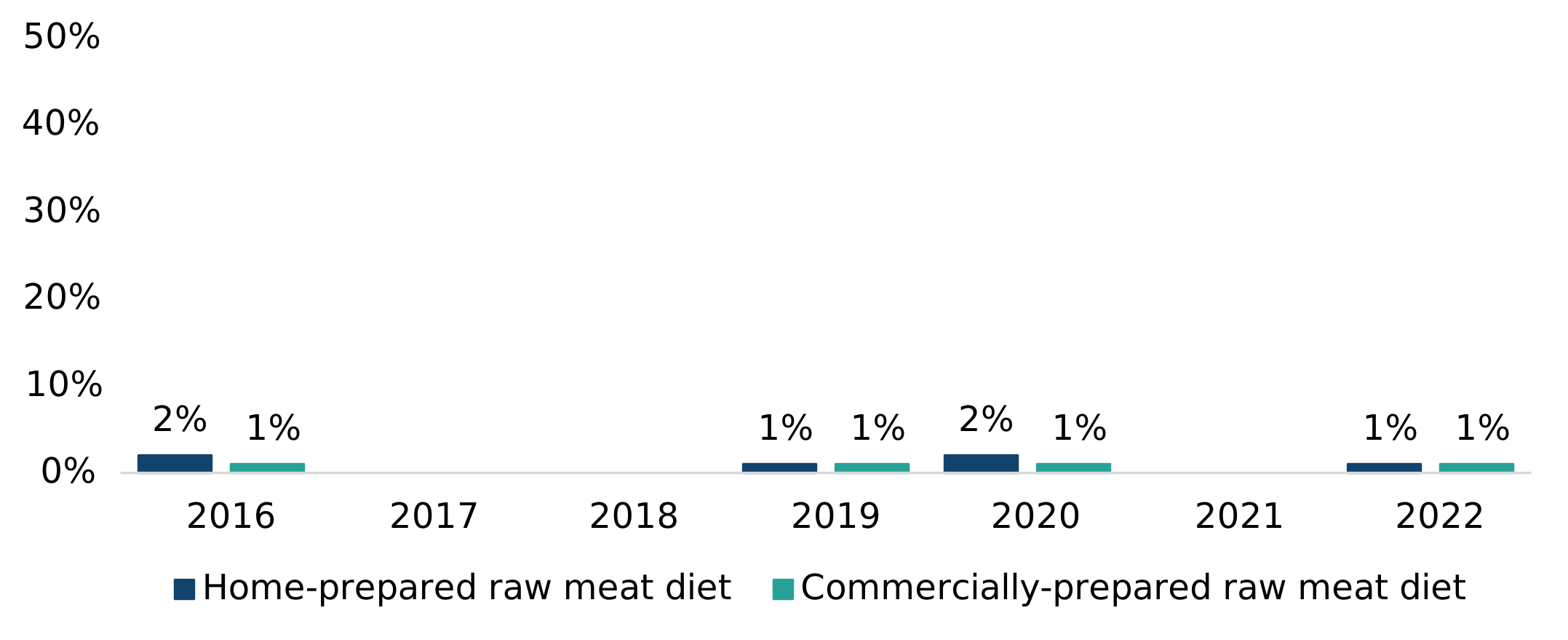
The PDSA also asked cat and dog owners what type of diet they feed their pets. As Figures 24 and 25 show, the percentage reporting they feed their pets a home-prepared or commercially prepared raw meat diet as one of their pet’s main types of food has been consistently low over time. For dogs, the total reporting either diet has ranged between 5% - 7%, and for cats it has ranged between 2% – 3% (PDSA, 2016–2022).[36] Please note, data is not available for each type of diet for each wave.
More recently data from the Office for National Statistics Opinions and Lifestyle Survey (September 2025) revealed that around two-fifths of respondents (41%) reported that they currently had a pet living in their household [37]. Among those that said they currently have a pet, dogs (52%) and cats (49%) were the most commonly owned pets. Smaller percentages reporting owning rabbits, ferrets or rodents (5%), indoor birds (1%) or other types of pets (8%) (Office for National Statistics, 2025)[38].
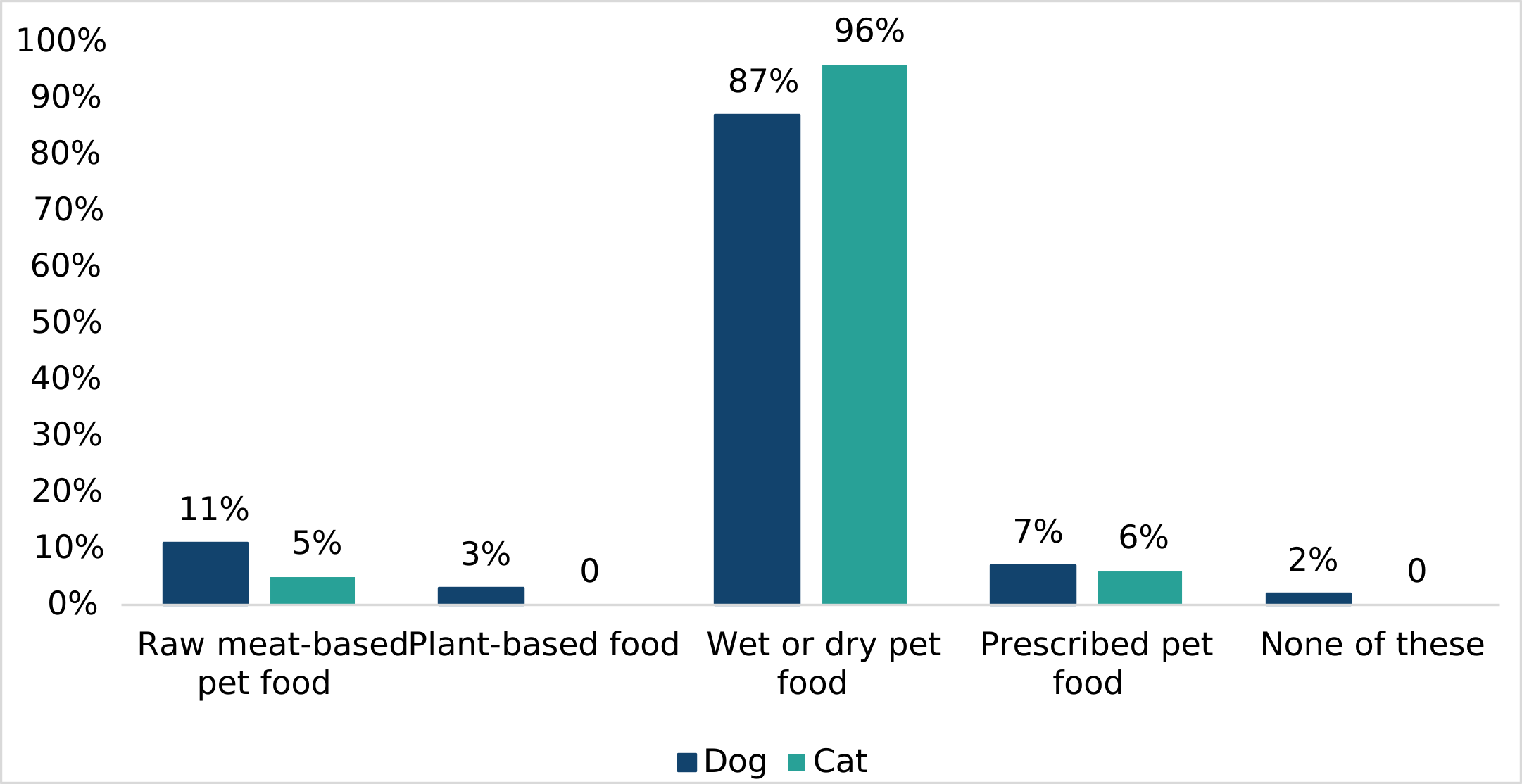
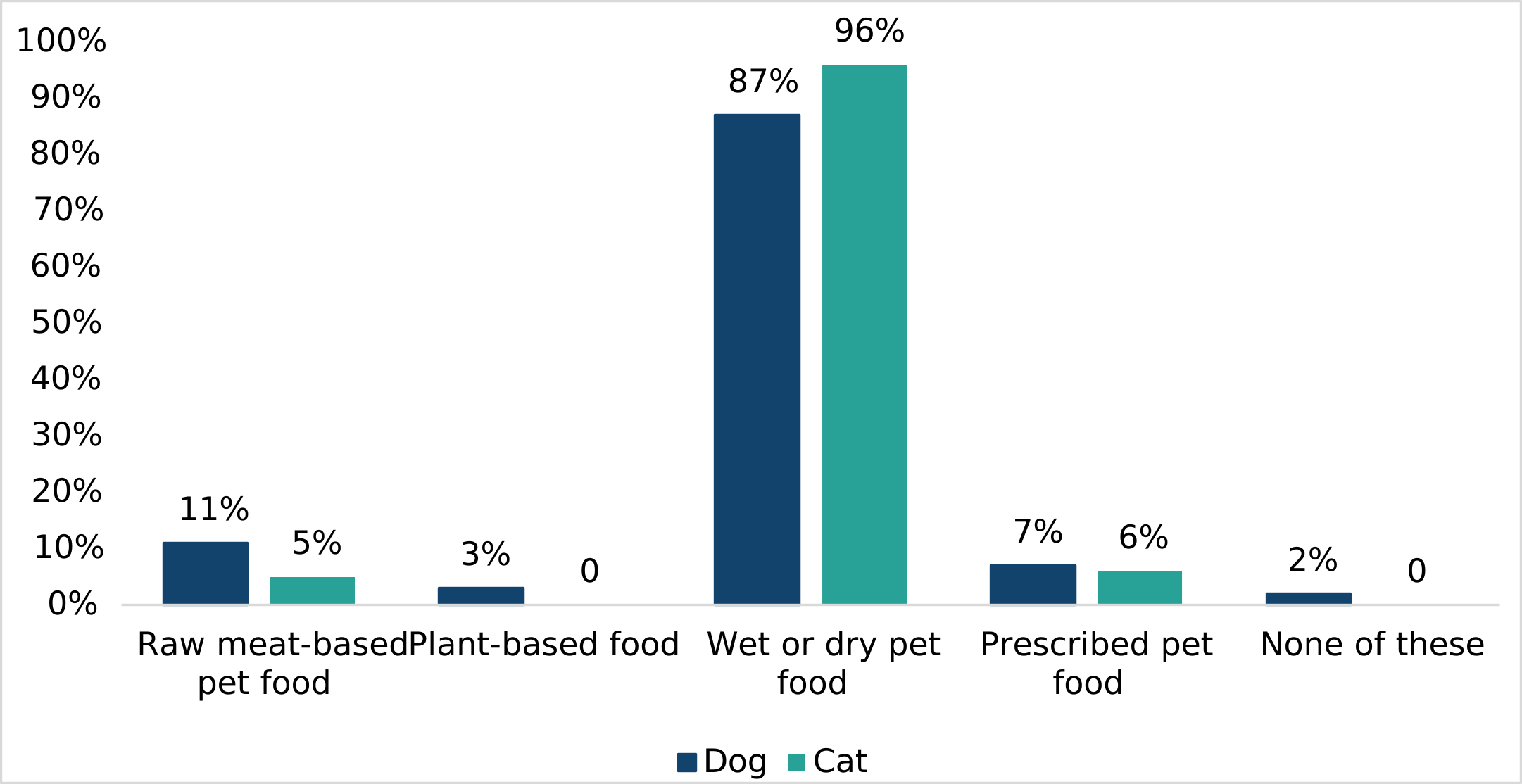
Among dog owners, the vast majority reported feeding their dogs wet or dry pet food (87%). Around one in ten (11%) reported feeding their dog raw meat-based pet food, with 7% feeding prescribed pet food. Plant-based pet food was only reported by 3%. Among cat owners, almost all (96%) reported feeding their cat wet or dry pet food. Smaller percentages reported feeding raw meat-based pet food (5%) or prescribed pet food (6%) (Figure 26) (Office for National Statistics, 2025).
Social media trends
Previous research has highlighted that social media can both positively and negatively influence food-related behaviours. For example, the immediacy of social media can make it a powerful tool when communicating risks (Overbey et al., 2017). However, it can also enable the spread of misinformation about food and nutrition (Segado Fernández et al., 2025), promote unhealthy food choices (Kucharczuk et al., 2022) and promote behaviours that might pose food safety risks.
Such recent trends have included “fridgescaping”, which involves decorating fridges with non-food items like flowers and wicker baskets (Reynolds, 2024). This can block airflow and increase cross-contamination. Other examples include home fermentation recipes (such as how to make kimchi) but often without including steps to properly sterilise storage containers (Psychreg, 2025), washing fruit and vegetables with soap (in particular during the Covid-19 pandemic) (Verma et al., 2023), and storage ‘hacks’ such as rinsing berries with baking soda before refrigeration (Landsel, 2024). Consumption of raw drinking milk has also been shared widely, particularly during 2024 and 2025 (Cullinan, 2025; Gray, 2024).
The extent to which these sorts of trends are driving unsafe practices, and among which groups, is not well understood. Further research could be conducted to more comprehensively map social media trends and explore their impact on food safety behaviour.