
1. Abbreviations
2. Lay Summary
Campylobacter is the leading cause of food poisoning in the UK, and chicken meat is one of the main vehicles for transmission. Reducing Campylobacter throughout the food chain is important to protect public health. This review looks at interventions to reduce Campylobacter in cutting and processing plants.
Published studies were reviewed in a systematic way to analyse the effectiveness of interventions tested to reduce Campylobacter levels on chicken. The interventions were categorised into three types: chemical treatments, non-chemical processes (excluding chilling and freezing) and packaging technologies. Chilling and freezing were considered to be relevant to all stages in the food chain post slaughter, so this intervention is discussed in the retail, consumer, restaurant and catering report.
The review found chemical treatments generally achieved a moderate reduction in Campylobacter levels. Combining various chemicals also demonstrated promising results. Non-chemical interventions included high-pressure processing and ultrasound which showed limited efficacy when used alone. Their performance was improved when combined with chemicals, but the performance was largely driven by the chemical. Packaging technologies, which included use of modified atmosphere packaging and vacuum packaging, primarily extended shelf life rather than significantly reducing Campylobacter levels.
No single intervention in this review was found to eliminate Campylobacter at the processing stage. A multi-barrier approach across the entire food chain is vital to reduce Campylobacter and elimination is best achieved by cooking chicken to 70°C all the way through.
3. Executive Summary
This systematic review discusses interventions to reduce Campylobacter spp. (C. jejuni and C. coli) levels in cutting and processing plant settings. Using the PRISMA approach, 35 studies published since 2015 were analysed and categorised into three intervention types: chemical treatments, non-chemical processes (other than chilling and freezing), and packaging technologies. Since chilling and freezing interventions are considered a relevant type of control in all food chain stages post-slaughter, relevant publications have been considered in the retail, consumer, restaurant and catering report. Chemical interventions—including organic acids, oxidising agents, and plant-based extracts—generally achieved reductions of 1–2 log₁₀ CFU, with some outliers such as sorghum extract reporting up to 7 log₁₀ CFU reduction. Combined treatments (e.g., eugenol with chitosan or pectin) also demonstrated promising results, although data on the efficacy of the individual compounds were not always reported. In comparison, non-chemical interventions such as high-pressure processing and ultrasound showed limited efficacy when used alone, but improved performance when combined with chemicals. The reduction in such cases was largely driven by the chemical. Packaging technologies, including modified atmosphere packaging and vacuum packaging, primarily extended shelf life rather than significantly reducing Campylobacter levels. Overall, no single intervention can eliminate Campylobacter risk at the processing stage. Due to limitations such as small sample sizes, limited number of trials and interventions not conducted under real-world manufacturing conditions, further research is required before conclusions in this report can be generalised. A multi-barrier approach across the food chain remains essential, supported by standardised protocols, large-scale validation, and consideration of consumer acceptance, cost, and regulatory compliance.
4. Introduction
Thermophilic Campylobacter species (spp.) C. jejuni and C. coli, henceforth referred to as Campylobacter, are the leading cause of bacterial gastroenteritis in humans (UKHSA, 2025). In the UK, Campylobacter was the most common bacterial pathogen identified in the second study of infectious intestinal disease in the community (IID2 Study) (O’Brien et al., 2012). The year 2024 saw the highest number of reports of campylobacteriosis in 10 years in England, with a rate rise from 104.1 in 2023 to 121.9 reports per 100,000 population (UKHSA, 2025).
Campylobacter has various potential pathways for infection. Among these, contaminated retail meats, particularly chicken, have been identified as the most common source of human campylobacteriosis (McCarthy et al., 2019). Raw chicken meat is often contaminated with Campylobacter (FSA, 2023) and reducing exposure from this source is predicted to decrease the number of human campylobacteriosis cases (EFSA Panel on Biological Hazards, 2011).
Interventions to reduce the prevalence of Campylobacter at the farm and slaughterhouse level have been described by other publications and institutions (FAO & WHO, 2024; Lu et al., 2021) and are the subject of review under different FSA reports, along with retail, consumer, restaurant and catering settings. In this report, we focus on microbiological control methods that can be employed in cutting plants and processing establishments to control Campylobacter.
4.1. Previous work on Campylobacter spp. in the UK
The importance of Campylobacter as a foodborne pathogen was recognised in the 1970s and 1980s after the development of improved laboratory tests. The FSA and, before its formation in 2000, the Department of Health, commissioned work to understand Campylobacter epidemiology and microbiology as well as potential interventions, either via the Advisory Committee on Microbiological Safety of Food (ACMSF) or external contractors.
In 1993, the ACMSF issued an interim report on Campylobacter summarising information on the bacterium, including effective interventions throughout the food chain that could reduce the disease risk (ACMSF, 1993). The report discussed control measures in the context of unfavourable growth parameters for Campylobacter, such as water activity, salinity, pH, oxygen, storage temperature and heating. Additionally, recommendations for industry included, but were not limited to:
-
Investigation of the effectiveness of preservatives, modified atmosphere processing and packaging and irradiation on the survival or inactivation of Campylobacter in food.
-
Adoption of Hazard Analysis and Critical Control Point (HACCP) approach throughout the food supply chain.
-
Ensuring consistency in heating equipment to ensure killing of the bacteria.
-
Industry and consumers to avoid cross-contamination during the handling of raw materials of animal origin by following guidelines.
-
Compulsory training of staff, which became a legal requirement in the UK (EU, 2004a; GOV.UK, 2004).
In 2002, a working group was set up to investigate knowledge gaps and the outcomes of the recommendations provided in 1993, with the aim to support the FSA strategy of reducing human campylobacteriosis. The ACMSF second report on Campylobacter was published in 2005 as a result of this working group and it focused on reducing Campylobacter in poultry meat (ACMSF, 2005). The report produced 33 recommendations for the government and the industry; hygienic handling at all stages from farm to fork is particularly relevant to cutting and processing plants.
The ACMSF third report on Campylobacter was published in 2019, building on the previous ACMSF reports (ACMSF, 2019). This report discussed several areas where there had been new information since the previous report, including the epidemiology of Campylobacter, risks in the food chain and people’s attitudes towards risk. The report found that no single intervention in the poultry food chain can reduce Campylobacter to levels sufficient to prevent human illness, although levels can be reduced by a combination of farm and processing controls such as hygiene barriers in sheds and application of thermal processes. Such measures reduced highly contaminated (>1000 CFU/g of Campylobacter on the skin) carcasses at retail from over 30% to <7% (ACMSF, 2019).
5. Materials and Methods
5.1. Literature review methodology overview
A systematic literature search was conducted to obtain data on interventions to reduce Campylobacter levels across the key stages of the food chain: (1) farm, (2) slaughterhouse, (3) cutting and processing plants, (4) retail, consumers, restaurants and catering. Publications were then scanned for relevance to each of the stages. PRISMA guidelines on data collection were followed (Page et al., 2021).
The question addressed by the literature search was “What interventions have been tested for reducing Campylobacter load in chicken meat across the food chain and which ones have been found to be effective?”
This report discusses the interventions that have been used at cutting plant and processing stages. Each of the other stages (farm; slaughterhouse; retail, consumers, restaurants and catering) are discussed in separate reports.
In the UK, the consumption of chicken meat is substantially higher than the consumption of chicken offal. In the National Diet and Nutrition Survey (NDNS), 56% of the general adult population reported that they consume chicken and 8.3% consumed unspecified animal offal. For this reason, the focus of this work was on chicken meat.
Publications were included if they met the following criteria:
-
Contained information on Campylobacter jejuni or Campylobacter coli on chicken meat;
-
Discussed interventions aiming to reduce Campylobacter load at the cutting plant and processing establishment level;
-
Provided log10 reduction levels after the intervention tested or sufficient data to calculate the reduction.
Publications were excluded when they:
-
Concerned food other than chicken meat.
-
Concerned chicken offal only.
-
Discussed layers only (a layer chicken is an older female chicken that is usually kept and raised specifically for egg production).
-
Reported on Campylobacter prevalence or levels with no intervention tested.
-
Reported solely on human disease outbreaks.
-
Discussed chilling or freezing of chicken meat. Although, chilling and freezing are possible interventions across all stages post-slaughter, publications investigating chilling and freezing were collated across all reviews and considered together in the retail, consumer, restaurant and catering report.
Due to time constraints, and the aim of reviewing new evidence since the last ACMSF report, publications pre-2015 were excluded from this review.
5.2. Literature review strategy
5.2.1. Database searches
A comprehensive search was implemented on databases including Google Scholar, Ovid Embase, PubMed, Scopus and Web of Science. The search was undertaken on 28th December 2023 with no date and language restrictions on searches.
Relevant papers were found using the search terms: (intervention OR reduction OR inhibition OR prevention OR decontamination OR control OR treatment) AND (campylobacter OR campylobacteriosis OR “C. jejuni” OR “C. coli”) AND (broiler OR chicken OR flock OR poultry).
References from the published meeting report “Measures for the control of Campylobacter spp. in chicken meat” produced by the Food and Agriculture Organization of the United Nations (FAO) jointly with World Health Organization (WHO) in 2024 (FAO & WHO, 2024) were also manually screened.
Projects funded by the FSA/FSS were also screened.
5.2.2. Publication selection process
Zotero v6 (Stillman et al., 2024) was used to manage citations and deduplicate resulting publications. These were then exported to Excel.
Initial screening was conducted using an automatic Excel search function to include papers which contained “campy* OR jejuni OR coli” in the abstract or title. All relevant papers also must have included “poultry OR chicken OR broiler” in the abstract or title. The abstracts shortlisted after the automatic Excel scanning were read to determine relevance, and to assign them to a stage of broiler processing: (1) farm, (2) slaughterhouse, (3) cutting and processing plants, (4) retail, consumer, restaurants or catering. This report discusses the interventions that have been used at the cutting and processing plant stages. Each of the other stages are discussed in separate reports.
All references were screened by two reviewers independently. Following this abstract screen, papers published before 2015 were excluded.
5.3. Data extraction
Relevant information from the selected publications was manually extracted and stored in Excel by two reviewers who worked independently. The two reviewers cross-checked each other’s work for accuracy. As an extra quality assurance step, a third reviewer also assured the accuracy of the extracted data.
The final extraction table included the columns shown in Table 1: .
5.4. Statistical Methods and Data visualisation
Mean log10 reductions per study/treatment, resulting from averaging replicates within a study, were used as reported to produce box and whisker plots. The boxes are made up of a central line, representing the median, whilst the lower end of the box represents the lower quartile (LQ, 25th centile) and the upper end of the box represents the upper quartile (UQ, 75th centile). The difference between the upper and lower quartiles is the Interquartile Range (IQR). The whiskers are defined for the lower end as the minimum data point which extends no further than LQ – 1.5*IQR; and for the upper end as the maximum data point which extends no further than UQ + 1.5*IQR.
The median log10 reduction per treatment along with the IQR are discussed in the results. The spread of the data as described by the IQR is discussed within the context of within study variability due to the different experimental conditions represented in each boxplot. The n numbers associated with these results refer to the number of trials within a study which are likely to include trials on the same treatment with differing experimental conditions (e.g., chemical concentration, storage time, etc); these are the datapoints represented as dots on the boxplots. This n number is not the same as the number of samples within a trial which refers to the number of replicates per trial.
The data were processed and graphically presented using R version 4.3.2 and the tidyverse suite of packages (R Core Team, 2021; Wickham et al., 2019).
6. Results
6.1. Literature searches
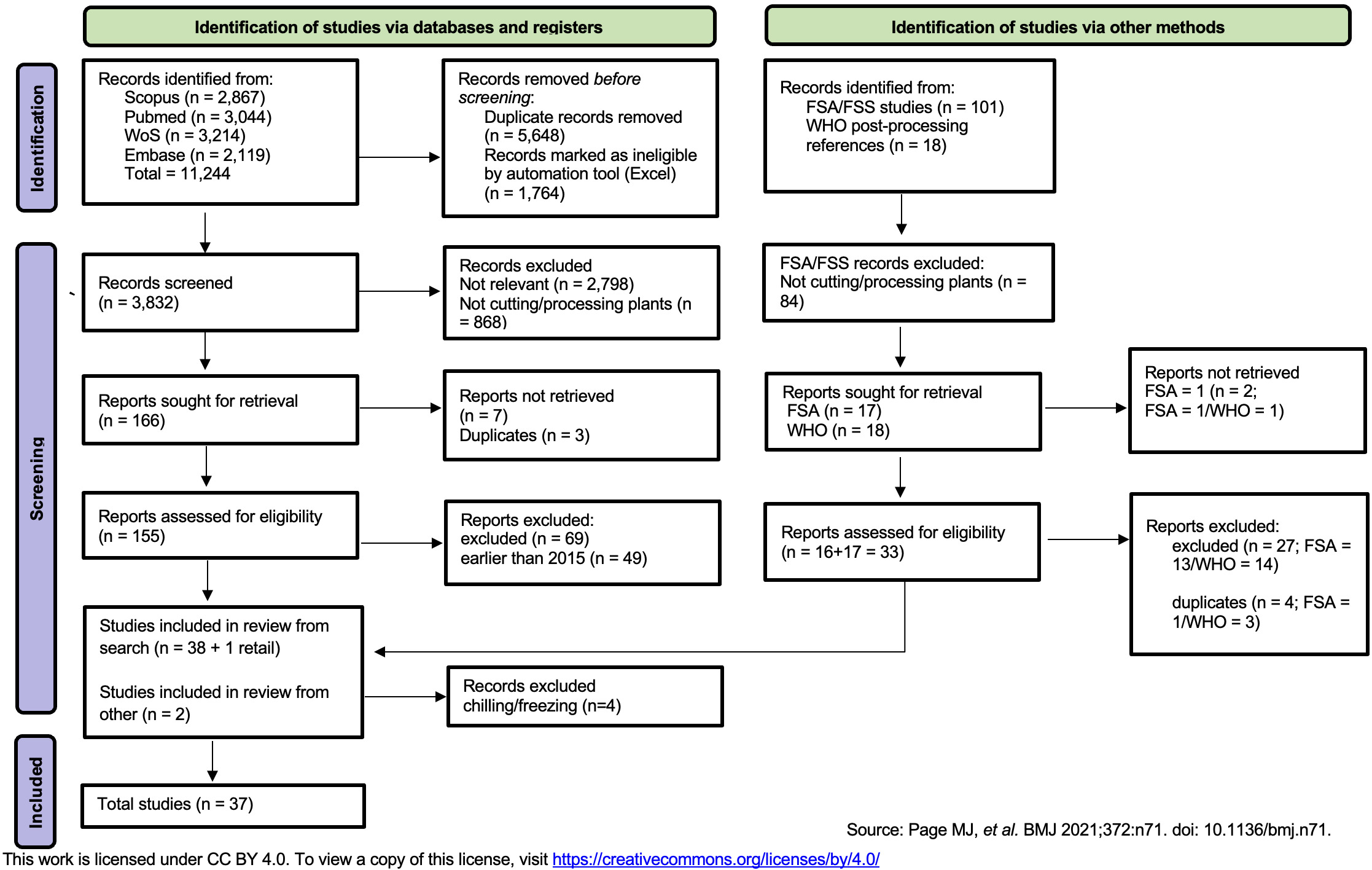
The literature search returned a total of 11,244 references, with 5,596 remaining after deduplication (Figure 1). The automatic screening in Excel resulted in a total of 3,832 references which were further screened by three reviewers reading the title/abstract. Following this screening, 1,034 publications were included in total in four different broiler processing categories (farm=535, slaughterhouse=268, processing/cutting plant=166, retail/consumer/restaurant/catering=65).
After the title/abstract screen, 868 publications were not relevant for this report, leaving 166 publications remaining describing interventions to reduce Campylobacter levels in cutting and processing plants. An additional two references were included from FAO and WHO (2024) and the FSA/FSS-funded research. The flow diagram for the systematic review search and the total number of references retrieved at each step are shown in Figure 1.
Following full text screen, articles that did not have quantitative data on the efficacy of interventions were excluded. Similarly, articles focusing solely on offal, poultry other than chicken, chilling or freezing interventions were excluded.
The full list of included and excluded papers can be found in Annex I.
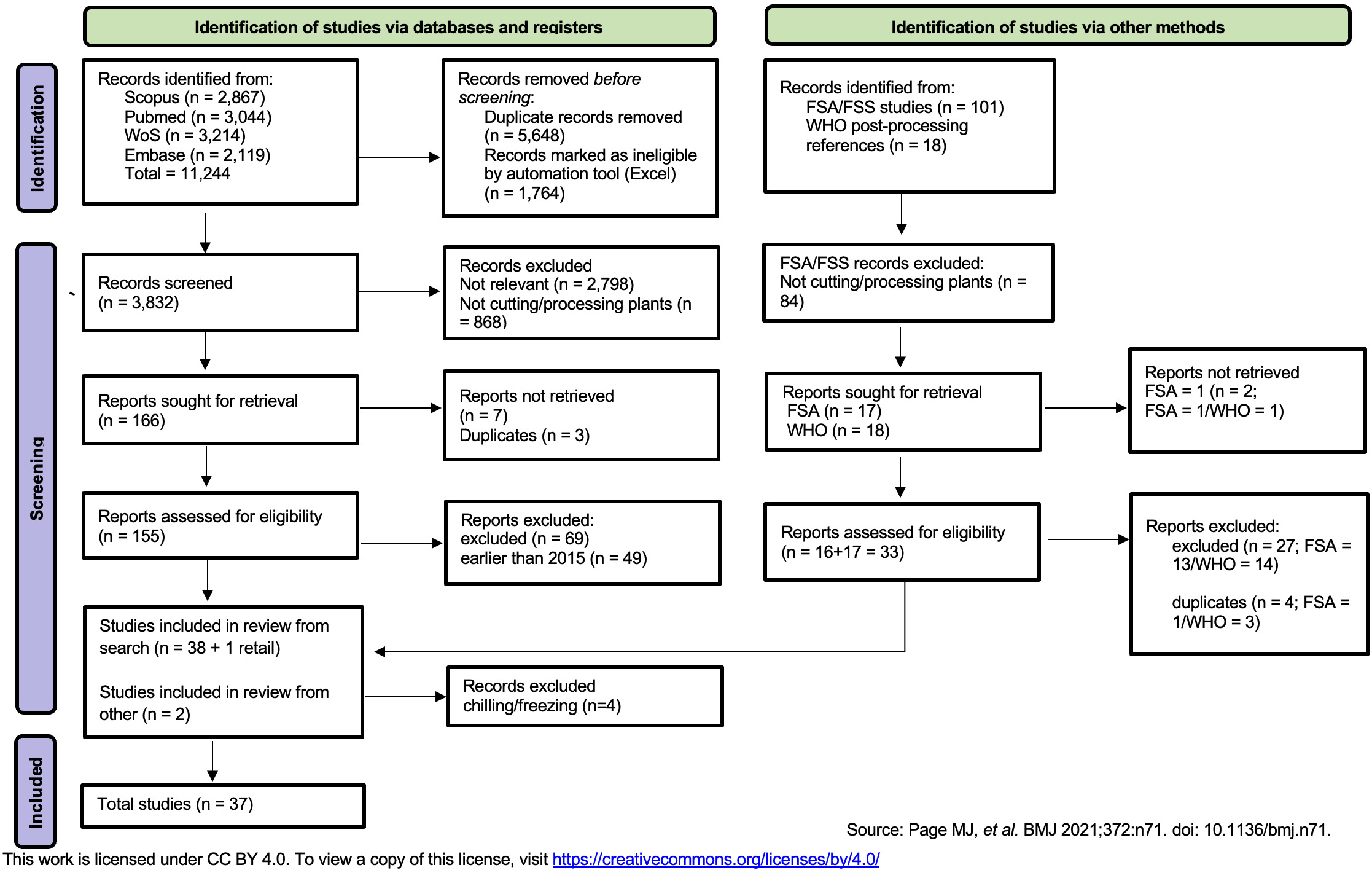
The final number of papers included in the systematic review was 35. The papers were categorised into three intervention themes according to their primary focus:
-
Chemical treatments
-
Non-chemical processes, excluding chilling and freezing
-
Packaging
For the data synthesis, log10 reductions were calculated from the starting and final concentrations of Campylobacter when these data were available, otherwise we used the reported values from the original publications. Within-treatment variability related to details in the experimental design variables such as concentrations of chemicals or meat parts tested were not always accounted for in the discussion, due to inconsistent reporting.
The high diversity of study designs and data reporting, lack of critical statistical information such as standard deviations (SD), standard errors (SE), and covariance of measurements, complicated the comparison of the data. Further quantitative or meta-analysis is recommended as a future project, giving further insights and allowing more robust conclusions to be drawn.
6.2. Effectiveness of interventions
The effectiveness of the interventions was measured as the mean log10 reduction per treatment within a publication as described in the methods.
6.2.1. Chemical interventions and marinades
A total of 17 publications were identified as using chemical interventions or marinades for reducing Campylobacter levels and providing numerical data. These studies were grouped according to the mode of action of the chemical described against bacterial cells. Any given publication could have been assigned to more than one group, depending on the types of treatments/ chemicals that were tested. The groups were as follows:
-
Organic acids (6 publications)
-
Oxidising agents (8 publications)
-
Combined treatments that included at least one chemical (3 publications – discussed in Section 6.2.2)
-
Other chemicals (4 publications)
-
Pure essential oils, broad-spectrum essential oil extracts and marinades (7 publications)
It should be noted that where multiple concentrations were tested in a study, the concentration of the chemicals was found to be an important factor in determining efficacy. The highest concentration of each chemical tested was generally 2-4 times the lowest concentration of each chemical tested. For 13 out of 17 chemicals, where statistical analysis was conducted and chemical concentration was considered as a model parameter, it was shown to have a significant effect on the log10 reduction of Campylobacter, with higher concentrations resulting in larger log10 reductions. These differences ranged from approximately 0.5 to 1 log10 CFU. Differences in the chemical concentrations used in the studies therefore contribute to the overall variability of Campylobacter reductions presented in this section.
6.2.1.1. Organic acids
Organic acids are organic molecules which contain one or more carboxylic acid groups. Short-chain organic acids display antimicrobial activity by diffusing across cell membranes and altering the pH of the cytoplasm, disrupting the cell’s metabolism (Dibner & Buttin, 2002).
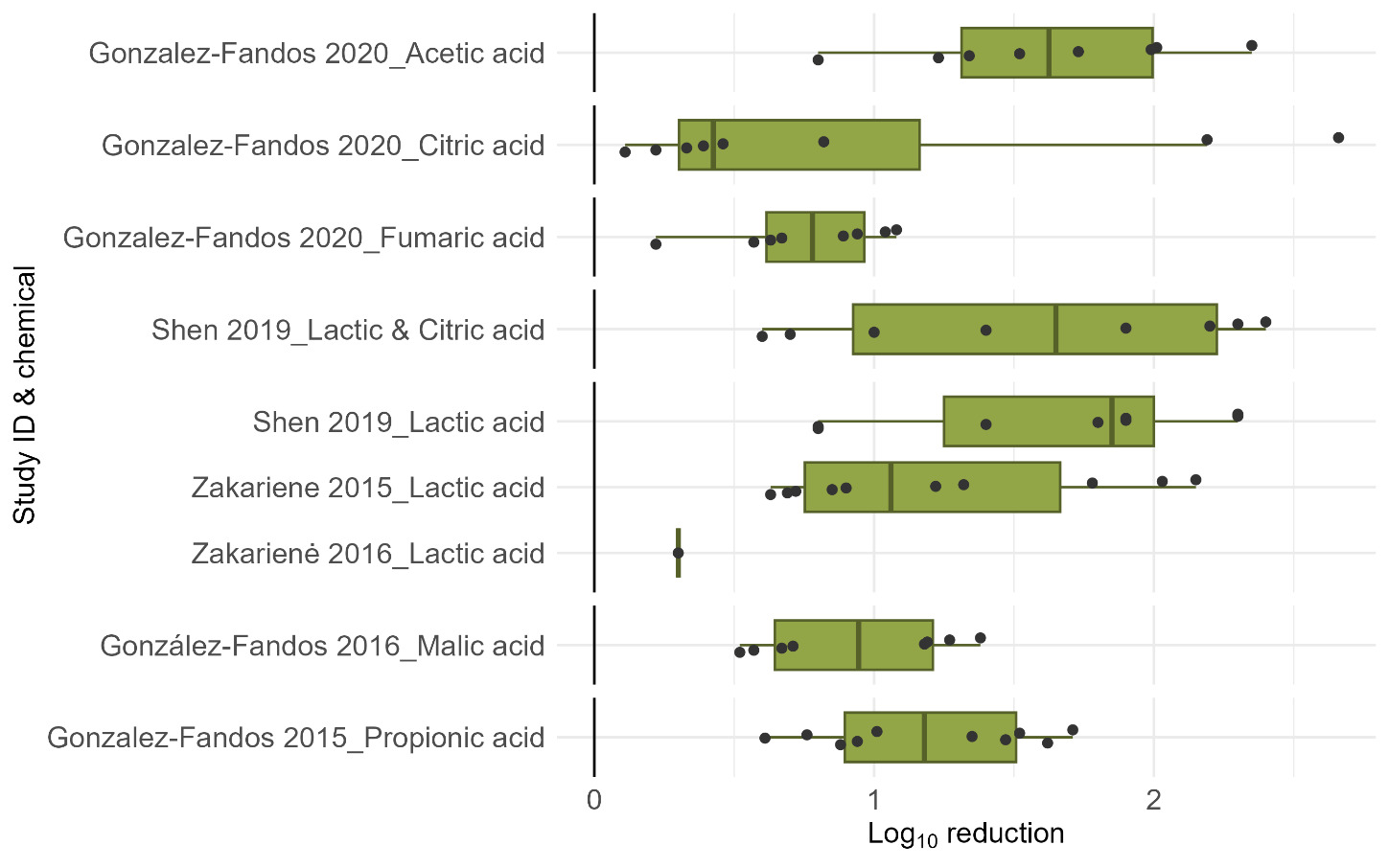
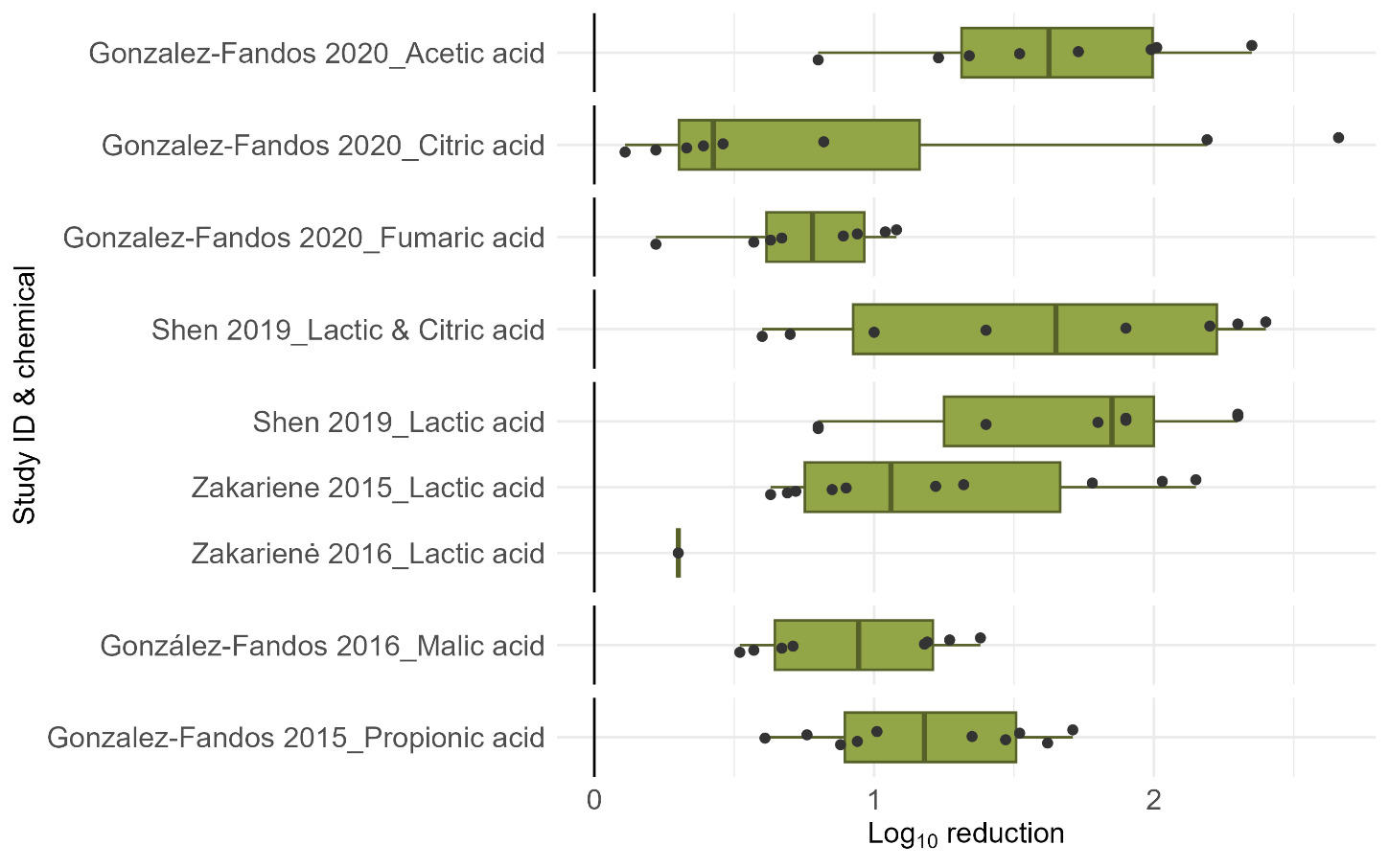
The organic acids tested in the publications and included in this review were: lactic acid, acetic acid, citric acid, fumaric acid, malic acid and propionic acid, with a summary of the conditions and results given in Annex I. Six papers used an organic acid and assessed its effect on C. jejuni on chicken. Three papers used lactic acid, which resulted in a log10 reduction range of 0.3 to 2.3, with the lower log10 reduction seen for lower concentrations of lactic acid (1.5-3% (Zakarienė et al., 2016)) and higher reductions seen for higher concentrations (3-5% (Shen et al., 2019; Zakarienė et al., 2015)). The other four papers used propionic acid, combined lactic and citric acid, acetic acid, malic acid or fumaric acid.
In summary, the observed log10 reductions ranged from 0.11 to 2.66 CFU with median log10 reductions at the study/treatment level as given in Figure 2 and listed below:
-
acetic acid (1.625, IQR 0.68, n=8)
-
lactic acid (Shen et al. (2019): 1.85, IQR 0.75; n = 8; Zakarienė, G., Šernienė, L. and Malakauskas, M. (2015): 1.06, IQR 0.91; n = 10; Zakarienė et al. (2016): 0.30, single sample)
-
lactic and citric acid (1.65, IQR 1.30, N=8)
-
malic acid (0.945, IQR 0.57, N=8)
-
propionic acid (1.18, IQR 0.61, N=10)
-
fumaric acid (0.78, IQR 0.35, n=8)
-
citric acid (0.425, IQR 0.86, n=8)
The within study variability as measured by the IQR was largest for the combination of lactic and citric acid whereas fumaric acid showed comparatively more consistent results with an IQR of 0.35. Between study variability likely reflects differences in experimental conditions such as storage temperature (4°C and 20°C), application times (0.5 min – 8 days) as well as trial numbers and sample sizes. However, the statistical significance of such effects has not been assessed. Generally, longer storage duration and higher concentrations resulted in greater reductions. For example in González-Fandos and Maya (2016), 1% malic acid had a reduction of 0.25 log10 CFU/g immediately after treatment and 2% malic acid had a reduction of 0.55 log10 CFU/g. After 6 days of storage, 1% malic acid treatment had a reduction of 1.67 log10 CFU/g, and 2% malic acid a reduction of 2.26 log10 CFU/g.
Three studies froze the chicken meat and thawed at 4°C before treatment (Shen et al., 2019; Zakarienė et al., 2016). Another three studies stored the chicken meat at 4°C before treatment (González-Fandos et al., 2015; Gonzalez-Fandos et al., 2020). The storage temperature details are not known for Landrum et al. (2017); Shen et al. (2019). Zakarienė et al. (2016) and Gonzalez-Fandos, Martinez-Laorden and Perez-Arnedo (2020) did not store the treated chicken meat. It is not clear if any of the measured reductions could be attributed to the cold storage conditions in these studies (for the effect of cold storage on Campylobacter see the retail, consumers, restaurant and catering report).
6.2.1.2. Oxidising agents
Oxidising agents are chemicals which oxidise (gain electrons from) other chemicals. The antimicrobial mode of action of these chemicals is therefore damage to cellular components by chemical oxidation, causing cell death (Finnegan et al., 2010). Plasma treatments, using an atmospheric pressure plasma jet, were included in this category. This was because while the antimicrobial mode(s) of action for plasma are complex and not fully understood, the main mode is thought to be via generation of reactive oxygen species which cause chemical oxidation (López et al., 2019).
The oxidising agents evaluated across eight publications were peracetic acid (PAA), sodium hypochlorite, hydrogen peroxide + PAA and plasma. Of these, six studies focused on PAA, two investigated plasma, and one study examined multiple substances - chlorine, hydrogen peroxide + PAA, and sodium hypochlorite, as well as PAA alone.
However, the two papers investigating plasma were excluded from analysis for the following reasons:
-
Sammanee et al. (2022): the study reported significant (>2 log10 CFU/g) Campylobacter growth at refrigeration temperatures, raising concerns about data reliability.
-
Rossow, Ludewig and Braun (2018): only minimum and maximum log₁₀ reductions were reported, without mean values.
Additionally, Zhang et al. (2019) was excluded because only approximate log reduction values were given in the text.
The summary statistics used to create the plots and experimental conditions such as temperature and time parameters are provided in Annex I.
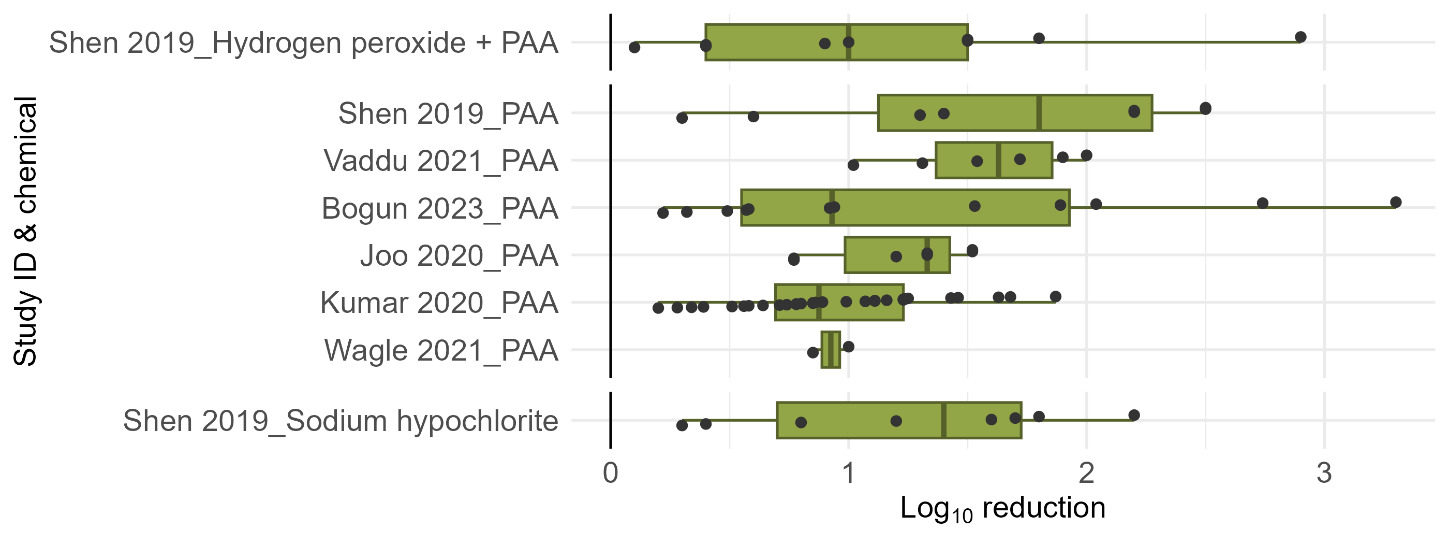
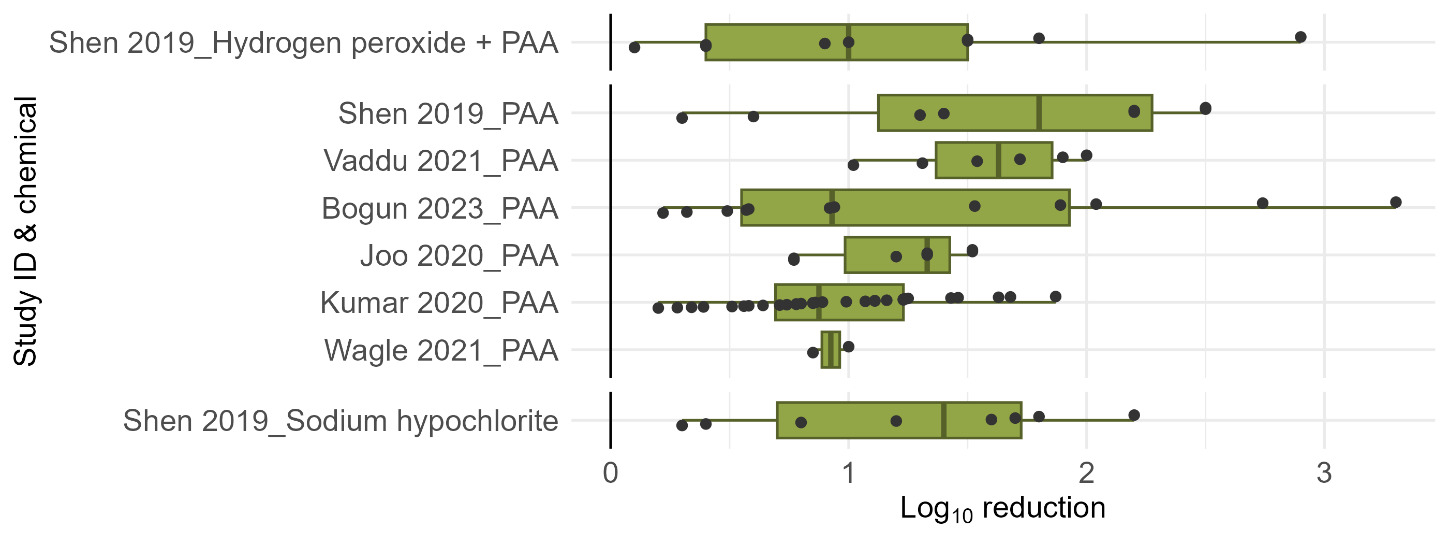
In summary, the observed log10 reductions for PAA ranged from 0.01 to 3.30 CFU with study/treatment medians between 0.875 and 1.80 (Figure 3). Within study variability differed by study:
-
Bogun et al. (2023): median 0.93, IQR 1.38; n = 12; storage 0–2 days.
-
Joo et al. (2020): median 1.33, IQR 0.44; n = 7; 5 min application time.
-
Kumar et al. (2020): median 0.87, IQR 0.54; n = 32; ≈4–10 s application time.
-
Shen et al. (2019): median 1.80, IQR 1.15; n = 8; 0.5 min.
-
Vaddu et al. (2021): median 1.63, IQR 0.49; n = 6; ≈10 s–60 min application time.
-
Wagle et al. (2021): median 0.925, IQR 0.075; n = 2; 60 min application time.
For the PAA+ hydrogen peroxide combination the observed log10 reductions ranged between 0.1 and 2.9 (Shen et al. (2019): IQR 1.1, n=9, 4 °C; storage 4 days). For sodium hypochlorite the range of log10 reductions was from 0.3 to 2.2 (Shen et al. (2019): IQR 1.025, n=8, 0.5 min; temperature not reported).
The differences in application, storage times and chemical concentrations used are likely to explain part of the variability in log10 reductions seen. Most of the papers sampled immediately after treatment, with only Bogun et al. (2023) storing the treated meat for 24 and 48 hours, which may explain the high maximum log10 reduction (3.3) and the higher variability (IQR 1.38) by PAA observed in this paper. Most of the papers using PAA kept the chicken meat at 4°C for the duration of the treatments; Vaddu et al. (2021) and Shen et al. (2019) did not state the temperature during treatment.
Most papers used Campylobacter alone (one or more than one strains), however Kumar et al. (2020) used a cocktail of Salmonella Typhimurium and Campylobacter coli and Vaddu et al. (2021) used a cocktail of Salmonella Typhimurium, E. coli and C. coli to inoculate the chicken meat. Although the papers did not discuss any synergistic or antagonistic effects on the individual strains, it has been reported elsewhere that co-culturing C. jejuni with Salmonella spp. can positively impact on the survival of C. jejuni (Anis et al., 2022).
6.2.1.3. Other chemical treatments
Various other chemical interventions have been investigated for their antimicrobial effects on Campylobacter. This category includes common cleaning agents (cetylpyridinium chloride, ethyl-lauroyl-arginate hypochloride (LAE)), salts of organic acids (potassium sorbate), polysaccharides (pectin, chitosan) and the proprietary, low pH chemical PoultrypHresh.
While the modes of antimicrobial action of these chemicals vary and are not always well understood, the most common mechanism is disruption of the cell wall or membrane (Chen et al., 2012; Ciriminna et al., 2020; Mao et al., 2020; Raafat et al., 2008; Santiesteban-López et al., 2019). LAE is also able to pass through the cell membrane and disrupt metabolic processes in some species of bacteria (Rodríguez et al., 2004).
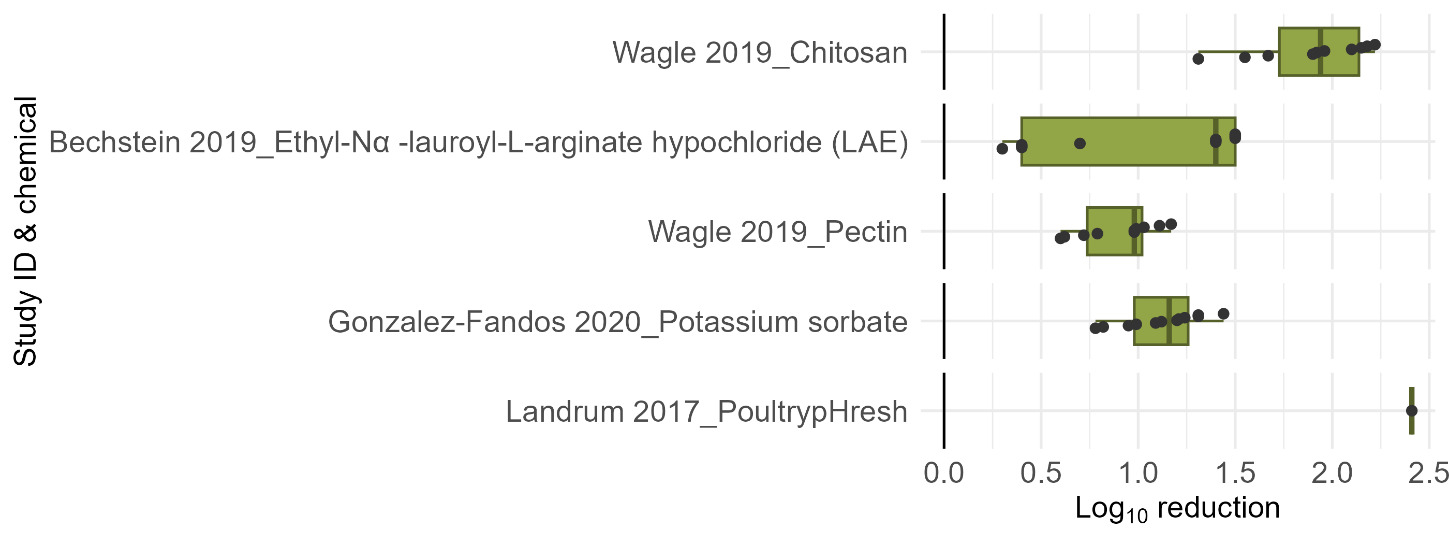
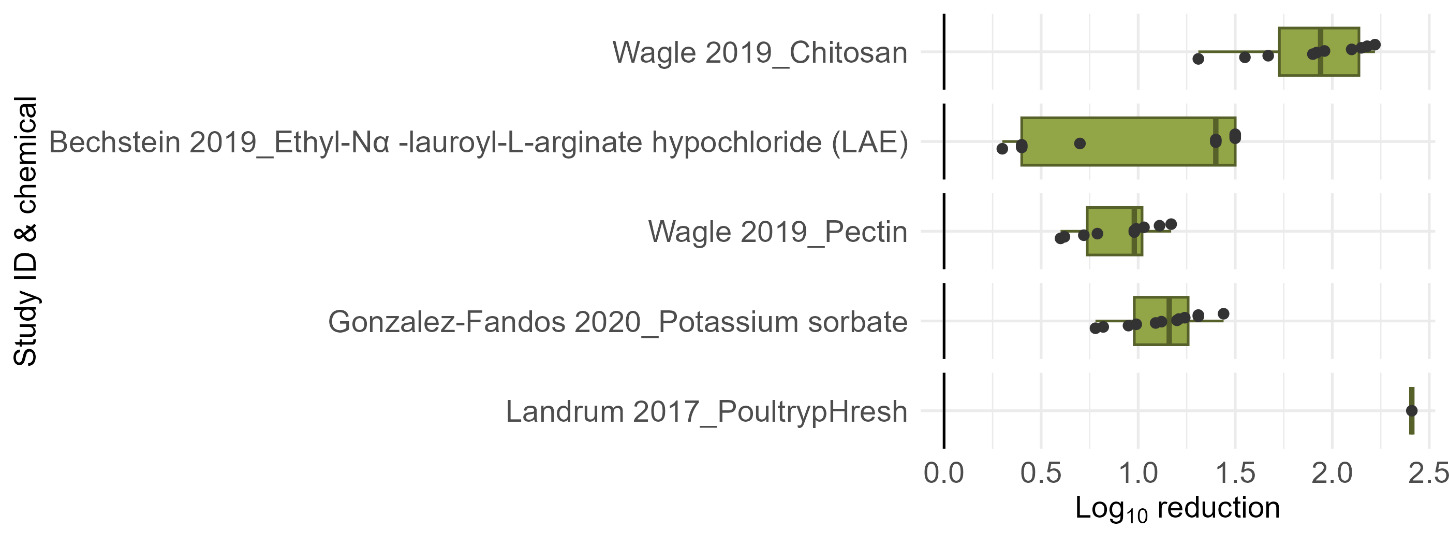
A summary of the experimental conditions and the range of results are given in Annex I. Chemicals in this “other” category had a mixed range of results, with a minimum of reported 0.3 log10 reduction for LAE (Bechstein et al., 2019) and a maximum of 2.41 log10 reduction for PoultrypHresh (Landrum et al., 2017), followed by chitosan (Wagle et al., 2019). In the case of PoultrypHresh, only 1 trial was available, and no other publication tested its efficacy, to our knowledge.
As can be seen in Figure 4, chitosan showed a median of 1.94 (IQR 0.41; n = 10; 4 °C; 0–7 days post-treatment storage), followed by LAE (1.40, IQR 1.10; n = 12; 4 °C; 1–14 days), potassium sorbate (1.16, IQR 0.278; n = 12; 20 °C; 10 min contact), and pectin (0.98, IQR 0.283; n = 10; 4 °C; 0–7 days). Within-study variability (IQR 1.40) was largest for LAE, potentially due to the wide range of storage time (1-14 days). A storage time of between 0 and 7 days did not result in equally large variability for chitosan, as the reductions resulted from using this substance were more consistent, indicating that storage parameters alone cannot explain the variability in outcomes.
An approximate maximum log10 reduction of 4 was reported for cetylpyridinium chloride in Zhang et al. (2019), but this was excluded from data synthesis, as only approximate values were reported in the text.
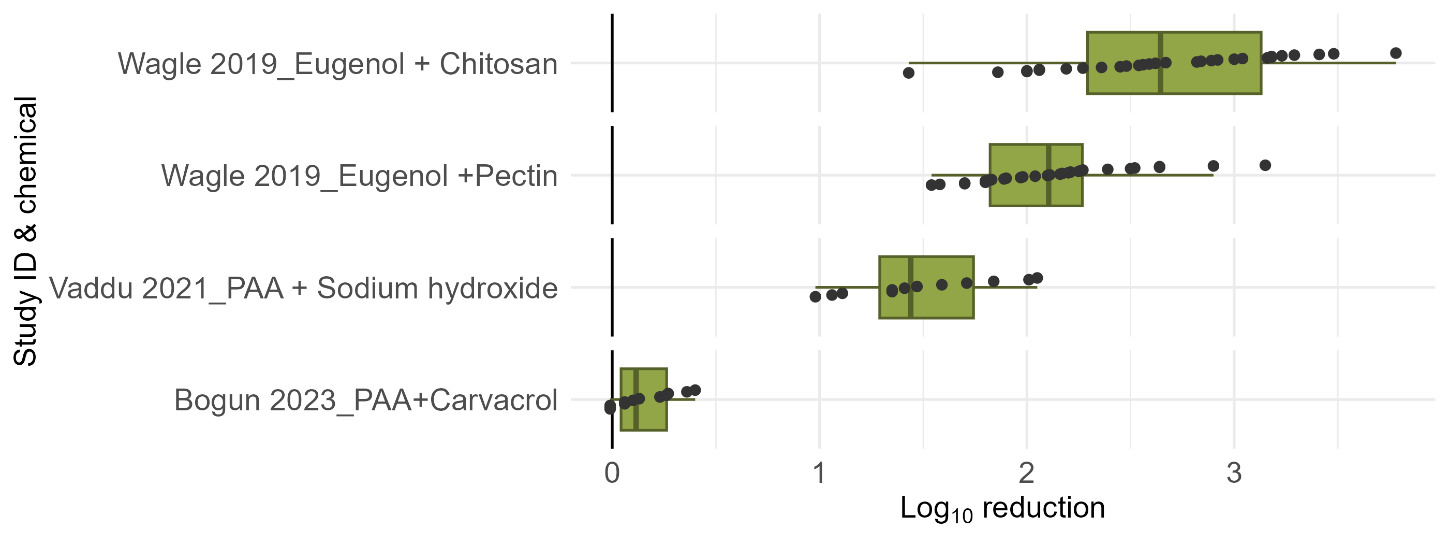
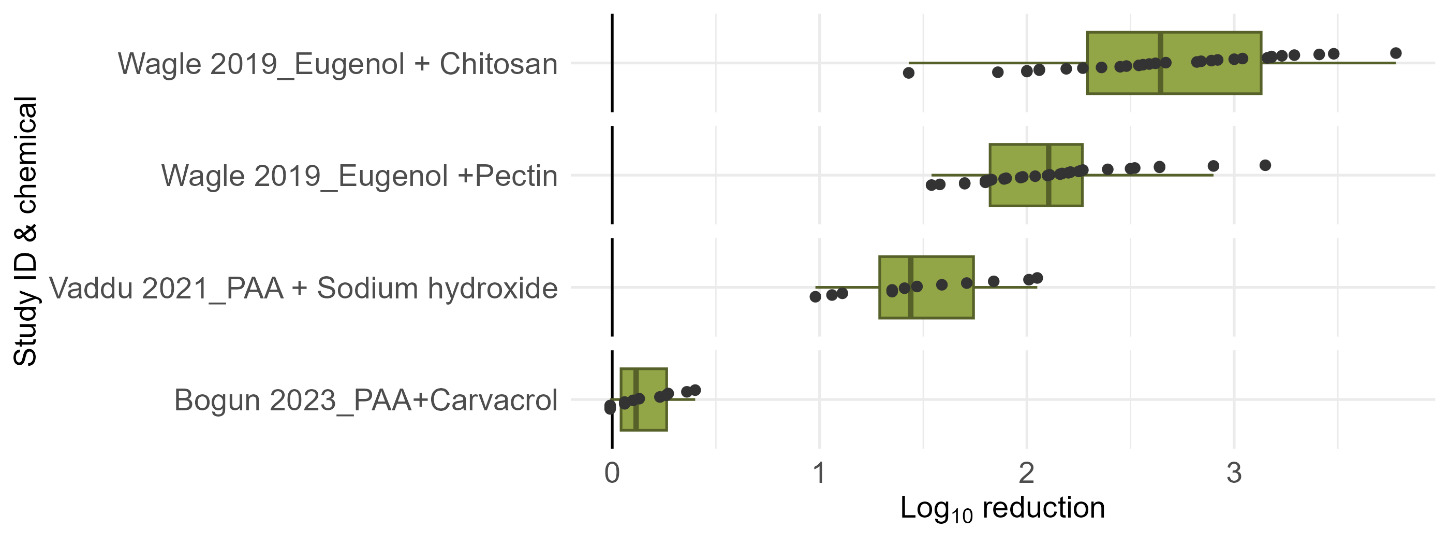
The combined chemical treatments tested by Wagle et al. (2019) were eugenol + pectin and eugenol + chitosan. Eugenol is a phenolic essential oil, pectin and chitosan are polysaccharide coatings. Bogun et al. (2023) looked at PAA + carvacrol. PAA is an oxidising agent and carvacrol is a phenolic essential oil. Vaddu et al. (2021) tested PAA + sodium hydroxide, which breaks down proteins.
A summary of the experimental conditions and the range of results for this group are given in Annex I. Campylobacter log10 reductions in this group ranged from -0.01 (for PAA + carvacrol) to 3.78 (eugenol + chitosan). Coatings containing eugenol showed the highest median reductions (Figure 5):
-
eugenol+chitosan (2,645, IQR 0.838, n=30, 4 °C; storage 0–7 days)
-
eugenol+pectin (2.105, IQR 0.445, n=30, 4 °C; storage 0–7 days)
Combinations with PAA resulted in lower median reductions in comparison:
-
PAA+carvacrol (0.115, IQR 0.22, n=12, 4 °C; storage 0–2 days)
-
PAA+sodium hydroxide (1.44, IQR 0.452, application time 0.17-60 min)
Overall, the type of chemicals appears to drive the between study variability in this diverse group, more than any of the other conditions that we were able to extract information for.
6.2.1.4. Essential oils, broad-based extracts and marinades
Essential oils are the primary active agents in mixtures such as broad-based extracts or marinades. Essential oils are fat-soluble liquids extracted from plant material. While they are extremely structurally and functionally diverse, many essential oils show antimicrobial action in vitro and are of interest as antimicrobials due to their perception as “natural” substances.
Essential oils typically have more than one cell target in their antimicrobial activity, and the specific mechanisms of cell inhibition are not known for all essential oils (Angane et al., 2022). Mechanisms of action include disruption of the cell wall, causing breakdown of the cell (Guo et al., 2021; Helander et al., 1998), interference with bacterial energy metabolism (Friedman, 2017) or generation of reactive oxygen species in the cytoplasm, causing oxidative damage (Marchese et al., 2017). The antimicrobial effects of essential oil mixtures are complex and may be synergistic (Sharma et al., 2020).
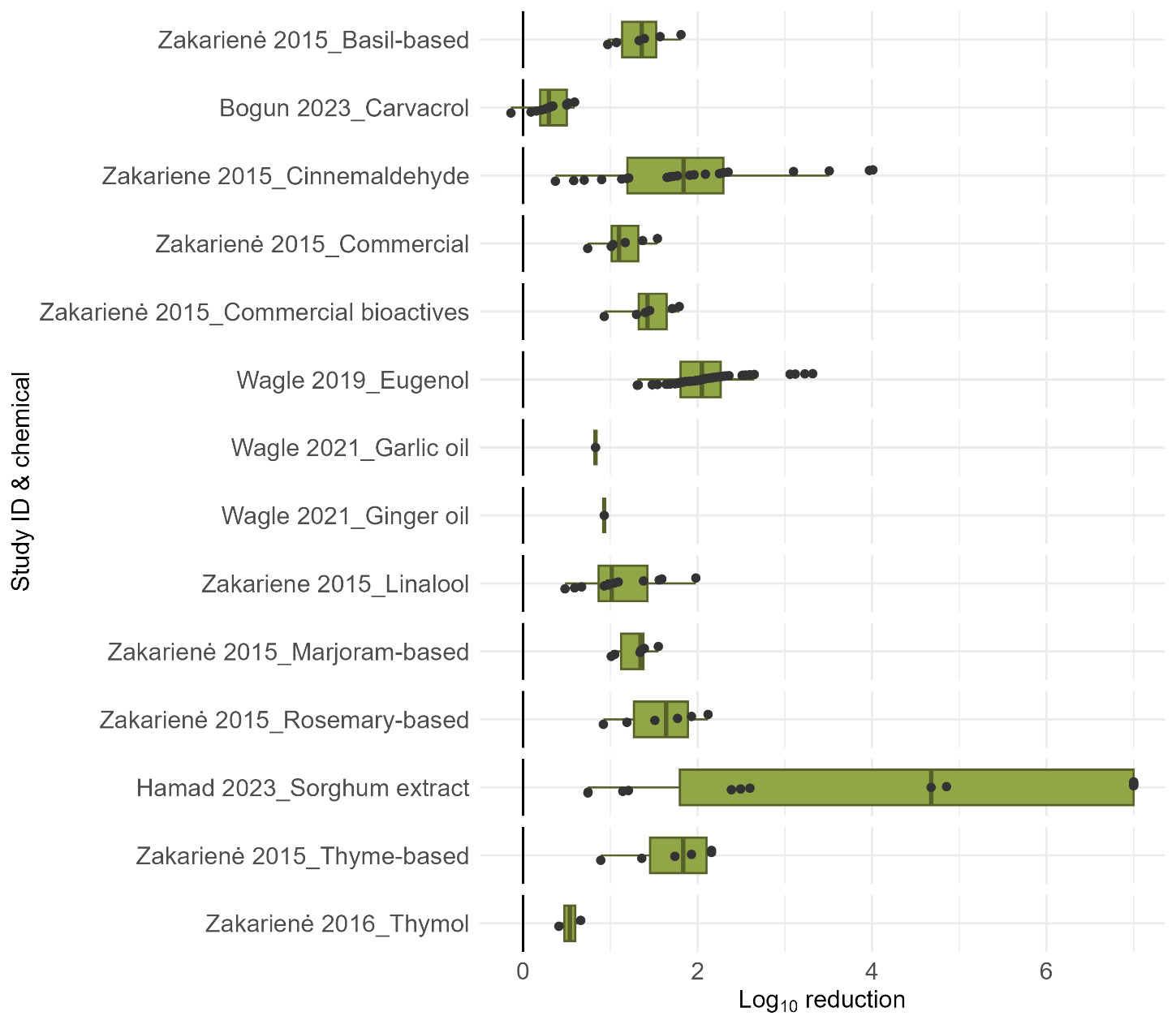
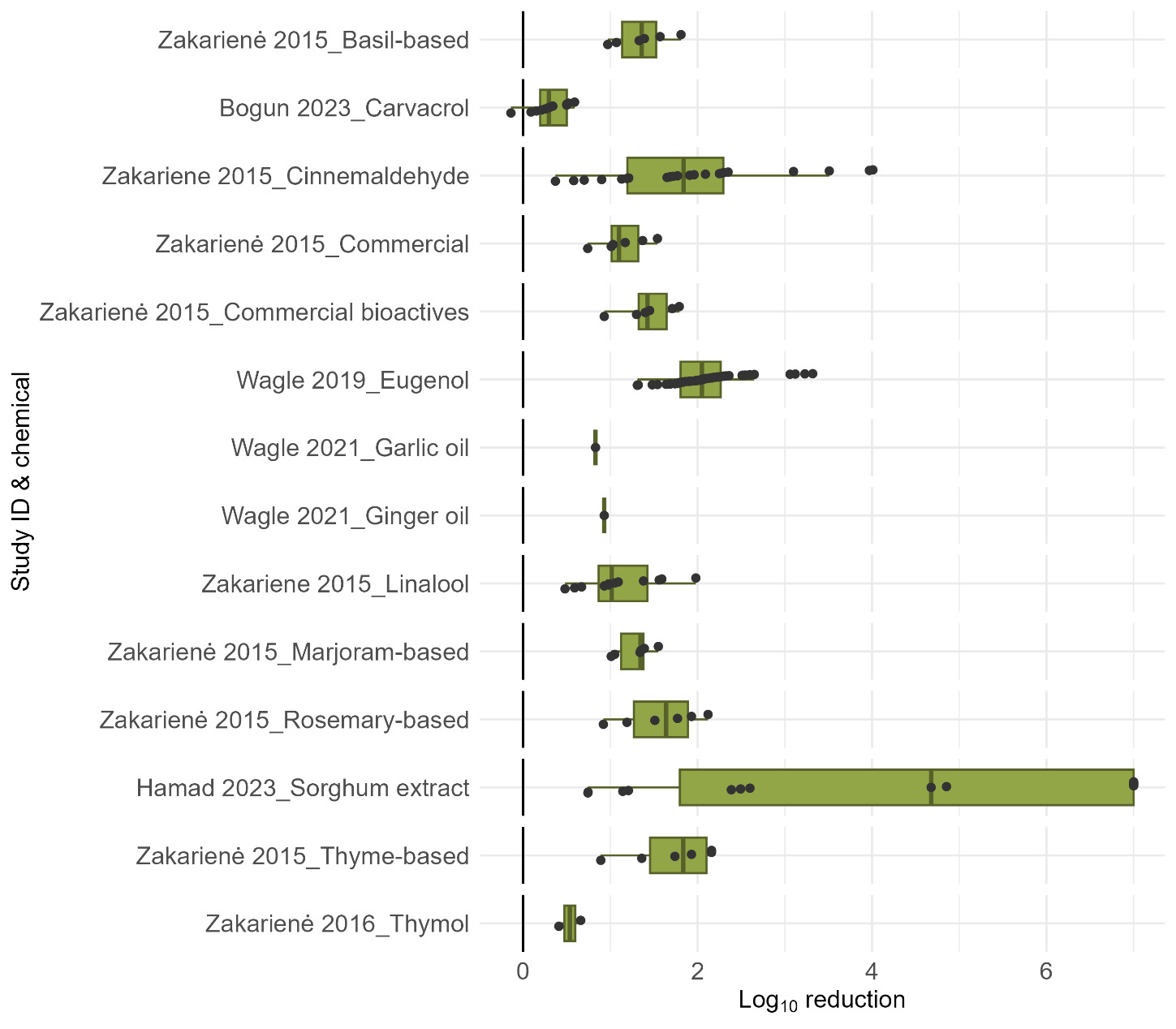
The treatments in this section included carvacrol, sorghum extract, eugenol, garlic oil, ginger oil, linalool, cinnemaldehyde, thyme-based marinade, rosemary-based marinade, commercial bioactives marinade, basil-based marinade, marjoram-based marinade, commercial marinade, and thymol. A summary of the experimental conditions and range of results are given in Annex I.
Seven papers investigated the use of an essential oil, broad-based extracts or marinades with no two studies looking at the same treatment. Most papers stored treated chicken for up to eight days, except Wagle et al., 2021, which tested immediately after treatment.
In most cases, the application of an essential oil, broad-based extracts or marinade resulted in a reduction in Campylobacter levels of up to 4 log10 CFU/g, with the exception of sorghum extract which achieved reported log10 reductions of up to 7 (Hamad et al., 2023), with the highest reductions seen at the highest concentration tested (6%) (Hamad et al., 2023). The authors reported that this concentration was safe for food use based on peripheral blood mononuclear cell cytotoxicity testing and noted no negative impact on the sensory attributes of grilled chicken meat (Hamad et al., 2023). The log10 reduction of 7 in this study was the result of the comparison between the initially inoculated samples (inoculum of 1 × 10⁷ CFU/g) with the samples after marinading for 6, 8 or 10 days.
The rest of the essential oils and marinades tested in the included publications had a median effect of around 0.3 to 2 log10 reduction, with no clear differences between pure essential oils and marinades (Figure 6). More specifically, eugenol showed a median reduction of 2.05 with relatively low within study variability (IQR 0.46, n=60) despite the variability in the storage duration (0-7 days). Cinnemaldehyde demonstrated a median reduction of 1.84 with a relatively larger within study variability (IQR 1.10) and application time between 0 and 240 min. The same application time range used in this study for other extracts (marjoram, basil, rosemary, thyme-based and commercial formulations) did not result in such large spread of results (IQR 0.25-0.65) indicating that application time alone cannot explain the variability seen.
6.2.2. Non-chemical interventions or combinations
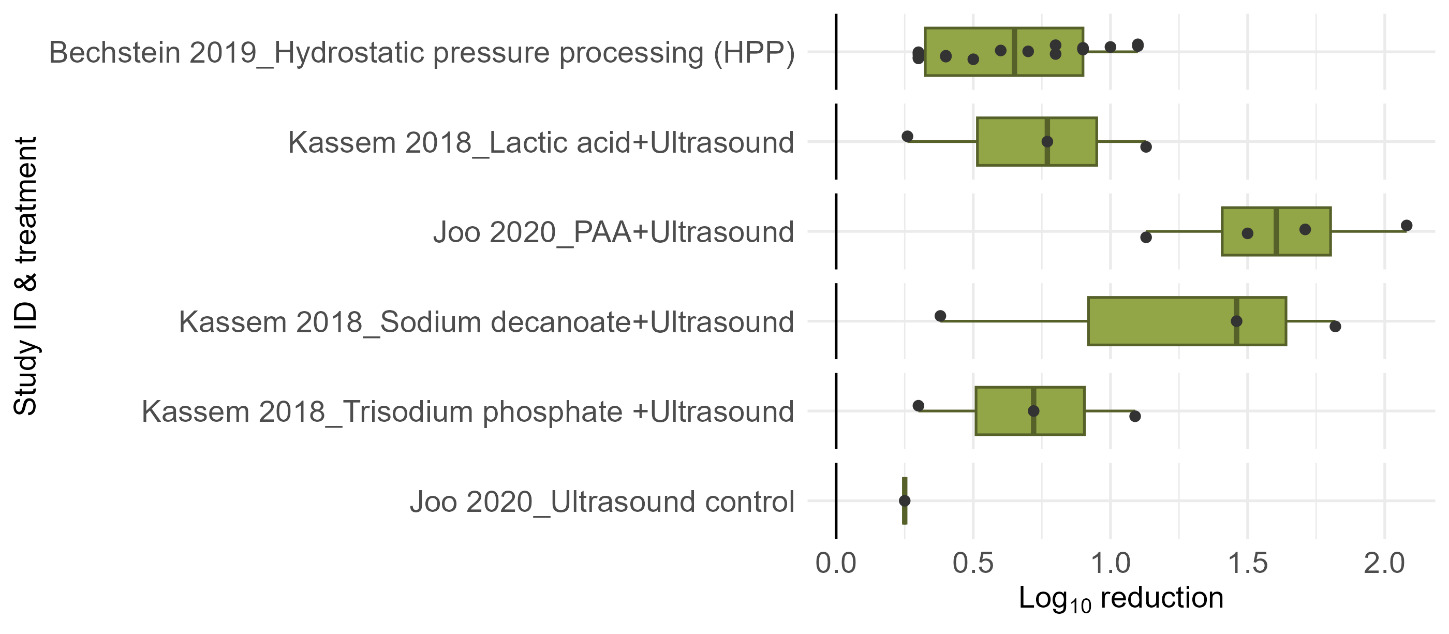
Three studies were identified that assessed interventions such as high-pressure processing (HPP) and ultrasound. In several cases, ultrasound was used in combinations with chemicals, and the combined effect was measured.
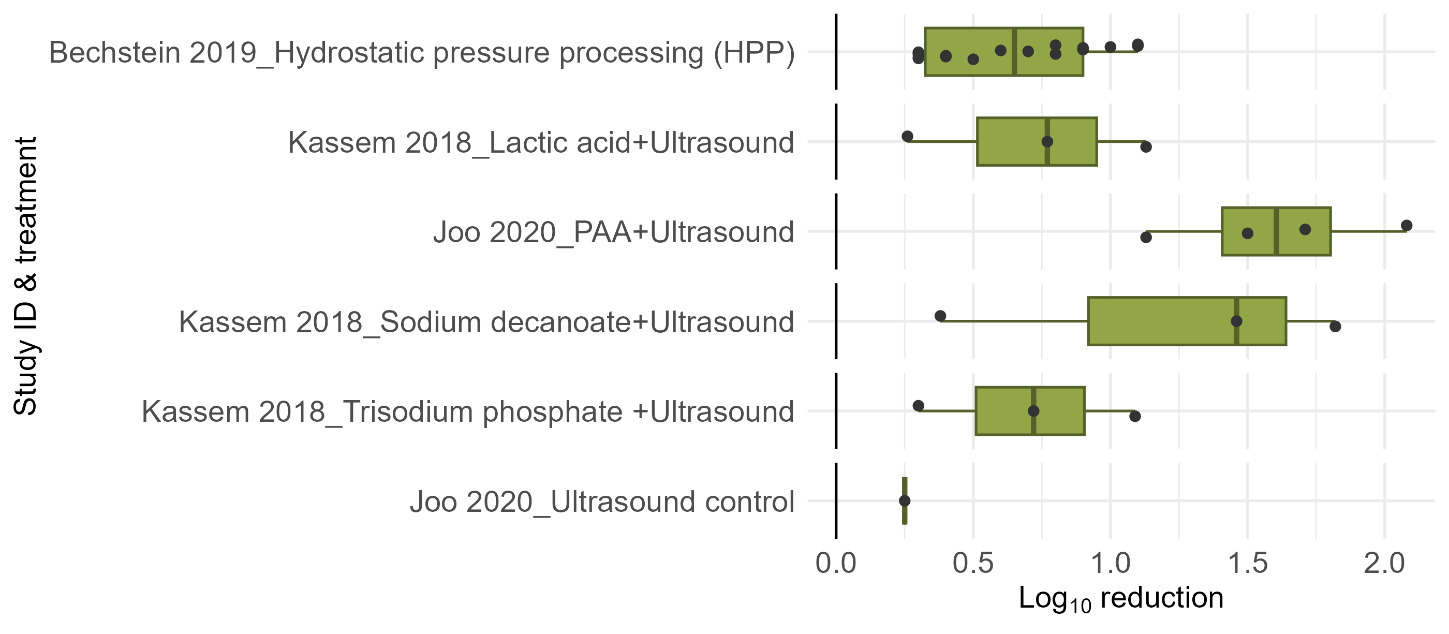
High-pressure processing is a non-thermal food preservation method where food is subjected to high hydrostatic pressure that inactivates micro-organisms and enzymes (Todd, 2014). At optimal pressure, it can achieve microbial inactivation and extend the shelf life whilst preserving vitamin content, flavour and colour (Sun & Holley, 2010). Bechstein et al., 2019 investigated the use of HPP treatments at 0.1, 100 and 200 MPa following surface inoculation of chicken breasts with a high level of Campylobacter (5.9 log10 CFU/g) and concluded HPP treatment resulted in no significant Campylobacter decrease. The reason no effect was observed is suggested by the authors as likely due to the low pressure used, as increasing pressure can affect the quality and colour of the meat by protein denaturation. HPP at 4 °C with 1–14 days post-treatment storage produced a median reduction of 0.65 log10 CFU/unit (IQR 0.575; n=18) (Bechstein et al., 2019).
Ultrasound is another non-thermal method used for food preservation. Ultrasound is defined as sound with a frequency greater than 20kHz (higher than the frequency range audible to humans) (GOV.UK, 2012). The sound waves propagate through food and generate compressions and rarefactions that can inactivate bacteria and extend shelf life (Bhargava et al., 2021).
Ultrasound alone (Joo et al., 2020) resulted in a reduction of 0.25 log10 CFU/unit (n=1). Ultrasound combined with chemicals yielded higher median reductions:
-
PAA + ultrasound (1.605, IQR 0.395; n =4, 4 °C, 5 min) (Joo et al., 2020).
-
3% sodium decanoate + ultrasound (1.46, IQR 0.72, n=3, 1–3 min sonication,) (Kassem et al., 2018).
-
3% lactic acid + ultrasound (0.77, IQR 0.435; n=3, 1–3 min sonication) (Kassem et al., 2018).
-
10% trisodium phosphate + ultrasound (0.72, IQR 0.395; n=3, 1–3 min sonication,) (Kassem et al., 2018).
Kassem et al. (2018) immersed chicken thighs with a Campylobacter suspension (7 log10 CFU/g for 60 seconds, followed by a 30-minute rest period to allow attachment) at three temperatures (4, 25 and 54 °C) for 1, 2 or 3 minutes. Following treatment, the chicken thighs were immersed in distilled water for 15 seconds before microbiological analysis. The effects of this immersion on Campylobacter levels were not assessed.
All treatments except the ultrasound alone at 4°C significantly (P < 0.05) reduced Campylobacter. Combination treatments of ultrasound and chemicals did not result in significantly (P > 0.05) greater reductions compared to individual chemical treatments. It was noted that higher temperatures or extended high intensity ultrasonication, which can result in an increase in temperature, may affect product quality and alter sensory and nutritional characteristics (Lado & Yousef, 2002; Piyasena et al., 2003).
Joo et.al. (2020) investigated the effects of ultrasound and PAA (50, 100, 150, 200 ppm) following inoculation of Campylobacter (7 log10 cfu/g). Reduction following five minutes of ultrasound alone was low (0.25 log10 cfu/g) but following treatment of 50, 100, 150, 200ppm PAA alone was higher (0.77, 1.20, 1.33 and 1.52 log10 cfu/g respectively). Combining ultrasound with PAA achieved the greatest reductions, increasing with greater concentrations of PAA (1.13, 1.50, 1.71 and 2.08 log10 cfu/g respectively).
6.2.3. Packaging interventions
Poultry sold at retail is often packaged either in Modified Atmosphere Packaging (MAP) or Vacuum Packaging (VP) to preserve product quality but also influence microbiological changes during storage. A combination of carbon dioxide (CO2) and nitrogen (N2) gases are often used in MAP at varying concentrations: CO2 inhibits aerobic spoilage bacteria but due to its solubility in water and fat, it can increase the growth of lactic acid bacteria. N2 is therefore used as a filler gas, displacing O2; it also has low solubility in water and fat. VP relies on removing all air from the packaging to create a vacuum (Vakkalanka et al., 2012). Such packaging however, can promote the growth of anaerobic bacteria (Hernández-Macedo et al., 2011).
The use of novel packaging technologies utilising absorbent pads to apply active controls was also explored (Hakeem et al., 2020). Absorbent pads are considered generally non-toxic, as made from food-safe silica gel or plant cellulose, and often found underneath packaged chicken and are designed to absorb excess moisture (Pettersen et al., 2021).
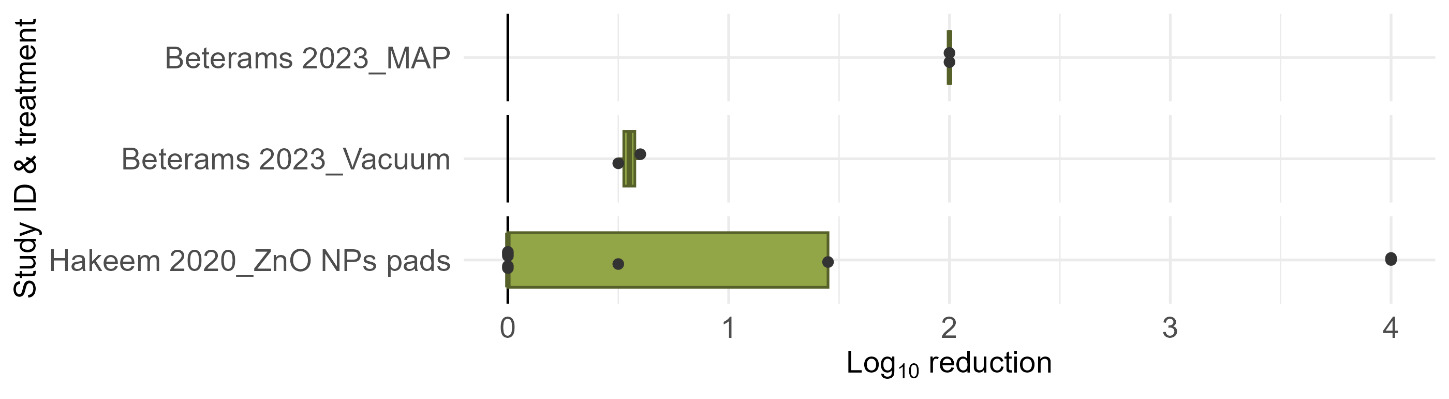
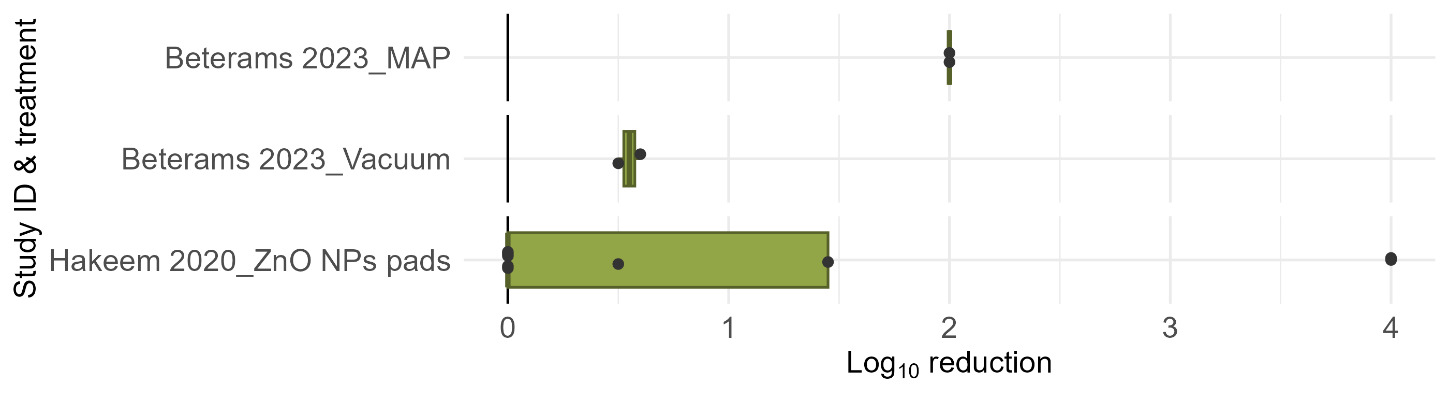
Five studies were identified relevant to packaging interventions but only two provided data which are displayed below (Figure 8). Varying temperature storage conditions between 4 and 10°C were used across the packaging interventions. A summary of the packaging type, summary statistics and experimental conditions are provided in Annex I. The three of these studies that did not provide data (Burfoot et al., 2015; Hulankova et al., 2018; Oh et al., 2017) all concluded that there was no significant difference in Campylobacter levels between air-packed and MAP samples and suggested that MAP’s primary benefit lies in shelf-life extension rather than pathogen reduction.
In summary (Figure 8), reported Campylobacter mean log10 reductions for packaging interventions ranged from 0 to 4 log10. MAP resulted in a median of 2 log10 reduction (n=2) after 13 days at 4-10 °C (Beterams et al., 2023). VP resulted in a median log10 reduction of 0.55 (n=2) under the same storage conditions (Beterams et al., 2023). Zinc oxide (ZnO) nanoparticle pads showed a median of zero (IQR 1.45, range 0-4, n=9) across 1–8 days at 4–7 °C with no reduction seen with ZnO nanoparticles at 0.075 mg/cm2 and 4 log10 reduction at 0.856 mg/cm2 (Hakeem et al., 2020).
Beterams et al. (2023) inoculated the surface of broiler breast meat with a high level of Campylobacter (5 log10 cfu/g) and utilised both culture and a molecular technique to assess bacterial loads. Although the culture-based method indicated that MAP reduced Campylobacter by approximately 2 log₁₀ CFU/g, while VP achieved a reduction of 0.5 log₁₀ CFU/g, viability real time PCR (v-qPCR, designed to detect only live bacterial cells by chemically blocking the amplification of DNA from dead cells) showed no significant observed reduction, which is consistent with the previously mentioned studies, highlighting that culture methods may underestimate Campylobacter levels as non-spore forming bacteria can enter a viable but non-culturable state (Lazou et al., 2021).
Hakeem et al. (2020) demonstrated that Campylobacter jejuni remained viable on untreated raw chicken meat during 8 days of storage at 4°C, despite cold stress. Functionalised absorbing pads containing ZnO nanoparticles showed a concentration-dependent antimicrobial effect:
-
pads with 0.075 mg/cm² ZnO achieved a reduction of ~0.5 log CFU/25 g after 8 days
-
pads with 0.856 mg/cm² ZnO reduced C. jejuni by 1.45 log CFU/25 g within 3 days and achieved complete inactivation (undetectable levels of ≤500 cells) by day 5.
At abuse temperature (7°C), neither concentration reduced C. jejuni within 24 hours, and rapid growth of psychrotrophic bacteria led to spoilage, limiting further testing. Overall, high-concentration ZnO pads were found to be effective for controlling C. jejuni under proper refrigeration but not under temperature abuse conditions.
The antimicrobial effect of ZnO-functionalized pads at 0.856 mg/cm² was strain dependent, with clinical strains (F38011 and Human 10) eliminated within 3 days at 4°C, while agri-food strains (ATCC 33560 and 1173) showed greater tolerance. Nevertheless, all four tested strains were completely inactivated after 5 days of refrigerated storage (Hakeem et al., 2020).
Testing was also conducted to determine whether zinc ions and zinc oxide nanoparticles would migrate from the absorbing pad to raw chicken meat. It was determined no zinc oxide nanoparticles were observed in raw chicken meat, although zinc ion levels did increase, linked to presence of lactic acid. The approach may be promising, but the effect appears to be time-dependent and should be evaluated in the context of product shelf-life (Hakeem et al., 2020) and consumer safety.
Overall, the use of MAP and VP appears to have limited success in reducing Campylobacter in broiler meat and is more beneficial for controlling spoilage bacteria and extending shelf life. The novel use of zinc oxide nanoparticles shows promise but requires further evaluation based on processing timelines and storage duration.
7. Discussion
Campylobacter remains the most common cause of foodborne disease in the UK, with poultry-associated strains the most frequent cause of human infections. This report is part of a series of systematic reviews looking into evidence on interventions that can reduce Campylobacter levels in chicken and chicken products intended for human consumption and focuses on the cutting and processing plant stage. Other reports in the series investigate interventions on the farm, at the slaughterhouse and at retail, consumer, restaurant and catering stages.
Three main categories of interventions applied at the cutting and processing plant stage were identified: chemical, packaging and non-chemical treatments other than chilling and freezing. While cold temperature controls are recognised as interventions with a potentially significant impact on the pathogen at all stages of the food chain from slaughterhouse onwards, they were evaluated as part of the retail, consumer, restaurant and catering report and they are not discussed here.
7.1. Chemical treatments
Organic acids such as lactic, citric, and acetic acids achieved reductions of 0.1–2.6 log₁₀ CFU, with higher concentrations and longer application times yielding better results. This is in line with results seen in Birk et al. (2010). Lactic and acetic acids generally resulted in higher median reductions but larger within and between study variability too. The variability appeared to have been influenced by the type of acid, application time, temperature control and post treatment storage duration. However statistical analysis was not conducted to assess the significance of the effect of the experimental parameters, due to data and time constraints.
Oxidizing agents, particularly PAA, showed reductions ranged from 0.2 to 3.3 log₁₀ CFU, with hydrogen peroxide + PAA combinations reaching up to 2.9 log₁₀ CFU. Variability was at least partially explained by time and temperature differences within and between studies, similarly to organic acids. These reductions are consistent with Campylobacter’s sensitivity to oxidative stress (ACMSF, 2005).
Natural substances in the essential oils and plant extracts category, often used as marinades, demonstrated variable efficacy, typically achieving 1–2 log₁₀ CFU. Sorghum extract demonstrated the highest reduction of 7 log10 CFU. Sorghum grains are high in phenolic compounds which can have antimicrobial properties. In an agar well diffusion assay, sorghum extract was able to inhibit C. jejuni (Schnur et al., 2021). While this is a finding that may warrant further investigation, it should be noted that marinades are rich in organic acids and essential oils which can reduce levels of Campylobacter, but can affect flavour, which might not be wanted by consumers (Meneses & Teixeira, 2022). In the latest review of the evidence by FAO and WHO (2024) certain marinades such as those included in this report (e.g., carvacrol and cinnamaldehyde) were considered to be effective.
Coating combinations of eugenol and chitosan or eugenol and pectin showed the highest log10 reductions (after sorghum) with a median reduction of 2.65 (IQR 0.838, n=30,) for the first combination and 2.13 (IQR 0.445, n=30) for the second. The addition of eugenol to either chitosan or pectin was more effective than the individual substances alone. The proprietary PoultrypHresh also resulted in a reduction at the high end of the spectrum within the studies reviewed (2.41 log10).
Campylobacter is considered to be sensitive to environmental conditions such as high atmospheric oxygen (ACMSF, 2019) and it lacks genes needed to produce an oxidative stress response (e.g. soxRS and oxyR) (ACMSF, 2019). However, some of the perceived reductions using chemicals may reflect limitations in culturability rather than true elimination, as shown in studies using molecular methods to detect viable cells (Beterams et al., 2023).
7.2. Non-chemical interventions
Non-chemical interventions such as HPP and ultrasound offered reductions between 0.25 (based on one datapoint) for ultrasound and a median of 0.65 log₁₀ (IQR 0.6, n=18) for HPP. Ultrasound in combination with chemicals improved reductions by up to 2.08 log10 (median 1.6, IQR 0.4, n=4) when PAA was used.
HPP treatment was the least effective in the reviewed studies, because a low pressure of 200 MPa was used to avoid affecting the quality and colour of meat. Pressures at or above 300 MPa are generally required to reduce microbial load (Campus, 2010).
Although ultrasound appears to be of limited effectiveness in isolation, it had a greater effect in combination with chemical treatments. The surface of chicken breast enables bacteria to reside in feather follicles and crevices, in addition to the flat surface (Jang et al., 2007). These entrapped bacteria can be dislodged by use of ultrasound allowing chemical treatments to work more effectively (Lee et al., 2014).
However, the practical implementation of such interventions depends on safety, cost, scalability, and consumer acceptance. Non-chemical methods such as HPP and ultrasound require significant investment and may affect sensory attributes.
7.3. Packaging environment
Packaging interventions such as MAP or VP are often used for poultry meat sold at retail. Five studies were identified using packaging interventions during the literature search, with only two providing numerical data. One study examined the use of MAP and VP and showed reductions in Campylobacter levels of up to 2 log₁₀, however the limited number of trials did not allow for further discussion on the consistency of results.
The use of MAP and VP in prolonging shelf life has been well studied, with extensions of up to 7 days at 5°C seen (Ntzimani et al., 2023), although the shelf life of chicken is relatively short regardless due to high initial bacterial contamination levels (Balamatsia et al., 2006; Marcinkowska-Lesiak et al., 2016). Beterams et al. (2023) also concluded MAP and VP are primarily effective for spoilage control rather than pathogen elimination.
Studies prior to our 2015 cut-off investigated the effect of varying gas concentrations in MAP, with one particular study concluding higher reductions of Campylobacter levels were seen under high oxygen atmosphere rather than high CO2 (Meredith et al., 2014). This was also consistent with a further study that saw faster reduction in oxygen-containing gas mixtures (Boysen et al., 2007).
There is limited literature investigating the use of VP to reduce Campylobacter levels with studies focussing on cooked chicken breast (Park et al., 2014) and chicken skin (El-Shibiny et al., 2009), but both agreeing reductions were low.
Novel packaging interventions, such as zinc oxide nanoparticle pads, showed potential with a maximum log10 reduction of 4 (IQR 1.45, n=9) after five days, though efficacy was time-dependent and requires assessment against shelf-life constraints. Different concentrations of ZnO were used with the highest (0.856 mg/cm²) achieving the largest reduction. The pads did not reduce C. jejuni within 24 hours at abuse temperature (7°C) and rapid growth of psychrotrophic bacteria led to rapid spoilage which limited further testing. Nanotechnology is a novel approach in regard to improving the quality and safety of foods. Although Hakeem et al. (2020) did investigate whether zinc nanoparticles migrated from the absorbing pad to raw chicken meat and although no transfer was detectable, there are general health concerns of use of nanoparticles by stakeholders, including consumers and the food industry (EFSA, 2011). Regulatory framework in the EU and the UK and industry considerations
While several of the chemical interventions reviewed in this report appear to be effective in reducing Campylobacter levels in chicken meat, their implementation must align with regulatory requirements. In the EU (including Northern Ireland) and the UK a farm-to-fork approach is followed, where appropriate hygiene measures and processes are required throughout the food chain. Hygiene rules for products of animal origin such as chicken meat are laid down in Regulation (EC) 853/2004 (EU, 2004b), which was assimilated in UK law after EU Exit. This regulation prohibits the use of chemicals to decontaminate poultry carcasses unless an approval is granted. To date no chemical treatments have been authorised for use on poultry or other meat, with the exception of lactic acid for use on the surface of bovine carcasses (Regulation (EU) 101/2013) (EU, 2013).
Consumer acceptability is a critical factor in the adoption of interventions by the industry. For example, marinades and essential oils, although of interest due to their natural origin, are likely to impact on the organoleptic properties (flavour and odour) of the meat in ways that do not meet consumer approval. Similarly, prolonged applications or high concentrations are likely to impact on the organoleptic properties and texture of the products and/or the scalability of the treatments, although this would vary a lot between treatments.
Packaging technologies such as MAP and VP are widely used to extend shelf life and product quality, but they are not targeting Campylobacter. Approaches such as nanotechnology have raised concerns in relation to the use of nanoparticles by stakeholders, including consumers and the food industry (EFSA, 2011).
Any interventions must take into account the shelf-life of chicken meat to ensure relevance and practical implementation. According to ACMSF guidelines for vacuum packaged meat, chicken meat has a shelf life is 10 days (AMCSF, 2020) and it is unlikely that it would be stored beyond this period.
No single intervention can eliminate Campylobacter risk; instead, a hurdle model or a multi-barrier approach across the food chain is recommended by ACMSF (2019) and FAO and WHO (2024). Meanwhile, ACMSF (2019) also highlighted the need for clear instructions on the packaging in relation to cooking requirements and importantly, the effectiveness of the collaborative approach between the government and the industry.
Finally, it should be noted that this report did not assess the consumer safety of the substances or other treatments discussed, nor their long-term implications (such as antimicrobial resistance), suitability for use or practicality for large-scale implementation.
8. Conclusion
Overall, interventions at the cutting and processing plant level can contribute to reducing Campylobacter contamination, but their effectiveness and practicality vary. Chemical treatments—such as organic acids, oxidizing agents, and certain plant-based extracts—generally achieve reductions of 1–2 log₁₀ CFU, with some innovations like sorghum extract showing higher efficacy. Combined treatments (e.g., eugenol with chitosan or pectin) also demonstrated promising results. Non-chemical interventions, including high-pressure processing and ultrasound, are comparatively less effective when used alone, but show improved performance when combined with chemical treatments. Packaging technologies such as Modified Atmosphere Packaging (MAP) and Vacuum Packaging (VP) primarily extend shelf life rather than impacting on Campylobacter levels.
Overall, no single intervention can eliminate Campylobacter risk at the cutting and processing plant stage. A multi-barrier approach across the food chain remains essential, supported by standardised protocols, large-scale validation, and consideration of consumer acceptance, cost, and regulatory compliance.
9. Knowledge gaps and key uncertainties
Systematic review methodologies are largely developed for healthcare research, using standardised evaluation methodology. In contrast, food safety studies often use different study designs (e.g., before-after or challenge trials), study settings (e.g., laboratory, commercial plant), inocula (naturally occurring or cultured; single strains or cocktail of strains), treatment time, sampling type (e.g., rinse or swab), or ways of reporting. This heterogeneity makes it difficult to determine whether variations in reported outcomes reflect differences in the efficacy of the intervention or in study designs and parameters.
The reporting and use of values relevant to statistical analysis such as sample sizes, standard deviation (SD), standard error (SE), covariance or exact parameters used in the statistical models was inconsistent. Additionally, raw data that could compensate for such shortcomings were rarely reported. When data were reported, they were often incomplete or based on small sample sizes. As a result, calculating statistical values such as SE and confidence intervals was not straightforward. These limitations reduced the generalisability of the findings in this report. Further quantitative analysis or meta-analysis is recommended to overcome this limitation, allowing more robust conclusions to be drawn about the relative effectiveness of the interventions.
Due to the uncertainty around the culturability of Campylobacter and the high variability in experimental conditions (e.g., chemical concentrations, application times, storage times, storage temperatures and reporting parameters, including critical statistical values and raw data) further validation of the outcomes of the reviewed studies is required. Ideally, such validation will need to be undertaken after protocol standardisation and subsequent large scale pilot studies to determine applicability to industry settings. Impacts on the sensory qualities of the food products should also be considered during study design and protocol standardisation.
Future research would benefit from the development and adoption of community reporting standards, especially for more novel methods such as v-PCR to assess viability, to enhance comparability, improve clarity and support interpretation of outcomes. This is particularly important considering the biology of Campylobacter and the challenges associated with culturing it in the laboratory, as it can enter a viable but not culturable state (VBNC) (Lazou et al., 2021).
Strain variability may also influence the efficacy of interventions as was noted in one of the studies (Hakeem et al., 2020). Various clinical and agri-food strains of Campylobacter were used in the studies reviewed here but the associated effect on efficacy could not be elucidated.
Experimental conditions often involved a refrigeration storage stage that was not accounted for in the measurement of intervention efficacy on the bacterial load. Since cold temperatures reduce Campylobacter levels (see retail, consumer, restaurant and catering report), this introduces uncertainty around the efficacy of the measured interventions. Such uncertainty may be reduced when high levels of bacteria are used for inoculation, but non-realistic contamination levels may overestimate the effectiveness of the interventions assessed.
10. Recommendations for further research
-
Conduct further quantitative analysis or meta-analysis on the results of the studies assessed to characterise the significance of the interventions in the context of the experimental variables used across the studies.
-
Conduct comparative studies using standardised and realistic Campylobacter inoculation levels, meat types, sampling methods, detection methods to directly compare the efficacy of different interventions.
-
Conduct studies to assess the efficacy of interventions on different Campylobacter strains, with a focus on naturally occurring contamination. If artificially contaminated studies are to be conducted, the concentration of the inoculum will need to be within natural contamination levels to avoid overestimating the effectiveness of the intervention.
-
Design studies utilising methods able to detect viable but non-culturable bacteria, such as v-qPCR, in order to assess the efficacy of interventions more accurately, i.e., estimate the amount of living bacteria after the intervention and calculate potential misestimations using traditional methods
-
Conduct further laboratory studies to evaluate the impact and safety of interventions that showed promise in laboratory settings before considering larger pilot studies in collaboration with the industry.
-
To ensure efficient use of resources, apply Technology Readiness Levels (TRLs) to classify intervention maturity and guide decision-making (GOV.UK, 2014). TRLs offer a structured scale (1–9) to benchmark progress from concept to full-scale deployment, ensuring interventions are evaluated consistently and implemented when scientifically and operationally ready.
-
Investigate safety aspects and potential long-term consequences (e.g. antimicrobial resistance) of interventions that appear to be consistently promising to generate a robust evidence database.
-
Investigate consumer attitudes toward interventions such as essential oils once safety concerns and effectiveness have been established.
11. Acknowledgements
We wish to acknowledge the Food Standards Agency Statistics Team for their contributions to this work. In particular, we extend our thanks to Mark Jitlal for his expert statistical guidance and review, which enhanced the analytical quality of this review.