
Lay summary
Campylobacter is the leading cause of food poisoning in the UK, with chicken meat being the most common source of Campylobacter exposure. Campylobacter does not cause illness in chickens, and is widespread in chicken farms, with 60% of UK broiler flocks carrying Campylobacter by the time they are slaughtered. Reducing Campylobacter in broiler flocks is therefore potentially an opportunity to reduce human exposure to Campylobacter via chicken meat.
This review, which formed part of a wider assessment of interventions to reduce Campylobacter in chicken meat across the processing chain, looked at evidence for practices which could reduce the prevalence of Campylobacter in broiler flocks. Farm management measures such as preventing unnecessary entry into broiler houses, using dedicated boots and clothing, and cleaning hands and footwear were found to reduce the risk of Campylobacter entering the flock. However, the studies did not show which measures work best, and many highlighted the challenge of maintaining these practices, especially under real farm conditions.
Removing a proportion of a flock early for slaughter (to cater for demand for smaller birds), and poor cleaning between flock cycles, especially in older or lower-quality housing, were also linked to higher levels of Campylobacter in broiler farms. Campylobacter may also spread during transport of chickens to the slaughterhouse, due to stress, close crowding or poorly cleaned transportation equipment.
Other potential sources, such as feed, water, litter or parent birds, appeared to be less important. Evidence for the effect of other domestic animals on the farm, or wildlife or pests, was mixed, although adjacent broiler houses were found to increase the risk of Campylobacter.
Overall, this review found that good hygiene and farm management practices remain the best tools available, but that further research is needed to understand how Campylobacter spreads on broiler farms and which interventions can best reduce its prevalence.
1. Executive Summary
An umbrella review, based on three systematic reviews which included meta-analysis and two systematic reviews with qualitative outcomes, was conducted to evaluate the evidence for risk factors for Campylobacter prevalence in broiler farms. This umbrella review focused on eight risk factor categories: animal-related; vertical transmission; water, feed & litter; environmental; equipment & vehicle, external & regional; farm management & biosecurity; and pests & wildlife.
Quantitative assessment of different risk factors was limited due to variabilities in study design, methodologies and outcomes measured across the included reviews as well as the analytical tools chosen for this study; further quantitative analysis or meta-analysis is recommended for drawing robust conclusions. Farm management & biosecurity was highlighted by all reviews as a crucial factor in controlling Campylobacter colonisation, although there was a lack of quantitative prevalence estimates to support this. While there was evidence for transmission between broiler flocks and adjacent domestic animals, wildlife and pests, and external environmental sources, the relative importance of these transmission routes and the directionality of spread could not be determined. Transmission of Campylobacter during transport from the farm to slaughterhouse was also identified as a risk factor. Vertical transmission, feed, water and litter were not determined to be important risk factors, although they cannot be ruled out in rare cases.
Overall, this report highlights the need for high-quality, standardised studies investigating the sources of Campylobacter in broiler houses, including investigations into genetic linkage and the directionality of spread, and the effectiveness of biosecurity and hygiene interventions in preventing colonisation of broilers by Campylobacter from animals and external environmental sources.
2. Introduction
Campylobacter species, particularly Campylobacter jejuni and Campylobacter coli, are the leading cause of bacterial gastroenteritis in the UK, contributing to significant public health and economic burden. In England there were 70,352 laboratory confirmed cases of Campylobacter infections in 2024 (UKHSA, 2025). Source attribution studies in the UK and other EU countries have identified the consumption of chicken meat as the most frequent source of Campylobacter infection (Cody et al., 2019; EFSA & ECDC, 2023; McCarthy et al., 2025).
C. jejuni and C. coli are responsible for approximately 90–95% of human cases globally. While C. jejuni is typically the dominant species in most regions and settings, the relative contribution can vary depending on factors such as geography, host species, and food production systems (FAO & WHO, 2024). Campylobacter species are non-spore forming, micro-aerophilic, motile spiral-shaped cells with optimal growth temperatures between 37°C and 43°C. Therefore, poultry are a favourable commensal (non-pathogenic) host as they have an internal intestinal temperature of 42°C (ACMSF, 2019).
As part of a wider strategic risk assessment, the Food Standards Agency is addressing the following question:
“What interventions have been tested for reducing Campylobacter load in chicken meat across the food chain and which ones have been found to be effective?”
This report discusses interventions that have been used on the farm only.
Campylobacter is common in chicken flocks in the UK, with approximately 60% of housed broiler poultry being Campylobacter-positive at slaughter age (ACMSF, 2019). The management of Campylobacter risk factors at the rearing stage is therefore an important first step in reducing Campylobacter transmission through the food chain (Abd El-Hack et al., 2021). Given the ubiquity of campylobacters in the environment and following the reduction in antimicrobial use in farming due to concerns around antimicrobial resistance, interventions to reduce Campylobacter colonisation of broilers at the farm typically focus on preventing entry of bacteria into the flock or reducing the spread through a colonised flock (e.g. by improving the resistance of birds to colonisation). For exclusion to be achieved, the most important sources of flock infection and the most effective interventions to prevent infection must be identified.
This umbrella review therefore focuses on research which assesses interventions at the rearing stage of poultry production, synthesising evidence from existing systematic reviews, key research funded by the FSA and FSS, and recent reports from the Advisory Committee for the Microbiological Safety of Food (ACMSF) and the European Food Safety Authority (EFSA) Panel on Biological Hazards (BIOHAZ), to evaluate the key risk factors for Campylobacter prevalence on broiler farms.
2.1. Previous FSA work on Campylobacter spp.
In 1993 the Advisory Committee for the Microbiological Safety of Food (ACMSF) issued an interim report on Campylobacter, collecting information on the bacterium, including effective interventions throughout the food chain that could result in the reduction of the risk (ACMSF, 1993). The report discussed control measures in the context of unfavourable growth parameters for Campylobacter spp., such as water activity, salinity, pH, oxygen, storage temperature and heating. The need for hazard and critical control point (HACCP) protocols and personnel training was highlighted in this report.
In 2000, a working group was set up to investigate knowledge gaps and the outcomes of the recommendations provided in 1993 with the aim to support the FSA strategy of reducing human campylobacteriosis. The ACMSF Second Report on Campylobacter was published as a result of this working group and it focused on reducing Campylobacter in poultry meat (ACMSF, 2005). The report produced 33 recommendations, including for the government and the industry. Sources of the pathogen on farm were discussed extensively in this report and the recommendations focused on biosecurity at the farm level, including improved crate washing, and use of personal equipment such as clothing and footwear. The working group highlighted thinning (partial depopulation of a flock) as a key risk factor and recommended urgent improvements to biosecurity measures during thinning, or a discontinuation of the practice if improvements could not be made.
The Third Report on Campylobacter was published in 2019. This report discussed several areas where there had been new information since the previous report, including epidemiology, genetics and genomics, risks in the food chain and people’s attitudes towards risk. The report found that no single intervention in the poultry food chain can reduce Campylobacter to levels sufficient to prevent human illness, although levels can be reduced by a combination of farm and processing controls.
3. Methods
The principles of PICo (Population, phenomena of Interest, Context) were the basis on which systematic reviews were considered for inclusion in this review.
-
Population: Broilers at farm / rearing stage
-
Phenomena of Interest: Interventions to reduce Campylobacter colonisation of broilers
-
Context: Have these interventions been successful in reducing colonisation?
Factors such as vaccines, bacteriophage and feed additives were considered out of scope for this umbrella review, as there are currently no commercially available vaccines or bacteriophage-based products for the control of Campylobacter, and evidence for other feed additives such as organic acids and probiotics remains limited to pilot studies (FAO & WHO, 2024). The role played by breeder farms in maintaining Campylobacter-negativity in broiler stock was also out of scope for this umbrella review, although vertical transmission from parent broilers to their progeny was considered.
3.1. Search strategy/study inclusion
For the systematic reviews, the FSA’s LitFetch tool, hosted by shinyapps.io, was used to perform key word searches on Ebsco, Pubmed, Scopus, and Springer, using the online search interfaces for each service. This tool provides automatic deduplication when a reference is returned by multiple services. The search terms used include Campylobacter AND review AND biosecurity. The search date was from 1st January 1980 to 24th May 2024.
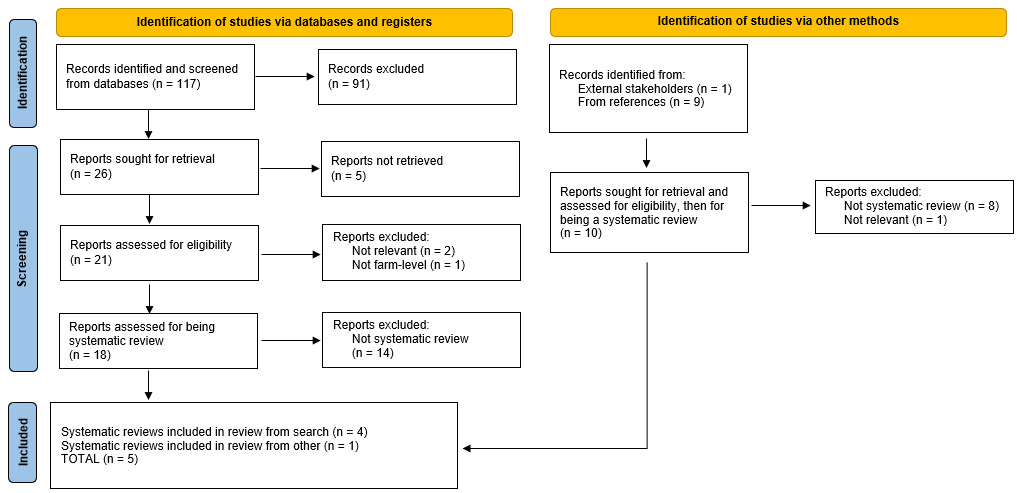
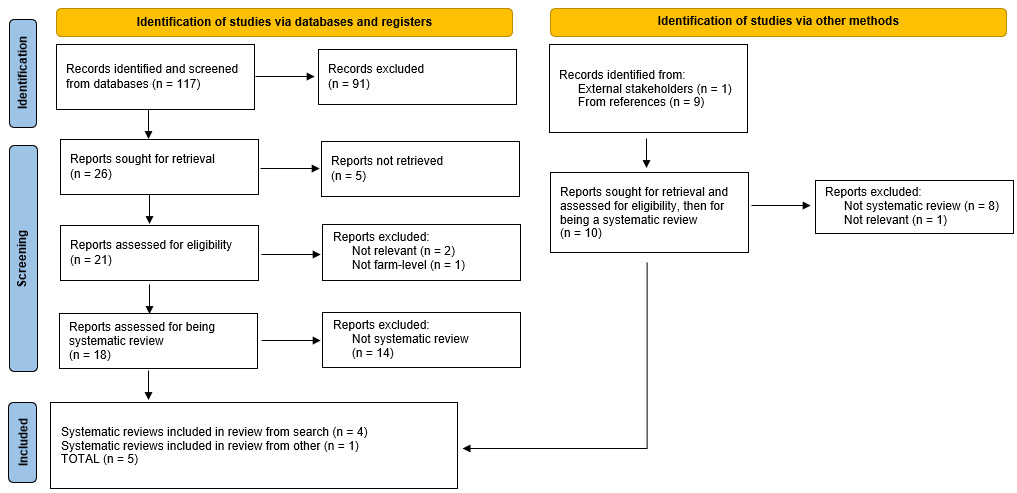
The PRISMA 2020 process for systematic reviews was applied to search databases, registers and other sources. From the databases and registers, 117 reports were retrieved. The titles and abstracts were screened, and 91 reports were excluded, leaving 26 reports for further screening. Of the 26 reports, five were not retrieved and four were excluded at the eligibility screen (not relevant: n=2, not farm level: n=2). Therefore, 18 reports were taken forward for assessment. 14 of these reports were not systematic reviews and therefore excluded. Hence, four reports were included in the review after the search.
Ten reports were identified via other methods (external stakeholders: n=1, references: n=9). The reports were assessed for eligibility, and then for being a systematic review (reports excluded: n=9). Hence, one report was included in the review from other sources.
Therefore, a total of five systematic reviews were included in the umbrella review.
A PRISMA flow diagram showing the selection process for systematic reviews is detailed in Figure 1.
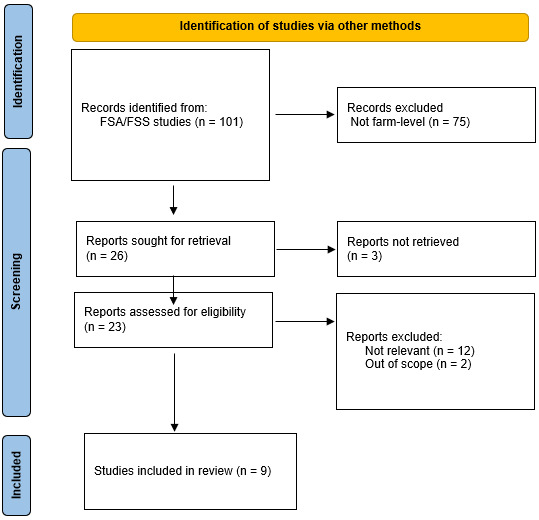
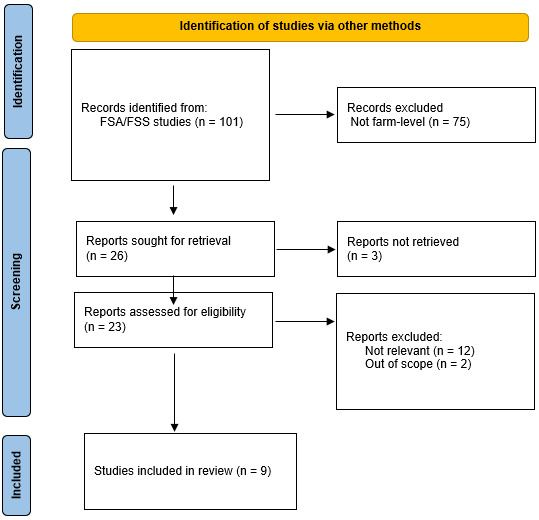
The PRISMA 2020 process was also applied to screen for FSA and FSS research studies. 101 studies were identified, of which 75 were excluded for not being relevant at farm level. The remaining 26 studies were further screened and three were not retrieved. 23 studies were assessed for eligibility. 12 studies were not relevant, and a further two focused on interventions outside the scope of this review (feed additives) and were excluded. Hence, nine studies were included in the review after the search.
A PRISMA flow diagram showing the selection process for FSA and FSS research studies is detailed in Figure 2.
3.2. Data extraction
Three of the five systematic reviews included in this review had quantitative results in the form of prevalence numbers and associated confidence intervals (CI) (Agunos et al., 2014; Golden & Mishra, 2020; Wang et al., 2023). These values, and the number of studies used in each prevalence estimate, were extracted directly from the systematic reviews. Data extraction was independently conducted by a single reviewer and was quality assured by a second reviewer to reduce bias and ensure accuracy.
Further meta-analysis was not conducted due to the limited data available as well as the limited time and resource available. A pooled mean was not calculated, a statistical model was not fitted, and publication bias was not assessed. Additional quantitative meta-analysis may be possible in future projects.
Qualitative outcomes from Newell et al. (2011) and Pessoa et al. (2021) were incorporated into the analysis at a second stage. Some risk factors such as thinning, downtime, seasonality and human traffic were only available as qualitative discussions in these papers.
3.3. Grouping of risk factors
The three studies used to synthesise results quantitatively (Agunos et al., 2014; Golden & Mishra, 2020; Wang et al., 2023) were selected as they provided suitable numerical values for inclusion in the analysis. These reviews assessed biosecurity intervention methods such as cleaning and disinfection protocols, pest control measures, livestock proximity management, staff management practices and hygiene barriers (a physical or visual barrier on entry into a broiler house, establishing a “dirty” and “clean” side, that involves a hygienic process such as changing of footwear or use of boot dips etc.).
Risk factors as identified in these three studies were categorised into eight groups according to where on the farm prevalence of Campylobacter was measured (Table 1).
For the purpose of this report, risk factors were defined as variables that are statistically or biologically associated with increased or decreased prevalence of Campylobacter on live chickens.
3.4. Data visualisation
The grouped data were processed and graphically presented using R version 4.5.2 (R Core Team, 2024) and the tidyverse suite of packages (Wickham et al., 2019).
3.5. Calculation of primary study overlap using corrected covered area (CCA)
This umbrella review synthesised five systematic reviews, of which only the three studies with quantitative results (Agunos et al., 2014; Golden & Mishra, 2020; Wang et al., 2023) contained a complete list of the primary studies included. To quantify the degree of overlap among primary studies included in these reviews, we applied the corrected covered area (CCA) method, which measures redundancy using the formula (Kirvalidze et al., 2023):
CCA=((N−r)/(r×(c−1)))×100
Where:
-
N = Total number of study occurrences across all reviews
-
r = Number of unique primary studies
-
c = Number of systematic reviews
For this review, N = 228, r = 111, and c = 3.
4. Details of included publications
4.1. Systematic reviews
This report summarises the mean prevalence and confidence intervals (CIs) for various risk factor groups associated with Campylobacter presence on broiler farms, based on findings from three meta-analysis studies: Agunos et al. (2014), Wang et al. (2023), and Golden and Mishra (2020). Qualitative outcomes from the systematic reviews conducted by Newell et al. (2011) and Pessoa et al. (2021) were also considered and added in the discussion.
Agunos et al. (2014) estimated the average prevalence of Campylobacter on farm settings and assess epidemiological associations across studies for identified sources of Campylobacter. To do this the authors used reported prevalence data and odds ratios (ORs) from 95 studies. ORs were used to quantify the strength of association between on farm risk factors and the likelihood of a flock being Campylobacter-positive; they were either extracted from the original studies or calculated from raw data. ORs were either based on sampling or questionnaire data. For the meta-analysis, studies were grouped into subcategories by source type (i.e., vertical transmission, domestic and wild animals, humans, water, environment, farm equipment). Both prevalence and ORs were used to conduct random effects meta-analysis, with I2 as the heterogeneity measure. Modified GRADE (Grading of Recommendations Assessment, Development, and Evaluation) criteria were applied to assess confidence in the pooled estimates and how likely they are to change with future studies. Additionally, the researchers reviewed studies that used molecular epidemiology techniques to determine whether isolates from sources linked to risk factors matched those found in broiler flocks.
Wang et al. (2023) evaluated environmental, biological, and operational factors that contribute to Campylobacter presence in broiler chickens before they reach the processing plant from 62 publications. The factors were grouped by sample source (exterior environment, interior environment, vertical transmission, broilers, and transportation equipment) and by region. A random intercept, generalised linear mixed model with logit transformation was applied on prevalence data. I2 was calculated as the heterogeneity measure.
Golden & Mishra (2020) quantified the differences in the prevalence of Salmonella and Campylobacter spp. in broiler chicken samples from conventional and alternative (free range or organic; also referred to as extensive) production systems, with a focus on the United States. A total of 72 studies were included in this review. Generalised linear mixed models with logit transformation were used with both I² and Cochran’s Q-test to assess heterogeneity. Moderator variables (e.g. detection method, year, sample type) were used to explain heterogeneity. Post processing and retail samples were also included in this study, but were not in scope for this review of interventions on farm before processing. On farm samples in the study were grouped as environmental and the group contained a total of 2,089 samples of boot socks, drag swab, air, faeces, soil, litter, water lines, feed pans, feed, grass, insect traps, wild bird droppings, compost, and processing wastewater. Therefore, despite the study only contributing 2 datapoints to our analysis those datapoints have a higher weight.
Newell et al. (2011) evaluated biosecurity-based interventions and strategies aimed at reducing Campylobacter colonisation in poultry flocks. Due to methodological diversity and lack of comparable studies, formal meta-analysis was not conducted. The results are summarised qualitatively.
Pessoa et al. (2021) conducted a systematic review assessing the effectiveness of pre-harvest interventions to control major foodborne pathogens in broilers, including Campylobacter. Prevalence data were used to qualitatively assess effectiveness of interventions as reduction or no reduction. Of the studies included, 65% were lab-based challenge trials and 28% were field trials on commercial farms. The rest were trials on commercial plants.
4.2. FSA/FSS-funded research reports
A qualitative comparative analysis was carried out between the results of this umbrella review and nine studies funded by the FSA and FSS on Campylobacter prevalence on farms. Details of these studies are summarised below.
Bull et al. (2003) (B03008) carried out isolation and sub-typing of Campylobacter and Salmonella throughout the broiler flock cycle, including samples from the broiler house environment; the external environment; internal and external air; food, litter and water; and chicken carcasses from the abattoir and poultry line. Samples were taken from 12 farms across 3 companies. The purpose of the study was to explore potentially under-examined sources of flock infection and horizontal spread of Campylobacter and Salmonella. Following on from this project, Bull et al. (2006) (B15001) conducted statistical analysis on the Campylobacter results of Bull et al. (2003) and compared the results to existing data from Danish and Norwegian broiler flocks. The authors also collected new Campylobacter results from well or poorly managed flocks over multiple flock cycles to further assess the influence of flock husbandry practices on Campylobacter prevalence.
Morris et al. (2009) (B15014) conducted farm questionnaires and Campylobacter isolation from farms with alternative production systems, to evaluate the effect of these farm practices on Campylobacter prevalence in the flock and farm environment.
Newell et al. (2008) (B15025) consisted of a systematic review of measures relating to interventions against Campylobacter in poultry, an observational review of current biosecurity practices within the UK poultry industry, and a cost-effectiveness assessment of selected intervention measures. The systematic review was published as Newell et al. (2011), which formed part of this umbrella review. This qualitative comparison therefore focused only on the study’s observational review of biosecurity practices.
Hutchinson et al. (2015) (FS101123) used farm practice questionnaires, isolation of Campylobacter at crop thinning and clearance, and statistical modelling to identify potential risk factors for Campylobacter colonisation on farms.
Allen et al. (2006) (B15004) investigated the hypothesis that ‘thinning’ of broiler flocks (depopulation of the poultry house over a period of days) is associated with an increase in Campylobacter prevalence in remaining birds after thinning. Farm visits during thinning to review practices and test for Campylobacter in the farm environment and on vehicles, equipment and personnel, were carried out before and after deployment of a hygiene and biosecurity standard operating procedure. In a follow-up study, Allen et al. (2008) (B15020) evaluated the recommendations made by Allen et al. (2006) by comparing Campylobacter prevalence on farms using an enhanced hygiene and biosecurity protocol to farms with unenhanced practices.
Georgiev et al. (2014) (FS101114) isolated Campylobacter from broilers originating from farms with standard or enhanced biosecurity, to determine the influence of enhanced biosecurity on Campylobacter prevalence. Statistical modelling was carried out to determine the population attributable fraction (PAF) of heavily contaminated flocks to biosecurity, thinning and breeds used.
Allen and Newell et al. (2005) (MS0004) conducted a review of published and unpublished scientific, experimental and industry literature on the role of biosecurity in Campylobacter control.
4.3. European Food Safety Authority (EFSA) report on Campylobacter in broiler meat
In 2011, the EFSA Panel on Biological Hazards (BIOHAZ) published a scientific opinion on ‘Campylobacter in broiler meat production: Control options and performance objectives and/or targets at different stages of the food chain’ (EFSA BIOHAZ Panel, 2011). A review and extension to this report was carried out in 2020 (EFSA BIOHAZ Panel et al., 2020). This involved a literature review from 2004 to 2019 to estimate population attributable fractions (PAFs). PAFs are the proportional reduction in population disease or mortality that would occur if exposure to a risk factor were reduced to an alternative ideal exposure scenario (WHO, 2024). Quantitative results from the EFSA report are reported as PAF (%) and a 95% confidence interval. In addition, other risk factors for which a PAF could not be calculated were discussed qualitatively by the Panel.
5. Results and discussion
When evaluating the weight and validity of the outcomes of the analysis it should be noted that while the 5 publications available cover a wide range of risk factors covering all known pathways of contamination, the distribution of datapoints is uneven, with Agunos et al. (2014) contributing disproportionately across several categories, which may introduce bias or overrepresentation of certain risk factors. In addition, the corrected covered area (CCA) for the three quantitative systematic reviews is 26%. While some overlap between systematic reviews is expected, a CCA of >15% is typically interpreted as “very high” (Kirvalidze et al., 2023).
Qualitative studies offer further insights; however, they may introduce subjectivity as they lack standardisation in how risk factors are assessed. Some groups, such as vertical transmission and external & regional factors, are underrepresented, limiting the ability to draw robust conclusions in these areas. Granularity is available for some groups such as water, feed & litter, but not for many of the other groups.
5.1. Animal-related sources
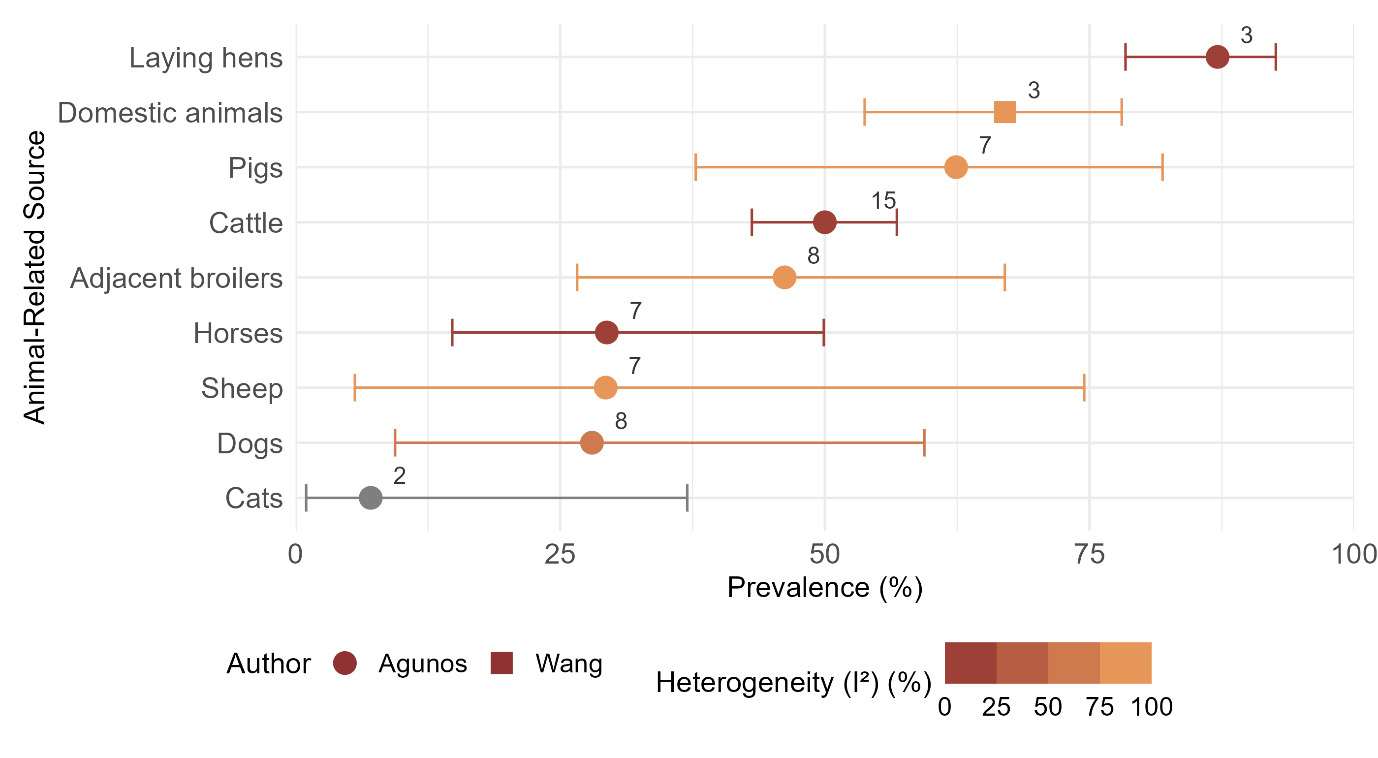
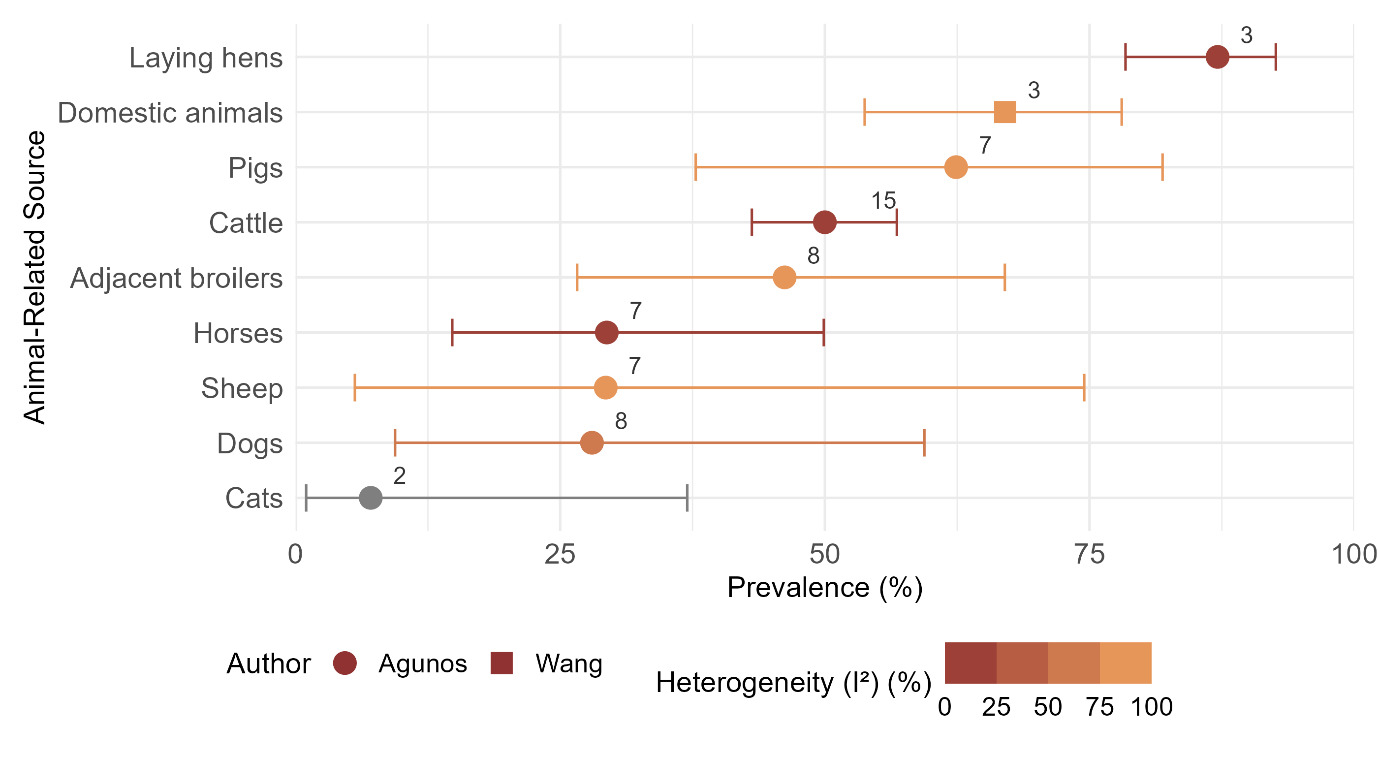
Domestic animals, including cattle, pigs, dogs, horses, sheep, cats, laying hens and adjacent broiler flocks, are included in this group. Estimates for individual species were only available from Agunos et al. (2014), while the domestic animals estimate from Wang et al. (2023) was not separated into individual species. The prevalence estimates for animals ranges widely, with wide confidence intervals (CI) for most estimates. The highest estimate in this group, laying hens (87%), has a relatively narrow CI and a low heterogeneity, indicating similar methods between the studies investigated. The estimate for other poultry, adjacent broilers (46%), is lower than for laying hens but has a wide CI and high heterogeneity. Adjacent broiler flocks were identified by Agunos et al. (2014) as a significant risk factor, with molecular evidence of genotype matches and a high odds ratio (OR) of 124.78, albeit with a very large 95% CI (3.6-288.2), which indicates that there may be a strong association between adjacent broilers being infected and the likelihood of the flock of interest being positive for Campylobacter. Newell et al. (2011) were in agreement with this conclusion in their qualitative review.
The estimate for generic domestic animals from Wang et al. (2023), which includes animals “such as cattle, pigs and dogs”, is at the high end of the estimates for these individual species from Agunos et al. (2014), although there is an overlap of confidence intervals between these categories. Newell et al. (2011) considered the evidence for risks associated with non-poultry domestic animals to be of low quality, although both Agunos et al. (2014) and Wang et al. (2023) reported genotypic and molecular evidence supporting transmission from non-poultry domestic animals to broilers.
In their 2020 review of interventions to control Campylobacter during broiler production, the EFSA Panel on Biological Hazards (BIOHAZ) highlighted that Campylobacter prevalence increases with the number of broiler houses on site, although they were not able to quantify the risk of adjacent broiler flocks. On the basis of 6 studies, they estimated a PAF of proximity to other livestock (within 2 km) to be between 20.9% (95% CI 5.0-37.0) and 79.3% (95% CI 32.3-87.5).
5.1.1. Evidence from FSA/FSS-funded research
In an investigation of the relationship between farm management factors and Campylobacter prevalence, Bull et al. (2003, 2006) found that farms with mixed livestock tended to be more likely to produce Campylobacter-positive flocks than farms which reared poultry only. Similarly, in a review of biosecurity practices, Allen and Newell (2005) identified several studies where the presence of other livestock and pets was associated with a higher risk of flock colonisation. While Morris et al. (2009) did not investigate the impact of other domestic animals on Campylobacter prevalence in poultry houses, they suggested that livestock may present a particular risk in alternative farming systems where broilers have access to pasture grazed by livestock.
5.2. Vertical transmission sources
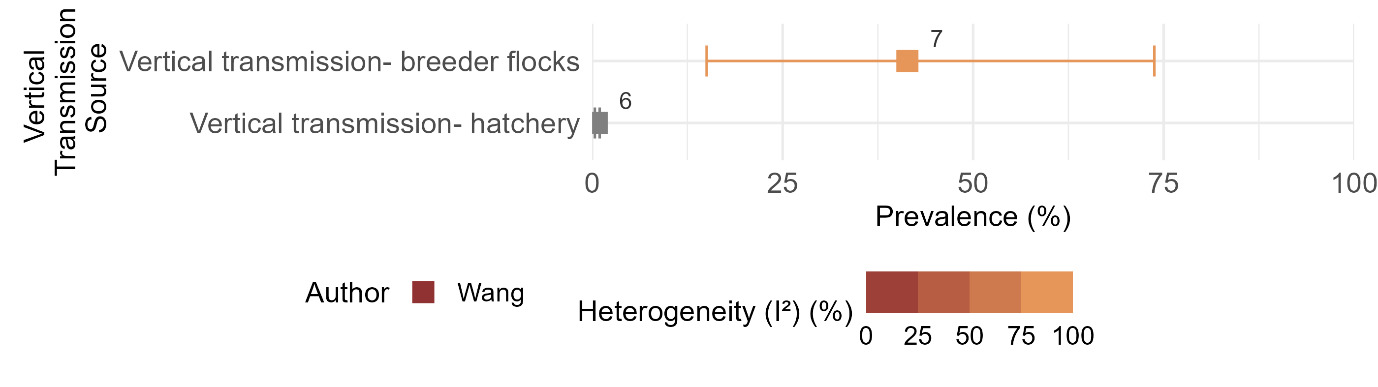
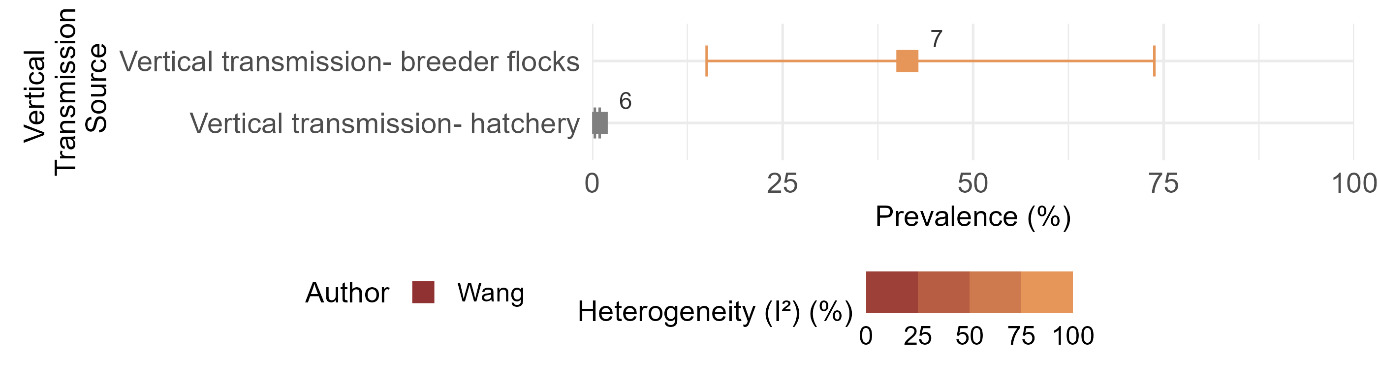
Vertical transmission is the transfer of Campylobacter from parent breeder flocks to progeny, either by internal contamination of the egg before shell deposition, or via routes such as faecal contamination of shells. Wang et al. (2023) found that while prevalence was high in breeder flocks (41%), hatchery samples (eggs and chicks) were mostly negative for Campylobacter. In one study, Campylobacter DNA, but not culturable Campylobacter, was detected in embryos, raising the question of whether those bacteria were live, dead or nonculturable. Golden and Mishra (2020) also did not find strong evidence for vertical transmission. Agunos et al. (2014) reported that only 11 of 32 studies supported vertical transmission, and most failed to culture Campylobacter from early-stage samples. Newell et al. (2011) found that viable campylobacters were rarely recovered from internal egg contents or hatchery fluff, debris or liners. Matching Campylobacter isolates were also rarely, if ever, recovered from both parents and progeny flocks. The authors therefore concluded that vertical transmission is rare and likely not a major route of infection. This conclusion is supported by research into table eggs produced by laying flocks suggesting that Campylobacter is rarely found on egg shells or in eggs (EFSA BIOHAZ Panel, 2014).
5.2.1. Evidence from FSA/FSS-funded research
Bull et al. (2003) investigated the role of vertical transmission, finding that the majority of Campylobacter sub-types isolated from breeder flocks were not found in the flocks’ offspring. In a statistical analysis of the results of Bull et al. (2003) and assessment of data from Danish farms, Bull et al. (2006) found that flocks generally do not become infected in the first four weeks of age, supporting the conclusions of the systematic reviews that vertical transmission is not a common source of Campylobacter in broiler flocks.
In its 2019 report on Campylobacter, the ACMSF concluded that vertical transmission is unlikely to be a significant route of Campylobacter infection. However, they noted that while Campylobacter is rarely isolated from eggs, embryos or chicks, this may in part be due to lack of sensitive sampling and detection methods, so vertical transmission cannot be ruled out as a potential source of infection (ACMSF, 2019).
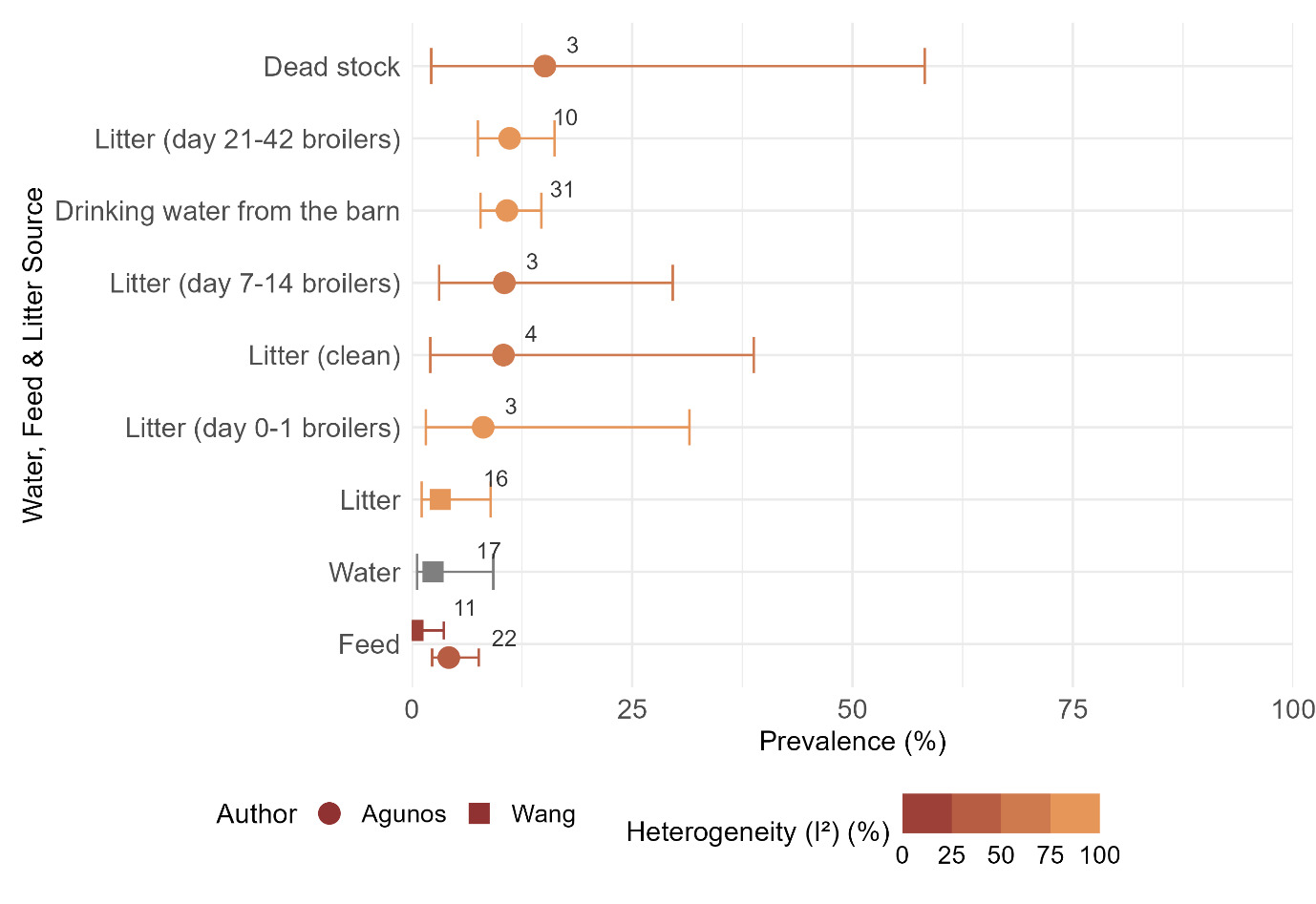
5.3. Water, feed & litter sources
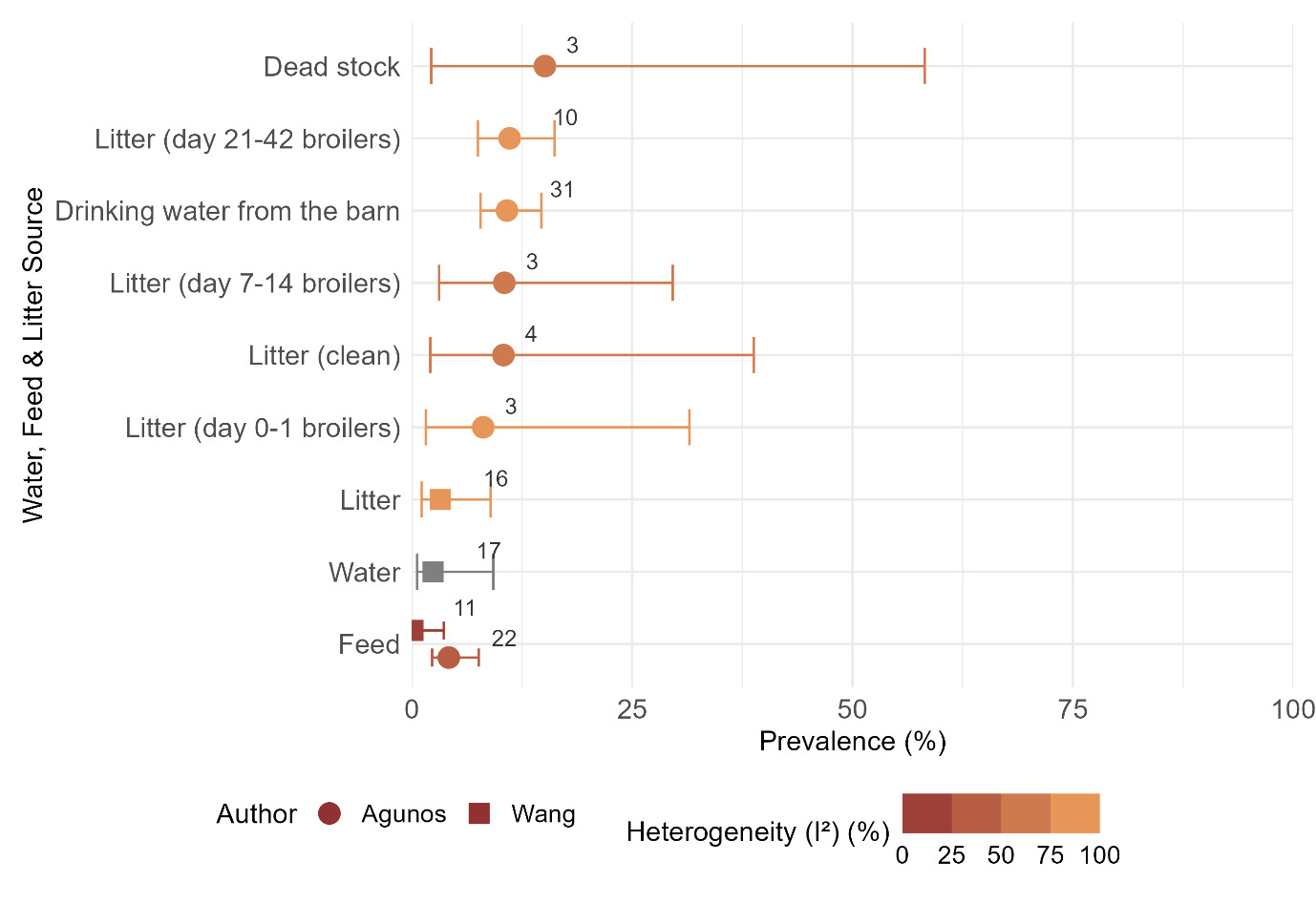
The water, feed and litter group contains prevalence estimates for water, feed, clean litter, broiler litter at various ages, and dead stock (birds which have died in the broiler house), from Agunos et al. (2014) and Wang et al. (2023). Further information on litter management was available in Pessoa et al. (2021). Newell et al. (2011) also discussed water and feed.
All the prevalence estimates in this group are <25%, and only one (dead stock) is above 15%. This is on the lower end of prevalence estimates across the risk factor groups. Dead stock has the highest prevalence estimate for this group, although there is also a wide confidence interval for this estimate due to the small number of studies contributing to the estimate.
Prevalence estimates for litter ranged from 3% to 11%, with high heterogeneity for all estimates. Agunos et al. (2014) separately categorised litter taken from different age flocks but did not find a relationship between age and Campylobacter contamination of litter. Literature assessed by Wang et al. (2023) suggested that reusing litter between flocks can pose a risk if not properly treated. Sufficient downtime between flocks and moisture control at levels between 20% and 30% were considered key in controlling Campylobacter contamination between flocks (Wang et al., 2023). Newell et al. (2011) also noted that allowing litter to become wet may increase the risk of Campylobacter colonisation. Only one study testing the effect of litter management was identified by Pessoa et al. (2021); the intervention (no further details were provided in the systematic review) did not produce a significant reduction in the prevalence of Campylobacter.
Campylobacter prevalence was estimated for feed and water by both Agunos et al. (2014) and Wang et al. (2023), with both meta-analyses finding very low estimates (0.14-4%). Additionally, heterogeneity was low (<30%) for both estimates, indicating similar methods between studies. Wang et al. (2023) concluded that feed was a low risk for Campylobacter spread due to rapid die-off during processing, although this was affected by moisture content, background microflora and Campylobacter recovery methods. Newell et al. (2011) also concluded that feed and water is normally Campylobacter-free, although they noted that methods for detecting Campylobacter in water are not currently adequate. They also noted that whenever Campylobacter was recovered from water supplies, it was after the flock became positive, indicating that water may not be a viable source of flock contamination, but may facilitate transmission through a flock once colonisation occurs.
Golden and Mishra (2020) identified litter, feed and drinking water as potential contamination sources, especially in alternative systems where broilers have more access to outside environments. However, these were grouped together with other risk factors and a breakdown of individual factor contributions was not provided.
The EFSA BIOHAZ Panel calculated population attributable factors (PAFs) for the addition of disinfectants to drinking water, finding a PAF range between 5.3% (95% CI 0.6-8.2) and 32.4% (95% CI 6.0-54.9) on the basis of 3 studies (EFSA BIOHAZ Panel, 2020). They noted that the wide range in effectiveness of this intervention may reflect differences in the use, concentration, and type of disinfectant used across member states. Similarly, they estimated that avoiding standing water in broiler houses could result in a prevalence reduction of between 25.4% (95% CI 0.8-44.0) and 62.4% (95% CI 0-53.9%) on the basis of 3 studies. Although quantitative assessment was not possible for litter, wet litter was also identified as a risk factor by the panel.
Litter management and animal welfare were factors considered as impactful on Campylobacter levels by the FAO and WHO (2024), who considered some of the same literature sources in their review along with others.
5.3.1. Evidence from FSA/FSS-funded research
Litter was identified as a potential risk factor for increased Campylobacter prevalence by Bull et al. (2003), especially when the litter was topped up during a crop cycle as this practice was associated with higher rates of Campylobacter-positive flocks. The authors suggested that this could be the result of breaches in biosecurity during top-up. Morris et al. (2009) found that flocks reared on a mix of straw and litter were statistically significantly more likely to be colonised by Campylobacter than flocks reared on litter alone. Inclusion of straw bales for enrichment was also associated with higher rates of Campylobacter positivity in flocks, although investigating the reason for this was beyond the scope of the study. In agreement with Newell et al. (2011) and Wang et al. (2023), the ACMSF concluded in their third report on Campylobacter that litter moisture control is an important potential area for investigation in reducing Campylobacter positivity (ACMSF, 2019).
Allen et al. (2006) found that treatment of water with antimicrobials (chlorine dioxide, organic acids, hydrogen peroxide or commercial disinfectants) was statistically significantly associated with the likelihood of flocks remaining negative of Campylobacter up to thinning. Similarly, Bull et al. (2003) noted that one farm in their study with consistently low Campylobacter prevalence in their flocks treated their water with chlorine dioxide. However, in their review of scientific and industry evidence on the efficacy of biosecurity practices, Allen and Newell et al. (2005) noted that untreated water was not a consistent risk factor for colonisation, and that it was uncertain whether Campylobacter recovered from water was infective to chickens. Given that Campylobacter is usually detected in water after a flock becomes positive (Newell et al., 2011), treated water may help to slow the spread of Campylobacter through a flock following colonisation, rather than reduce the risk of a flock becoming colonised.
5.4. Environmental sources
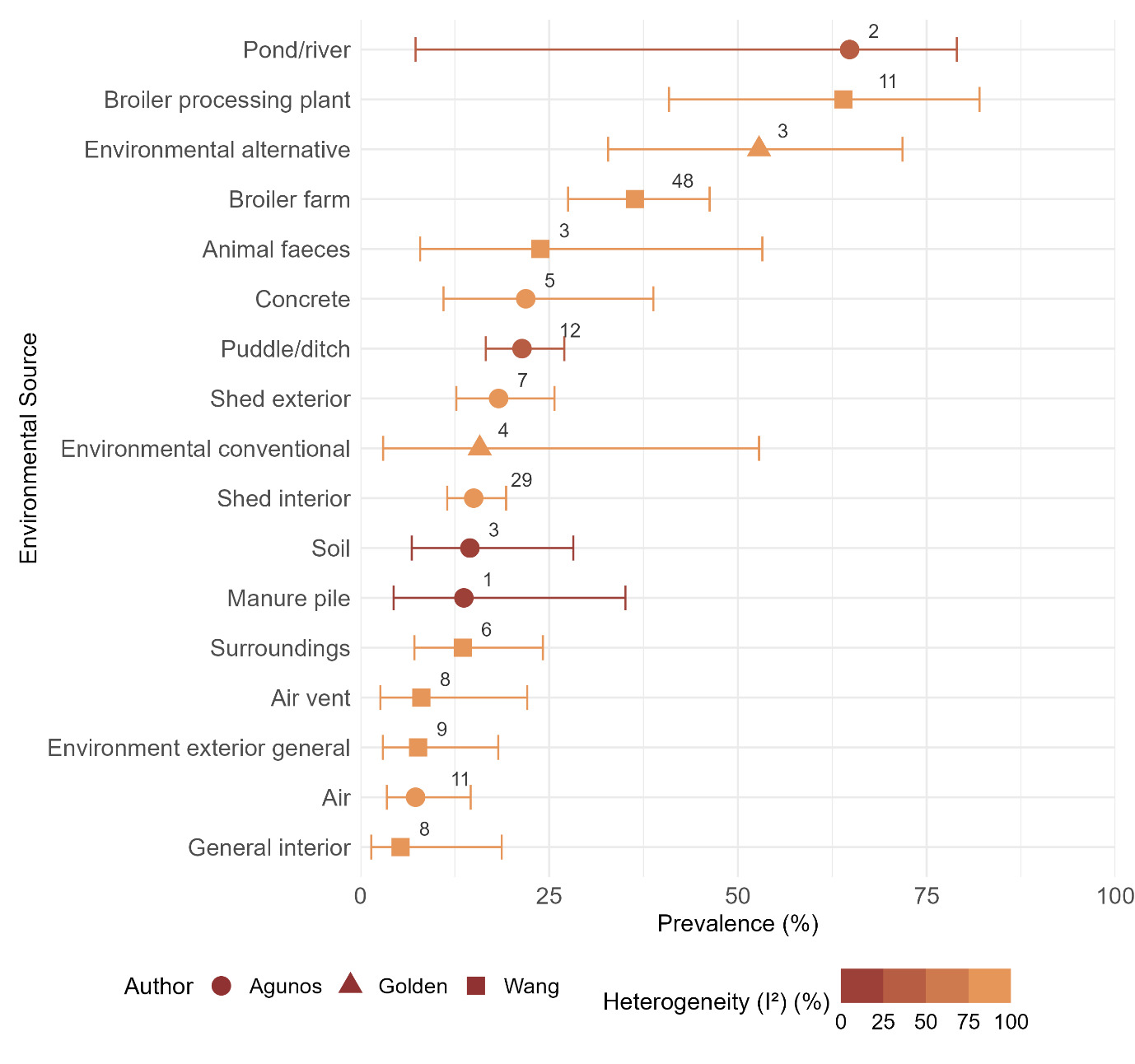
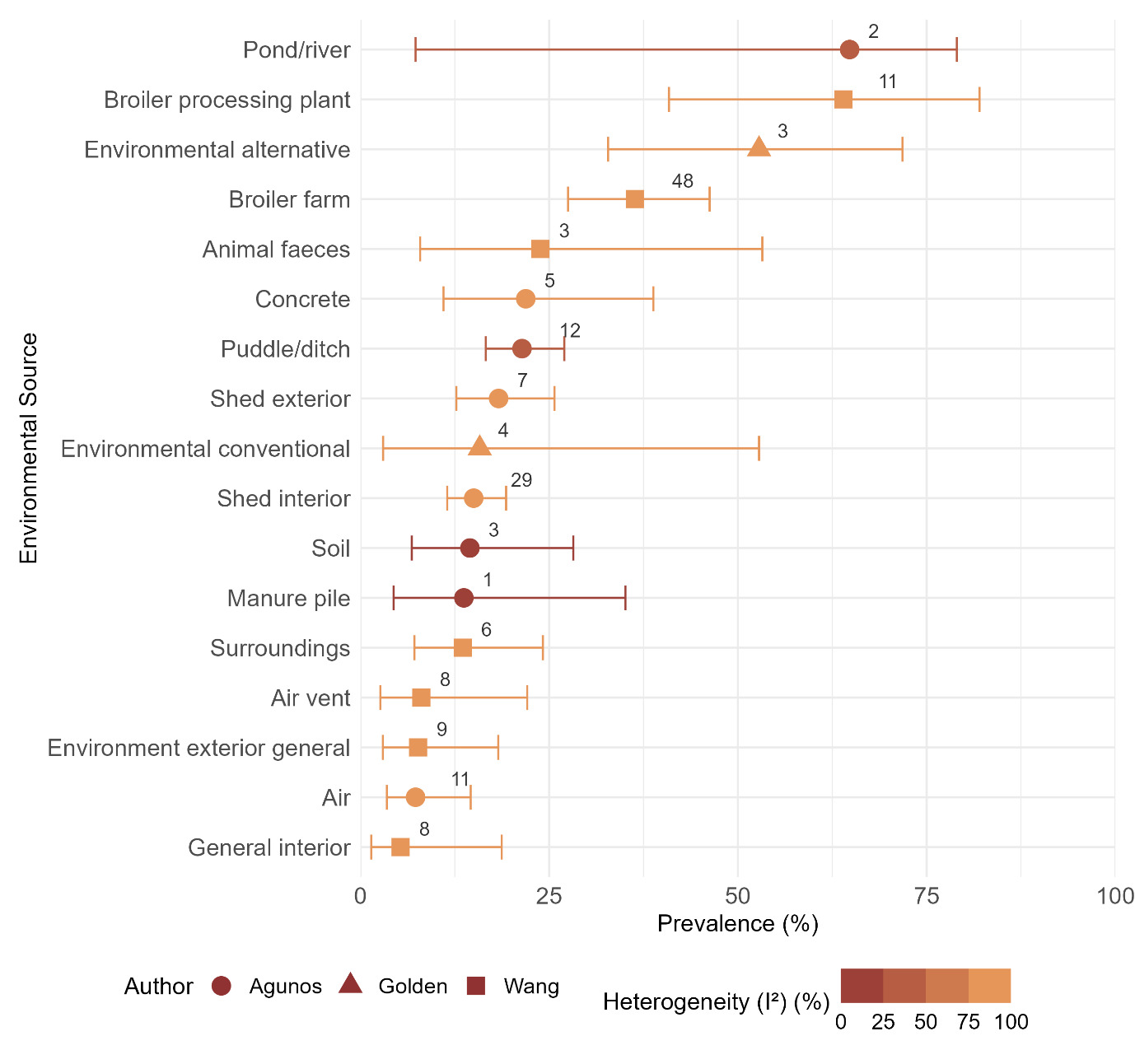
The environmental factors risk group contains information on samples taken from the air, concrete, shed interior and exterior, soil, puddles, ponds/rivers, and general farm surroundings. A total of 15 prevalence estimates from Agunos et al. (2014), Wang et al. (2023) and Golden and Mishra (2020) were included.
The prevalence estimates from environmental sources range widely, from 64.8% (pond/river, Agunos et al., 2014) to 5.3% (general interior, Wang et al., 2023). Overall, however, most prevalence estimates (11/15) are <25%. Generally, the heterogeneity was high (>75%) in this group, indicating a high amount of variability between studies.
The highest predicted prevalence from environmental sources is ponds/rivers (65%); however, molecular links to Campylobacter in flocks were not confirmed by either of the studies which investigated this source (Agunos et al., 2014). Conversely, while water from puddles/ditches had a lower prevalence estimate (21%), 7 of 11 studies with genetic testing reported matches between Campylobacter found in puddles or ditches and flocks.
Prevalence estimates from locations around the farm, such as shed interiors and exteriors, air, and concrete, ranged from 7.3% (air) to 21.9% (concrete). Both Agunos et al. (2014) and Wang et al. (2023) estimated prevalence in the general interior and exterior environment of farms, with neither review finding a significant difference between interior and exterior Campylobacter prevalence.
Agunos et al. (2014) noted molecular linkage between Campylobacter in flocks and the outdoor environment; however, none of the studies they reviewed were able to demonstrate the direction of spread between the flock and the external environment. They found genetic matches between Campylobacter detected in interior environments prior to flock placement and in flocks as soon as 24 hours after placement. In the interior environment, Wang et al. (2023) found the highest prevalence in air vents (6%); overall they concluded that transmission from the interior environment is not a considerable source of Campylobacter, as it is thermophilic and sensitive to desiccation, and therefore unlikely to survive well in poultry house environments.
The prevalence in manure piles was based on only one sample and therefore the predicted prevalence, although low (13.7%), is uncertain. The one study that looked at molecular linkage between manure and flocks did not find a link. Newell et al. (2011) noted that because of the high numbers of campylobacters (up to 109 organisms/g) in the faeces of colonised poultry, inappropriate poultry waste management may be a persistent source of Campylobacter on farms.
Wang et al. (2023) noted that the estimated prevalence at broiler processing plants (64%) was significantly higher than broilers at the farm (36%), which they suggested was due to transmission during transport (discussed further in Section 4.5).
Golden and Mishra (2020) noted that alternative systems, which often allow more outdoor access than conventional systems, had significantly higher environmental Campylobacter prevalence (52.8%) than conventional systems (15.8%). However, they also observed that there were no significant differences in the presence of Campylobacter between conventional and alternative meat at the post-chill (55.6%) and retail (58.1%) stages. The reason for this discrepancy was not explored by the authors, but warrants further investigation.
While they did not estimate quantitative risk factors for cleaning broiler houses between crop cycles, the EFSA BIOHAZ Panel (2020) concluded that carry-over between flocks due to contamination of the broiler house environment can be an important source of Campylobacter transmission. The Panel noted that lack of proper cleaning procedures, poor design of feeders and drinkers, the variability of effectiveness of cleaning agents, failure to clean the adjacent external environment (such as doors and aprons) and insufficient downtime between flocks could result in carry-over of Campylobacter between flocks. However, they also noted contradictory evidence of the effect of downtime on carry-over, with long periods of downtime (>2 weeks) associated with higher prevalence in subsequent flocks. They attributed this to ingress of Campylobacter back into the broiler house from the external environment due to breaches in biosecurity.
5.4.1. Evidence from FSA/FSS-funded research
Bull et al. (2003) found that Campylobacter was present in environmental samples surrounding broiler houses in almost all farms they investigated, regardless of whether the flock itself was colonised with Campylobacter. The most frequently Campylobacter-positive environmental samples were collected from puddles, paths, floors and cow faeces. In a comparison between Campylobacter sub-types in the environment and infected flocks, matches were found in two out of five Campylobacter-positive flocks, indicating transmission from the environment into the poultry house. The authors concluded that biosecurity measures are important in minimising the transmission of Campylobacter from the external environment. Campylobacter was also isolated from both internal and external air samples, although only once the flock had already been colonised.
In their investigation of extensively-reared flocks, Morris et al. (2009) found that flocks kept in poor quality housing were significantly more likely to be Campylobacter-positive at four weeks of age, in particular when the concrete aprons at the front of the poultry house were in poor condition. They hypothesised that this could be due to the survival of Campylobacter in puddles in apron cracks or holes. This is supported by the finding in Agunos et al. (2014) of genetic matches between Campylobacter in puddles and colonised flocks.
Bull et al. (2003) highlighted the importance of cleaning and disinfection between crop cycles to minimise the risk of infection of flocks from the environment following infection of a previous flock. They linked the higher prevalence of Campylobacter they observed in extensive rearing systems to the impossibility of eliminating Campylobacter from the outside environment between flocks. Morris et al. (2009) found that Campylobacter was able to survive in pasture for up to 24 days after clearance of a Campylobacter-positive flock, which they suggested could contribute to between-flock transmission in free-range or organic flocks. Similarly, in their study of the genomics of antimicrobial-resistant campylobacters, Colles et al. (2025, PATH-SAFE AMR.5) isolated clonal complexes of Campylobacter associated with environmental sources from extensively-reared flocks but not intensively-reared flocks. In their review of scientific and industry data, Allen et al. (2005) found that Campylobacter was rarely reported in interior environments in conventional housing systems even following occupation by a positive flock, concluding that standard cleaning regimes and schedules are usually adequate to eliminate Campylobacter from the internal environment at the end of a crop cycle. Similarly, in its Third Report on Campylobacter, the ACMSF concluded that campylobacters are particularly susceptible to desiccation and die off relatively rapidly compared to other pathogens (ACMSF, 2019). However, they also noted that the survivability of hyper-tolerant strains of Campylobacter remains an area of uncertainty.
5.5. Equipment & vehicle sources
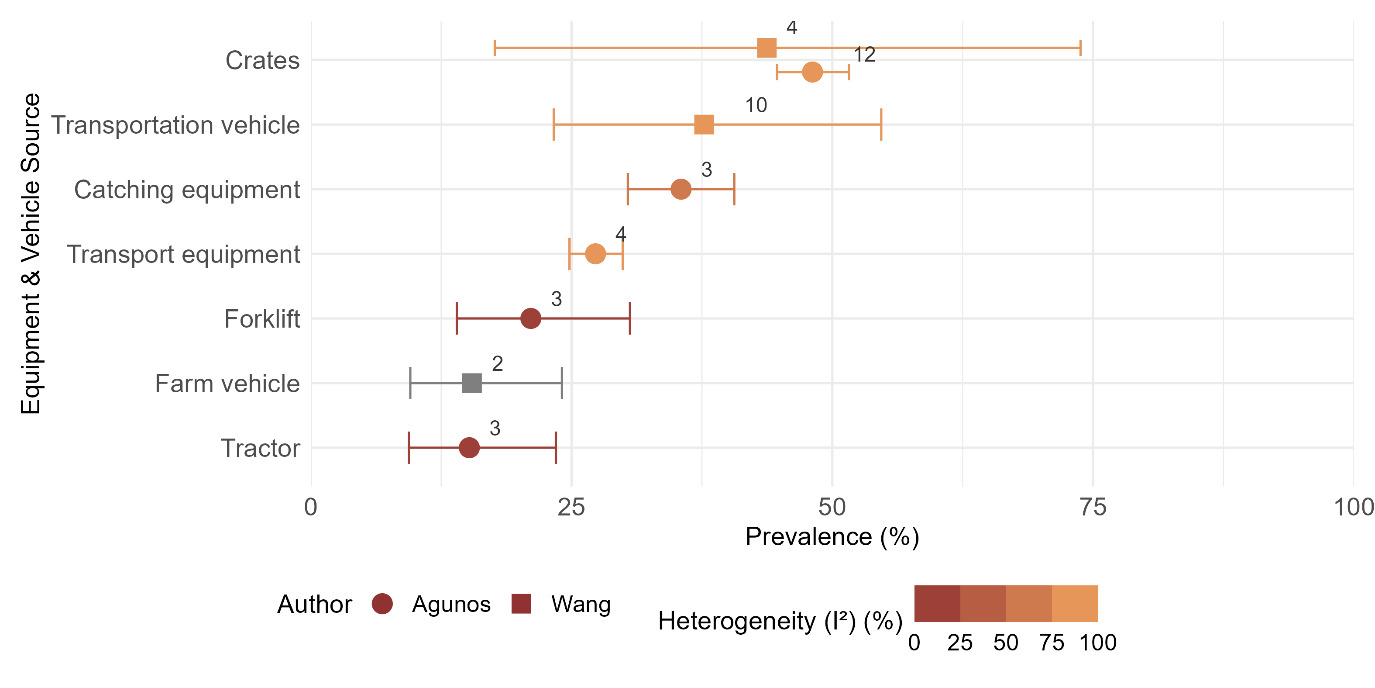
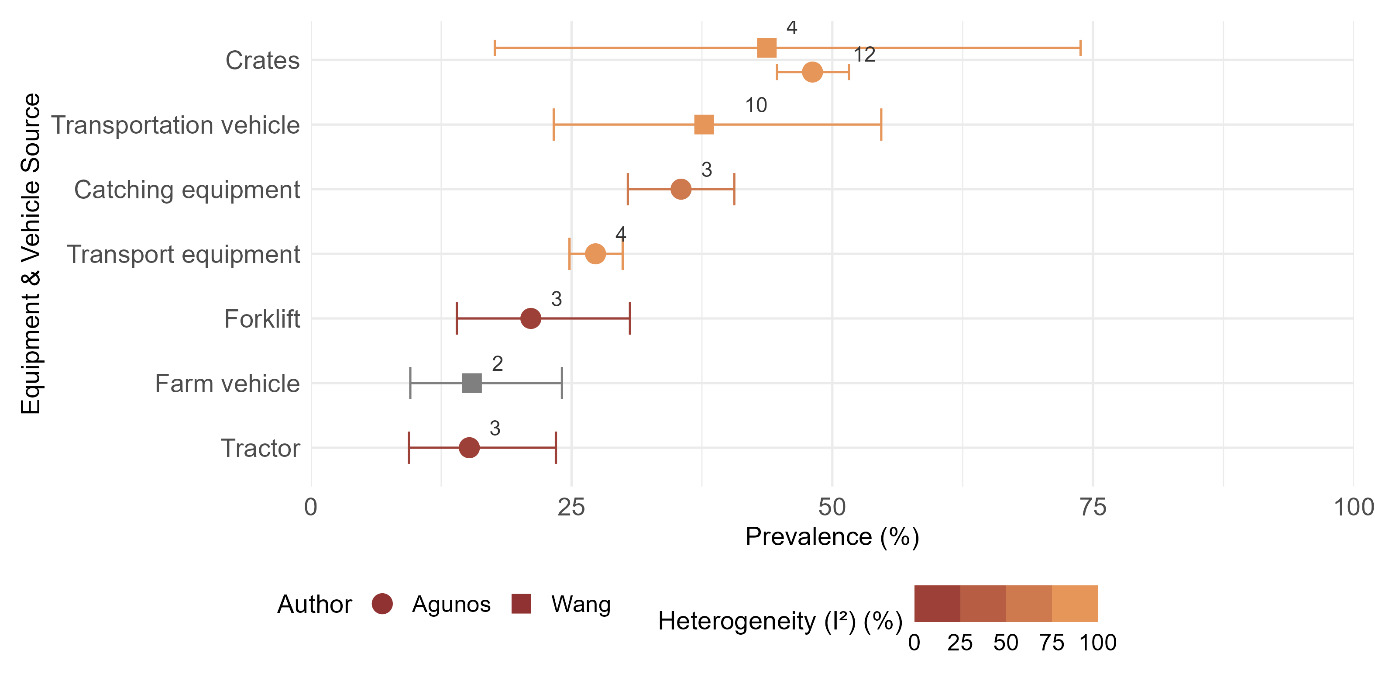
The equipment & vehicle sources group consists of prevalence estimates for crates, transportation vehicles and equipment, catching equipment, forklifts, tractors and other vehicles. Discussion of this group was also available in Newell et al. (2011).
The highest prevalence estimates in this group are for crates. Both Agunos et al. (2014) and Wang et al. (2023) had estimates of around 45%, with a narrower confidence interval for Agunos et al. (2014) due to the larger number of studies included in the estimate. Both estimates had high heterogeneity, indicating high variability of study parameters. Agunos et al. (2014) found genotype matches between crates and broilers in 11/12 studies included in this risk factor. Newell et al. (2011) also discussed crates in the context of reuse, finding that crate surfaces may remain biologically contaminated even after cleaning and thus act as a source of Campylobacter. They noted that both spray washing of crates and storage of crates for 48 hours between uses reduce Campylobacter numbers, but that immersion in detergent does not eradicate campylobacters attached to the crate surface.
Wang et al. (2023) noted that the prevalence of Campylobacter in broilers upon arrival at the processing plant is significantly higher than broilers at the farm (see Figure 6). They suggested that insufficient decontamination of transportation vehicles (estimated prevalence 37.7%) facilitates the transmission of Campylobacter between flocks. They also suggested that high bird density in crates, and increased defecation by birds due to stress, could contribute to the spread of Campylobacter within a flock during transport.
Both meta-analyses found lower Campylobacter prevalence in on-farm vehicles than transportation vehicles, although Agunos et al. (2014) found genotype matches between flocks and both forklifts and tractors.
The EFSA BIOHAZ Panel (2020) noted that the use of dedicated tools for each broiler house was associated with lower Campylobacter prevalence in several studies, although quantitative estimates for the risk reduction of this intervention were not calculated by the Panel.
5.5.1. Evidence from FSA/FSS-funded research
In agreement with the evidence from the systematic reviews, Bull et al. (2003) and Allen et al. (2008) found that Campylobacter was often present on crates, even after cleaning, suggesting that standard cleaning protocols are insufficient to eliminate Campylobacter from crates. Allen et al. (2008) also found that the Campylobacter sub-types isolated from the crates matched those which subsequently colonised flocks of 9 of the 15 farms they studied. Bull et al. (2003) noted that one company in their study with consistently Campylobacter-negative crates had lower incidences of Campylobacter in their flocks, although it was not investigated whether this was because of this company’s crate-cleaning procedures or that prevalence in crates was low due to a lower general prevalence of Campylobacter on this company’s farms.
In their observational review of biosecurity practices in the UK poultry industry, Newell et al. (2008) noted that workers’ vehicles were often contaminated with litter and manure from farms, and that this could be a source of Campylobacter transmission between poultry houses and farms if biosecurity measures were not implemented properly. Similarly, in their review of the effectiveness of biosecurity practices, Allen et al. (2005) identified the introduction of contaminated equipment into broiler houses, for example tractors for laying litter, as a key source of potential Campylobacter transmission. Allen et al. (2006) found statistically significant correlations between disinfection of vehicles and lower Campylobacter prevalence in the flocks investigated in their study.
5.6. External & regional sources
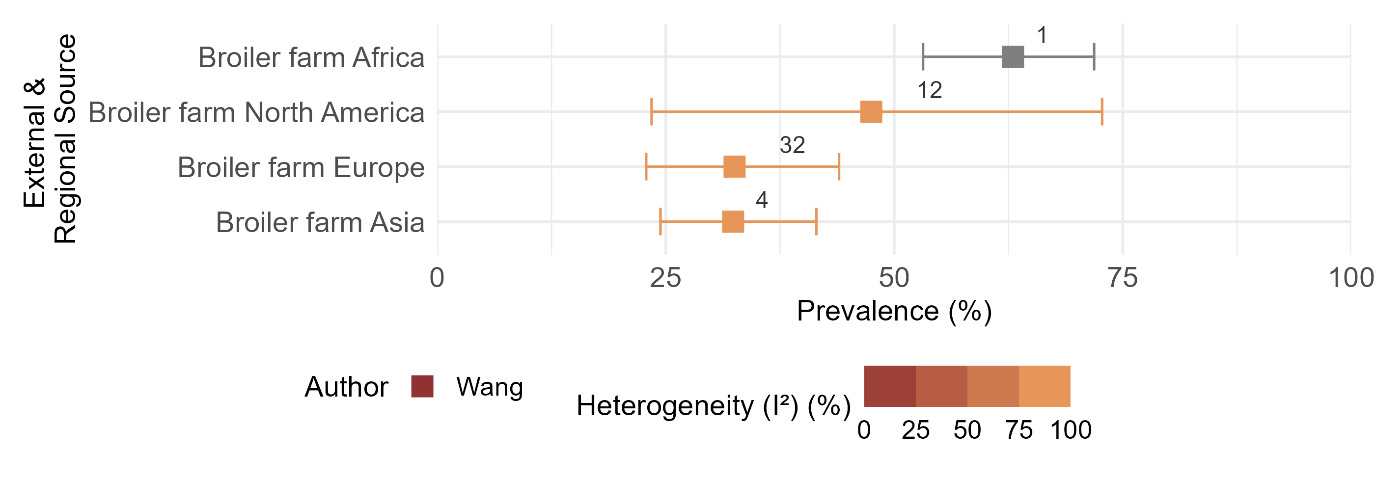
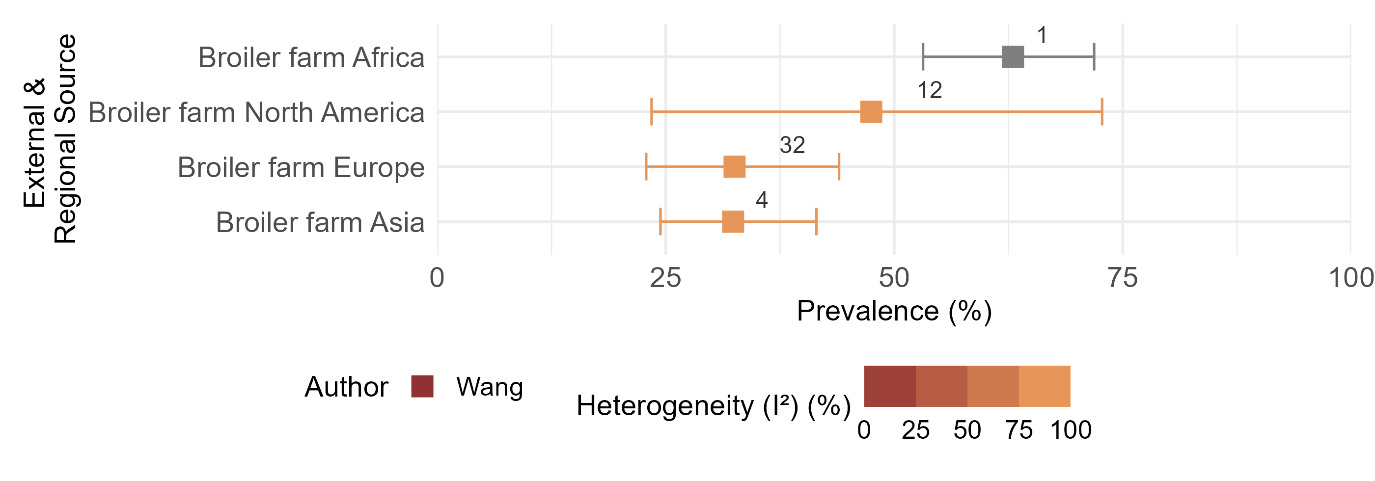
Regional factors influence prevalence. Wang et al. (2023) reported higher Campylobacter prevalence in North America (47%) compared to Europe (33%), although the heterogeneity was high (>90%) for all estimates based on more than one study. The authors suggested that regional variations in prevalence may result from differences in bird age at slaughter, biosecurity, and farm management. Agunos et al. (2014) emphasised the effect of regional variations in management practices and producer education on Campylobacter colonisation prevention, but did not investigate this risk factor further. Declines in Campylobacter cases in several countries (Denmark, Norway, the Netherlands, the USA and Iceland) have been attributed to interventions in the poultry production chain, indicating the effect of regional factors (WHO & FAO, 2009), but investigations of these factors across regions are lacking.
Newell et al. (2011) and Pessoa et al. (2021) found that seasonality affects infection rates, with peaks in the UK occurring in late summer/autumn. Seasonal factors were also noted in the review by the EFSA BIOHAZ Panel (2020), with the higher Campylobacter prevalence during warmer months suggested to be due to heat stress in birds or increased contamination from the external environment due to higher air flow in broiler houses. Golden and Mishra (2020) did not investigate the effect of season on Campylobacter prevalence, but suggested that the higher Campylobacter prevalence in alternative farm systems may be in part due to seasonal effects which may be stronger on farms without closed, climate-controlled housing.
5.6.1. Evidence from FSA/FSS-funded research
In agreement with the findings of Newell et al. (2011), several FSA-commissioned studies observed a strong seasonal variation in Campylobacter prevalence in UK flocks (V. Allen et al., 2008; Bull et al., 2006; Georgiev et al., 2014), with lower rates in winter/spring and higher rates in summer/autumn. Bull et al. (2006) suggested heat stress making flocks more susceptible to Campylobacter colonisation as the possible cause of this relationship, although in their review of data from Danish broiler houses they also identified flies as a seasonal risk factor, with higher airflows during warmer weather bringing in Campylobacter-carrying insects. Allen et al. (2006) also observed more Campylobacter-positive environmental samples on warm days.
5.7. Farm management & biosecurity sources
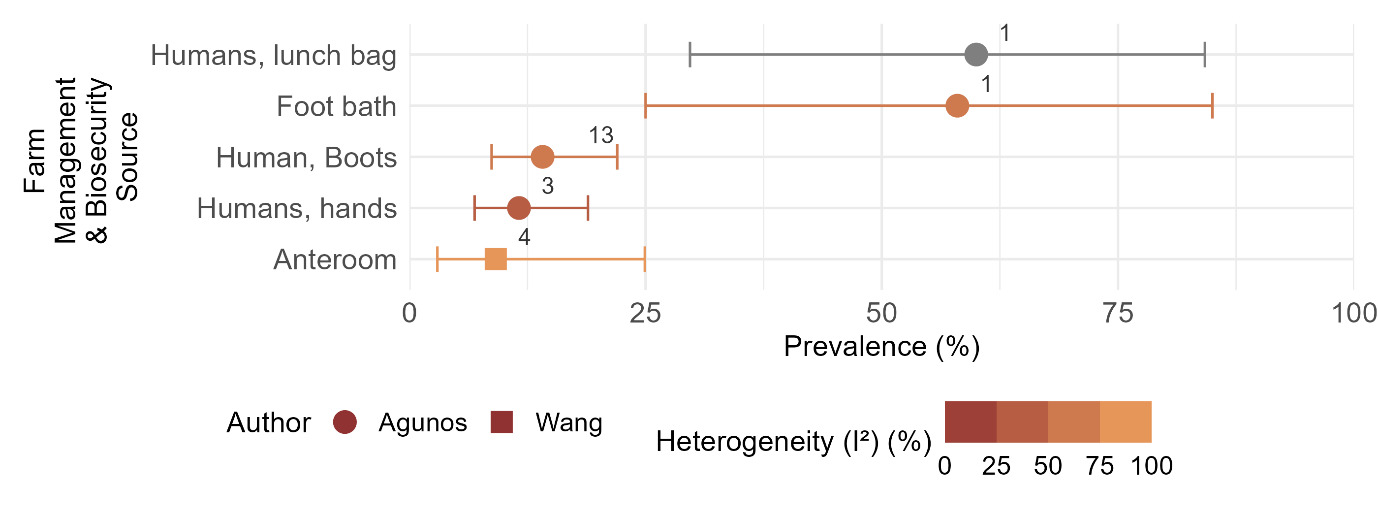
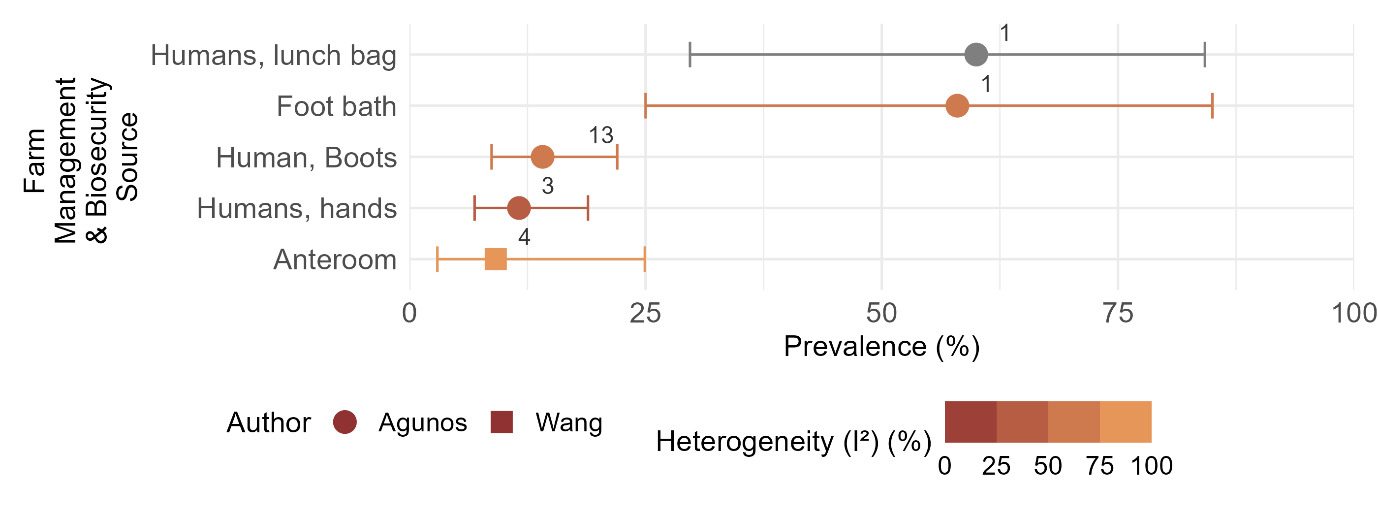
This risk factor group includes risk factors related to human behaviour, and biosecurity-related practices such as foot baths, hygiene barriers and anterooms, and farm-management practices such as cleaning and disinfection, thinning and downtime. Quantitative prevalence estimates were available only for boots, hands and lunch bags (Agunos et al., 2014), foot baths (Agunos et al., 2014) and anterooms (Wang et al., 2023). Although Wang et al. (2023) emphasised the role of personnel, footwear, and equipment in bridging exterior and interior environments, their discussion is based on findings of other reviews, including Newell et al. (2011).
The prevalence estimates for boots, hands and anterooms are relatively low (9-14%) compared to other sources. The prevalence estimates for lunch bags and foot baths are much higher, at 60%, although both estimates are based on only one study and have wide confidence intervals.
Agunos et al. (2014) estimated an odds ratio of 39.8 for Campylobacter-positive boots in infected flocks and confirmed genotype matches between human and broiler isolates (9/10 studies). However, prevalence on the boots increased with the age of the flock (Agunos et al., 2014), indicating that the direction of Campylobacter spread may not be straightforward to determine.
All studies reviewed emphasised the role of biosecurity. Agunos et al. (2014) found that flock positivity was negatively associated with the presence of hygiene barriers (OR=0.23, 95% CI 0.12-0.44) on the basis of 3 studies, and recommended hygiene barriers to reduce infection rates. Similarly, Newell et al. (2011) found that the use of hygiene barriers can reduce contamination in the flock by about 50%, especially when livestock are in close proximity to the farm, while Pessoa et al. (2021) found that biosecurity interventions resulted in a reduction in Campylobacter in 71% of trials.
Wang et al. (2023) concluded that human activity during practices such as thinning is a critical factor in Campylobacter introduction and spread, and that biosecurity alone may not be sufficient without addressing human vectors. Similarly, Newell et al. (2011) considered human traffic to be a significant risk factor in introducing and spreading Campylobacter to flocks, with substantial epidemiological evidence, while Golden and Mishra (2020) cited poor worker hygiene as a potential source of Campylobacter contamination. The same study also found that production system, detection method, and year explained up to 50% of variability in prevalence, underscoring the importance of consistent practices.
In their Third Report on Campylobacter, the ACMSF concluded that no single practical intervention can reduce Campylobacter to acceptable levels in broiler houses, but that evidence suggests a combination of biosecurity interventions can reduce Campylobacter colonisation significantly (ACMSF, 2019). The Committee highlighted thinning practices and hygiene barriers as particular areas for evaluation by the industry.
Biosecurity interventions were also highlighted by the EFSA BIOHAZ Panel (2020). Quantitative estimates for prevalence reduction were available for two interventions: restricting staff members to only permanently or long-term employed staff and the use of hygienic anterooms at the broiler house entrance. The use of only permanent staff had estimated prevalence reductions between 13.9% (95% CI 2.7-18.6) and 25.3 (95% CI 2.7-37.1) on the basis of 4 studies. The Panel concluded that farm staff are often the vehicle of Campylobacter carriage into the broiler house, and that better education of workers could improve the efficacy of biosecurity protocols. The estimated reduction in prevalence for the use of hygienic anterooms ranged from 3.3% (95% CI 0.4-4.2) and 18% (95% CI 5.9-31.9) on the basis of 5 studies. However, the Panel noted that untidy or poor-quality anterooms were also a risk factor for Campylobacter colonisation.
In a previous report, the EFSA BIOHAZ Panel estimated that the relative risk reduction from banning thinning ranged from 2% to 25% (EFSA BIOHAZ, 2011). In addition to breaches in biosecurity during thinning, the Panel also noted that increased stress due to thinning could increase the spread of Campylobacter through a flock once colonised.
5.7.1. Evidence from FSA/FSS-funded research
Farm management and biosecurity was highlighted as a key factor in controlling Campylobacter in all of the FSA/FSS-funded studies covered in this review.
Allen and Newell et al. (2005) reviewed biosecurity measures and found that the most effective interventions were protective clothing; dedicated footwear and/or dipping boots; washing or sanitising of hands; cleaning and disinfection of house and equipment; minimising visitors to essential personnel; and controlling pets and other animals on the farm. Conversely, in their study of Campylobacter prevalence on 12 farms across 3 companies, Bull et al. (2006) did not find statistically significant associations between hygiene measures and Campylobacter prevalence, although they suggested that this could be due to the farms having similar levels of biosecurity. The authors noted that one farm which produced consistently Campylobacter-negative flocks used dedicated footwear for each broiler house, which may have reduced transmission of Campylobacter from the environment. Similarly, Allen et al. (2006) found that in the farms they investigated, providing site-specific gloves for visitors was statistically significantly associated with lower environmental incidence of Campylobacter on the farm and a lower likelihood of flock positivity at the thinning stage.
Generally, effective biosecurity measures were found to delay, but not necessarily prevent, the onset of Campylobacter colonisation in flocks (V. M. Allen & Newell, 2005; Georgiev et al., 2014; Morris et al., 2009). Nevertheless, in their epidemiological analysis of Campylobacter in standard and enhanced-biosecurity farms, Georgiev et al. (2014) estimated that if all broiler flocks in the UK were raised under enhanced biosecurity, 26% of heavy colonisation (≥1,000 CFU/g Campylobacter) of batches could be avoided.
Events such as thinning, where routine biosecurity could be breached, were found to be associated with higher incidence of Campylobacter in several studies (V. Allen et al., 2008; Bull et al., 2003; Georgiev et al., 2014; Hutchinson et al., 2015) and reviews (V. M. Allen & Newell, 2005). In their investigation of Campylobacter prevalence at crop thinning and clearance, Hutchinson et al. (2015) found that Campylobacter counts were highest in very large sheds (>50,000 birds), where thinning could take place as many as 6-8 times over a crop cycle. Georgiev et al. (2014) also found that birds harvested at the end of a crop cycle were significantly more likely to be heavily colonised than those harvested at thinning. They also found that the protective effect of enhanced biosecurity was reduced at the end of a crop cycle compared to at thinning. Similarly, while Allen et al. (2008) found in laboratory trials that cleaning hands and shoes could dramatically reduce Campylobacter contamination, the use of enhanced cleaning protocols on farms during thinning was not found to reduce Campylobacter colonisation at clearance. The FAO and WHO (2024) also drew attention to practices such as thinning and downtime between flocks when reviewing interventions to control Campylobacter.
Challenges in correctly implementing biosecurity measures, even when appropriate facilities were provided, were highlighted by several authors (V. Allen et al., 2006, 2008; V. M. Allen & Newell, 2005; Bull et al., 2003; Newell et al., 2008), especially in alternative rearing systems (Bull et al., 2003; Morris et al., 2009). In their observational review of UK poultry farms, Newell et al. (2008) noted that several sites were old and not designed with current biosecurity recommendations in mind. Morris et al. (2009) also found that the difference in Campylobacter prevalence between flocks with and without hygiene barriers was not statistically significant, but the authors highlighted that several farms with hygiene barriers did not follow best practices (such as using the correct concentration of disinfectant in foot dips), which may have affected the results.
Bull et al. (2003) and Bull et al. (2006) also investigated the relationship between flock health and Campylobacter colonisation, finding that farms with better health scores and lower mortality had a lower incidence of Campylobacter. They suggested two interpretations of this correlation: that healthier birds are less susceptible to colonisation, or that higher farm welfare reflects better adherence to farm procedures, including biosecurity, which might reduce the risk of Campylobacter colonisation. In addition, although it was not the focus of either study, the authors highlighted the influence of the gut microbiome on broiler susceptibility to colonisation with Campylobacter, recommending further research into interventions such as competitive exclusion to control Campylobacter colonisation in broilers. The ACMSF also recommended further research into competitive exclusion in their Third Report on Campylobacter (ACMSF, 2019).
5.8. Pests & wildlife sources
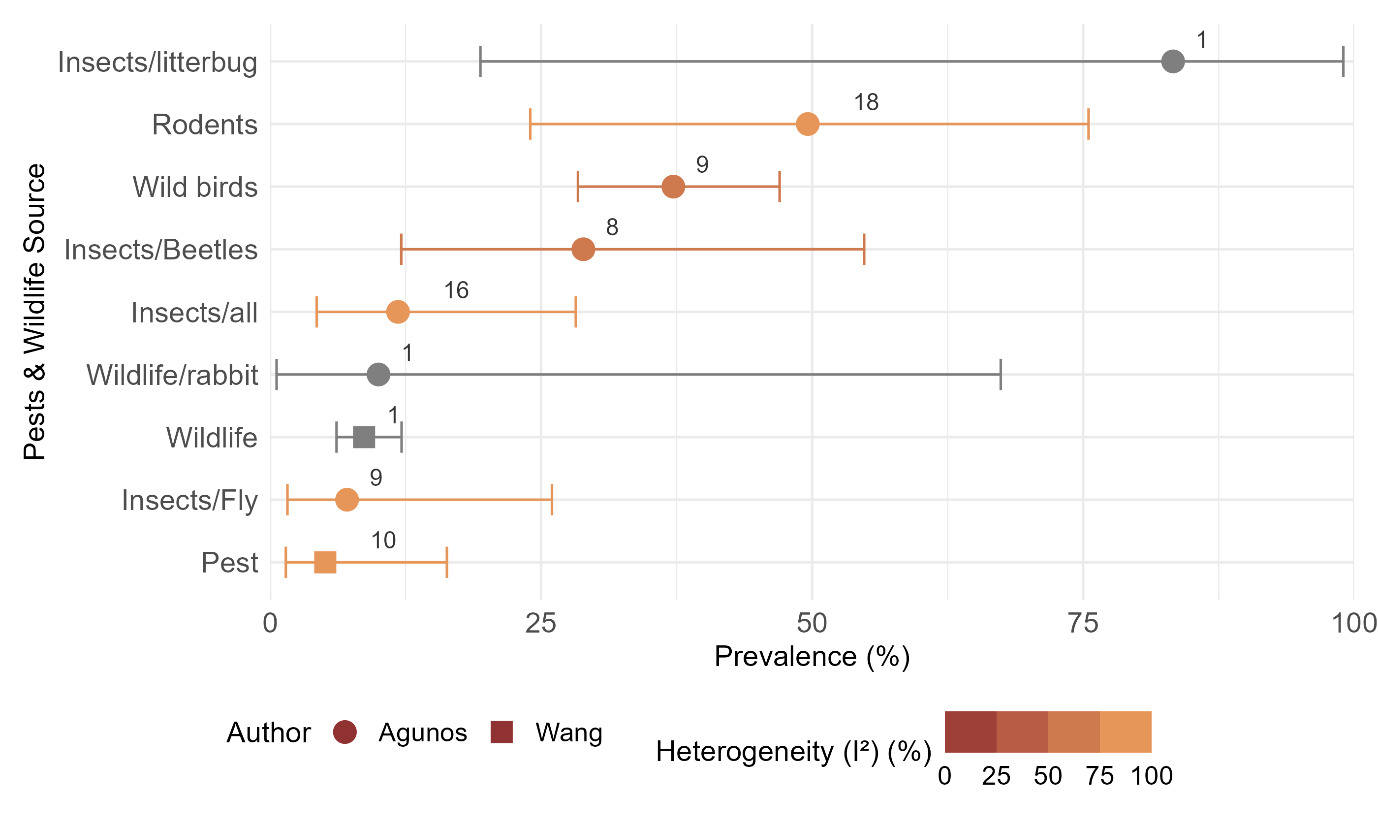
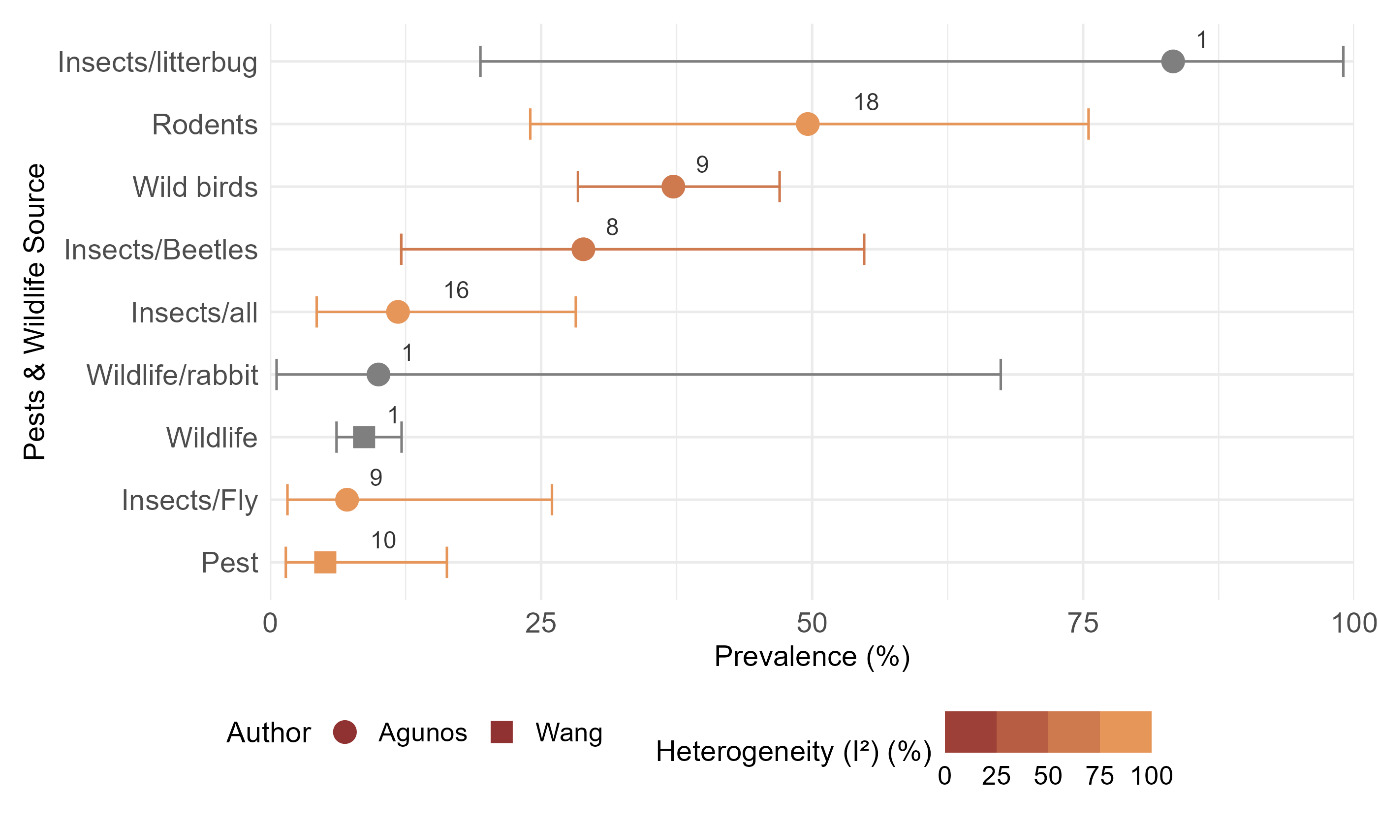
Wild birds, rodents, rabbits, and insects such as beetles, flies and litterbugs were included in this group. This group has a wide range of prevalence estimates, between 5% (pests) and 83% (litterbugs), with wide confidence intervals and high heterogeneity, even for estimates produced from a large number of studies (e.g. rodents, insects). There are no clear patterns across groups of animals.
Wildlife, including rodents, was recognised as a potential source of Campylobacter by Newell et al. (2011); however, the evidence was considered inconsistent due to limited genetic linkages between Campylobacter strains in poultry and wild animals. Golden and Mishra (2020) also identified insects and rodents as contamination risks, particularly in alternative systems where poultry may have more access to outside areas. Agunos et al (2014) estimated that in the presence of pests, the likelihood of flock colonisation increases (OR=2.38, 95% CI 1.33 – 4.27), but noted that there was a lot of variability in prevalence between species and the amount of contact between broilers and pests. Conversely, Wang et al. (2023) found only 5% prevalence of Campylobacter in pests (including insects and rodents).
The prevalence of Campylobacter in wild birds was estimated by Agunos et al. (2014) to be 37.2% but the heterogeneity was high (I2 = 71%), indicating variability between studies. The authors noted that wild birds are common carriers of pathogens including Campylobacter, but found genetic links between wild birds and broilers in only 3 of 9 studies. They also found that insecticide and rodent control measures were not significantly associated with Campylobacter status, but that fly screens could significantly prevent or delay colonisation, although this finding was based on only two studies.
The EFSA Panel on Biological Hazards (BIOHAZ) estimated that effective rodent control could reduce the overall prevalence of Campylobacter on EU farms by between 6.7% (95% CI 0-12.1) and 11.8% (95% CI 2.4-7.1) on the basis of 4 studies (EFSA BIOHAZ Panel et al., 2020). The Panel also noted that a few studies found a link between the use of fly screens and lower Campylobacter prevalence, at least during summer months, although the evidence for this was mixed.
5.8.1. Evidence from FSA/FSS funded research
Bull et al. (2003) found that flocks with evidence of rodents were more likely to be colonised with Campylobacter. Composting of dead stock (compared to incineration) was also associated with higher Campylobacter-positivity by Bull et al. (2006), which the authors suggested was potentially due to higher rodent activity. The authors also suggested that in addition to contaminating broiler feed or the external environment, rodents could act as a reservoir for Campylobacter between crop cycles. Similarly, Allen and Newell et al. (2005) identified several studies which recovered Campylobacter from the faeces of wild animals, with some studies also finding matching sub-types between wild animals and broilers. The authors concluded that pests such as insects, beetles and rodents could be responsible for spreading Campylobacter within and between broiler houses following initial infection of a flock.
In their investigation of practices on extensive rearing systems, Morris et al. (2009) found that vermin control was associated with flocks remaining Campylobacter-negative up to the end of the brooder stage (4 weeks), but that this was not statistically significant. They also noted challenges maintaining vermin control once broilers had access to the outside environment.
6. Conclusions and recommendations
Overall, the risk factor group considered to be the most important was farm management and biosecurity, as this factor is the main influence affecting colonisation of a broiler flock with Campylobacter from the external environment, adjacent domestic animals, or wildlife. This is in line with conclusions reached by the recent FAO and WHO review of measures to control Campylobacter (FAO & WHO, 2024). Although there was relatively little quantitative evidence for farm management and biosecurity, all systematic reviews and studies commissioned by the FSA/FSS highlighted strong qualitative evidence for good biosecurity and hygiene practices reducing transmission of Campylobacter from the external environment into broiler houses, although conclusions could not be drawn on which specific biosecurity interventions are most effective at reducing Campylobacter prevalence in broiler flocks. Challenges in maintaining biosecurity practices, especially in alternative systems and during events such as thinning, were highlighted by several reviews. Transmission from the internal environment from one flock to subsequent flocks was mainly linked to inadequate cleaning, disinfection and downtime between flocks, especially in older or poorer quality housing. Differences in biosecurity practices were also considered to be the main contributors to regional differences in Campylobacter prevalence, although there was no quantitative evidence in the studies reviewed to support this.
The evidence for the effect of domestic animals on Campylobacter prevalence in broilers is generally considered poor, although there is some evidence of transmission between broilers and other domestic animals. Adjacent broiler or layer flocks are considered the most important animal-related risk factor for Campylobacter colonisation in broilers, with high estimated prevalence and strong genetic connections. Prevalence in wildlife and pests is mixed, but with a higher risk of transmission where broilers have more contact with pests (e.g. in alternative systems).
Campylobacter prevalence was found to increase during live transport of broilers. The high density of birds in crates, increased defecation due to stress, and insufficient cleaning of equipment used for transport were suggested as risk factors for increasing Campylobacter prevalence of broilers arriving at processing plants.
Feed, water and litter were not identified as significant risk factors. Some studies found that treatment of water with antimicrobials reduced the likelihood of Campylobacter colonisation, but this was not a consistent risk factor, especially as Campylobacter is usually only detected in water after a flock becomes positive. Litter top-up or reuse was identified as a potential risk factor in qualitative reviews, due to the risk of breaching biosecurity.
Vertical transmission from parents to progeny was considered by all reviews to be a rare route of Campylobacter colonisation in broilers, although it could not be ruled out.
This synthesis emphasises the relative importance of different risk factor groups in Campylobacter transmission on farms and highlights the need for targeted, evidence-based interventions. However, wide confidence intervals in some categories and a lack of quantitative data for others, especially farm management and biosecurity, underscores the need for more consistent data collection and further research to refine prevalence estimates and intervention efficacy.
The publications reviewed provided recommendations for more effective interventions that often focused around the need for enhanced biosecurity (Agunos et al., 2014; Newell et al., 2011; Pessoa et al., 2021) and effective cleaning between crop cycles (Agunos et al., 2014; Wang et al., 2023). Similarly, the efficacy of interventions such as vaccination (Newell et al., 2011; Pessoa et al., 2021) or use of feed additives (Pessoa et al., 2021), while out of scope for this umbrella review, have been discussed in the literature. However, there are currently no vaccines or bacteriophage-based products for Campylobacter commercially available, and evidence for other feed additives such as organic acids and probiotics remains limited to pilot studies (FAO & WHO, 2024).
On the basis of this review, the following recommendations are proposed to enhance Campylobacter control in poultry processing at the farm level:
-
Biosecurity measures to reduce transmission of Campylobacter from the external environment to the broiler house, with a focus on enforcement of biosecurity measures at the worker level, in particular:
-
Dedicated protective clothing and/or footwear for each broiler house;
-
Washing or sanitising of hands and boots before entering the broiler house;
-
Minimising access to the broiler house to essential personnel;
-
Controlling pets and other animals on the farm.
-
-
Proper cleaning and disinfection of broiler houses and equipment between crop cycles to prevent transmission from a flock to subsequent flocks;
-
Proper cleaning and disinfection of equipment and vehicles used for broiler transport to reduce transmission through a flock during transport to the slaughterhouse;
-
Control of the proximity and interaction with other farm animals, in particular other broiler houses.
7. Limitations
While this umbrella review provides a synthesis of research into the prevalence of Campylobacter on broiler farms, there are several limitations which limit the interpretation of results. Due to variabilities in study design, methodologies and outcomes measured across the included reviews, the synthesis presented in this umbrella review is qualitative. Further quantitative meta-analysis may be possible, giving further insights into the data and allowing more robust conclusions to be drawn.
Of the quantitative data that were available, the heterogeneity of results and overlap in primary sources between systematic reviews mean that results should be interpreted and compared cautiously. Heterogeneity (I2) is a measure of the degree of variability in effect estimates between studies which cannot be attributed to chance. Of the 55 estimates in this umbrella review with heterogeneity estimates, 9 had “substantial” I2 values (61-75%) and 34 had “considerable” (>75%) I2 values. The high I2 values in this umbrella review therefore reflect high variability in study parameters between primary sources, which limits the confidence in pooled estimates. I2 may also be underestimated when the sample size is small due to low statistical power. Of the 57 estimates in this umbrella review based on more than one study, 22 had a sample size of ≤5 studies. The lack of standardisation between studies and the small number of studies contributing to many estimates means that the pooled prevalence estimates and their confidence intervals should be interpreted cautiously.
A second limitation of the quantitative results in this umbrella review is the overlap in primary sources between systematic reviews. The corrected covered area (CCA) for the three systematic reviews with quantitative data was 26%. While some overlap between systematic reviews is expected, a CCA of >15% is typically interpreted as “very high” (Kirvalidze et al., 2023). This suggests that while the overall evidence base is relatively diverse, there is still a notable degree of duplication among studies. The presence of frequently cited foundational studies may disproportionately influence the perceived effectiveness of certain interventions. It is also worth noting that there is also likely to be substantial overlap between primary sources for the systematic reviews where a full list of primary references was not available (Newell et al., 2011; Pessoa et al., 2021). Agreement between reviews should therefore be interpreted with caution, considering this overlap. Furthermore, comparisons between risk factor groups from different systematic reviews may be affected by different classification assumptions. For example, more prevalence estimates are available from Agunos et al. (2014), as their breakdown of categories was generally more granular than the other reviews.
A third limitation of this umbrella review is that interactions between risk factors have not been accounted for. For example, biosecurity measures may be less effective in preventing flock colonisation if the prevalence of Campylobacter is very high in the external environment. Finally, there was a particular absence of quantitative data for the intervention category of farm management and biosecurity, despite this being a key risk factor highlighted by all systematic reviews.
Overall, risk prioritisation should consider the underlying data quality and variability presented in this umbrella review.
8. Knowledge gaps and recommendations for further research
Beyond a lack of standardisation between studies limiting quantitative comparison between risk factors, several particular knowledge gaps were identified in the systematic reviews and FSA/FSS-funded studies discussed in this report.
While biosecurity was highlighted as a key risk factor for Campylobacter in poultry houses, relatively little quantitative data was available on the sources of flock colonisation, and therefore which biosecurity interventions might be most effective in preventing Campylobacter transmission from the external environment to flocks. For example, domestic and wild animals have been linked to Campylobacter colonisation of broiler houses, but the relative importance of this transmission pathway compared to other sources is unknown. This data gap is of particular relevance to extensively reared flocks, where traditional biosecurity practices are not possible. While campylobacters are widespread in the environment, genetic linkage has not necessarily always connected environmental campylobacters to those colonising broiler flocks, so prevalence alone cannot determine the importance of a particular source to flock colonisation. The directionality of spread between the broiler house and environment is also poorly understood. Regional variations in Campylobacter prevalence were also hypothesised to be due to differences in biosecurity standards or practices, but this has not been investigated.
Broiler house inputs such as water, feed and litter were not considered to be major sources of Campylobacter colonisation; however, factors that influence the survival of campylobacters in the broiler house environment is an area of uncertainty. Moisture control of litter and treatment of water with antimicrobials were suggested as potential interventions to reduce the spread of Campylobacter through flocks, but strong evidence for this remains lacking and this is an area recommended for further research.
Additionally, while litter management has been highlighted elsewhere as a potential control factor, the evidence reviewed in this work was not sufficient to reach robust conclusions. Transmission of Campylobacter though flocks during transport from the farm to the slaughterhouse was observed in several studies, but studies on interventions which may reduce transmission during transport are lacking. In addition, the importance of Campylobacter transmission during transport to human infection is not well understood.
The relationship between the welfare and health of broilers and the prevalence of Campylobacter is another area highlighted by several studies, but lacks quantitative data. Health-related variables such as litter quality, feed composition, the gut microbiome and the presence of other pathogens, as well as stress events such as feed withdrawal and flock thinning, have been suggested as factors which might increase the risk of Campylobacter colonisation in broilers, but further research is required in this area.
In conclusion, this report suggests the following avenues for future research into Campylobacter risk factor prevalence on broiler farms:
-
The relative importance of different environmental and animal sources of Campylobacter for broiler houses, including the directionality of transmission and epidemiology of Campylobacter on the farm;
-
Campylobacter is a natural part of chicken gut microflora, and its presence on farms affects contamination of chicken meat throughout the production chain. Research is needed on strategies to reduce its prevalence in live birds, including consideration of environmental factors that influence gut microbiota. It is also important to assess how changes in prevalence impact microbial loads on carcasses;
-
The effectiveness of different biosecurity measures to reduce Campylobacter, especially during events such as thinning where standard biosecurity practices may be overwhelmed;
-
A comparison of regional variations in Campylobacter prevalence in broiler houses to regional differences in biosecurity and hygiene standards or practices;
-
The relative importance of Campylobacter transmission during transport from the farm to slaughterhouse, and effective interventions to reduce transmission during transport;
-
The relationship between broiler health and susceptibility to Campylobacter colonisation;
-
The effectiveness and feasibility of other interventions in reducing Campylobacter colonisation in broiler houses such as water treatment, feed additives and competitive exclusion;
-
The evidence on the association, or lack thereof, between Campylobacter strains in breeder houses and on eggs with those isolated from the produced broiler birds needs to be strengthened;
-
The survival of Campylobacter in broiler house environments and the effectiveness of current laboratory methods to detect infective Campylobacter.
Acknowledgements
We wish to acknowledge the Food Standards Agency Statistics Team for their contributions to this work. In particular, we extend our thanks to Mark Jitlal for his expert statistical guidance and review, which enhanced the analytical quality of this review.