
This is a joint FSA and FSS publication.
1. Introduction
3-fucosyllactose (3-FL) produced using a genetically modified derivative strain of Escherichia coli BL21 (DE3) from the same applicant, Chr. Hansen A/S, has been the subject of one positive assessment for GB by the Food Standards Agency (FSA) and Food Standards Scotland (FSS) in October 2024 (FSA and FSS, 2024). At the time of assessment this authorisation was not yet in place, but this prior application forms the basis for the change in conditions of use sought.
3-FL produced using another strain of Escherichia coli - E. coli K12 – DH1 in many of the food categories sought in this application is authorised for use in GB since 2024 under a separate application sought by a different applicant. Data protection is in place for this authorisation.
In EU level, authorisations have been made for 3-FL produced using E. coli K12 MG1655 (Commission Implementing Regulation (EU) 2021/2029), E. coli K12 DH1 (Commission Implementing Regulations (EU) 2023/2210 and 2025/1549), and E. coli BL21 (DE3) (Commission Implementing Regulations (EU) 2023/ 52 and 2025/1537). The EU has also authorised the change in conditions of use for 3-FL produced using a derivative strain of Escherichia coli BL21 (DE3) (Commission Implementing Regulation (EU) 2025/1537). However, this EU authorisation covers fewer food categories and lower 3-FL use levels compared to this GB novel food application.
The FSA and FSS have undertaken the safety assessment of the change in conditions of use for 3-FL produced using a derivative strain of Escherichia coli BL21 (DE3) to amend the use levels previously assessed for authorisation under assimilated Regulation (EU) 2015/2283.
Under Article 3(4) of assimilated Commission Implementing Regulation (EU) 2017/2469, it may not be necessary for an applicant to provide all the data required under Article 5 of this Regulation where a novel food application seeks to modify the conditions of use, the specifications, additional specific labelling requirements or post-market monitoring requirements of an authorised novel food. Verifiable justification explaining that the intended changes do not affect the results of the existing safety assessment is provided by the applicant. Given that the novel food is identical to the novel food reviewed in the previous assessment, this new safety assessment has focused on the impact of the change in conditions of use for 3-FL and the higher use levels sought.
The evaluation by the FSA and FSS assessed the food safety risks of the novel food and its production, in line with Article 11 of assimilated Regulation (EU) 2015/2283 and Article 7 of assimilated Commission Implementing Regulation (EU) 2017/2469. The basis and structure of the assessment was conducted in accordance with the relevant technical guidance put in place by the European Food Safety Agency (EFSA) for full novel food applications (EFSA, 2016) which the FSA and FSS considers is relevant and should be applied to this novel food application owing to similarities in the regulatory regimes.
This assessment outlines the conclusions of the FSA and FSS on the change in conditions of use of 3-FL produced using Escherichia coli BL21 (DE3) derivative strain as a novel food to increase use levels in specified food categories and food supplements.
Assessment
1.1.1. Identity of the Novel Food
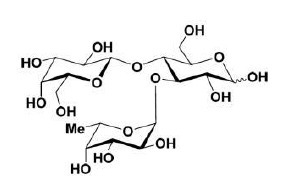
The novel food, 3-fucosyllactose, is a purified dried powder of ≥ 90% 3-FL minimum purity. Other saccharides are also present: ≤ 5% D-lactose, ≤ 3% L-fucose, ≤ 3% D-galactose, ≤ 3% D-glucose and ≤ 5% of other related saccharides. The structural formula of 3-fucosyllactose (3-FL) is depicted in Figure 1.
.png)
3-FL is classified by the following information:
IUPAC name:
(2S,3S,4R,5S,6S)-2-[(3R,4R,5R,6R)-2,3-dihydroxy-6-(hydroxymethyl)-5-[(2S,3R,4S,5R,6R)-3,4,5-trihydroxy-6-(hydroxymethyl)oxan-2-yl]oxyoxan-4-yl]oxy-6-methyloxane-3,4,5-triolCAS number: 41312-47-4
Molecular formula: C18H32O15
Molecular mass: 488.44 g/mol
There is no change to the identity of the novel food in this application and it remains the same as the novel food assessed previously (FSA and FSS, 2024). In that assessment, confirmation that the 3-FL novel food is equivalent to 3-FL Human Milk Oligosaccharide (HMO) found in human breast milk was provided and assessed (FSA and FSS, 2024) and did not raise any safety concerns.
1.1.2. Production Process
3-FL is synthesised by fermentation using a genetically modified derivative strain of Escherichia coli BL21 (DE3). Raw materials lactose and glycerol (glucose or sucrose can be used as alternatives to glycerol) are used to produce 3-FL. A series of purification and isolation steps and spray drying is used to yield a high purity powder containing ≥ 90% 3-FL by dry weight.
The applicant did not propose any changes to the production process since the prior GB assessment (FSA and FSS, 2024). In the original assessment, it was concluded that the data provided on the production process was sufficient and did not give rise to any safety concerns. No further assessment is required.
1.1.3. Compositional Information
The composition of the novel food is unchanged in this application. The composition of the novel food was previously assessed based on batch data provided by the applicant (FSA and FSS, 2024). No further assessment is required.
1.1.4. Stability
The stability of the novel food and its application in food matrices was previously assessed (FSA and FSS, 2024) and did not raise any concerns. This aspect remains unchanged by the extension of use sought as there are no changes to the novel food’s composition or storage. No further assessment is required.
1.1.5. Specification
There are no proposed changes to the specifications for 3-FL. The specifications as assessed previously for GB (FSA and FSS, 2024) are shown in Table 1.
1.1.6. History of Use
Intake of 3-FL from human milk
Human Milk Oligosaccharides are the third largest solid component of human breast milk (Bode, 2012; Kunz & Rudloff, 1993; Newburg, 2013). Individual composition and levels vary due to factors including mothers’ genotype and the stage of lactation (Wang et al., 2020). High levels are reported in colostrum at 20-25 g/L and in mature milk at 10-15 g/L (Bode, 2012; Coppa et al., 2001; Gidrewicz & Fenton, 2014; Kunz et al., 1999; Thurl et al., 2010; Urashima et al., 2018).
3-fucosyllactose (3-FL) is classed as a neutral HMO due to its structure containing l-fucose rather than sialic acid. 3-FL is one of the most abundant HMOs in breast milk, (Bode, 2012; Molnar-Gabor et al., 2019; Thurl et al., 2017).
To support the positive opinion for 3-FL from genetically modified BL21 (DE3), the levels of naturally occurring HMOs in breast milk (Soyyılmaz et al., 2021) were used to support the safe use of the novel food under the proposed conditions of uses.
In July 2024, the EU published the results of a scoping literature review on the levels of HMOs in breast milk to support the safety evaluations of HMO based novel foods (EFSA, 2024; Malih et al., 2024). Data from this EFSA (2024) report was assessed and accepted by FSA and FSS when a positive opinion was issued for 3-FL produced using genetically modified Escherichia coli K-12 (FSA and FSS, 2025). To support the safety assessment for the change in conditions of use of the novel food, the estimated daily intakes for 3-FL (see Table 2) were derived using the mean of means and maximum mean fo 3-FL in human breast milk (0.91 g/L and 5.00 g/L, respectively), and the average and high daily intake of breast milk for infants (0 to 6 months) at 800 mL and 1200 mL, respectively (EFSA NDA Panel, 2013).
History of use of 3-FL as a novel food
3-FL produced using a genetically modified derivative strain of Escherichia coli BL21 (DE3) has been subject to assessment in Great Britain (GB) but is yet to complete the authorisation process. The positive GB opinion on this novel food assessment was published in October 2024 (FSA and FSS, 2024).
In EU level, 3-FL produced using a derivative strain of E. coli BL21 (DE3) was authorised under Commission Implementing Regulation (EU) 2023/52, following a positive EFSA assessment (EFSA, 2022). A change to the conditions of use covering fewer food categories and lower 3-FL use levels was authorised under Commission Implementing Regulation (EU) 2025/1537.
Authorisations have been made in GB and the EU for 3-FL produced using other microbial sources. 3-FL produced using E. coli K12 DH1 has been authorised as a novel food (subject to data protection) in GB since 2024. At EU level, authorisations have been made for 3-FL produced using E. coli K12 MG1655 (Commission Implementing Regulation (EU) 2021/2029). E. coli K12 DH1 (Commission Implementing Regulations (EU) 2023/2210 and 2025/1549), and E. coli BL21 (DE3) (Commission Implementing Regulations (EU) 2023/ 52 and 2025/1537). The EU has also authorised the change in conditions of use for 3-FL produced using a genetically modified derivative strain of Escherichia coli BL21 (DE3) (Commission Implementing Regulation (EU) 2025/1537). However, this EU authorisation covers fewer food categories and lower 3-FL use levels compared to this GB novel food application.
The history of use does not indicate any further areas for evaluation.
1.1.7. Intended Use and Maximum Use Levels
The request for higher use levels across all previously assessed food categories (FSA and FSS, 2024) is the focus of the current assessment. The applicant provided a rationale based on a recent EFSA scientific and technical report (EFSA, 2024) summarising new data on the natural levels of 3-FL found in human milk. This report is supported by a prior scoping literature review commissioned by EFSA (Malih et al., 2024) which is the latest comprehensive report available on the concentrations of 3-FL in human milk.
The applicant has proposed to increase the use levels of 3-FL across all previously assessed categories: food for infants and young children (infant formula and follow-on formula, baby foods and processed cereal-based foods, milk-based drinks, foods for special medical purposes and food supplements) and food for other children, adolescents and adults (foods for special medical purposes and food supplements). No other changes have been requested.
3-FL is to be consumed by the general population. The uses and use levels previously assessed for this novel food (FSA and FSS, 2024) are displayed in Table 3 alongside the newly proposed increased use levels. In Table 3, the units and food categories have been aligned with Commission Implementing Regulation (EU) 2023/52 as supplied by the applicant. Food supplements, which are not permitted in young children and infants in the EU, but were positively assessed in the previous GB assessment, are also included. A direct comparison in Table 3 can be made for food categories and units in accordance with Annex II Part D of assimilated Regulation (EC) No 1333/2008 rather than FoodEx2.
An intake assessment to determine the anticipated daily intake of the novel food was conducted based on the applicant’s changes in the conditions of use (Table 3) and individual data from the EFSA Comprehensive European Food Consumption Database (EFSA, 2012). The lowest and highest mean and 95th percentile anticipated daily intakes of 3-FL (expressed in mg/kg body weight (bw) per day) are reported in Table 4.
The EFSA Comprehensive European Food Consumption Database was utilised in the previous GB assessment for 3-FL produced using genetically modified Escherichia coli BL21 (DE3) and this did not raise any additional areas for review for GB consumers (FSA and FSS, 2024). As such, the use of EU data was considered appropriate and relevant in reviewing this change in conditions of use of the novel food
Infants are expected to have the highest mean (281 mg/kg bw/day) and 95th percentile (632 mg/kg bw/day) intakes. The estimated daily intake of 3-FL from the proposed uses and use levels does not exceed the estimated high-level daily intake for 3-FL of 896 mg/kg bw/day in breastfed infants.
The anticipated intakes for 3-FL in food supplements on a body weight basis (Table 5) were calculated for all population groups based proposed use levels (Table 3) and default body weights (EFSA Scientific Committee, 2012).
The estimated daily intakes of 3-FL from the proposed increased levels in food supplements do not exceed the estimated high-level daily intake for 3-FL of 896 mg/kg bw/day in breastfed infants.
Food supplements are not intended to be used if other foods with the novel food are consumed on the same day. For infants and young children, food supplements are not intended to be used if breast milk or other foods with added 3-FL are consumed on the same day.
Combined exposure from 3 FL from other novel foods or breast milk has not been evaluated in this assessment. This is because existing authorisations make clear that multiple sources of 3-FL should not be consumed on the same day. This is consistent with the management of other human identical milk oligosaccharides.
Risk managers may wish to consider precautionary labelling to ensure any foods containing the novel food, other sources of 3-FL or breast milk are not consumed on the same day.
1.1.8. Absorption, Distribution, Metabolism and Excretion (ADME)
No ADME data was provided for the novel food as there is no change to the ADME of 3-FL as previously assessed. The previous FSA and FSS review of the available literature on the ADME of 3-FL did not raise safety concerns (FSA and FSS, 2024). The ADME of human milk oligosaccharides (HMOs) are well understood and the information does not indicate any further areas of concern.
1.1.9. Nutritional Information
There is no change to the nutritional profile of the novel food. The consumption of the novel food under the newly proposed use levels does not pose a nutritional disadvantage.
1.1.10. Toxicological Information
No toxicological data was provided for the novel food as there are no changes to the toxicological profile of the novel food since the original assessment under RP2106. The FSA and FSS previously conducted an assessment of the toxicological studies and literature provided by the applicant (FSA and FSS, 2024).
The increase in proposed use levels does not raise any new concerns for review.
It is considered that the conclusions from the previous assessment (FSA and FSS, 2024) remains relevant for the proposed change in use levels.
1.1.11. Allergenicity
The protein content of the novel food is low (≤ 0.01%) (FSA and FSS, 2024). The increase in use levels do not change the low allergenic profile of the novel food. It is considered that the conclusions from the previous assessment (FSA and FSS, 2024) remains relevant and that the likelihood of allergenic reactions to the novel food is low.
Discussion
3-FL is a human milk oligosaccharide (HMO) and is equivalent to 3-FL found naturally in human breast milk.
The novel food is produced using a genetically modified derivative strain of Escherichia coli BL21 (DE3). The novel food was previously positively assessed by GB (FSA and FSS, 2024).
This application seeks to increase the use levels of 3-FL across all previously assessed food categories: food for infants and young children (infant formula and follow-on formula, baby foods and processed cereal-based foods, milk-based drinks, foods for special medical purposes and food supplements) and food for other children, adolescents and adults (foods for special medical purposes and food supplements). No other changes have been requested. Therefore, the identity, production process, composition, specifications, nutritional information, ADME, toxicological information and allergenic profile for the novel food remain unchanged.
The history of human exposure to 3-FL concerns breastfed infants. To support the safety evaluations of HMO based novel foods, EFSA published the results of a scoping literature review on the levels of HMOs, including 3-FL, in human breast milk (EFSA, 2024; Malih et al., 2024). Data from this report (EFSA, 2024) was previously assessed and accepted by FSA and FSS when a positive opinion was issued for 3-FL produced using genetically modified Escherichia coli K-12 (FSA and FSS, 2025). The FSA and FSS considered the EFSA publication (EFSA, 2024) and the supporting information provided by the applicant to be scientifically robust to draw conclusions. To support the safety assessment for the change in conditions of use of the novel food, the estimated daily intakes for 3-FL were derived using the mean of means and maximum mean for 3-FL in human breast milk (0.91 g/L and 5.00 g/L, respectively), and the average and high daily intake of breast milk for infants (0 to 6 months) at 800 mL and 1200 mL, respectively (EFSA NDA Panel, 2013). Based on this information, the estimated high daily intake for breastfed infants is expected to be 896 mg/kg bw/day.
Infants are expected to have the highest mean (281 mg/kg bw/day) and 95th percentile (632 mg/kg bw/day) intakes based on the changes to the conditions of use in the proposed food categories. Using EU consumption data for food uses, infants were calculated to have the highest mean (281 mg/kg bw/day) and 95th percentile (632 mg/kg bw/day) intakes. For food supplements, infants have the highest estimated intake of 400 mg/kg bw/day.
Combined exposure to 3-FL from multiple dietary sources including breast milk have not been considered in this assessment. This reflects existing advice on these products not to consume 3-FL from multiple sources on the same day. Risk managers may wish to consider precautionary labelling to ensure any foods containing the novel food, other sources of 3-FL, or breast milk, are not consumed on the same day.
The consumption of 3-FL at the increased use levels does not raise any safety concerns. Regarding ADME, 3-FL has limited absorption. The toxicity of 3-FL produced using a genetically modified derivative strain of Escherichia coli BL21 (DE3) was assessed in the prior GB and EU assessments, (FSA and FSS 2024; EFSA, 2022). Toxicological information indicates that the novel food is not genotoxic and no adverse effects were reported in 90-day repeat dose feeding studies. Additionally, breastfed infants are naturally exposed to these substances without adverse effects at the intended use level.
Conclusions
The FSA and FSS have undertaken the assessment of the extension of use for 3-FL produced using a derivative strain of E. coli BL21 (DE3) and concluded that the proposed increases to authorised use levels are safe under the intended conditions of use and do not pose a safety risk to human health. The higher anticipated intake levels were not considered to be nutritionally disadvantageous.