
Lay Summary
Cell-cultivated products (CCPs), such as cultivated meat and seafood, are made by growing animal-derived cells in controlled environments. CCPs are considered novel foods. Given that these products are unlike any food previously available, it is important to understand any associated food safety implications and to develop suitable mitigation strategies where required.
This review focuses on genetic and epigenetic drift during CCP production and any potential risks that this might present. In this context, the term “drift” refers to the potential accumulation of genetic and epigenetic changes that may lead to changes in some of the cell line characteristics. A review of the literature and an expert elicitation event were conducted to get a better understanding of the type of changes that may occur, their drivers, what the food safety implications may be and potential mitigating strategies.
Although no evidence of any specific food safety-related issues linked to genetic drift was found in the existing literature, and direct evidence from CCP systems is limited, various theoretical risks are discussed, including tumorigenic potential, allergenicity and toxicity. Existing industry quality controls—such as checking cell growth rate, verifying cell identity, and monitoring consistency across batches—already help detect unexpected changes. This project reviews available methodology to detect (epi)genetic changes and best practice and monitoring systems from the biomedical sector, where in vitro cell culture plays a critical role and (epi)genetic stability is essential. Learnings from this field can inform future CCP regulatory requirements. Research gaps and recommendations to support regulatory developments are highlighted. As the sector grows, regulators, researchers and producers will continue to work together to develop proportionate monitoring approaches to ensure CCPs are safe, high quality, and trustworthy for consumers.
Abbreviations
ASC – Adult Stem Cell
aCGH – Array Comparative Genomic Hybridisation
CH/CHO – Chinese Hamster Ovary (cells)
CCP / CCPs – Cell-Cultivated Product(s). Note: in this document, CCP does not refer to ‘critical control point’.
CCLid – Cancer Cell Line Identification (web application)
CNV / CNVs – Copy Number Variation(s)
DDR – DNA Damage Response
DMR – Differentially Methylated Region
DSB / DSBs – Double-Strand Break(s)
ECCDNA / eccDNA – Extrachromosomal Circular DNA
ESC / ESCs – Embryonic Stem Cell(s)
FAP – Fibro-Adipogenic Precursor
FAO – Food and Agriculture Organization
FBS – Fetal Bovine Serum
FISH – Fluorescence In Situ Hybridisation
FSA – Food Standards Agency
GFI – Good Food Institute
hESC / hESCs – Human Embryonic Stem Cell(s)
hPSC / hPSCs – Human Pluripotent Stem Cell(s)
HACCP – Hazard Analysis and Critical Control Point
ICH – International Council for Harmonisation
IG – Imprinted Gene (appears in IG DMR)
iPSC / iPSCs – Induced Pluripotent Stem Cell(s)
hiPSC / hiPSCs – Human Induced Pluripotent Stem Cell(s)
IVT – In vitro Transcription
MALDI-TOF MS – Matrix-Assisted Laser Desorption/Ionisation – Time-of-Flight Mass Spectrometry
MCB – Master Cell Bank
WCB –Working Cell Bank
MMLV – Moloney Murine Leukaemia Virus (reverse transcriptase)
MSC / MSCs – Mesenchymal Stem Cell(s)
MuSCs – Muscle Satellite Cells
PCR – Polymerase Chain Reaction
PSC / PSCs – Pluripotent Stem Cell(s)
QC – Quality Control
ROS – Reactive Oxygen Species
scRNA-seq – Single-Cell RNA Sequencing
siRNA / siRNAs – Small Interfering RNA(s)
SNP / SNPs – Single Nucleotide Polymorphism / Polymorphisms
SNV / SNVs – Single Nucleotide Variant(s)
STR – Short Tandem Repeat
TP53 – Tumour Protein 53
TERT – Telomerase Reverse Transcriptase
WES – Whole Exome Sequencing
WGS – Whole Genome Sequencing
Executive Summary
Cell-cultivated products (CCPs) represent an emerging category of novel foods produced by cultivating and expanding animal cells in bioreactors under controlled environments. CCP production requires cell lines with unlimited proliferation potential and cultivation at large-scale. It is widely recognised that genetic and epigenetic alterations arise during cell culture, and these shifts can lead to changes in cell phenotype and behaviour. It is therefore important to consider any potential food safety implications that genetic and epigenetic changes occurring in CCP cell lines might pose, and how to mitigate any risks. This report reviews existing scientific evidence and expert opinion to evaluate the nature of (epi)genetic drift in CCP production, its potential implications, and proportionate strategies for monitoring and risk mitigation. Given the novelty of CCP production technologies, the scientific literature is lacking data directly generated from CCPs, but the mechanisms of (epi)genetic changes are well characterised in stem cell biology and biomedical and biopharmaceutical contexts and apply similarly to CCP-relevant cell lines.
(Epi)genetic drift is expected during long-term cell culture, driven by selective pressures such as nutrient availability and other environmental conditions. Pluripotent stem cells, adult stem cells, and immortalised cells all exhibit susceptibility to genetic or epigenetic alterations, including chromosome number variations, chromosome structural variations, microsatellite instability, epigenetic instability and aberrations of mitochondrial DNA. In addition to the culture environment, other factors that contribute to the occurrence of (epi)genetic aberrations include the technology used to generate the cell lines - e.g., integrative versus non-integrative systems to reprogram or immortalise cells – number of cell divisions or culture and cryopreservation practices.
Based on current knowledge, most of such changes are not anticipated to pose food-safety risks (consumer exposure to hazards). Instead, some (epi)genetic alterations would be expected to present quality risks during the manufacturing process such as abnormal cell division rate or inefficient cell differentiation. These changes would lead to the rejection of the production batch and would not reach the final product. Nonetheless, direct evidence of (epi)genetic drift and any associated food safety risks in CCPs remains limited. While scenarios such as tumour formation or emergence of new allergens are generally considered unlikely, they should still be taken into account from both regulatory and consumer confidence perspectives, and proportionate mitigation strategies must be established. This report considers several theoretical hazards, tumorigenicity, allergenicity and toxin formation being the main concerns discussed in the literature.
-
Genetic and epigenetic changes can be detected and characterised using a range of analytical techniques. This review outlines the available methodologies, highlighting the type of information each approach can generate, their relevance for regulatory assessment, and their respective strengths and limitations in the context of CCP production. Although genomic, transcriptomic, and proteomic analyses can provide deep mechanistic insight, their long turnaround times, technical complexity, and high cost restrict their routine use in CCP manufacturing. As a result, these high-resolution technologies are best suited to critical characterisation stages while more accessible assays may be deployed for in-process testing.
-
Industry experts emphasise that phenotypic stability may serve as a practical indicator of underlying genetic stability. Given the expense, complexity, and interpretative burden associated with high-resolution genomic analyses, monitoring phenotypic attributes may offer a feasible alternative for detecting (epi)genetic drift during CCP production. Routine monitoring already performed—such as assessing growth rate, morphology, differentiation capacity, and batch-to-batch consistency—provides meaningful assurance of cell line performance. However, phenotypes are complex multifaceted biological features, and specific phenotypic markers would need to be validated as reliable proxies for (epi)genetic change.
Although there is currently no consensus on the regulatory guidelines and analytical approaches to characterise the genetic stability of CCP cell lines, harmonised guidelines exist in the biomedical field setting out how companies must characterise and control cell lines used to manufacture biological products. This report identifies control measures and mitigation strategies implemented in these adjacent disciplines - some of them already adopted within the CCPP industry - that could form the basis to develop similar frameworks for CCPs. Additional best practice recommendations have been extracted from the literature based on scientific evidence from stem cell biology and related fields.
Key research gaps identified:
-
Investigate if in CCP-related cell lines there is a correlation between cell line age and passage number and the expression of cancer-related genes to address concerns regarding tumorigenicity risks. In vitro tumorigenicity assays of cells lines expressing these genes would provide supporting evidence.
-
Investigate (epi)genetic variation in live animals and in conventional meat to establish a baseline for comparison with CCPs. This baseline would allow safety risks in CCPs to be evaluated in relation to the natural variation already present in conventional meat.
Investigate the extent to which (epi)genetic changes are cell type–dependent, including the nature of these alterations, their frequency, and their resulting phenotypic consequences. This could inform cell line selection to minimise risk and aid in identifying suitable phenotypic markers for monitoring (epi)genetic divergence, some of which may be specific to particular cell types.
-
Create open-access databases containing large datasets to track genetic drift in CCP-relevant cell lines. This would allow users to screen the genomic profiles of their cell lines against existing data for the same cell types. Databases of hotspots and common (epi)genetic alterations for relevant cell lines would also be useful.
Key recommendations:
-
Encourage industry to share best practices, with the FSA compiling this information through its CCP sandbox activities. This would enhance the FSA’s understanding of current production processes and monitoring methods, along with their associated advantages and limitations, and could support more informed regulatory decision making.
-
Promote and incentivise data sharing across industry regarding (epi)genetic variation and associated phenotypes in CCP-relevant cell lines. Developing a safe framework for such exchange would facilitate the identification of reliable phenotypic endpoints of (epi)genetic instability. Legacy data held by companies that no longer exist may be particularly valuable, as it may be free from intellectual-property restrictions. Harnessing this information would provide additional benefit.
-
Develop guidelines establishing a minimum set of tests to monitor cell line stability in the context of CCPs. Existing expertise from the biomedical sector - including its protocols, monitoring approaches, and mitigation strategies - provides a strong foundation for this. Additional research to fill the knowledge gaps identified in this report will provide CCP-focused data to support the creation of proportionate, risk-based monitoring frameworks.
1. Introduction
Cell-based food production is an emergent field expected to deliver benefits in protein quality, environmental impact of food production and animal welfare. Unlike traditional agriculture, these technologies involve the large-scale culture of cells in bioreactors to produce food / food ingredients. These systems fall under two main categories: (i) precision fermentation, where microorganisms are genetically modified and used as cell factories to produce specific proteins that are subsequently extracted and purified as food ingredients, and (ii) cultivated meat/seafood and plant products, where cells derived from an animal or plant are grown in culture and later harvested to form part of the final product. The focus of this review is cell-cultivated products (CCPs), which belong to the latter category and refers only to cultivated meat/seafood.
CCPs are considered novel foods in Great Britain. Given that these products are unlike any food previously available, it is important to understand any associated food safety implications and to develop our readiness for potential future challenges. The Food Standards Agency and Food Standard Scotland’s CCP Sandbox programme was designed to inform regulatory actions achieving the right balance between supporting innovation and ensuring consumer’s safety. One of the aspects of CCPs that must be considered in this context is the occurrence of genetic and epigenetic drift during production and any potential hazards that this might present.
In population genetics, genetic drift refers to the fluctuations in allele frequencies that occur randomly rather than due to selective pressures. Certain alleles may be lost while others may become established in a population just by chance, and these stochastic changes contribute to species evolution. Consistent with much of the literature dealing with genetic alterations arising during in vitro cell culture (Frattini et al., 2015), (Jaime-Rodríguez et al., 2023), in the context of this report, the term “drift” refers to unintended genetic and epigenetic changes that may occur over time in culture, leading to a deviation of the cell population (or subpopulations within the culture) from the initial cell line. Most of these changes are driven by selective pressure from the culture conditions and their accumulation is facilitated by the intrinsic and necessary high proliferation capacity of cell lines destined for food production.
It is widely recognised that (epi)genetic alterations arise during cell culture, and these shifts can lead to changes in cell phenotype and behaviour. The most prominent example of this phenomenon is HeLa cells, one of the most popular cell lines in biomedical research. The cells were derived from a human adenocarcinoma in 1951 and have been distributed to laboratories around the world over the years. Each laboratory has grown and maintained the cells under slightly different conditions and random mutations, chromosomal rearrangements and copy-number changes have accumulated over decades. This has resulted in a collection of HeLa sublines that differ markedly in genotype, phenotype and behaviour and no longer resemble closely the starting cells, to the extent that the same experiment performed with different batches can lead to different results (Frattini et al., 2015). The rapid cell cycle of the cells and the large number of passages have contributed to the accumulation of genetic aberrations.
It is therefore anticipated that (epi)genetic drift may happen during CCP production. Indeed, given the scale of production required and the large numbers of cells, it could be considered that these changes are more likely to occur in CCP processes than in biomedical applications (FSA, 2025a). If fixed within the cell population, some of these (epi)genetic alterations could lead to variations in culture performance, cell quality or even potentially impact food safety. This project addresses the potential food safety implications, aiming to enhance our understanding of genetic drift during CCP production, how this may affect the long-term stability of the genetic integrity of cell lines and how producers will be able to demonstrate effectively that any potential food safety risks have been mitigated. This will inform risk assessments and provide reassurance regarding the safety of any CCPs that are authorised.
The project includes:
-
A comprehensive review of published literature (peer-reviewed and grey literature) focusing on potential hazards linked to genetic drift in cell-cultivated systems, how genetic changes may influence cellular behaviour/metabolism and product safety. The review also explores relevant mitigation strategies that might be used in analogous fields (e.g., biopharmaceutical or regenerative medicine), as well as any cross-learnings from other novel protein production technologies.
-
An expert elicitation event where the findings from the literature were discussed and validated. A diverse panel of experts participated, representing academia, industry and regulatory sectors and covering expertise in genetics, stem cells, cell biology, genetic toxicology, food safety, biotechnology and regulatory science. Knowledge gaps have been identified, and key recommendations are provided.
2. Methods
2.1. Literature review
A list of relevant keywords and text phrases to be used in the literature searches was agreed with FSA. The resulting lists of terms are shown in Appendix A. The selected keywords and text phrases were used to search Web of Science Core collection. Searches were restricted initially to the last five years (2021 – 2025), and where number of articles retrieved was too large, only review articles were considered along with relevant articles therein. Where the number of papers retrieved was too low, the date range was expanded to the last 10 years or removed if necessary. Additional focused web searches to identify science and grey literature were also completed. An initial filtering of retrieved articles was made from the titles, followed by abstract-based filtering. A total of 110 articles were selected. Only four of these talked about (epi)genetic drift in cultivated meat.
A quick trial was conducted using the AI tools Open Evidence and Elicit to test if any additional papers focus on cultivated meat could be retrieved. The following prompts were used:
-
Find literature about genetic drift or instability of cell lines in the context of cultivated meat.
-
Find literature about genetic and epigenetic mechanisms causing genetic drift in animal cells grown in large-scale cultures in the context of cultivated meat.
-
Find literature about how genetic and epigenetic drift may vary across different cell types (animal cells) grown in large-scale cultures in the context of cultivated meat.
-
What can be the consequences of genetic and epigenetic drift in animal cells grown in large-scale cultures in the context of cultivated meat?
-
What could be potential food safety risks associated with genetic and epigenetic drift in cell-cultivated meat?
-
Find current methods for monitoring genetic stability in cell cultures and evaluate their suitability and limitations within food production settings.
The first set of references provided after each prompt were reviewed and filtered based on title and abstract. These AI-based additional searches retrieved 40 publications, of which 10 were selected for review that had not been retrieved through the main searches, eight of them focused on cell-cultivated products.
2.2. Expert elicitation event
The expert elicitation took place on 10 February 2026 and was conducted as a hybrid event with presential participants meeting at Fera Science (Sand Hutton, York, UK), and online participants joining via Microsoft Teams.
Twenty-two experts were invited from various professional sectors: academia, CCP industry, biomedical, regulatory/consulting. Eleven of them attended the event, plus four members of the Fera Science team. One additional expert provided written input.
An event briefing was provided to participants in advance of the event. The briefing was based on the outputs of the literature review and included a list of topics for discussion as follows:
-
Types and drivers of (epi)genetic drift
-
Potential safety implications for CCPs
-
Mitigation strategies (learnings from related fields)
-
Detection of drift and practical constraints
-
Evidence gaps and recommendations
The event was conducted as a workshop, following a structured conversational process intended to facilitate open discussion and capture multiple points of view around the themes provided. The event started with preliminary information about the project and goals of the workshop. Participants were split into three subgroups. Members of the Fera team were present in all subgroups, facilitating the discussion and taking notes. Sub-group discussions took place for points 1-4, each followed by a collective conversation to present and further discuss the key points identified by each subgroup. The final point and conclusions were discussed collectively.
The Fera team members shared and reviewed notes and produced a single document aggregating all the information and suggestions gathered in an anonymised manner. These notes were sent to participants to give them the opportunity to review and add any further comments. Once further comments were complied, the results were analysed and structured for incorporation into this report.
3. Findings: Literature review
3.1. Cell lines for CCP production
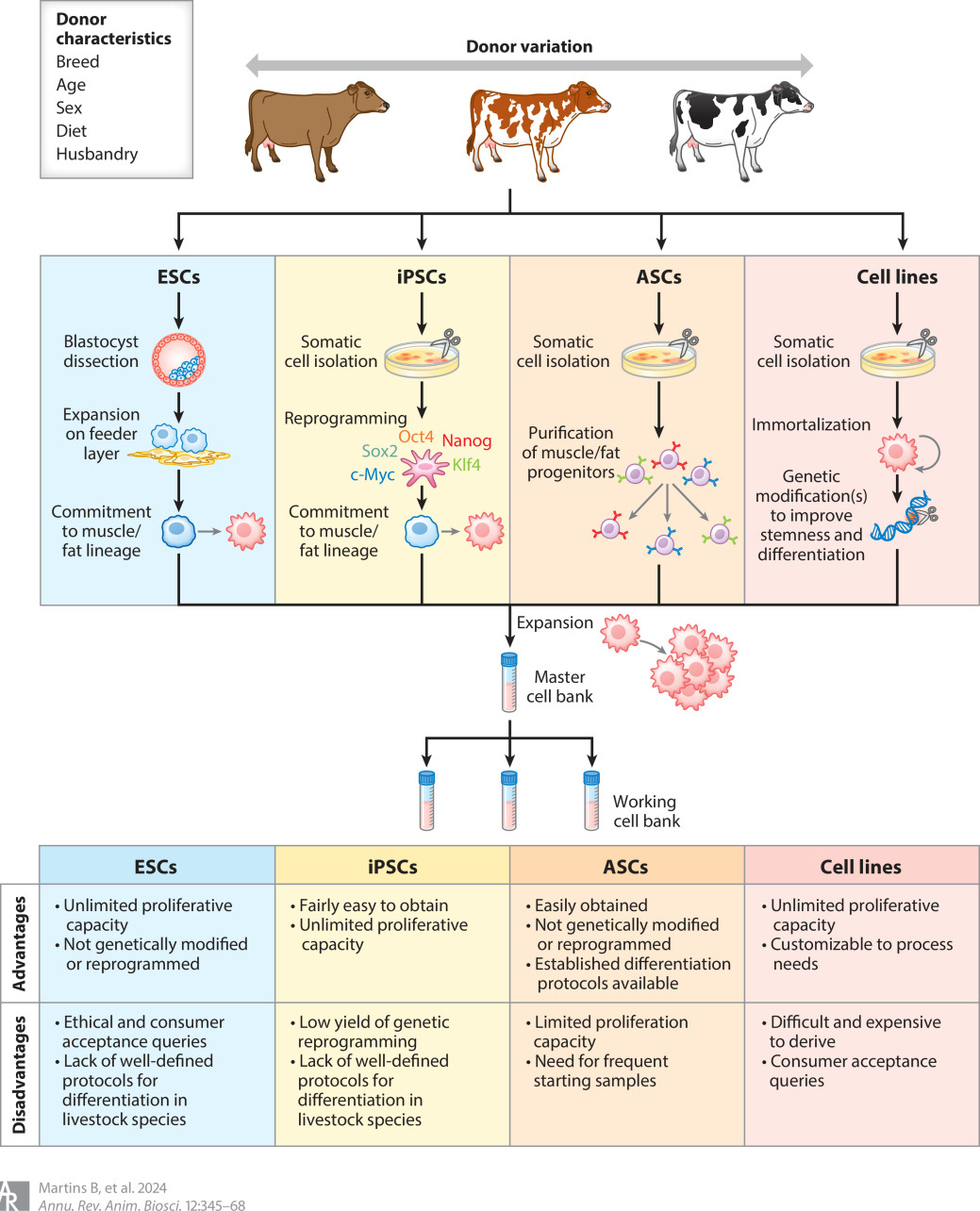
CCPs such as cultivated meat/seafood are produced through cellular agriculture technologies whereby animal-derived cells are cultured under controlled environments and harvested to produce food items. Various cell sources can be employed for CCP production, including stem cells, primary cells and immortalised cells. The cells must be capable of proliferating at large-scale and generally, the production process will involve differentiation into cell types present in conventional meat, mainly muscle and fat cells (Figure 1).

The proliferation phase is critical to achieve the volume of biomass that is required for CCP production, and this is an inherent challenge due to the limited proliferative capacity and rate of the initial cell population (Hauser et al., 2024). Proliferation efficiency must be optimised to produce sufficient biomass while minimising resource consumption and costs and supporting the intended sustainability benefits. Different approaches are available to enhance cell expansion, including optimisation of nutrients and environmental factors and strategies involving genetic or molecular interventions that influence the cell division process. Regardless of the method, safety remains essential, and any potential effects on safety parameters must be managed. Accelerated proliferation and large-scale culture systems can increase the likelihood of DNA damage accumulating over multiple population doublings.
A summary of the main cell types used for CCPs is presented below.
-
Pluripotent stem cells (PSCs) include embryonic stem cells (ESCs) and induced pluripotent stem cells (iPSCs). They are well suited for CCP production, since, under the correct conditions, they have unlimited self-renewal capacity and a rapid propagation rate and can differentiate into most cell types of an organism (Jara et al., 2023; Khan et al., 2025). These properties are advantageous for achieving appropriate quantities of cell biomass and differentiation into relevant cell types. They also enable the establishment of cell banks, which eliminates the need for repeated animal tissue biopsies, and facilitates growth consistency and reliable manufacturing processes.
ESCs can be isolated from embryo zones such as the inner cell mass of a blastocyst or from the embryonic disc (Kinoshita et al., 2021) to establish stable cultures in defined media. Examples of ESCs developed for production of CCPs include chicken ESC used by Super Meat and bovine ESCs used by Aleph Farms to produce cultivated beef (Khan et al., 2025). Other ESC lines have been reported from sources such as sheep (with stable karyotype and morphology for over 40 passages) and pig cells from embryonic disc producing stable self-renewal and expression of pluripotency markers (Jara et al., 2023).
iPSCs are generated by reprogramming somatic cells, a strategy that involves the activation of critical growth factor genes (Oct3/4, Sox2, Klf4 and c-Myc – known as Yamanaka factors) to promote pluripotency (Takahashi & Yamanaka, 2006). These authors described the reprogramming of mouse embryonic and adult fibroblasts using retroviral transduction to introduce those key growth factors, an approach that they later applied successfully to human adult fibroblasts. Reprogramming of somatic cells can be achieved by other methods such as lentiviral, adenoviral or plasmid induction, transposon-mediated reprogramming via the PiggyBAC system, or by direct use of the proteins required to reprogramme cells (Jara et al., 2023).
PSCs have been studied extensively in mouse and human, given their great potential in cell-based therapies and regenerative medicine. More recently, PSCs have been established from species relevant to CCPs including pig, chicken, fish and cow (Jara et al., 2023).
-
Adult stem cells (ASCs) are undifferentiated progenitor cells from specific tissues or organs that are multipotent, i.e., they can differentiate into a limited number of cell types, depending on the tissue of origin. These cells have limited proliferative capacity (50-60 divisions) due to the Hayflick limit, i.e., telomerase shortening (Hayflick, 1965), and therefore, multiple biopsies and repeat characterisation are required for commercial CCP production. There are different types of ASCs that can be used in CCP production, including muscle satellite cells (MuSCs), fibro-adipogenic precursors (FAPs) and mesenchymal stem cells (MSCs). MSCs are usually isolated from bone marrow or adipose tissue, although they can also be sourced from other tissues such as muscle. They mainly develop into osteoblasts, adipocytes and chondrocytes (Khan et al., 2025).
-
Immortalised cells. Differentiated mature cells have limited capacity to proliferate, and cultures can only be expanded if they are genetically modified or immortalised. Immortalisation involves the loss of cell cycle checkpoint regulation and the circumvention of the process of senescence, it may occur spontaneously through genetic marker drift during in vitro culture, or artificially induced, for example, by disruption of cellular pathways such as the P53/P14/RB pathway or activation of the telomerase catalytic subunit (TERT) through genetic modification (Soice & Johnston, 2021). Episomal immortalisation—where the introduced genetic material remains as an extra-chromosomal plasmid—is regarded as a safer approach than integrative methods because it avoids integration-related genomic disruptions such as insertions or chromosomal rearrangements. Nonetheless, the indefinite proliferation capacity of immortalised cells raises concerns regarding (epi)genetic alterations and tumorigenic potential, highlighting the need for regular monitoring during CCP production (Khan et al., 2025).
Genetic modification of stem cells has many potential applications in CCP production. In addition to induction of pluripotency, it can be used to enhance cell proliferation or to guide differentiation into specific cell types, induce cells to express required growth factors - eliminating the need for external supplementation-, regulate micro- or macronutrients of interest, and various other purposes. However, as in the case of spontaneous cell line immortalisation, the potential for associated undesired mutations remains a concern (Jara et al., 2023).
3.2. Genetic and epigenetic drift in cell lines
Genetic drift is the fluctuation in frequency of variants of a gene in a population due to random chance. It is a non-selective evolutionary mechanism that may cause gene variants to disappear or to become more frequent in the population. Living organisms also experience random genetic change whereby random somatic mutations occur that can be selected or lost through neutral clonal drift (Williams et al., 2020). In most cases, these mutations produce abnormal cells that do not survive in the organism, but in certain cases, the variant cells can proliferate and lead to cancer. In culture, the cells divide, accumulate random mutations and undergo selection pressures. Some alleles can persist and proliferate by chance, while others increase in frequency because they confer advantages under culture conditions. These patterns reflect underlying genetic instability and drift.
ESCs, MSCs and iPSCs expanded in vitro exhibit genetic and epigenetic instability (Rebuzzini et al., 2015, 2016; Ross et al., 2011). (Rebuzzini et al., 2016) described five main types of (epi)genetic abnormalities found in mouse and human PSCs, namely, chromosome number variations, chromosome structural variations, microsatellite instability, epigenetic instability and aberrations of mitochondrial DNA. Possible mechanisms leading to these aberrations include DNA repair mechanism abnormalities, telomere crisis, mitotic spindle abnormalities and alterations in DNA methylation and histone modifications. The presence or absence of a feeder layer, the source of serum and the different methods used for cell passaging seem to be major factors affecting genome integrity (Rebuzzini et al., 2016).
Another genomic entity that is thought to play a role in cell line instability is extrachromosomal circular DNA (eccDNA). These elements are present in eukaryotic cells and contribute to gene expression alterations, chromatin maintenance, and genetic heterogeneity (Chitwood et al., 2023). EccDNAs are known to play an important role in cancer development and in differentiation of human MSCs (Gu et al., 2025).
Genetic abnormalities in PSCs have been extensively studied in humans, given the great therapeutic potential of these cells and the impact that genetic instability might have on their safety for clinical applications. Genetic aberrations could be present in donor somatic cells and then transferred to the culture, and they can also emerge as de novo mutations during culture or reprogramming of iPSC generation (Poetsch et al., 2022). Although integration-free reprogramming is the preferred method to generate hiPSCs (human iPSCs) with lower incidence of genetic variations, (Bhutani et al., 2016) reported that different reprogramming methods applied to ten different fibroblast lines did not result in large differences in the types and numbers of variants identified, and that the variants found were generally benign, concluding that reprogramming was unlikely to generate cell lines unsuitable for therapy. However, it has been suggested that reprogramming of somatic cells randomly captures pre-existing mutations present in the donor at low frequency, and these are then expanded during cell cloning (Abyzov et al., 2017; Young et al., 2012). Therefore, different hiPSC lines established from the same parental source do not show the same mutations. A study of 36 non-cancerous tissues from more than 500 people showed that somatic mutation profiles were tissue-specific and associated with various cellular functions, and there was a positive correlation between age and mutation burden in most tissues (García-Nieto et al., 2019). The use of young somatic cells or adult stem cells may lead to lower mutation loads in hiPSCs (Poetsch et al., 2022).
Multiple studies indicate that iPSCs may have cancer-driver mutations. SNVs and CNVs were found to concentrate in stem-cell regulatory elements and binding sites of transcription factors in hiPSCs, a pattern that was not observed in the founding cells (DeBoever et al., 2017). (Ji et al., 2012) found that 75% of mutations in human fibroblast-derived iPSCs were acquired during reprogramming and could be the result of oncogenic reprogramming factors and genotoxic stress.
Numerous studies have reported full or partial gains of chromosomes 1, 12, 17 and 20 as the most common aberrations in both hESCs (human ESCs) and hiPSCs (Al Delbany et al., 2024; Assou et al., 2018). Whole genome sequencing (WGS) has enabled the detection of smaller copy number variations (CNVs) and single-nucleotide variants (SNVs) at similar frequency to large structural variants, some of these associated with cancer and other diseases, hence important to monitor from a clinical safety perspective (Merkle et al., 2022). The mechanisms leading to the high incidence of chromosomal abnormalities are not fully understood, but it is generally accepted that they originate from genetic changes that occur in a cell and offer a proliferation advantage, allowing that variant to take over the culture. It is hypothesised that the rapid cell cycle of hPSCs leads to DNA replication stress, increased DNA damage, double-strand breaks, and inefficient repair mechanisms. This combined with other impaired processes such as cell cycle checkpoints, decoupling of spindle assembly checkpoint mechanisms from apoptosis or chromosome segregation, can lead to accumulation of chromosomal abnormalities. Environmental stressors like hypoxia and medium acidification can also contribute to DNA damage (Al Delbany et al., 2024).
(Al Delbany et al., 2024) studied the dynamics of genetic changes during in vitro culture of multiple hPSCs observing that the accumulation of de novo CNVs and SNVs in cancer-related genes was due to the prolonged culture rather than to an increased rate of mutation over time. The study revealed that de novo CNVs tend to be associated with other typically recurrent CNVs that confer a growth advantage, and that many de novo SNVs emerge after the acquisition of these typical chromosomal aberrations. The authors point out a possible scenario where these additional mutations might enhance the in vitro proliferative advantage already provided by the recurrent CNVs. Nonetheless, most of the low passage and genetically balanced samples of the hPSCs lines analysed did not present de novo mutations linked to cancer, which the authors highlight as reassuring in terms of clinical safety in therapeutic applications.
It has been reported that 90% of all recurrent genetic aberrations in hPSCs are found in 20 common chromosomal regions (Assou et al., 2018). Two of the most reported genetic alterations in hPSCs are point mutations in TP53 (Merkle et al., 2017) and copy number variants in chromosome 20q11.21, both conferring strong growth advantage in vitro (Y. J. Kim et al., 2024) ;(Krivec et al., 2024) by disruption of apoptosis and cell cycle checkpoint control under culture stress. Increasing frequencies of trisomy 12 and trisomy 17 (both also providing growth advantage) are observed in cultured hESC, which supports the concept of ongoing positive selection in vitro. Moreover, hotspots of aberration in the hiPSC genome are syntenic with hotspots in PSC of other species (Ben-David & Benvenisty, 2012). (Attwood & Edel, 2019) suggested that the recognition of such common genetic abnormalities might lead to the development of a database of mutations that could be used for Quality Control (QC) screening of iPSC.
A study of 25 clinical-grade hESC lines using whole-genome SNP arrays identified 15 CNVs, most of which were found to be naturally occurring in the human population, and none were associated with culture adaptation. They also identified three copy-neutral loss of heterozygosity regions that were relatively small and interstitial, which are not typical signatures of culture-induced genomic instability, suggesting that they were already present in the original cells. Overall, the clinical-grade lines showed no signs of culture adaptation–related genomic instability (Canham et al., 2015).
Point mutations occur at low frequency in hiPSCs, with an average of 10-point mutations in protein-coding regions and hundreds of thousands in the whole genome. They include mutations already existing in the somatic cells and mutations induced during reprogramming or prolonged culture (Poetsch et al., 2022). Bioanalytical analysis of the mutagenic signatures in hiPSCs revealed that reprogramming-associated mutations, especially base substitutions, were caused by oxidative stress and subsequent DNA damage due to the overexpression of reprogramming factors and an error-prone repair mechanism (Rouhani et al., 2016). Oxidative stress associated with reprogramming was also considered the likely cause of iPSC point mutations in a study of mouse and human iPSCs (Yoshihara et al., 2017). These authors explored de novo point mutations in the context of epigenetic status, revealing that they occur preferentially in structurally condensed (i.e., inactive) lamina-associated heterochromatin domains and are less represented in coding and regulatory regions. Various elements of the reprogramming protocol such as the expression of key proteins or supplementation of antioxidants, can be modulated to minimise the incidence of genetic changes during iPSC generation (Poetsch et al., 2022).
The cell epigenome regulates gene expression, and it is essential for genome integrity and proper functioning. Eukaryotic cells cultured in vitro undergo epigenetic alterations that lead to changes such as activation of endogenous viruses, abnormal gene activation or repression or expression of certain classes of small interfering RNAs (siRNAs) (Saferali et al., 2010). The two main mechanisms by which epigenetic alteration occur are DNA methylation and histone modification. Different types of stressors like replicative, oxidative and mechanical, can cause epigenetic changes, and further research is needed to better understand the mechanisms involved and to develop mitigating strategies to minimise potential negative outcomes (Llewellyn et al., 2024).
The reprogramming process by which pluripotency is reinstated in somatic cells is an epigenetic transformation whereby the epigenome of a somatic cell is reverted to resemble that of an embryonic stem cell (Lister et al., 2011). Chromatin structure and gene expression are very similar between ESCs and iPSCs, although there are also differences, suggesting that the reestablishment of an ESC-like epigenome may not be complete. The DNA methylation patterns of ESCs and iPSCs have been shown to be generally comparable, but every individual iPSC line shows significant reprogramming individuality, including both somatic memory (progenitor somatic cell methylation patterns) and iPSC-specific methylation signatures. Moreover, these specific methylation patterns are transmitted through differentiation (Lister et al., 2011). The adaptation of iPSCs to 3D culture as aggregates has been shown to influence epigenetic modifications and gene expression (M.-H. Kim et al., 2021).
(Tanasijevic et al., 2009) described that hESCs adapted to growth in culture accumulate epigenetic changes such as CpG methylation, expression of imprinted genes or changes in X chromosome inactivation status. These changes can happen within a single culture, leading to mosaicism. The authors recommend that epigenetic analysis be included in the quality control measures for production of hESCs. Studies of mouse embryonic fibroblasts demonstrated the rapid epigenetic modifications induced by culture, with loss of 5-hydroxymethylcytosine (5hmC) within three days of culture initiation (Nestor et al., 2015).
Mesenchymal cells in culture seem to accumulate DNA methylation changes at specific sites in the genome. (Franzen et al., 2021) identified CpG sites that constitute an epigenetic signature that can be monitored for relatively precise estimation of passage number in different cell types. These changes do not seem to be actively regulated but rather resemble epigenetic drift (stochastic changes). However, because the same genomic sites consistently show these drift-like changes, the authors suggest that there must be another mechanism by which specific genomic regions become more prone to epigenetic drift (methylation hotspots).
A review of cases of pluripotent stem-cell therapies, including clinical trials and studies reporting genetic aberrations in iPSCs (Attwood & Edel, 2019) concluded that despite the theoretical predictions of potential oncogenesis, the practical experience thus far showed that iPSCs have a good safety record. The authors speculate that the absence of malignancy may be due to a combination of factors, such as the fact that the genomic aberrations found in hiPSC are generally typical of stem cells in vivo, and in most cases neutral, that mutations tend to concentrate in inactive regions of chromatin or that epigenetic aberrations may disappear with culture time. Although there are contrasting results from different research studies, the overall observation of real human clinical cases is that oncogenicity is not likely in iPSCs therapies. This would not support the notion that cell reprogramming, in-vitro iPSC culture, and subsequent redifferentiation are likely to introduce tumorigenic characteristics into iPSC cell lines intended for food production.
3.3. External factors influencing genetic/epigenetic changes during cell culture
Multiple studies have shown that micronutrients like vitamins and minerals present in the culture media influence genomic stability. Depending on micronutrient type and concentration and on the specific cell type, micronutrients can have positive or negative effects on cell viability and stability. Some of the effects reported in the literature include DNA damage, increased reactive oxygen species (ROS), increased apoptosis, increased proliferation and metabolic rate, decreased differentiation, protective effect against DNA damage, etc. (Arigony et al., 2013). Addition of vitamin C to cultures of mouse embryonic fibroblasts was shown to modulate reprogramming-induced epigenetic changes by partially reducing the loss of 5-hydroxymethylcytosine (5hmC) that occurs within three days of culture initiation (Nestor et al., 2015). The culture of adipose derived mesenchymal stem cells in serum-free medium was shown to confer higher genetic stability that FBS-containing medium (Lee et al., 2022). Detailed understanding of media composition requirements for each cell line will assist in ensuring cell stability.
A recent study (Klein, Alsolami, et al., 2022) combined experimental data from human somatic and pluripotent stem cell lines and data available in the literature to demonstrate that in vitro cell cultures consistently exhibit important deviations of environmental parameters during standard batch culture. Dissolved O2, dissolved CO2 and medium pH were measured in real time and shown to depart from physiological conditions. Furthermore, the changes in environmental conditions during culture are cell type-dependent, suggesting that growth rate and metabolic profile must influence culture stability. Epigenetic modifications play a key role in cellular responses to environmental factors, as they control the activation or repression of gene expression enabling the cell to adapt to changes in their environment. Given the impact that the environment may have on the cell epigenome, Klein et al. (2022) highlight the importance of monitoring environmental conditions, reporting factors that affect culture conditions and implementing measures to ensure cell stability and data reproducibility.
PSC reprogramming and differentiation are affected by pH through its influence on various cellular processes such as differential splicing, mitochondrial activity, certain signalling pathways and others (N. Kim, 2021; N. Kim et al., 2017). Changes in pH have also been shown to affect chromatin acetylation in ESCs, with a decrease in pH inducing histone deacetylation. Dissolved gases, including O2, also influence the reprogramming and differentiation of PSCs. Further studies are needed to understand how these effects take place. Monitoring and controlling environmental parameters is critical for the stability and quality of the stem cell cultures (N. Kim, 2021).
The accumulation of metabolic wastes, such as ammonia and lactate, can have a profound effect on cell culture viability and productivity, including changes in growth patterns and metabolic profiles (Chitwood et al., 2021, 2023). High levels of exogenous ammonia in fed-batch cultures of Chinese Hamster Ovary cells (CHO) caused de novo mutations within functional genes, such as SNPs, insertions, deletions and unfaithful replication of microsatellites, and these mutations persisted throughout the culture population. The authors suggest that microsatellite analysis could be used as a tool to diagnose genome instability (Chitwood et al., 2021).
Accumulation of metabolic waste has been observed to cause changes in extrachromosomal circular DNA (eccDNA) in CHO cultures, even in tightly controlled fed-batch systems, driving genome heterogeneity and phenotypic drift (Chitwood et al., 2023).
Other factors in the cell culture environment may also affect genetic stability. A recent study analysed karyotyping datasets from over 23,000 hPSC cultures of more than 1,500 lines, exploring how culture conditions can influence genetic variant selection (Stavish et al., 2024). The analysis identified an association between chromosome 1q gains and feeder cell-free cultures. Competition experiments of multiple isogenic lines confirmed that 1q variants have an advantage in feeder-free conditions due to overexpression of a gene that alleviates DNA damage-induced apoptosis, which is higher in feeder-free cultures.
Culture microenvironments affect the cell behavioural dynamics and intracellular mechanics that determine the stem cell states and potential. In addition to biochemical cues, mechanical interaction with their surroundings provides additional extrinsic stimuli to cultured cells. These signals are relayed intracellularly to regulate molecular pathways and gene transcriptional networks, a process called mechanotransduction (Thanuthanakhun et al., 2022). Cell adhesion molecules play a crucial role in this process, communicating signals from interactions with other cells, extracellular matrix or substrate, towards internal cell compartments and nuclei via cytoskeletal connections (Chen et al., 2018). This triggers biochemical responses such as epigenetic modifications and gene transcriptional activity, consequently affecting cell fates and functions. (Thanuthanakhun et al., 2022) suggest that the understanding of cell-microenvironment interactions and cellular behaviours can be exploited to optimise bioreactor conditions for large-scale cellular production. Different input variables will be required for individual cell lines and purposes; media ingredients, culture platforms, substrate materials, mechanical dynamics should be considered by bioengineers for the design of optimal culture systems. In addition, the authors advocate for the use of in-process monitoring and culture control measures to minimise aberrant cell behaviours and the emergence of suboptimal cell populations, as suggested by others (Klein, Steckbauer, et al., 2022).
Cells in culture are subjected to shear forces, mechanical forces generated from fluid movements within the bioreactor or culture vessel. These forces can induce changes in gene expression through epigenetic changes such as histone modifications (Illi et al., 2005), affecting cellular functions like cell attachment, proliferation, differentiation or viability. Therefore, controlling shear stress during culture is also important to avoid phenotypic drift and ensure the desired quality.
Mycoplasma contamination can also lead to genetic changes in the cell population by exerting selective pressure. Reported effects on cultures include changing growth rates, altering the cell metabolism, physiology and causing chromosomal aberrations (FSA, 2023; Ong et al., 2023; Uphoff & Drexler, 2014).
Cryopreservation and frozen storage are part of the process of cell culturing and must follow precise protocols suitable for the cell type of interest. Suboptimal cryopreservation has been reported to cause chromosomal damage and epigenetic changes (Hunt, 2019), which can lead to batch-to-batch variability. Post-thaw assessment of cell viability must be carried out, including assays that reflect the potential for selection of subpopulations through genomic and epigenetic changes in the surviving cell population.
3.4. Food safety implications of (epi)genetic drift in CCPs
Hazards commonly identified as potentially associated with genetic and epigenetic drift include oncogene activation/tumorigenicity, expression of allergens, expression of undesirable metabolites or toxins, changes in expression levels of certain nutrients (Ham et al., 2025; Jaime-Rodríguez et al., 2023; Ong et al., 2023; Zandonadi et al., 2025)).
3.4.1. Tumorigenicity
One of the issues that may be of concern to consumers is the potential for pluripotent or immortalised cells to survive after consumption and lead to tumour generation. As described above, tumorigenicity is a key concern in the context of stem cell therapy and regenerative medicine where human cells are transplanted into an individual and allowed to form tissue. In that field, monitoring (epi)genetic drift to avoid that risk is essential. However, this scenario is not applicable to CCPs. Even though current scientific understanding is not consistent with the notion of tumorigenicity risk following consumption of CCPs, a FAO Technical panel considered the issue and concluded that no credible route to harm could be identified (FAO/WHO, 2023). The panel described the sequence of events that would be needed for this risk to be realised, including cell survival away from bioreactor conditions and during processing, storage, cooking, gastrointestinal digestion, crossing the gastrointestinal barrier intact into the blood stream, evading the immune system and proliferating in the body, despite being from a non-human source. The probability of each one of those events is extremely low and there is no scientific evidence consistent with their occurrence. Also, cancerous lesions may exist in livestock animals, but there is no evidence of cross-species cell survival and growth through their consumption.
(Zandonadi et al., 2025) conducted a thorough review of hazards associated with CCPs. They highlight that each individual cell line may have its own challenges, but producers must have sufficient control over the production process to mitigate risks and ensure the quality and consistency of the final product. They suggest that the cells that make up the final product should be verified to ensure that the correct differentiation/maturation has occurred and that no undesired subpopulations, such as carcinogenic cells, are present. Cells can be tested for specific differentiation biomarkers, genetic stability or chromosome assays to monitor genetic drift, but more research is needed to establish appropriate parameters to monitor and characterise cell stability and to establish approaches to determine suitable limits to ensure safety, for example, maximum passage number (Jaime-Rodríguez et al., 2023; Ong et al., 2023). The idea of an open-access database containing large datasets to track genetic drift in CCP-relevant cell lines and support their safety has been suggested (Ong et al., 2023). This concept has been applied to cell lines used for pharmacogenomic studies, with the creation of the CCLid web application by Quevedo and co-workers (Quevedo et al., 2020) to allow users to screen the genomic profiles of their cell lines against existing datasets for the same cell lines.
(Jaime-Rodríguez et al., 2023) suggested that cells used to manufacture cultivated meat should be subjected to genetic quality control tests to detect mutations, with emphasis on oncogene activation mutations. They proposed that common human cancer mutation hotspots could be used as a basis to search for tumorigenic profiles in animal cells used for cultivated meat.
To address the issue of monitoring cell line stability and potential divergence from optimal status, (Vanhara et al., 2018) employed intact cell MALDI-TOF MS (Matrix-Assisted Laser Desorption Ionisation – Time-of-Flight Mass Spectrometry) profiling. Using this technique, the authors obtained global protein profiles of cells taken at various passage numbers, which followed by multivariate analysis to compare across datasets, enabled the detection of small alterations in protein expression. This offers a visualisation of potential phenotypic drifts that occurred during long-term culture which the authors suggest has clear application for quality control in routine cell cultures. MALDI-TOF is ideal for routine profiling and pattern classification. Sample preparation is minimal, spectra acquisition is fast and it offers unparallel accuracy. The technology is increasingly being used in the food industry, mainly for microbiological safety, but also for other purposes such as food authenticity and quality control. The use of MALDI-TOF would be extremely useful in the CCP industry, with applications not only for cell line verification but also other safety and quality aspects such as microbial contamination, monitoring differentiation or batch-to-batch comparisons. However, instrument cost and the need for specialised training and expertise to operate and maintain the system are limiting factors for widespread adoption.
3.4.2. Allergenicity
The production of proteins with allergenic properties as a result of (epi)genetic modifications is considered a potential risk. Such changes may include mutations in genes that encode proteins known to be allergens in other species—for example, tropomyosin, which is allergenic in crustaceans but not in its terrestrial animal counterparts. These alterations could lead to the expression of a new protein variant with increased similarity to an allergenic version found in another species.
It is also conceivable—though no evidence currently supports this—that dysregulation of gene expression caused by (epi)genetic alterations in long-term cultures could result in atypical allergen production by, for example, triggering the expression of milk or egg allergens in cow or chicken cells, respectively, since the relevant genes are present in their respective genomes. While such an occurrence is highly improbable, as the production of milk and egg proteins depends on complex regulatory signalling pathways, the theoretical risk should nonetheless be acknowledged.
Another possibility to consider is that (epi)genetic modifications during culture might lead to the emergence of novel allergens by causing unusually high levels of expression of proteins that normally occur at very low levels in natural tissues and whose allergenic potential is therefore unknown.
Allergenicity assessment of CCPs must address concerns regarding potential novel allergens or accumulation of known allergens as a consequence of (epi)genetic drift. This can be approached in part by using genomics, transcriptomics and proteomics analyses to confirm equivalence to the source organism. Bioinformatic analysis of newly expressed or over-represented proteins would then be employed to assess the degree of homology with known allergens, which is indicative of allergenic potential. However, these approaches are based on known allergens and would not identify new or unreported allergenic proteins. It has been suggested that methods to predict the sensitisation potential of novel proteins should be part of allergenicity assessment of CCPs (Ham et al., 2025), although tools for reliable prediction of de novo sensitisation are still lacking (Mills et al., 2024).
3.4.3. Toxins and adverse metabolites
Certain (epi)genetic changes might cause gene or protein expression changes leading to the production of new metabolites or toxic proteins. Although the animal species used for CCP production are not known to naturally produce toxins, theoretically, (epi)genetic variation during cell culture could lead to abnormal expression of novel proteins with toxic properties. The high potency of many biological toxins means that even small quantities of new unknowingly toxic proteins could raise concerns. For this reason, it has been proposed that toxicity testing or the potential presence of unexpected toxic substances (metabolites or toxins) should be part of food safety risk assessments for CCPs, together with cell line characterisation and monitoring of genetic stability (Bennie et al., 2025; Ong et al., 2023; Zandonadi et al., 2025).
3.5. Consumer perceptions of CCP-related safety risks
An evidence review undertaken by the FSA (FSA, 2025a) to investigate consumer responses to CCPs showed that 85% of people have concerns about CCPs, particularly about their safety. The safety concerns were linked to the perception of the product being unnatural and to the lack of scientific understanding. Awareness of the allergenicity risks of CCPs was low and the terminology used may influence the perceived allergenicity.
Another risk that concerns consumers is tumorigenicity. The notion of using cells with indefinite replication capacity is reminiscent of cancer, and despite ongoing debates arguing that the cells are not cancerous, there are concerns about their modifications, predictability and stability.
Consequently, effective risk communication is a crucial responsibility that both industry and regulators need to undertake. (Ong et al., 2023) reported the outputs of a series of expert consultations that included the topic of unlimited cell proliferation and potential tumorigenicity in the context of CCPs. Although there was agreement about the lack of a credible pathway to harm, experts indicated that careful risk communication or testing for tumorigenicity may be helpful to address consumer concerns. Similar conclusions were obtained by (Ketelings et al., 2021) regarding the role of monitoring and testing in evading concerns related to consumption of cells with spontaneous or engineered genetic changes.
3.5. Methodologies for detection of (epi)genetic alterations
3.5.1. Detection of primary genomic stress and DNA damage
DNA replication stress, particularly in the form of DNA double-strand breaks (DSBs) has been shown to be an important indicator of genomic instability in human cancer cases (Lakbir et al., 2025) with increased DSB load being strongly indicative of further genomic abnormalities at later time points. As such, DSBs could represent an early and sensitive indicator of genomic instability in cultured cell systems. Non-sequencing–based assays that detect DNA damage signalling are therefore valuable as leading indicators, preceding fixed genetic or epigenetic alterations. Immunofluorescence-based detection of DNA damage response (DDR) proteins is the most widely applied approach (Atkinson et al., 2024). Repair of DSBs in proximity to chromatin leads to the phosphorylation of histone H2AX at serine 139 (now designated γH2AX) and forms microscopically detectable nuclear foci. γH2AX immunofluorescence is relatively cheap, highly sensitive and enables single-cell analysis, making it well suited for longitudinal monitoring of heterogeneous cell populations (Valente et al., 2022).
To improve specificity, γH2AX is commonly combined with detection of downstream repair factors such as p53-binding protein 1 (53BP1). Co-localisation of γH2AX and 53BP1 foci increases confidence that lesions represent genuine DNA double-strand breaks (Popp et al., 2017). Importantly, large 53BP1 nuclear bodies observed specifically in G1-phase cells (i.e. post-mitotic cells) mark unresolved DNA lesions that were transmitted through mitosis from the previous cell cycle, most commonly arising from replication-associated stress (Kilgas et al., 2024). Functional studies indicate that these structures act to protect inherited lesions, delaying their processing until conditions allow for repair and thereby limiting their conversion into fixed genomic alterations. As such, 53BP1 nuclear bodies have emerged as a particularly informative marker of persistent genomic stress, identifying viable cells that have failed to fully resolve DNA damage prior to mitotic entry (Atkinson et al., 2024).
Immunofluorescent detection of DDR markers offers several advantages for routine monitoring, including low cost, scalability, and compatibility with standard cell culture workflows. When applied longitudinally across passages, these assays can reveal gradual increases in baseline damage, impaired resolution kinetics, or the emergence of damaged subpopulations (Reddig et al., 2018). While they do not directly measure mutational outcomes, DNA damage signalling assays provide an essential early warning layer within a broader genomic stability assessment framework
3.5.2. Detection of large-scale chromosomal and karyotypic alterations
Large-scale chromosomal and karyotypic alterations represent stable, heritable outcomes of genomic instability, including aneuploidy, polyploidy, and large copy number variations (CNVs). In contrast to DNA damage signalling assays, which capture ongoing or unresolved stress, these approaches detect fixed structural changes that accumulate during prolonged culture and clonal expansion. Conventional cytogenetic methods such as G-banding and Fluorescence in situ hybridisation (FISH) remain a widely used approach for detecting whole-chromosome gains and losses, large deletions or duplications, and major chromosomal rearrangements, albeit at relatively low resolution (Rohani et al., 2018).
3.5.3. Sequence-level genomic variation
Sequence level variation – changes at the nucleotide level – can occur at any stage of PSC culture. Although the majority of these will be benign, single point mutations within important genes in initial extractions and early passages can influence the proliferation and safety of downstream passages (Bhutani et al., 2016; Young et al., 2012). For species where PSC research is well established, single nucleotide polymorphism (SNP) arrays exist to detect known variations typically seen in cultured cells, including many correlated with undesired phenotypic changes that would affect the integrity of the culture (Baker et al., 2016; Haake & Steenpass, 2025).
3.5.3.1. Whole genome sequencing (WGS)
Where the PSCs are from a non-model organism, with no pre-existing SNP array available, whole genome sequencing would enable identification of sequence-level variation between samples and passages. This would be performed via high throughput sequencing of each passage, aligning sequenced reads to a reference genome, and then calling variants and comparing those detected between passages, with special attention paid to variants within oncogenes and genes involved in PSC maintenance and differentiation (Merkle et al., 2020; Pierson Smela et al., 2024). Advantages of this approach include capturing every SNP in the genome rather than only those associated with an array, and enabling K-mer spectrum analysis, which can be applied to detect alterations in genome size, complexity, and in overall ploidy without the need for additional staining-based analyses (Natarajan et al., 2025; Ranallo-Benavidez et al., 2020).
3.5.4. Epigenetic and chromatin landscape
Epigenetic drift has been seen in PSC cultures, so this class of modifications should also be assessed (Franzen et al., 2021; Nguyen et al., 2013). Epigenetics refers to genetic changes that alter a phenotype without altering the genome sequence and includes both CpG methylation and chromatin conformation – the 3D structure of the DNA across the chromosome, both of which can affect which genes are expressed, and to what extent. Methods to detect epigenetic variation in PSC culture vary.
3.5.4.1. Methylation
Epigenetic methylation is where a methyl group is added to a cytosine nucleotide base (CpG), altering how transcription factors bind to the sequence. It has been shown that methylation of CpG islands around risk genes can affect the integrity of downstream passages (Franzen et al., 2021; Lister et al., 2011). Methylation is typically detected through sequencing, either bisulphite or nanopore sequencing. Sequenced reads are then mapped to a reference and methylated CpG sites flagged (Ahmed et al., 2022; Franzen et al., 2021). Methylation patterns between passages can be then compared to assess epigenetic drift, and accumulation of methylated CpG sites around known risk factors.
3.5.4.2. Chromatin conformation
Differences in chromatin conformation have been identified between passages of PSCs and have been shown to influence and bias the mutational rate and alter gene expression (Y. J. Kim et al., 2024; Yoshihara et al., 2017). The chromatin landscape can be mapped using chromatin conformation capture sequencing, such as Hi-C or 4C (Cetin & Sefer, 2025).
Another method for assessing the chromatin landscape is ATAC-seq, with which comparisons of accessibility between passages can reveal changes in chromatin landscape and subsequent gene availability (Y. J. Kim et al., 2024).
3.5.5. Functional consequences of (epi)genetic changes
3.5.5.1. Transcriptomics
Transcriptomics refers to the characterisation of RNA transcripts in a sample, generally for the purpose of analysing gene expression, and is usually performed using the technique of RNA-seq, involving high-throughput sequencing. It is a primary means of assaying the consequences of genomic changes (both genetic and epigenetic), which would not necessarily be predictable from the genome sequence and epigenetic profile alone. It is applicable to different CCP stages from starter cultures to mature biomass.
As well as the more tractable culture- or tissue-level transcriptome, single-cell transcriptomes can also be achieved (by scRNA-seq), usually beginning with single-cell capture via microfluidic systems, which has largely superseded fluorescence-activated cell sorting (Dal Molin & Di Camillo, 2019). Numerous synthesis and amplification protocols have been developed. These include linear amplification by in vitro transcription (IVT) involving T7 RNA polymerase; more commonly in scRNA-seq, ‘template switching’ is employed using the Moloney Murine Leukaemia Virus (MMLV) reverse transcriptase, which enables full-length PCR amplification.
Both RNA-seq and scRNA-seq have proven useful research tools in the elucidation of heterogeneity in cell lines and within cell cultures, with the most focus on cultures of medical relevance. Ben-David et al. (2018) used RNA-seq to determine differences between strains of the same human cancer-cell lines. Global expression patterns were found to be similar, but > 600 genes had > 2-fold differing expression levels between pairs of strains. Notably, clustering the strains by expression differences accorded well with clustering by genetic differences; moreover, in at least some cases, differences in gene expression could be well rationalised by the genetic mutations observed in the same cell lines. These included direct effects of mutations in the genes themselves, and downstream effects in genes controlled by regulation cascades involving the mutated genes. Furthermore, clustering of strains by morphological traits (cell size, shape) accorded with clustering by transcriptomics and genomics; there was also an association with doubling-time. Other phenotypic associations involved drug resistance, and again clustering by drug response produced similar clusters as genotype and gene expression. These results are consistent with at least some predictability of consequences of genetic differences. The same study applied scRNA-seq to a small number of clones, including single-cell-derived clones. Transcriptomic heterogeneity within clones was not much lower than that of the parental populations, and increased over culture time, indicating variation arising both de novo as well as from pre-existing variation in selected subclones.
In contrast, other studies have used gene expression analysis to probe heterogeneity of gene expression with epigenetic causes. Grissom et al. (2025) specifically identified 199 heritable gene states (essentially, “on” or “off”) under epigenetic control in CHO cells, by obtaining ~ 40 single cells and then expanding them to ~ 100,000 cells each, representing around 17 generations. The approach, termed MemorySeq, involves bulk-RNA transcriptomics at this time point. Different shaped distributions of expression levels identify those genes that can be inferred to have non-heritable gene expression profiles (a roughly normal distribution), and skewed distributions characterized by high variance and an elongated tail, which reflects heritable expression profiles, first switched on in individual clones at different generational time points. Controls further enabled the identification of those genes subject to transient expression (transcriptomic ‘noise’). The relevance of the inferred heritable gene states was that they represent a set of (broadly rationalisable) cell responses to particular stresses in the culture conditions, the onset of which may be quite unpredictable from clone to clone.
Beyond the research application, the MemorySeq approach may have potential for CCPs, enabling identification of biomarkers which could then be assayed; its use in-production to monitor cultures may have less application than traditional bulk RNA-seq.
Publications on applications of transcriptomics to CCPs are few. Mathieu et al. (2025) presented an integrative multi-omic systems-biology model of duck embryonic stem cells, involving dedicated RNA-seq and metabolomics, along with third-party gene/protein interactome data. This aimed to identify upstream factors and actionable interventions on them which could improve a downstream cellular outcome, associated with a desired trait. Conversely, Yang et al. (2025) used transcriptomics in an explanatory context, to determine and rationalise the genes involved in improved performance of pigeon cell culture resulting from use of a novel, silk-based scaffold (gene functions included cell proliferation, promotion of myotube fusion, muscle-fibre formation; groups of genes could also be associated with different stages of myogenesis). Niu et al. (2024) described a similar approach for 3D bioprinted hydrogel scaffolds.
In summary, transcriptomics has been demonstrated to have utility in development of CCPs, but also, importantly, monitoring cultures for gene expression profiles. This can be an efficient way of monitoring expression of numerous biomarkers simultaneously (e.g. for stress, adaptation) but also has the potential of monitoring genes more generally. In principle, from the food safety perspective it is also a means of identifying expression of any potentially hazardous genes, such as those encoding protein sequences similar to known toxins and allergens. Hypothetically, these might be expressed at significantly higher levels in CCPs than in conventional meat tissue, and inferred protein sequences can then be compared to databases of toxins and allergens. However, there appears to be no current literature addressing this specifically in CCPs/cultured meat.
3.5.6. Overview of methodology for detection of (epi)genetic alterations
The approaches described above capture complementary layers of genomic integrity, progressing from early indicators of DNA damage through to stable genomic alterations and their downstream functional consequences. Together, they provide a multi-layered framework for assessing genomic stability in PSC cultures, spanning early warning signals, fixed structural and sequence-level changes, epigenetic regulation, and functional outcomes. For clarity, these methods and their relevance to cell-cultivated food production are summarised in Tables 4.a and 4.b, providing an integrated overview of complementary approaches for monitoring genomic stability.
3.6. Monitoring and best practice
The CCP industry recognises the importance of cell line stability, with 68% of companies considering it one of the top characteristics for cell lines to demonstrate according to a study conducted by GFI in 2023 (Ravikumar, 2023). The same study showed that karyotyping, WGS, transcriptomics and proteomic analysis were identified as the top analyses for characterisation of immortalised cells. The quality of the final CCP and production consistency rely on stable cell lines that exhibit the expected cell behaviour and phenotype. To this aim, monitoring of potential genetic variation during early cell expansion and before cell banking is essential. Moreover, in the case of genetically modified cells, the integrity of the engineered genetic elements needs to be assessed to ensure their traceability (FSA, 2025b). Testing cell lines during these early phases will ensure the quality and identity of the cell banks. In addition, regular monitoring throughout the production process may be required to manage the potential risk of (epi)genetic drift. Beside the possible impact of genetic variation on the production process or the quality of the final product, due to the potential hazards discussed in this review, monitoring genetic stability is critical from a regulatory and safety assurance perspective. The volume of testing anticipated once CCPs are established at a commercially viable scale will require access to reliable and low-cost assays, probably necessitating the development of new techniques (Martins et al., 2024).
Although there is currently no consensus on the regulatory guidelines and analytical approaches to characterise the genetic stability of cell lines (Ravikumar et al., 2024), harmonised guidelines exist setting out how companies must characterise and control cell lines used to manufacture biological products, such as Q5B (Genetic Stability of Recombinant DNA-Derived Cell Lines) and Q5D (Derivation and Characterisation of Cell Substrates) from ICH (International Council for Harmonisation). Biomedical regulatory frameworks can serve as informative comparators, and collaboration with these adjacent disciplines will be helpful in developing similar frameworks. These should be adapted to be proportionate for food-production systems. Moreover, as the sector develops, relevant risk assessments from application dossiers are becoming available and possibly informing Hazard Analysis and Critical Control Points (HACCP) protocols for industry (FSA, 2025b). More scientific literature identifying potential hazards associated with CCPs is also emerging that highlights the importance of genetic stability for risk assessments and HACCP plans (de Macedo et al., 2024; Sant’Ana et al., 2023).
3.7. Current understanding and practice
Recent FSA-commissioned research on best practices for cell banking methods in cultivated cell products (FSA, 2025b) included genetic drift as a discussion topic during expert consultations. The topic was selected because evidence from the biomedical sector shows that operational factors—such as cell banking procedures and cryopreservation—can contribute to genetic drift, and although there is currently no direct scientific evidence linking genetic drift in CCPs to human health risks, from a regulatory and safety perspective it is an important potential concern that warrants attention. The issue of genetic drift was considered important/quite important/very important by 78% of the experts that participated in the consultation. The overarching question discussed was: "What is the likelihood that genetic drift occurs or is induced in the early cell banking and propagation steps and how can it be controlled?". The key outputs are summarised below:
-
Genetic drift is expected to occur, but the rate of genetic change will depend on cell type, differentiation stage and external factors such as media ingredients. These dependencies are still uncharacterised and reference data to establish what could be considered acceptable rates of genetic change for specific cell types and production processes do not exist. Moreover, production typically involves multiple cell types, and this adds another level of complexity.
-
Establishing baseline data on genetic drift would demand substantial efforts, and this challenge is even greater in the case of fish cells, where less knowledge is currently available.
-
The most important aspect to understand is whether genetic drift poses a health risk. There is currently no evidence supporting that hypothesis and correlating specific genetic changes to risk factors for consumers of CCPs would be highly complex.
-
It was highlighted by participants that genetic change during the production process would most likely lead to disruption of the production process efficiency and disposal of the affected batch.
-
Testing for genetic stability needs to be done in a pragmatic fashion, mainly to ensure consistency of production processes. It was suggested that a realistic approach would be to test cells twice, at working cell bank vial thaw, and at a later stage just before final product assembly. For routine QC testing, less elaborate methods such as morphological assessment (microscopy), low-resolution gene expression profiling, karyotyping and possibly STR testing were suggested. It was proposed that future requirements might need to focus on definitions of “phenotypic stability” as a valid proxy for genetic stability rather than focusing on DNA testing, where methods such as WGS or partial sequencing at lower resolution are considered as too time consuming and expensive for assessing genetic stability during day-to-day production.
-
Another issue raised was how producers can demonstrate that ongoing production continues to meet the specifications originally submitted to regulators. While there was agreement that producers should provide a certain level of genetic stability data, there is currently no guidance defining the extent of genetic change that would trigger the need for reapproval of a cell line.
The following specific question was put to participants in that FSA study asking them to vote for one option: “What would be a proportionate measure for producers to demonstrate that genetic drift does not pose any risk to consumers?” The results are shown in Table 1 and illustrate that although there were more votes for other types of tests when combined, the phenotypic testing was the most supported type of test.
However, given the lack of scientific evidence relating to (epi)genetic drift in CCPs and their implications, the opinions expressed may have been driven more by non-scientific considerations - such as familiarity with the technique, ease of interpretation or costs, rather than the significance of the empirical evidence.
3.8. Learnings from the biomedical sector
The phenomenon of (epi)genetic drift and its potential consequences have been widely studied in the biomedical field. It is recognised that factors like extended culture at high passage numbers, inconsistent split ratios between passages, suboptimal media or freeze-thaw events contribute to shifts in cell lines. Effective control measures implemented in these sectors include (from Cell Culture Company):
-
Early monitoring of parameters like growth rate, morphology (comparing with standard images), periodic confirmation of cell line identity
-
Early creation of master and working cell banks
-
Standardised cryopreservation protocols
-
Strict passage number limits
-
Defined criteria to decide when metrics deviate
-
Controlled expansion during scale up
-
Consistent documentation to help linking cause and effect. This supports corrective action and allows comparability across studies and operators.
ATCC (American Tissue Culture Collection) and others recommend routine cell line authentication to confirm identity. DNA fingerprinting by Short Tandem Repeat (STR) marker profiling is a powerful tool to determine the identity and uniqueness of a cell line. STRs are tiny repeating segments of DNA found between genes and their profiling can be carried out by multiplex PCR to simultaneously target and amplify the most informative polymorphic markers in the genome. The pattern of repeats results in a unique STR signature that can be used as a baseline for comparison with future tests. The standard protocol ASN-0002 (Revised 2021-2022) details all aspects of human cell line authentication using STR analysis.
Karyotyping is a common technique used in the biomedical field to monitor large-scale chromosomal changes and is one of the standard approaches accepted by regulators. Standard protocols have been established, for example, to ensure genotype stability of hiPSCs (Sullivan et al., 2018) for research and pre-clinical applications. Maintaining a record of the type of karyotypic changes observed is advised.
In-depth Whole Genome Sequencing (particularly examining the coding portions of the genome – the Exome) is recommended by biomedical regulators to screen for known cancer-related mutations and other disease markers recorded in relevant data repositories. Single nucleotide polymorphism (SNP) array testing has higher resolution than standard morphological karyotyping and has become common practice for clinical cytogenetics (Miller et al., 2010; Sullivan et al., 2018). Robust protocols for data acquisition, recording, storage and sharing are also needed as part of the quality assurance processes (FSA, 2025b).
Assays for cell line stability and identity are included in the iPSC quality control measures published in (Steeg et al., 2021) that are based on the experience of the EBiSC (European Bank of iPSCs). Details are shown in Table 2.
The Global Alliance for iPSC Therapies published a white paper reporting international consensus on critical quality attributes and minimum testing requirements for clinical-grade iPSC lines. The report notes that the science in this field continues to advance, and the guidelines will continue to evolve as scientific understanding, technologies and best practice progress (Sullivan et al., 2018), (Table 3).
3.9. Summary of recommendations from the reviewed literature to minimise (epi)genetic drift
-
The use of young somatic cells or adult stem cells may lead to lower mutation loads in human iPSCs (Poetsch et al., 2022).
-
Hotspots of aberration in the hiPSC genome are syntenic with hotspots in PSC of other species (Ben-David & Benvenisty, 2012). (Attwood & Edel, 2019) suggested that the recognition of such common genetic abnormalities might lead to the development of a database of mutations that could be used for Quality Control (QC) screening of iPSC. (Jaime-Rodríguez et al., 2023) proposed that common human cancer mutation hotspots could be used as a basis to search for tumorigenic profiles in animal cells used for cultivated meat.
-
Various elements of the reprogramming protocol such as the expression of key proteins or supplementation of antioxidants, can be modulated to minimise the incidence of genetic changes during iPSC generation (Poetsch et al., 2022).
-
Detailed understanding of media composition requirements for each cell line will assist in ensuring cell stability. The impact that the environment may have on the cell epigenome (Klein, Alsolami, et al., 2022) highlights the importance of monitoring environmental conditions, reporting factors that affect culture conditions and implementing measures to ensure cell stability and data reproducibility. The use of in-process monitoring and culture control measures will assist in minimising aberrant cell behaviours and the emergence of suboptimal cell populations.
-
Post-thaw assessment of cell viability must be carried out, including assays that reflect the potential for selection of subpopulations through genomic and epigenetic changes in the surviving cell population (Hunt, 2019).
-
Cells can be tested for specific differentiation biomarkers, genetic stability or chromosome assays to monitor genetic drift, but more research is needed to establish appropriate parameters to monitor (Jaime-Rodríguez et al., 2023; Ong et al., 2023).
-
The idea of an open-access database containing large datasets to track genetic drift in CCP-relevant cell lines and support their safety has been suggested (Ong et al., 2023). This concept has been applied to cell lines used for pharmacogenomic studies, with the creation of the CCLid web application by Quevedo and co-workers (Quevedo et al., 2020) to allow users to screen the genomic profiles of their cell lines against existing datasets for the same cell lines.
-
Careful risk communication or testing for tumorigenicity may be helpful to address consumer concerns. Monitoring and testing are important to evade concerns related to consumption of cells with spontaneous or engineered genetic changes. (Ong et al., 2023), (Ketelings et al., 2021).
-
It has been suggested that methods to predict the sensitisation potential of novel proteins should be part of allergenicity assessment of CCPs (Ham et al., 2025), although tools for reliable prediction of de novo sensitisation are still lacking (Mills et al., 2024).
4. Findings: Expert elicitation event
The event brought together experts from academic research (human and livestock stem cells, tissue engineering), CCP industry and regulatory/consultancy areas. The discussion points were based on the literature findings and aiming to gain further understanding about:
-
What the potential hazards are linked to (epi)genetic drift in cell-cultivated systems.
-
What the mechanisms are by which (epi)genetic drift may influence cellular behaviour and product safety.
-
What mitigation strategies used in analogous fields (e.g., biopharmaceuticals, tissue engineering) may be applicable to CCPs.
-
Suitability and limitations of current methods for monitoring drift within food production settings.
-
Key evidence gaps.
The outputs from the discussions are presented below.
4.1. Genetic and epigenetic changes
It is recognised that genetic and epigenetic changes will occur during CCP production. Indeed, some of these changes are needed to achieve the desired traits for CCP cell lines, for example, adequate growth rate, indefinite proliferative capacity, adaptation to growth in suspension, etc. However, the important aspect that needs to be understood is to what extent this matters, i.e., whether these changes may introduce unexpected food safety hazards.
The mechanisms underlying (epi)genetic alterations observed in pluripotent and immortalised cells cultured for research and biomedical applications are expected to similarly apply to CCP cell lines.
Certain aspects of the cell line generation approach can influence genetic stability, for example:
-
The initial cells may carry somatic mutations due to exposure of the donor animal to mutagens.
-
Cells from younger animals are likely to carry fewer mutations.
-
Cells at higher passages are more likely to be genomically unstable.
-
Cells with higher growth rates are more prone to genetic changes. Spontaneous immortalised cell lines are considered the most susceptible as they usually have become immortalised through changes in the DNA repair mechanism and most probably in oncogenes and cell cycle-related genes.
-
Cell immortalisation procedures – episomal immortalisation, as a non-integrative approach, is generally considered safer than integrating vectors because it avoids insertional mutations. Likewise, non-integrative methods to produce iPSCs are considered safer.
However, the accumulation of (epi)genetic changes during culture is largely induced by selective pressures. Examples of stressors include replication stress, crowding, serum-free adaptation, environmental factors (media composition, variability), age of cell line, time in storage. These stressors, and the large number of cell divisions in long-term cultures, can also influence the mobilisation of transposable elements of viral origin in the genome, a potential hazard that might exacerbate genetic instability.
4.2. Phenotypic consequences
The phenotypic changes caused by (epi)genetic modifications may range from minor, undetectable changes to significant alterations like enhanced proliferation rate or impaired differentiation capacity. Although it can be argued that phenotype could be used as a proxy to monitor (epi)genetic instability, different companies in the CCP space have different definitions of “phenotype” and suitable indicative endpoints have not been established. Nevertheless, industry representatives agreed that current criteria that regulators demand to demonstrate quality consistency are also helpful indicators of cell line stability. These include unchanged growth rate and differentiation capacity, consistent behaviour during the production process (comparing master cell bank with midpoints and harvest stage cells) and across different batches (usually 3-5 batches).
Data about (epi)genetic changes and associated phenotypes in CCP-relevant cell lines are not publicly available. It was suggested that individual companies may have useful data, and finding a mechanism to share the data would be very helpful. Of particular interest would be any information and knowledge gathered by companies that no longer exist, as intellectual property may be less limiting in those cases. Finding a way of leveraging that information would be beneficial.
4.3. Potential safety implications
-
Tumorigenicity / oncogenic potential – This is often listed amongst the potential safety concerns in relation with CCPs because cells that are suitable for CCP production must have long-term proliferative potential. However, the general view among participants was that this is only a hypothetical risk and there is no evidence linking tumorigenic cells in food with cancer development in consumers. Indeed, this is also a hypothetical risk in the case of conventional meat, where (epi)genetic changes also occur and cancerous cell populations may in principle be present in the food. Yet, the demonstration of genetic stability or the lack of any associated consequences is not a requirement in the conventional meat sector. Furthermore, growth rate is frequently monitored during CCP production, and this would help to detect any changes in proliferative capacity induced by (epi)genetic changes.
-
Allergenicity – The emergence of novel allergens in CCPs as a consequence of (epi)genetic alterations is theoretically possible but considered highly improbable. Another theoretical risk may be the ectopic expression of endogenous genes encoding known animal allergens—such as milk-derived allergenic proteins—which are normally transcriptionally repressed in muscle tissue but might become upregulated following epigenetic modifications. However, the expression of milk and egg proteins is regulated by complex signalling networks and epigenetic events, and the multiple coordinated changes required to activate the production of these allergens are highly improbable. Still, this risk could be mitigated by testing the final CCP biomass for known animal-derived allergens, such as milk and egg proteins, using well-established methods widely applied in the food industry, such as ELISA.
-
Another plausible scenario, although also considered highly unlikely, could be that mutations arising in genes encoding proteins with known allergenic orthologues in other species—for example, tropomyosin, a major shellfish allergen—could generate protein variants with increased sequence homology to their allergenic counterparts and thus higher allergenic potential.
-
Toxins and adverse metabolites – There is a theoretical possibility that (epi)genetic changes might result in protein variants with toxic potential or dysregulation of metabolic pathways leading to accumulation of metabolites that might present a hazard, e.g., oxidative stress molecules, reactive aldehydes, etc.
-
Prions – During the discussions, prions were suggested only as a hypothetical hazard considering a scenario where mutations in the prion protein gene (PRNP) might lead to misfolding of the protein. This would need to be combined with activation of PRNP expression, which is not expected in CCP cell lines. There is no evidence of prions emerging spontaneously in cell cultures used for cultivated meat. Comparable theoretical considerations may also apply to other disease associated amyloid forming proteins. Prions have only been included in the CCP safety discussions in the field as a potential contaminating agent derived from the donor animal, and mitigating measures against this are in place.
-
Changes to nutritional properties – it could be envisaged that certain (epi)genetic alterations might lead to phenotypic changes affecting the nutritional parameters of the final product. However, this would be detected through the established quality monitoring regime.
4.4. Mitigation strategies
Media composition and the cell culture process itself can introduce risks in terms of (epi)genetic changes. Having robust protocols and maintaining operational consistency are key elements of the mitigation strategy. The culture medium should be tested to monitor the consistency and quality of the cell environment, using parameters such as levels of lactate, ammonia, and other undesirable metabolites. A panel of positive and negative indicators is recommended. Automation, control of exposure to known mutagens such as UV and reliable media supply chains can also play an important mitigating role.
The stability of each cell line must be characterised by the producer and the number of acceptable cell divisions established accordingly, as this will be cell line-dependent. Protocols are optimised for each cell line, and cells must be assessed at the master cell bank (MCB) stage and after various passage numbers, and they must demonstrate unchanged behaviour using the MCB as a baseline. Any phenotypic shifts detected may be indicative of genetic instability. The mature product also needs to be well characterised and consistency assured.
Standardisation of processes is difficult but very important. The evidence from the research field shows that there is a strong link between specific laboratories and the levels of genetic changes accumulated, even for the same cell line. It was suggested that an ISO standard for cell banking would be helpful, although this may need to be species dependent.
Mitigation measures need to be risk-based and proportionate, and therefore, it is important to understand the implications of (epi)genetic changes in a food production context, which will be different to the clinical context. When assessing risks, the intended use of the final product must be considered since factors such as cooking or dosage will have an impact.
Possible parameters to monitor to mitigate risks:
-
Omics technologies offer the opportunity to develop databases of molecular profiles that enable the comparison of a given cell population to a baseline and the identification of deviations from normal. Although for certain aspects of CCPs (e.g., nutritional profile) the conventional counterpart (natural meat/seafood equivalent) is the most meaningful reference, in terms of genetic stability and potential accumulation of (epi)genetic changes during cell cultivation, the MCB is the baseline of choice.
While omics analyses can generate extensive datasets, they may lack the sensitivity needed to detect some low-abundance molecules or small changes in expression levels that may be biologically relevant. Another key limitation is that there is no universal threshold that constitutes a “biologically meaningful change.” In practice, fold-change thresholds comparing a sample to a reference are subjective, and the choice of cutoff can strongly influence data interpretation.
-
Metabolomics - metabolite databases could be generated for screening purposes. This may be particularly helpful for novel cell lines and new animal species.
-
Transcriptomic and proteomic profiles offer greater insight than genomic data when assessing the potential impacts of (epi)genetic changes. Transcriptomics is useful for identifying gene expression changes relative to a baseline, and widespread shifts in gene expression can signal underlying (epi)genetic alterations. This would enable the identification of genes that might become newly expressed. Although transcriptomic data can help highlight overexpression of genes associated with food allergens, proteomics is considered the most effective approach for detecting potential allergens, as allergens are typically proteins. The identification of specific peptides enables bioinformatic analysis and allergenicity assessment based on amino-acid sequence homology.
-
-
Various targeted approaches that were suggested include:
-
Define a panel of epigenetic markers for screening
-
A panel of known oncogenes and tumour suppressor genes could be monitored as indicative of tumorigenicity potential. However, the mere expression of these genes is not sufficient evidence, and tumorigenicity would have to be confirmed empirically using in vitro (simpler) or in vivo assays. Given the lack of evidence and the extremely low probability of oncogene expression having food safety implications, an alternative view on this suggests that this sort of testing might feed alarmism and therefore be counterproductive.
-
Phenotypic features such as nutritional profile and absence of allergens may be important from a monitoring perspective. A panel of relevant allergens to test in these products could be established.
-
Other phenotypic traits that industry monitor as part of their best practice and that can be good indicators of genetic stability are proliferation rate and differentiation potential.
-
-
Monitoring for prion and related disease phenotypes in cells and destruction of batches with symptoms was suggested in relation to the hypothetical scenario where this type of misfolded protein might arise spontaneously during culture, although the likelihood of this occurring is considered very low.
4.5. Methodology for detection of (epi)genetic drift
Whole genome sequencing is generally considered excessive for genetic stability assessment during CCP production. It is expensive, time-consuming and difficult to interpret in the context of genetic stability and potential safety implications. Large volumes of data are obtained, but it is unclear what constitutes acceptable results. Nevertheless, the need for genomic data for CCP-relevant species was generally recognised. Whole genome sequences are not available for all livestock, and the situation is even worse for fish species. It is not clear who should drive the efforts to fill this gap.
A practical limitation for testing the cells during production and at the end of the process is the length of time that some techniques involve. The culture continues to evolve during this time, and the final product approaches the expiry date. From a practical perspective, suitable for CCP production, the quality and safety assessment should be completed within two days approximately.
Techniques that were discussed during the event as possibly applicable to CCPs:
-
Short tandem repeats (STR) are easy to check and can show differences between MCB and further passages, although do not actually inform as to whether the changes lead to a different phenotype. Databases of STRs for different species could be used for profiling of cell lines and detection of known markers to confirm cell line stability.
-
SNP arrays
-
Transcriptomics analysis is seen as a more feasible approach to determine cell line stability, comparing data at various stages from MCB to end product.
-
Karyotyping – commonly used in the biomedical field. This enables to check for ploidy changes after a defined number of generations. However, autosomal characterisation is difficult in some species like birds, that have a large number of chromosomes, including macro- and micro-chromosomes, and often present subtle structural rearrangements that are difficult to detect without high resolution mapping. Access to karyotyping services with the required turnaround time was identified as a limitation for the industry.
-
Fluorescent in situ hybridisation (FISH)
-
Exome sequencing
-
Immunocytology
-
Analysis of Cytochrome C oxidase subunit I (COI) was discussed. COI is a widely used mitochondrial marker in animal cell biology for species-level identification and authentication (DNA barcoding). However, it is not considered a suitable marker for tracking small-scale genetic changes in cell cultures because it is a highly conserved protein-coding gene under strong selective pressure.
Techniques for analysis of epigenetic changes include:
-
ATAC-seq
-
Methylomics e.g. via bisulphite sequencing
4.6. Research gaps and recommendations
4.6.1 Research gaps
-
Investigate the expression of cancer-related genes in CCP-related cell lines to see if there is a correlation with cell line age and passage number. Lack of correlation would reduce concerns regarding the induction of tumorigenicity during CCP production. Cell lines that are immortalised or pluripotent often express genes associated with proliferative capacity—many of which have been characterised through cancer research and annotated as cancer-related. However, the expression of these genes does not imply an inherent tumour-forming potential. In vitro tumorigenicity assays linked to the cancer-related gene expression studies would offer additional reassurance.
-
Investigate (epi)genetic variation in live animals to establish a baseline for comparison with both conventional meat and CCPs. This baseline would allow safety risks in CCPs to be calibrated and evaluated in relation to the natural variation already present in conventional meat.
-
Conduct research to understand to what extent (epi)genetic changes are cell type-dependent, including the nature of these alterations, how frequently they occur, and their resulting phenotypic effects.
-
An unresolved issue is whether it is possible to establish acceptable levels of (epi)genetic variation during CCP production beyond which, the safety risks would be considered too high. The suggestion was made to consider an approach used in the agrochemical regulatory field whereby the conditions for a worst-case scenario are established, and that is used as a reference point from which to work backwards to identify acceptable levels. However, the potential safety implications would not be determined by the number of (epi)genetic alterations but rather by the nature of those alterations and their consequences in terms of gene expression changes, which is the reason why some consider that monitoring phenotypic traits is a more adequate mitigation strategy. The worst-case scenario approach would necessitate data relating to CCPs which are currently unavailable.
4.6.2. Recommendations
-
Encourage industry to share best practices, with the FSA compiling this information through its CCP sandbox activities. This would enhance the FSA’s understanding of current production processes and monitoring methods, along with their associated advantages and limitations, and could support more informed regulatory decision making.
-
Additional insights into current industry practices to ensure cell line stability data can be gathered from publicly available regulatory dossiers and through engagement with regulatory agencies in other countries, an activity in which the FSA is already involved.
-
Promote and incentivise data sharing across industry regarding (epi)genetic variation and associated phenotypes in CCP-relevant cell lines. Developing a safe framework for such exchange would facilitate the identification of reliable phenotypic endpoints of (epi)genetic instability. Legacy data held by companies that no longer exist may be particularly valuable, as it may be free from intellectual-property restrictions. Harnessing this information would provide additional benefit.
-
A compilation of media ingredients and any data on associated risks would be useful, as media composition can influence genetic stability. It was mentioned that the Cultivated Meat Safety Initiative (CMSI) have already published the collaborative development of a safety assessment framework for media components, including a preliminary list of those commonly used in cultivated meat and seafood production, their categorisation, and safety-assessed use levels (Ong et al., 2025). The output includes a list of 56 media components that have been safety-assessed (Safety-Assessed Media Ingredient (SAMI)), with proposed use levels to facilitate the screening of safe culture media ingredient levels. It would be interesting to explore if this framework may be applicable to the assessment of genetic stability or whether a similar approach might be helpful to deal with media ingredients that may influence genetic and epigenetic changes.
-
Develop guidelines establishing a minimum set of tests to monitor cell line stability in the context of CCPs. Existing guidance from the biomedical field could serve as a useful starting point, while CCP-specific research would support further refinement to produce tailored guidance, including proportionate and practical measures that can be implemented by CCP producers.
4.6.3. Additional considerations about terminology
The use of the phrase “genetic /epigenetic drift” in the context of CCP was discussed during the expert elicitation event. In population genetics, genetic drift describes random fluctuations in allele frequencies that occur independently of selective pressures and contribute to evolutionary change. In contrast, the genetic and epigenetic alterations that accumulate in cultured cells arise mainly from selective pressures imposed by culture conditions and other factors. This phenomenon would be more accurately described as the accumulation of (epi)genetic changes that influence cell line stability. Nonetheless, the term “drift” is widely used in the literature in relation to (epi)genetic changes arising during in vitro cell culture and for consistency with common usage, it has been used in this report. A clarification of its meaning in this specific context has been included in the introduction.
The generation of a standard set of definitions for all the relevant concepts was discussed and considered important to achieve a common understanding of the topic. This could be included in future guideline documents.
5. Summary of findings
Genetic and epigenetic changes are expected to occur during CCP production, given that cells with high proliferative capacity are cultured at large scale and subjected to the selective pressures of defined environmental conditions to which they must adapt. Some of these modifications may confer a proliferative advantage and become established in the cell population. Other random mutations, chromosomal rearrangements and epigenetic modifications can also occur, some of them may affect cell viability and disappear, while others may persist in the population causing unknown phenotypic changes. It is anticipated that (epi)genetic changes will mainly influence cell behaviour in culture, affecting performance parameters such as growth rate, differentiation capacity or cell morphology. These changes will be detected by the quality monitoring systems that producers have in place, and do not necessarily imply any safety issues.
From a regulatory perspective, the key question is whether (epi)genetic drift could lead to food safety risks in CCPs. Various theoretical safety hazards have been identified in this review:
-
Tumorigenicity. Although commonly raised in public discourse, current scientific understanding suggests there is no realistic route to harm from consuming cultured cells, even those with high proliferative capacity. For a tumour to form, cells would need to survive processing, storage, cooking, digestion, enter the bloodstream intact, evade the immune system, and proliferate— an unlikely sequence of events based on available evidence. Conventional meat can also contain pre-cancerous cells without any evidence of such risks.
-
Allergenicity. Theoretically, drift could:
-
activate endogenous genes encoding allergenic proteins (e.g., milk or egg proteins). This is considered highly improbable due to the complex regulatory cascades that activate expression of these proteins.
-
generate variants resembling allergens from other species (e.g., shellfish tropomyosin), or
-
increase expression of rarely expressed proteins with unknown allergenicity.
Overall, these hypothetical scenarios are considered improbable. Nonetheless, allergenicity assessments should remain part of CCP safety evaluation, and bioinformatic approaches can support the identification of proteins, implicated by gene-expression data or directly by proteomics, with allergenic potential based on homology to known allergens. However, approaches to assess de novo sensitisation (novel allergens) are still lacking.
-
-
Toxic Metabolites or Novel Toxic Proteins
(Epi)genetic changes could theoretically dysregulate metabolic pathways or generate aberrant proteins with toxic properties. No evidence indicates this has occurred in CCPs, but it has been proposed that toxicity testing or the potential presence of unexpected toxic substances (metabolites or toxins) should be part of food safety risk assessments for CCPs, together with cell line characterisation and monitoring of genetic stability.
-
Disease-associated amyloid-forming proteins. The hypothetical risk of genetic aberrations leading to misfolding of amyloid-forming proteins such as prions, has been considered, although there is no evidence of this occurring in relevant cell lines. The potential appearance of amyloid plaques could be monitored using microscopy.
Regarding monitoring and mitigation strategies that could be implemented in the CCP industry, there are measures already in place that play an important role towards monitoring (epi)genetic variation of cell lines. Cell line stability and performance consistency are critical from a quality assurance viewpoint, and producers routinely check parameters such as growth rate and differentiation potential, which may be affected in (epi)genetic variants. Cell lines are thoroughly characterised at the stage of master cell bank production, and this is used as a baseline to compare performance at various points throughout production. Current regulatory requirements involve analysing 3 – 5 batches to ensure consistency across the multiple safety and quality aspects that must be demonstrated. Transcriptomics or proteomics data can be used to demonstrate consistent gene and protein expression profiles. Any genes or proteins that are overexpressed in the final product can be subjected to bioinformatics analysis to assess allergenicity or toxicity potential.
A wide range of technologies and bioinformatic approaches are available to analyse specifically genetic and epigenetic changes, but there is currently no clear understanding of which tests and which endpoints would be most appropriate and proportionate as a monitoring strategy against potential (epi)genetic risks. Moreover, current knowledge of (epi)genetic changes and their consequences for CCPs does not allow acceptable levels of drift to be determined. The food safety-related phenotypic consequences of drift will depend on the nature of the changes and the genes and proteins affected rather than on the level of change across the full genome. Expert opinion favours the use of phenotype as a proxy of (epi)genetic changes, but the relevant phenotypes to monitor need to be determined and phenotypic tests specified. More research is needed to understand these questions and to identify relevant endpoints and correlations between (epi)genetic drift and phenotypes for different cell lines.
Genetic stability and tumorigenicity are key concerns for stem cell therapy, and standard protocols have been established, for example, to ensure genotype stability of hiPSCs (Sullivan et al., 2018) for research and pre-clinical applications. The Global Alliance for iPSC Therapies published a white paper reporting international consensus on critical quality attributes and minimum testing requirements for clinical-grade iPSC lines (Table 3). This includes mandatory tests with recommended methods, additional tests for further information and acceptance criteria for each test. Karyotyping and STR analysis are indicated as mandatory, with SNP arrays, WGS/WES and cancer-associated and other genetic disease marker analysis recommended for further information. This type of guidance provides a useful model that could be adapted to CCP production, taking into account the different level of risk associated with administering cells for therapy (e.g., into the blood stream) versus consuming cells orally
Research gaps and recommendations extracted from the review of the literature and the expert’s input are included in Section 4.6. Addressing these will assist in filling knowledge gaps and informing policy decisions.
6. Conclusions
Genetic and epigenetic drift occurs during in vitro cell culture as a result of changes that cell populations may accumulate over multiple cell divisions due to both selective pressure and stochastic variation. The molecular mechanisms involved have been extensively studied in biological research and in the biopharmaceutical and biomedical sectors, and a variety of techniques and approaches are available to detect these changes.
(Epi)genetic drift can lead to phenotypic shifts that may affect cell behaviour and impact quality characteristics such as differentiation capacity of PSCs or production efficiency in the case of biologics production. In clinical applications like stem cell therapy, a key concern is the appearance of cell subpopulations with tumorigenic capacity. Therefore, regulatory guidelines, HACCP protocols, monitoring measures and standard methods have been developed to ensure quality assurance in those fields.
In the field of cell-cultivated products, the cell proliferation rates and the scale of culture required for food production would suggest, in principle, that the likelihood of (epi)genetic drift may be even higher than in research or clinical applications. A central issue is understanding how (epi)genetic drift could affect CCPs. Many random alterations are expected to reduce cell fitness and therefore disappear over time, or to cause shifts in cell behaviour—such as changes in proliferation rate or differentiation capacity—that would prompt rejection of the affected batch. Nonetheless, despite the limited evidence, the theoretical risk that (epi)genetic changes might cause tumorigenic traits or lead to the production of proteins with allergenic or toxic potential cannot be ignored.
Scientific publications specifically examining (epi)genetic changes during CCP production are currently lacking. Yet, because CCP methodologies build on established stem cell-based and biomedical techniques, it is reasonable to expect similar molecular events to occur and to be driven by comparable influencing factors. Regulatory bodies such as the FSA are still developing appropriate oversight frameworks in partnership with industry, and this effort relies on robust scientific evidence to guide safety standards, testing strategies, and risk assessment.
Several key aspects of (epi)genetic drift in CCPs and its potential relevance to food safety, can be identified as areas for focused attention. Considering existing knowledge, industry experience, and targeted research around these aspects would support the development of regulatory guidance. These include:
-
Potential risks. It is well established that cells cultured in vitro accumulate genetic and epigenetic changes over time, and that variants conferring a selective advantage will become predominant within the population. For example, certain mutations affecting cell cycle control may lead to increased proliferation rates. From such phenotypic effect, a theoretical risk of oncogenic capacity in CCP cells may be conjectured. Similarly, other potential risks, as discussed in this review, can be considered as phenotypic consequences of (epi)genetic changes. However, there is currently limited scientific data demonstrating a direct link between such cellular changes and risks to consumers. Nevertheless, acknowledging and investigating these possibilities is important, both to support evidence-based risk assessment and to address consumer concerns as understanding in this area evolves.
-
Analytical testing. Testing can, in principle, be used to detect (epi)genetic variants, elucidate underlying molecular mechanisms in specific cell types or culture systems, and assess phenotypic consequences of the changes. Many relevant parameters would be measured directly in the cells, while analysis of the culture media can also be informative, for example, by monitoring the presence of adverse metabolites. A wide range of analytical techniques is available; however, the selection of an appropriate testing strategy requires careful consideration of which endpoints are most informative and feasible within a food production context. In this regard, further research to identify phenotypic markers that could serve as proxies for genetic stability would be of benefit. Likewise, selecting specific genes where mutations may be undesirable based on current knowledge could support targeted monitoring approaches. Such markers may be suitable for routine screening using accessible techniques, whereas more sophisticated techniques that provide in depth analysis are often resource-intensive, and better suited for non-routine or investigative purposes. The practicalities of conducting testing should therefore be considered against the value of the data generated, and this is something that will evolve with advances in technology and scientific understanding.
-
Defining thresholds for acceptable levels of drift. The food safety implications of (epi)genetic drift are likely to depend more on the nature and the functional consequences of the changes than on the overall extent of variation across the genome. There is currently insufficient knowledge of (epi)genetic changes and their consequences for CCPs to define clear thresholds for acceptable levels of drift. In the interim, approaches such as benchmarking against a master cell bank, alongside existing guidelines from the human stem cells sector, may provide a useful basis. As additional data become available, both from CCP production systems and from targeted research efforts, it is expected that a more refined understanding of meaningful thresholds and relevant endpoints will emerge.
Existing expertise from the biomedical sector—including its protocols, monitoring approaches, and mitigation strategies—provides a strong foundation for understanding and managing the potential risks that (epi)genetic drift may pose for CCPs. Much of the evidence identified in this review originates from biomedical research, offering insights that can be adapted to CCP development, helping to highlight knowledge gaps, methodological needs, and opportunities to strengthen safety monitoring in this emerging area. As technologies advance and the field matures, both best practices and regulatory expectations will continue to evolve and may require ongoing review.
Acknowledgements
We gratefully acknowledge the expert contribution to this project from Dr. Maria Gomes Fernandes (New Harvest), Dr. Thomas Agnew (Ivy Farm Technologies Ltd), Dr. Vítor Espírito Santo (Hoxton Farms Ltd), Dr. Katarzyna Pirog (Newcastle University), Maria Lazari (Newcastle University), Prof. Xavier Donadeu (The Roslin Institute, University of Edinburg), Dr. Florian T Merkle (University of Cambridge), Lucy Wilkinson (University of Bath, CARMA), Michael Dickinson (Exponent Ltd), Michael Watson (Exponent Ltd), Dr. Bernhard Strauss (Camrosh Ltd), Dr. Hannah Lester (Atova Regulatory Consulting SL). We are also grateful to our colleague Bryn Martin for his support with the AI literature searches.