
1. Lay summary
This review looks at interventions to reduce Campylobacter, bacteria which are a common cause of food poisoning, found on chicken sold in shops, cooked at home, or prepared in restaurants or catering settings.
Cooking is by far the most effective way to kill Campylobacter. Heating chicken all the way through to 70°C or more reduces the number of bacteria within minutes.
Chilling and freezing interventions can help reduce the number of bacteria, but they cannot make the chicken meat completely safe on their own. Their impact depends on how long the chicken is stored for and how many bacteria it was contaminated to begin with. Freezing chicken for more than three weeks tends to reduce bacteria the most. Chilling has mixed results: keeping chicken in the fridge for up to three days does not have much effect, while chilling for more than a week often is not practical as the meat will go off.
A major risk of Campylobacter illness comes from cross-contamination, when bacteria from raw chicken spread to hands, utensils, cutting boards or other foods and is eaten. Studies suggest that this is potentially the most common way people get ill, followed by eating undercooked chicken. Research also shows that many people believe they are following good kitchen hygiene, but in practice, things like proper handwashing with hot water and soap do not happen as often as stated.
Educational campaigns can improve food safety behaviours, but the effect does not usually last long. Longer-term approaches, such as teaching good food habits early in life and reinforcing them regularly through public health messages, may create more lasting change. Mathematical models can help identify the most important steps to reduce Campylobacter risk, but their predictions still need to be checked in real-life scenarios.
2. Executive summary
This systematic review discusses interventions to reduce the levels of Campylobacter spp. in retail, consumer, restaurant and catering settings in relation to chicken meat, focusing on three main intervention types – cooking, chilling and freezing, and one risk factor – cross-contamination.
Cooking remains the most reliable intervention, particularly at temperatures at or above 70°C, which consistently eliminate Campylobacter within minutes. Refrigeration and freezing offer moderate reductions but are not sufficient as standalone interventions. Their effectiveness is influenced by storage duration and initial contamination levels, with freezing for more than 3 weeks offering consistently larger reductions in bacterial levels compared to chilling. The effects of refrigeration vary widely – for three days or less in particular, while longer periods of more than seven days may be impractical.
Consumer handling of raw chicken poses a significant risk of Campylobacter cross-contamination, with modelling studies predicting cross-contamination as the main pathway for campylobacteriosis (rather than undercooking). Observational studies reveal a gap between reported and actual hygiene behaviours, with proper handwashing (hot water and soap) inconsistently practiced. Short-term educational interventions improve behaviour temporarily, but sustained change may require a different approach such as early food safety education and continuous reinforcement through public health messaging. Modelling studies can guide prioritisation of interventions for risk reduction, but the predictions need validation with experimental studies.
3. Introduction
3.1. Background
Thermophilic Campylobacter species Campylobacter jejuni and Campylobacter coli, henceforth referred to as Campylobacter spp., or Campylobacter, are the leading cause of bacterial gastroenteritis in humans, with various potential pathways for infection (Tam et al., 2009). Among these, contaminated retail meat products, particularly chicken, have been identified as the most common source of human campylobacteriosis (McCarthy et al., 2021). Raw chicken meat is often contaminated with Campylobacter species, and reducing exposure from this source is predicted to decrease the number of human campylobacteriosis cases (EFSA Panel on Biological Hazards, 2011).
Campylobacter was the most common bacterial pathogen (9.3 cases per 1000 person-years in the community, and 1.3 General Practice consultations per 1000 person-years), and the most identified pathogen (13%), in the Out of General Practice Presentation study forming part of the second Infectious Intestinal Disease project in the UK (Tam et al., 2012). While laboratory-confirmed campylobacteriosis remained relatively steady at approximately 100 cases per 100,000 population between 2014 and 2023 (UKHSA, 2024), recently the UK Health Security Agency (UKHSA) reported that notification rates in England have risen from 60,055 cases in 2023 to 70,352 cases in 2024, or approximately 120 cases per 100,000 (UKHSA, 2025).
This Food Standards Agency (FSA) report focuses on interventions to control Campylobacter at retail, restaurants, catering establishments and consumer kitchens. Commercial kitchens in the UK are expected to adhere to strict standards, including 4 Cs (cleaning, cooking, chilling, and cross-contamination), and food safety and hygiene requirements when preparing food, with extra consideration given to the preparation of raw meat including poultry (Dephna, 2021; FSA, 2018; GOV.UK, n.d.).
The FSA provides guidance on handling and preparing food safely in the kitchen environment (FSA, 2023). For consumers, advice focuses on everyday behaviours to reduce illness, such as hand washing, thorough cooking, chilling, and avoiding cross-contamination (FSA, 2023). Answers to common home myths are also provided (FSA, 2024).
Guidance for food businesses, including retailers, is available (FSA, 2024; UK Government, 2025). This guidance includes encouragement to implement a Food Safety Management System based on principles of Hazard Analysis and Critical Control Points (HACCP), with procedures such as cleaning schedules, inspections, and staff training.
Cold temperature interventions, such as chilling and freezing, are widely used in poultry processing to control or prevent the increase of Campylobacter spp., other pathogens and spoilage organisms (Dogan et al., 2021; James et al., 2006; Leone et al., 2024). . The lack of cold shock proteins such as CspA, which help bacteria survive exposure to low temperatures (Hur et al., 2022), may explain the particular susceptibility of Campylobacter to chilling and freezing interventions. These cold temperature interventions are applied at different processing stages, including slaughterhouse, cutting and processing plants, retail, consumer, restaurants and catering. The effects of chilling and freezing are collectively discussed in this report.
Cross-contamination remains a major food safety concern. The risk persists in domestic kitchens, restaurants, catering, and other food establishments because harmful bacteria can easily transfer from raw poultry to ready-to-eat foods, utensils, hands and surfaces during food preparation. This is because most of the Campylobacter is present at high levels on the surface of the raw chicken (Luber et al., 2006; MacDonald et al., 2015). Several surveys have also shown that UK consumers continue to engage in risky behaviour that could potentially result in cross-contamination in the kitchen and Campylobacter spp. spread, such as washing raw chicken, or not always washing utensils and their hands with soap after handling raw meat (Armstrong et al., 2023; Cardoso et al., 2021; Prior et al., 2011). Poor cleaning of hands, knives, and cutting boards can lead to bacterial levels up to 3 log10 CFU in salads, while proper washing (using hot water with detergent) significantly reduces this risk (van Asselt et al., 2008).
Dose-response studies and information extrapolated from outbreaks show that the infectious dose varies and even small numbers of viable bacteria may cause illness (Teunis et al., 2018; World Health Organization, 2024). This information is used in modelling studies to predict the rate of illness following consumer preparation of meals with raw chicken. Some studies indicate that the risk of disease incidence may be either overestimated or underestimated by current risk models, depending on the uncertainty of immunity and dose-response parameters included (Havelaar & Swart, 2014). Although Campylobacter infection can induce immunity, as observed in challenge studies, these typically use high doses (Tribble et al., 2010) and the effect of repeated low dose exposure via cross-contamination on immunity is not well understood.
3.2. Previous work on Campylobacter spp. in the UK
The FSA and its predecessors have previously commissioned work to understand the disease trends and implementation of potential interventions, either via the Advisory Committee on Microbiological Safety in Foods (ACMSF) or external providers. In 1993 the ACMSF issued an interim report on Campylobacter collating information on what was known about the bacterium, including effective interventions throughout the food chain that could result in the reduction of the risk. The effects of storage temperature, heating, salt levels, water activity, acidity/alkalinity, modified atmosphere, preservatives and irradiation were examined. The report concluded that the following actions were more likely to inhibit Campylobacter growth in foods:
-
Storage at below 30°C
-
pH of less than 4.9
However, only heat treatment (70°C for 2 minutes or equivalent) was considered effective in eliminating the bacterial cells. Cross-contamination was also highlighted as a risk factor. It should be noted that although poultry was emerging as the potential main source of infection, food attribution was not clear at the time and therefore these recommendations were not specific to poultry meat (ACMSF, 1992).
In 2002 a working group was set up to investigate knowledge gaps and the outcomes of the recommendations provided in 1993 with an aim to support the FSA strategy of reducing human campylobacteriosis. The ACMSF Second Report on Campylobacter was published in 2005 as a result of this workshop (ACMSF, 2005). The report reiterated previous recommendations on storage temperatures and cooking and highlighted the importance of hygienic handling of poultry meat in consumer and commercial settings. It also discouraged washing chicken before cooking due to the risk of cross-contamination. Education of food handlers and HACCP procedures were also discussed for commercial settings, which became a legal requirement in the UK (EU, 2004; GOV.UK, 2004).
In 2019, the ACMSF published its third report on Campylobacter (ACMSF, 2019). This report investigated progress made since the second report. It acknowledged that no single intervention could eliminate Campylobacter. However, it confirmed that a combination of farm and processing controls—such as improved biosecurity, time-controlled depopulation, and thermal processing—could significantly reduce contamination levels. Further research into Campylobacter genetics, gut microbiota interactions, contamination risks from catching equipment, and factors influencing bacterial reduction during shelf life were recommended.
3.3. Aims and Objectives
In this systematic review, we aim to identify and assess interventions that can be applied at retail and in consumer homes, restaurants or catering environments to control Campylobacter levels in chicken meat. We categorised the interventions into the following groups: chilling and freezing methods, and cooking techniques.
Additionally, risk factors for the spread of Campylobacter through cross-contamination were considered.
3.4 Note on abbreviations and logarithms
In this document, we use logarithmic notation to describe the numbers of bacteria. For instance, 1 log10 CFU/g means 101 CFU/g, or 10 CFU/g of Campylobacter. A conversion table is included below (Table 2).
4. Material and Methods
A systematic literature search was performed to obtain data on chilling, freezing and cooking interventions to reduce Campylobacter spp. presence in consumer, restaurant and catering settings, together with data on cross-contamination risks.
4.1. Search strategy
4.1.1. Database searches
A comprehensive search was conducted on PubMed, Scopus, Ovid Embase, Google Scholar and Web of Science, with no date and language restrictions on searches. Relevant articles were found using search terms: (intervention OR reduction OR inhibition OR prevention OR decontamination OR control OR treatment) AND (campylobacter OR campylobacteriosis OR “C. jejuni” OR “C. coli”) AND (broiler OR chicken OR flock OR poultry). The search was carried out on December 28th 2023. References from the published meeting report “Measures for the control of Campylobacter spp. in chicken meat” produced by the Food and Agriculture Organization of the United Nations (FAO) jointly with World Health Organization (WHO) in 2024 (FAO & WHO, 2024) were also manually screened. Projects funded by the FSA/FSS were included in the screen.
The question addressed by the literature search was “What interventions have been tested for reducing Campylobacter load in chicken meat across the food chain and which ones have been found to be effective?” This report discusses the interventions that have been used at the retail, restaurants, catering and consumer stages. Each of the other stages (farm, slaughterhouse and processing) are discussed in separate reports.
4.1.2. Screening and selection process
Zotero was used to manage citations (Stillman, 2024). Following the literature search, the total number of references imported to Zotero was 11,244. Once duplicates were removed, 5,596 articles remained. Microsoft Excel was then used to automatically screen the remaining articles. The criteria used for the automatic screening were publications that included “campy, jejuni or coli” AND “poultry, chicken or broiler” in the abstract or title. After automatic screening, 3,832 publications remained.
The titles and abstracts of the 3,832 publications were screened for inclusion or exclusion by reviewers. The reviewers also assessed what stage of broiler processing each publication referred to. Broiler processing stages include farm, slaughterhouse, processing/cutting plant, retail/consumer/restaurant/catering.
Publications were included when the following criteria were met:
-
Broiler carcasses or chicken meat were in scope and Campylobacter was studied.
-
Studies which examined interventions or cross-contamination risk factors for infection.
The following types of publications were excluded:
-
Studies on layer chickens (older female chickens raised for egg production). While meat from layers may be consumed, this category was excluded to remove articles about Campylobacter in eggs.
-
Studies examining the effects of laboratory media on Campylobacter recovery, survival or viability.
-
Studies focused on chicken offal. Although chicken offal is a known risk factor for human campylobacteriosis in the UK, chicken meat consumption is substantially higher than offal. Therefore, this report focused on chicken meat.
-
Prevalence or outbreak studies without tested interventions.
-
Reviews.
-
Interventions using chemical or active ingredient marinades (covered in a separate report).
-
Immersion chilling studies, as this report aimed to determine the effects of temperature alone on Campylobacter spp.; immersion chilling impacts are addressed in a separate report on slaughterhouse interventions.
Following this screening, 1,034 publications were included in total in the four categories (farm=535, slaughterhouse=268, processing/cutting plant=166, retail/consumer/restaurant/catering=65).
Chilling and freezing
After excluding publications related to on-farm interventions (n=535), the remaining studies were screened to identify those addressing chilling or freezing interventions and their effect on Campylobacter spp. in chicken meat. A total of 499 publications were assessed for this by 2 reviewers based on their titles and abstracts. Additional references were included and screened from FAO & WHO, 2024, as well as FSA- and FSS-funded research, an FSA report (Cairo et al., 2021) and from systematic literature reviews (Bucher et al., 2015; Dogan et al., 2021; Gichure et al., 2022; Golden & Mishra, 2020; Guerin et al., 2010; Leone et al., 2024).
Lack of consensus between reviewers was resolved through discussion with a third reviewer.
Cross-contamination and cooking
Additional screening of titles and abstracts of the 65 publications at the consumer, restaurant, catering and retail stage was also undertaken by 2 reviewers, to identify studies on cooking as an intervention and those relevant to Campylobacter spp. cross-contamination from raw chicken.
Lack of consensus between reviewers was resolved through discussion with a third reviewer.
4.2. Data extraction and synthesis
Relevant information from the selected publications was manually extracted and stored in Microsoft Excel spreadsheets (see Annex I) and grouped by intervention category (cooking, chilling, freezing, or cross contamination). Campylobacter counts were recorded as described in the publications. Further information such as the temperature and duration of the intervention, whether artificial inoculation or natural contamination of the chicken were examined and the part of the chicken that was examined (e.g. carcass, breast, neck skin etc.) were recorded. A manual confirmation of the extracted data was performed by a second researcher for each of the publications to reduce errors. A third independent reviewer carried out a manual confirmation of a random subsection of publications. Where disagreements were noted, these were resolved with discussion.
For the data synthesis, log10 reductions were calculated from the starting and final concentrations of Campylobacter when these data were available, otherwise we used the reported values from the original publications.
4.3. Data visualisation and descriptive statistics
The grouped data were processed and graphically presented using R version 4.3.2 and the tidyverse suite of packages (R Core Team, 2021; Wickham et al., 2019).
Mean log10 reductions per study/treatment, resulting from averaging replicates within a study, were used as reported to produce box and whisker plots. The boxes are made up of a central line, representing the median, whilst the lower end of the box represents the lower quartile (LQ, 25th centile) and the upper end of the box represents the upper quartile (UQ, 75th centile). The difference between the upper and lower quartiles is the Interquartile Range (IQR). The whiskers are defined for the lower end as the minimum data point which extends no further than LQ – 1.5*IQR; and for the upper end as the maximum data point which extends no further than UQ + 1.5*IQR.
The median log10 reduction per treatment along with the IQR are discussed in the results. The spread of the data as described by the IQR is discussed within the context of within study variability due to the different experimental conditions represented in each boxplot. The n numbers associated with these results refer to the number of trials within a study which are likely to include trials on the same treatment with differing experimental conditions (e.g., chemical concentration, storage time, etc); these are the datapoints represented as dots on the boxplots. This n number is not the same as the number of samples within a trial which refers to the number of replicates per trial.
The grouped data were processed and graphically presented using R version 4.3.2 and the tidyverse suite of packages (R Core Team, 2021; Wickham et al., 2019).
5. Results
5.1. Literature searches
5.1.1. Cooking and cross-contamination
After title/abstract screen, 65 publications were left describing interventions to reduce Campylobacter presence in retail, consumer, restaurant and catering settings. An additional 18 references were included from FAO & WHO, 2024, as well as 13 projects funded by the FSA/FSS.
Following extraction of relevant information, the additional exclusion criteria listed above (4.1.2) were applied, leaving 40 publications for inclusion:
-
7 publications on cooking as an intervention
-
33 publications on cross-contamination
5.1.2. Freezing and chilling
The literature search resulted in 119 publications using air chilling, refrigeration or freezing as an intervention to reduce Campylobacter spp. in chicken meat (not offal). An additional 16 publications were identified from the systematic literature reviews (Bucher et al., 2015; Dogan et al., 2021; Gichure et al., 2022; Golden & Mishra, 2020; Guerin et al., 2010; Leone et al., 2024) and an FSA report (Cairo et al., 2021). One further reference was added from the list of FSA/FSS-funded projects and none from the FAO & WHO, 2024, article.
Following title/abstract screen, these 136 publications were taken forward to full-text screen. Publications were excluded if they were reviews, if data were only available as figures, if the intervention used was immersion chilling or if no relevant numerical data were reported. Data were extracted from a total of 52 publications.
5.1.3. Study selection flow
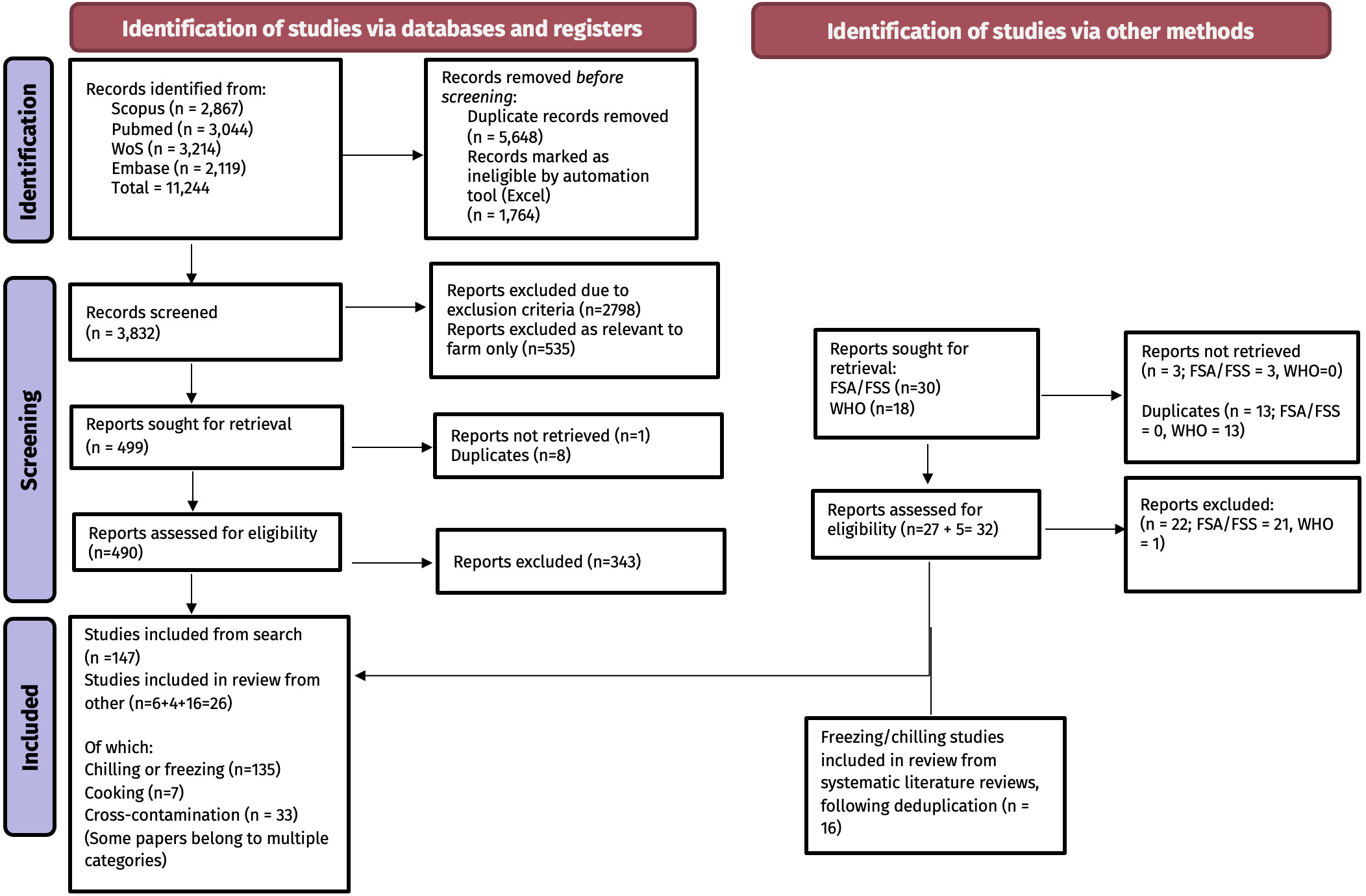
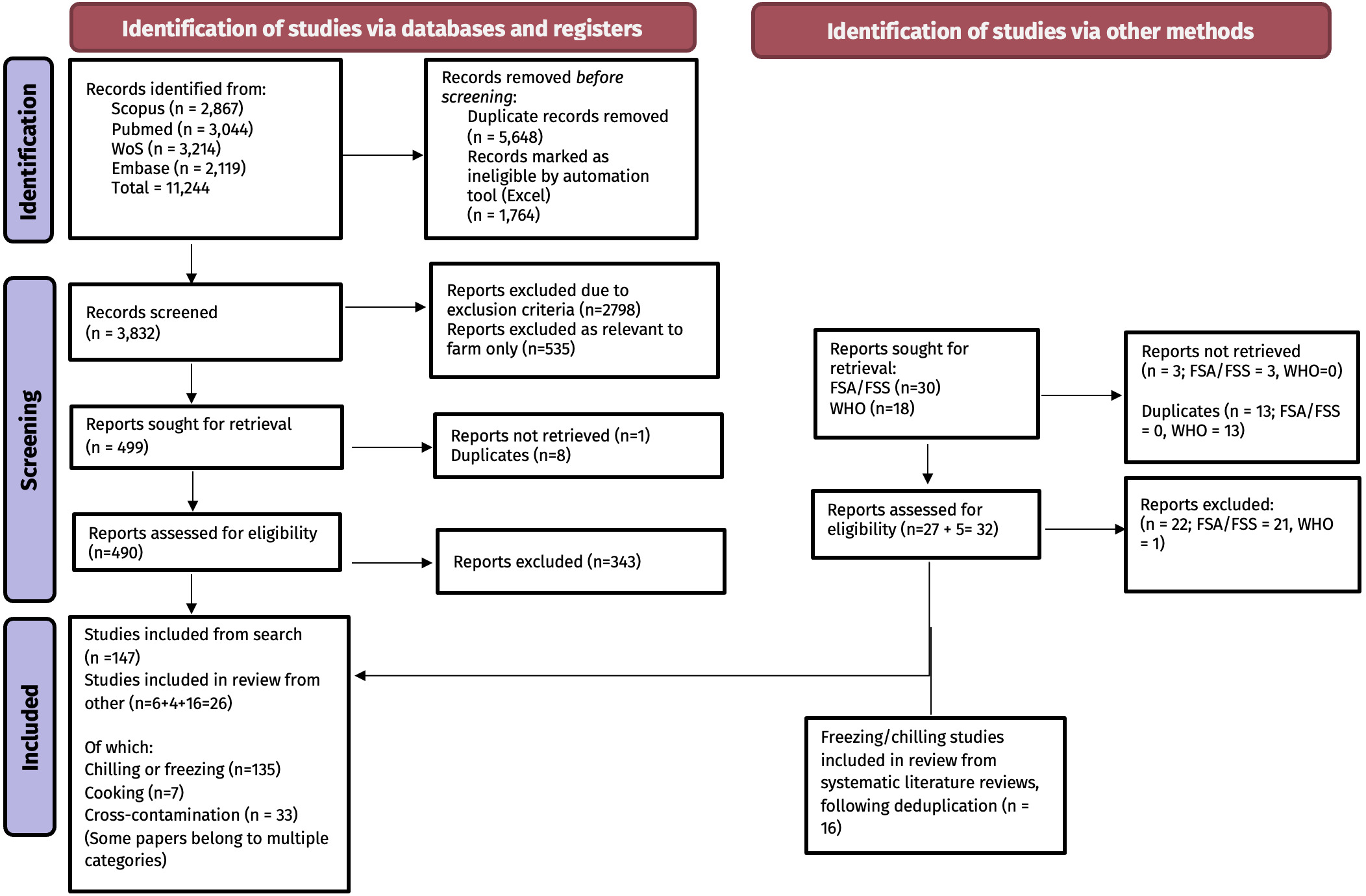
The PRISMA 2020 flow diagram shows how the studies were selected for inclusion. After extraction, publications were screened by 2 reviewers, to include a total of 173 publications (Figure 1). The final publications were Campylobacter studies focused on broiler carcasses or chicken meat and interventions in retail, consumer kitchens, restaurant and catering settings.
5.2. Cross-contamination
5.2.1. Consumer behaviour
Self-reported surveys indicated that most consumers were aware of the risks associated with cross-contamination and generally reported good hygiene practices. For example, two surveys conducted in New Zealand found that the majority of participants (97% in one study, and 78% in another) used separate chopping boards or knives when handling raw chicken and other ingredients (Allan et al., 2018; Al-Sakkaf, 2021). This was similar to results found in a recent Food and You 2 survey conducted in the UK, where 70% of respondents reported that they always washed their hands before preparing or cooking food, and 92% reported that they always washed their hands immediately after handling raw meat, poultry, or fish (FSA, 2025). Similarly, 99% of respondents from New Zealand reported cooking chicken thoroughly (Allan et al., 2018). In the UK, consumer preference for doneness was also high: 26.6% consumed chicken very well done, 53.6% well done, 19.1% medium-well, and only 0.7% ate chicken less than thoroughly cooked (Langsrud et al., 2020).
However, hygiene practices were not consistent across all regions. In Senegal, a survey of street-restaurant managers revealed that 58% of chefs did not use separate knives for poultry, and 34% rarely cleaned knives (Cardinale et al., 2005). Questions on handwashing practices also showed only 35% of New Zealand participants reported using hand sanitizer or washing hands with soap and hot water, and similar practices were observed in Hungary (Al-Sakkaf, 2021; Kasza et al., 2022). Risky behaviours such as washing raw chicken remained common. Allan et al. (2018) found that 23% of participants did not know rinsing raw chicken under running water could result in cross-contamination, potentially leading to illness. Kasza et al. (2022) reported that 83% of Hungarian participants washed raw chicken, including 100% of elderly respondents and 80% of pregnant women. In Chinese commercial kitchens processing 25–50 chickens per hour, chefs were observed washing chicken carcasses in sinks, washing hands without soap, and wiping knives and surfaces with cloths; boards were often scraped with knives rather than properly cleaned (Lai et al., 2022).
Observational studies in domestic kitchens also showed inconsistencies with reported behaviours. Redmond et al. (2001) found that older adults (60–75 years) in the UK committed more malpractices than younger men and mothers. This was similar to findings from Scotland in 2014, where, although over-60s felt confident about hygiene, they were observed washing raw chicken and ignoring Use-By dates (Food Standards Agency in Scotland, 2014; Redmond et al., 2001). In Redmond et al. (2001), none of the participants washed and dried their hands adequately after handling raw chicken, and 43–57% reused dirty knives or boards to prepare salad. Similarly poor practices were reported in Hungary by Kasza et al. (2022), where only 8% used warm water and 3% used soap when washing hands. Additionally, the results of an observational study by Harrison et al. (2001) showed the probability of adequate hand washing (washing in hot water with either detergent or soap) after handling raw chicken or packaging was only 1 in 7.5 in the UK (Harrison et al., 2001).
Nauta et al. (2008) studied the practical effects of providing different food safety information to consumers on salad contamination with Campylobacter, followed by handling of raw chicken (Nauta et al., 2008). They showed that while provision of risk information increases the intent for carrying out safe behaviour, microbiological analyses did not find meaningful difference between control groups and informed groups of people.
5.2.2. Reduction of Campylobacter spp. prevalence in kitchen settings
Washing hands, utensils and surfaces is a well-established hygiene measure to reduce cross-contamination of pathogens associated with raw meat handling and preparation.
Studies examining the behaviour of participants handling raw chicken found that it led to widespread contamination of surfaces, utensils, and ready-to-eat foods. For example, in one-third of food preparation sessions investigated by Redmond et al. (2001), Campylobacter reached surfaces or final food; 86% of utensils and surfaces were contaminated, and all salad vegetables were affected when the same knife or board was reused. Gorman et al., 2002, found that 18% of sites became contaminated after consumers were asked to prepare a chicken roast with their own recipe (Gorman et al., 2002). In De Boer & Hahné (1990), half of cutting boards and a quarter of plates became contaminated after preparation of chicken; bacteria were also found on raw vegetables (9%) and cooked chicken (10%), with hands being a major transfer vector - 73% of hands touching raw chicken carried Campylobacter (De Boer & Hahné, 1990). Even cooking salt was found to spread bacteria: handling salt with unwashed hands led to 21/30 samples being contaminated, and 37% of lettuce samples being positive (Santos-Ferreira et al., 2021). Delayed, partial or inadequate cleaning (e.g., wiping with cloths) allowed the spread bacteria to multiple surfaces – as evidenced by participants of a study asked to prepare raw chicken and then clean work surfaces, taps, sinks, condiments, fridge, cupboard, oven and kitchen door handles with a cloth rinsed in soapy water. This resulted in more contaminated sites than before cleaning (Cogan et al., 1999). Another study showed contamination of sausages (0–2 log10 CFU), cucumber (0–1 log10 CFU), and hands/bread roll (2.8-3.5 log10 CFU) from naturally contaminated chicken when plates, chopping boards, utensils and hands were not washed after handling of the raw chicken (Luber et al., 2006).
Washing with soap and water, especially hot water, reduced contamination to near zero (Bai et al., 2021; De Jong et al., 2008), although the temperature used in De Jong, 2008, (68 °C) was too hot to be practical for washing hands. Simply rinsing hands with lukewarm water was less effective and seen to spread contamination to towels (Redmond et al., 2001). Running tap water alone reduced contamination on hands from a prevalence of 69% to 30% (Lai et al., 2021), but soap was essential for full effectiveness. Cleaning chopping boards and knives with running water alone only partially reduced contamination (average decrease of 0.6 log10 CFU/cm²), while using (unspecified) disinfectant achieved a much greater reduction (2.2 log10 CFU/cm²) (Lai et al., 2023). Washing dishes with detergent followed by rinsing reduced contamination significantly, leaving only one positive chopping board with Campylobacter counts less than 10 CFU (Cogan et al., 2002). Washing chopping boards in hot water (68°C) or rinsing under hot running water for 10 seconds eliminated Campylobacter (decrease of ≥7 log10) (De Jong et al., 2008). Cold water rinsing was less effective, though could be adequate for cutlery (De Jong et al., 2008). Adding hypochlorite disinfectant (5000 ppm chlorine) after detergent cleaning reduced positive sites on chopping boards from 13% to 1% (Cogan et al., 1999).
Although bacteria from raw chicken easily transferred onto foods via hands, utensils, chopping boards, or surfaces, Campylobacter was seen not to survive long in the environment. Redmond et al. (2001) showed that although 100% of surfaces used to prepare raw chicken were contaminated with Campylobacter immediately after preparation, no bacteria were recovered after 2 hours. Similarly, Wanyenya et al. (2004) showed that survival decreased over time: after 2 hours, metal showed a 3-log10 reduction, plastic 2.4- log10, wood 1- log10; after 3 hours, some bacteria persisted on plastic and wood (Wanyenya et al., 2004). It was not clear how the material of the surfaces impacted the bacteria levels. Lai et al. (2023) found that Campylobacter survived longer on plastic surfaces depending on the temperature: 4.5 hours at 15°C and 3.5 hours at 25°C. Other research showed that longest survival was on Formica laminate and shortest on cotton dishcloths (De Cesare et al., 2003). In general, Campylobacter died off within 4 hours on most surfaces (Betts & Everis, 2003; Lai et al., 2023; Santos-Ferreira et al., 2021). However, most cross-contamination is likely to happen in the first hour or two, while the meal preparation is occurring and the bacteria are still viable.
Campylobacter were found on chicken packaging further emphasising the importance of washing hands, chopping boards, utensils and surfaces. Burgess et al. (2005) found that 3% of chicken packages in the UK were contaminated externally with Campylobacter species. Packaging contamination rates varied by product type (6.5% for whole chickens, 2.3% for chicken portions, and 8% for offal) (Burgess et al., 2005). Similarly, Harrison et al. (2001) investigated Campylobacter exposure in the UK and reported that 68% of retail chicken and 3% of outer packaging were contaminated (Harrison et al., 2001).
5.2.3. Modelling approaches
Both Van Asselt et al. (2008) and Mylius et al. (2007) used modelling to compare the benefits of different hygienic behaviours and predict which practices most significantly reduced Campylobacter cross-contamination risks. Van Asselt’s study quantified reductions under various washing scenarios, showing that replacing utensils and boards (best case scenario) or washing them with hot water and soap achieved the greatest bacterial reduction, often below detection limits. In contrast, partial washing (e.g., cold water) resulted in partial reductions (van Asselt et al., 2008). Mylius et al. (2007) used a probabilistic model to estimate contamination frequencies and infection risk, finding that washing the cutting board was more effective than handwashing or rinsing salad. Their simulation also highlighted that improved washing practices substantially lowered the probability of infection (Mylius et al., 2007). Salads prepared after handling raw chicken had a contamination risk of about 7%, with simulations predicting 1 infection per 2,000 meals (Mylius et al., 2007). Other studies reported raw chicken contamination prevalence of around 60%, and illness probabilities from meals that required handling and preparing raw chicken, ranging from 1 in 13 to 1 in 3,000 servings, depending on hygiene practices (Habib et al., 2020; Jorgensen et al., 2019; Kusumaningrum et al., 2004). Modelling ranked hygienic behaviours by impact: thorough cleaning of cutting boards and utensils with hot water and soap or replacing them entirely provided the most significant risk reduction, followed by handwashing and salad rinsing. However, no experimental studies were conducted to confirm these predictions.
5.3. Refrigeration and freezing
The following sections present results for the effects of refrigeration and freezing, summarising observed reductions in Campylobacter prevalence across different time and temperature ranges. The effects of air chilling in slaughterhouses are summarised in the Appendix, Section 10.1. The effectiveness of the interventions was measured as the mean log10 reduction per treatment within a publication as described in the methods. The mean log10 reductions extracted for the purposes of this data synthesis can be found in Annex I.
5.3.1. Refrigeration
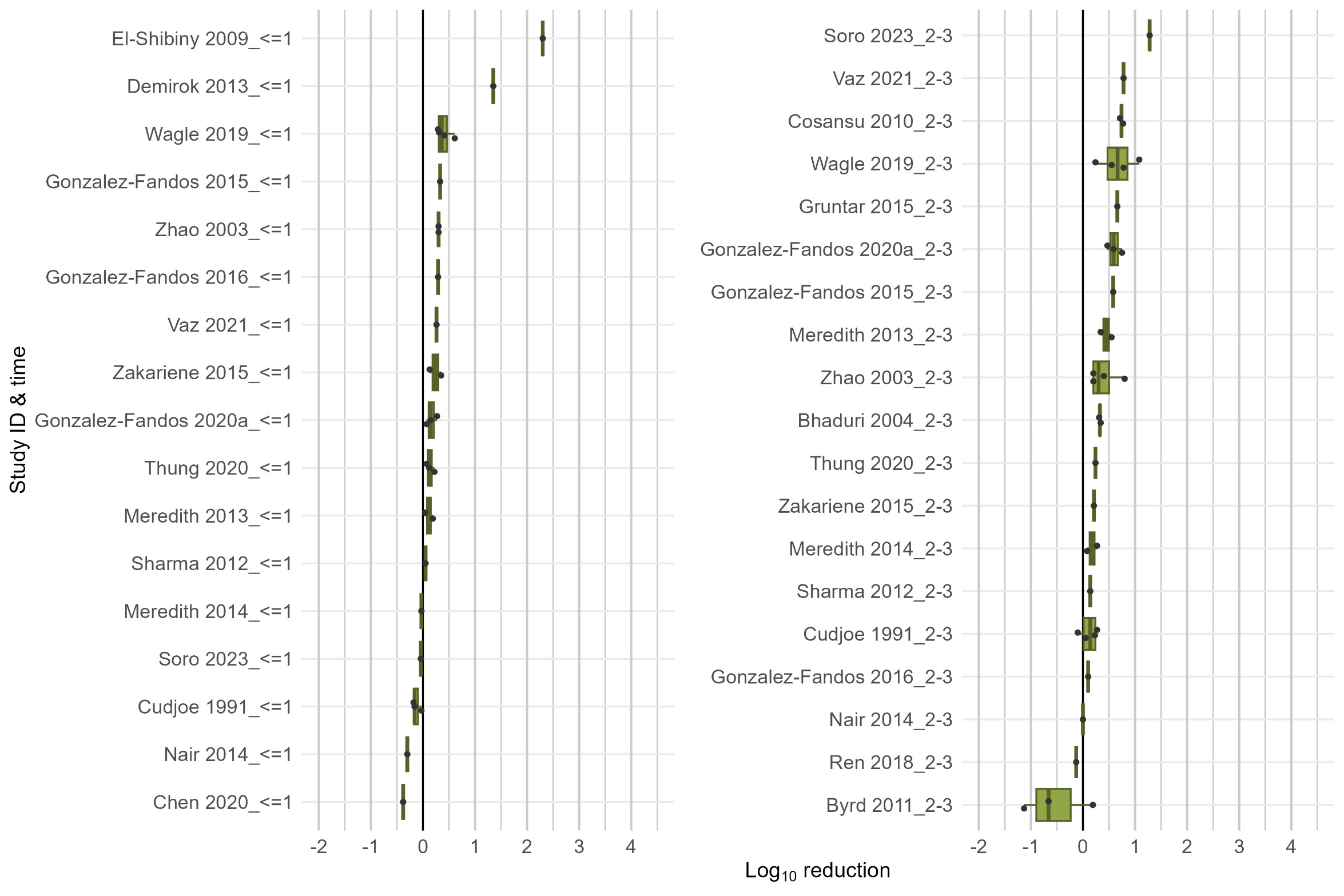
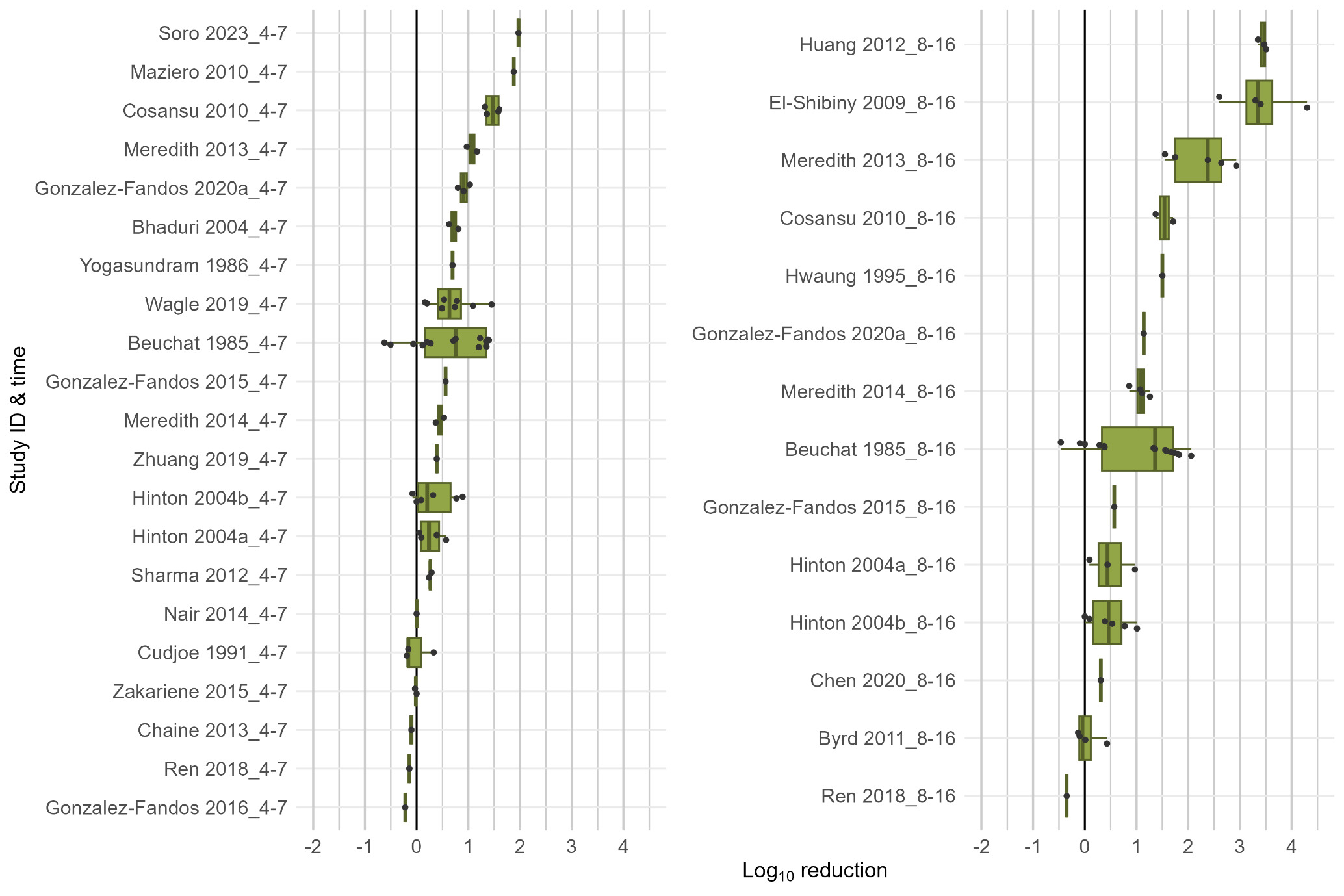
This section presents the findings on the effect of refrigeration on Campylobacter spp. Temperature ranged from -1°C to 8°C across all studies. Figure 2 and Figure 3 present refrigeration grouped by storage duration: Figure 2 covers periods of three days or less, while Figure 3 focuses on storage for four to 16 days. Some studies assessed chilling as the control for other processing interventions such as marinades. Log reductions were reported using a variety of units, such as log10 CFU/g, log10 CFU/carcass, log10 CFU/cm2, log10 CFU/sample, log10 Most Probable Number/cm2, etc. Because these were compared like-for-like within each study, and to ease comparability, we report them as log10 reductions when discussing results, but this includes an implicit assumption that log10 reductions will be similar for different measurement methods.
_and_.png)
For ≤1 day
Reductions in Campylobacter spp. after refrigeration for up to one day ranged from -0.38 to 2.3 log10 across 16 studies (Figure 2, Annex I). Of these, two studies measured the changes in natural contamination found on chicken using carcass rinsate (Chen et al., 2020; Demirok et al., 2013) while the remainder inoculated the chicken meat (skin/leg/breast/wing) with artificial levels of Campylobacter.
The majority of the studies (14/16) reported small reductions (≤0.61 log₁₀) or increases, while the remaining two showed larger decreases. These are Demirok et al., 2013, and El-Shibiny et al., 2009, which recorded reductions of 1.35 log10 CFU/ml after 2 hours and 2.3 log10 CFU/cm2 after one day, respectively. While Demirok et al., 2013, measured 10 samples to obtain this reduction value, El-Shibiny et al., 2009, only had 3 replicates. Within study variability, as measured by IQR, was not a meaningful metric in most cases due to the small number of trials.
Five studies reported small increases in the levels of Campylobacter observed after treatment, ranging from -0.03 to -0.38 log10 (Chen et al., 2020; Cudjoe & Kapperud, 1991; Meredith et al., 2014; Nair et al., 2014; Soro et al., 2023).
For 2-3 days
Reductions in Campylobacter spp. after refrigeration for 2-3 days ranged from -1.13 to 1.28, with 16/18 studies reporting values of less than 1 log10 (Figure 2). Of these, two studies measured the changes in natural contamination found on chicken using carcass rinsate or neck skin (Byrd et al., 2011; Gruntar et al., 2015) while the remainder inoculated the chicken meat (mince/skin/leg/breast/wing) with artificial levels of Campylobacter. Two studies reported larger decreases of 1.08 and 1.28 log10 (Soro et al., 2023; Wagle et al., 2019). Three studies reported negative log reductions i.e. increases in Campylobacter levels following treatment (Byrd et al., 2011; Cudjoe & Kapperud, 1991; Ren et al., 2018). This is likely due to errors in measurements or variability in levels of Campylobacter measured on different pieces of meat as the bacterium does not grow at refrigeration temperatures.
_a.png)
For 4-7 days
Changes in Campylobacter spp. levels after refrigeration for 4-7 days ranged from -0.62 to 1.97 log10 (Figure 3, Annex I). Of the 21 studies used in this time frame, two measured the changes in natural contamination found in carcass rinsate (Hinton et al., 2004a, 2004b) while the remainder inoculated the chicken meat (legs, neck, breast, carcass, mince, skin or wings) with artificial levels of Campylobacter.
Large variability in the results continued to be seen, even within the same study, with IQR of 1.2, 0.64, 0.86 for those studies that included the highest number of trials (Beuchat, 1985; Hinton et al., 2004b; Wagle et al., 2019). While 16 studies reported some positive reduction in levels of Campylobacter, 8 studies observed a small increase or no change in Campylobacter. Three studies reported maximum reductions of more than 1.5 log10 (Cosansu and Ayhan, 2012; Maziero & de Oliveira, 2010; Soro et al., 2023).
For 8-16 days
The longer refrigeration period of 8-16 days exhibited reductions from -0.46 to 4.3 log10 across 13 studies (Figure 3, Annex I). Of these, four studies measured the changes in natural contamination found on chicken using carcass rinsate (Byrd et al., 2011; Chen et al., 2020; Hinton et al., 2004a, 2004b) while the remainder inoculated the chicken meat (neck, breast, carcass, leg, skin, wing, fillet or mince) with artificial levels of Campylobacter.
The results showed that while chilling causes stress and gradual death of C. jejuni, the organism persisted for extended periods under refrigeration. In general, chilling for 8-16 days showed more pronounced reductions in Campylobacter contamination levels, with a majority (8/13 studies) reporting reductions of more than 1 log10.
As before, variability remained high, with four studies also showing increases or no change in Campylobacter levels (Beuchat, 1985; Byrd et al., 2011; Hinton et al., 2004b; Ren et al., 2018). The within study variability (IQR) for those studies with 4 trials or more ranged from 0.13 to 1.37 with the latter associated with a study assessing 15 different conditions (Beuchat, 1985).
5.3.1.1. Summary of results on refrigeration
Across all time ranges (<=1 day to 8-16 days), reductions in Campylobacter spp. varied considerably for refrigeration, although longer storage at chill temperatures > days generally resulted in more robust and pronounced decreases. This may relate to differences in initial contamination levels, experimental conditions or most likely represent biological variability in Campylobacter response to environmental conditions. Slight increases seen in Campylobacter levels are likely due to this noise or biological variability (for instance – different pieces of chicken are measured and averaged at each time point), or variability in measurements (for instance – the enumeration method may have different efficiency during different experiments or different experiments might be carried out by different scientists resulting in small variations). Campylobacter is not generally able to grow at refrigeration temperatures.
A majority of studies chose to artificially inoculate the chicken with Campylobacter. Due to using single/a mixture of Campylobacter lab strains at very high levels, this may not reflect what happens at consumers/retail generally when chicken is refrigerated.
Overall, these results highlight chilling as a potentially effective but highly variable control measure, reinforcing the need for multi-step interventions to ensure food safety.
5.3.2. Freezing
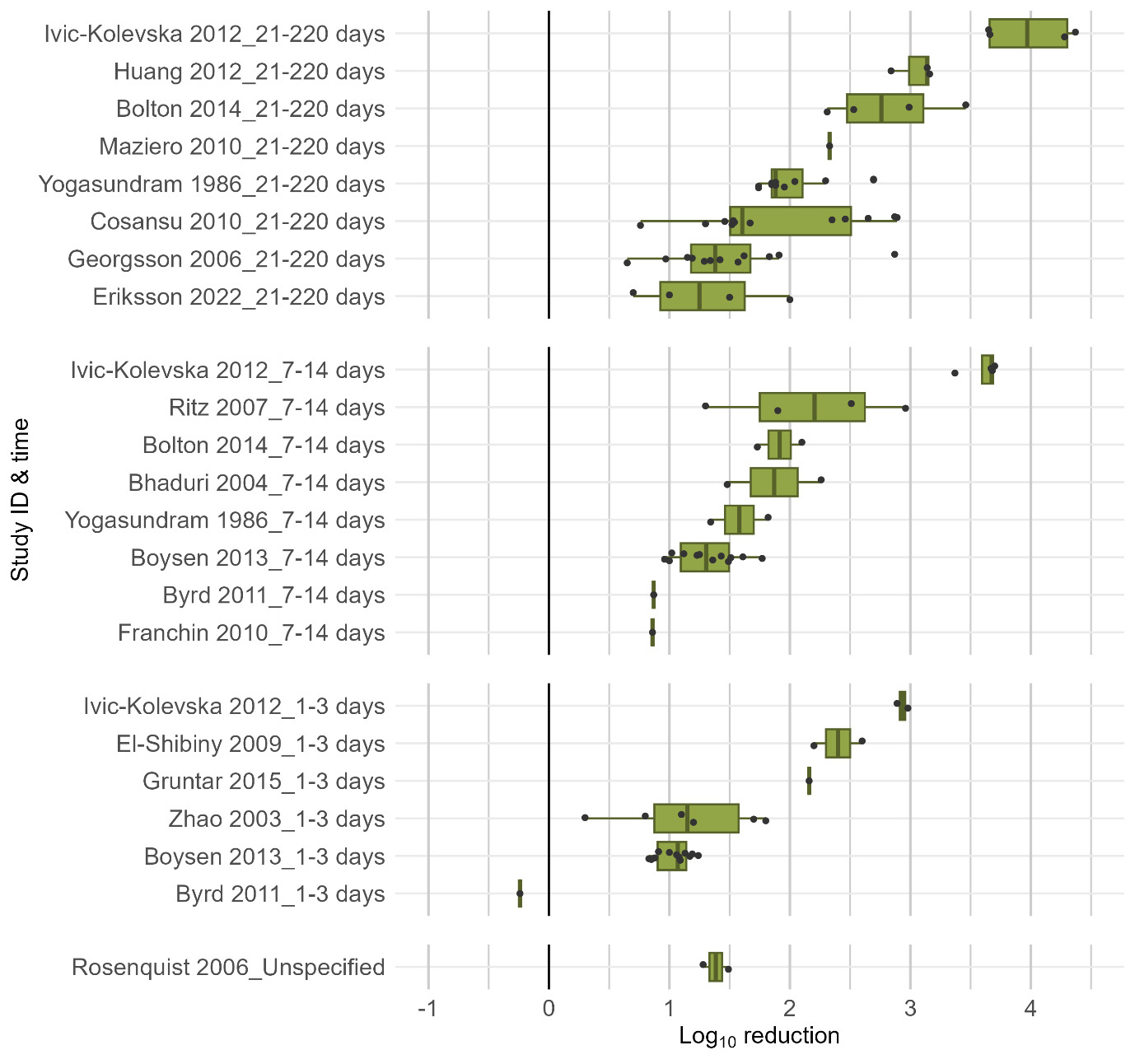
This section presents findings on freezing interventions for Campylobacter spp. The mean log₁₀ reductions reported across 18 studies are summarised, covering freezing durations ranging from 1 to 220 days. Across these studies, freezer temperature ranged from -30°C to -18°C. Rosenquist et al., 2006, did not specify the freezer temperature.
__following_.png)
Reported reductions spanned approximately -0.24 to 4.37 log10, with 14/18 studies showing consistent reductions of more than 1 log10 (Figure 4). Only one study reported an increase of 0.24 log10 in Campylobacter levels after 2 days of freezing (Byrd et al., 2011). This is likely due to biological/experimental variability as mentioned above (Section 5.3.1.1).
Five studies measured the changes in natural contamination found on chicken using carcass rinsate or neck skin (Byrd et al., 2011; Franchin et al., 2007; Georgsson et al., 2006; Gruntar et al., 2015; Rosenquist et al., 2006) while the remainder inoculated the chicken meat with artificial levels of Campylobacter. All studies showed a more consistent effect of freezing on Campylobacter levels in comparison with results for refrigeration, with some of the largest reductions seen across all interventions reviewed.
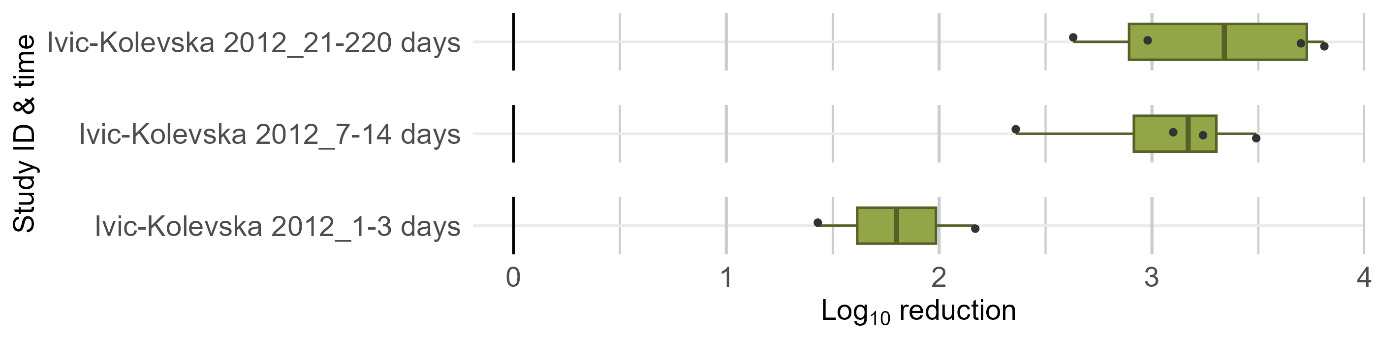
Three studies were not included in the above figure as they assessed deep freezing or crust freezing. Ivic-Kolevska, 2012, used a temperature of -70°C over a range of days, with log10 reductions ranging from 1.43 to 3.81 (see Figure 5). Two studies reported log10 reductions of 0.35 to 1.78 following crust freezing - rapidly freezing the surface of a carcase without freezing the underlying meat (Boysen & Rosenquist, 2009; James et al., 2007). Crust freezing is discussed further in a separate FSA report on slaughterhouse interventions.
__following_.png)
In summary, freezing alone has been shown to consistently lower bacterial levels, particularly if carried out for more than 3 weeks, but it does not completely eliminate Campylobacter spp.
5.4. Cooking
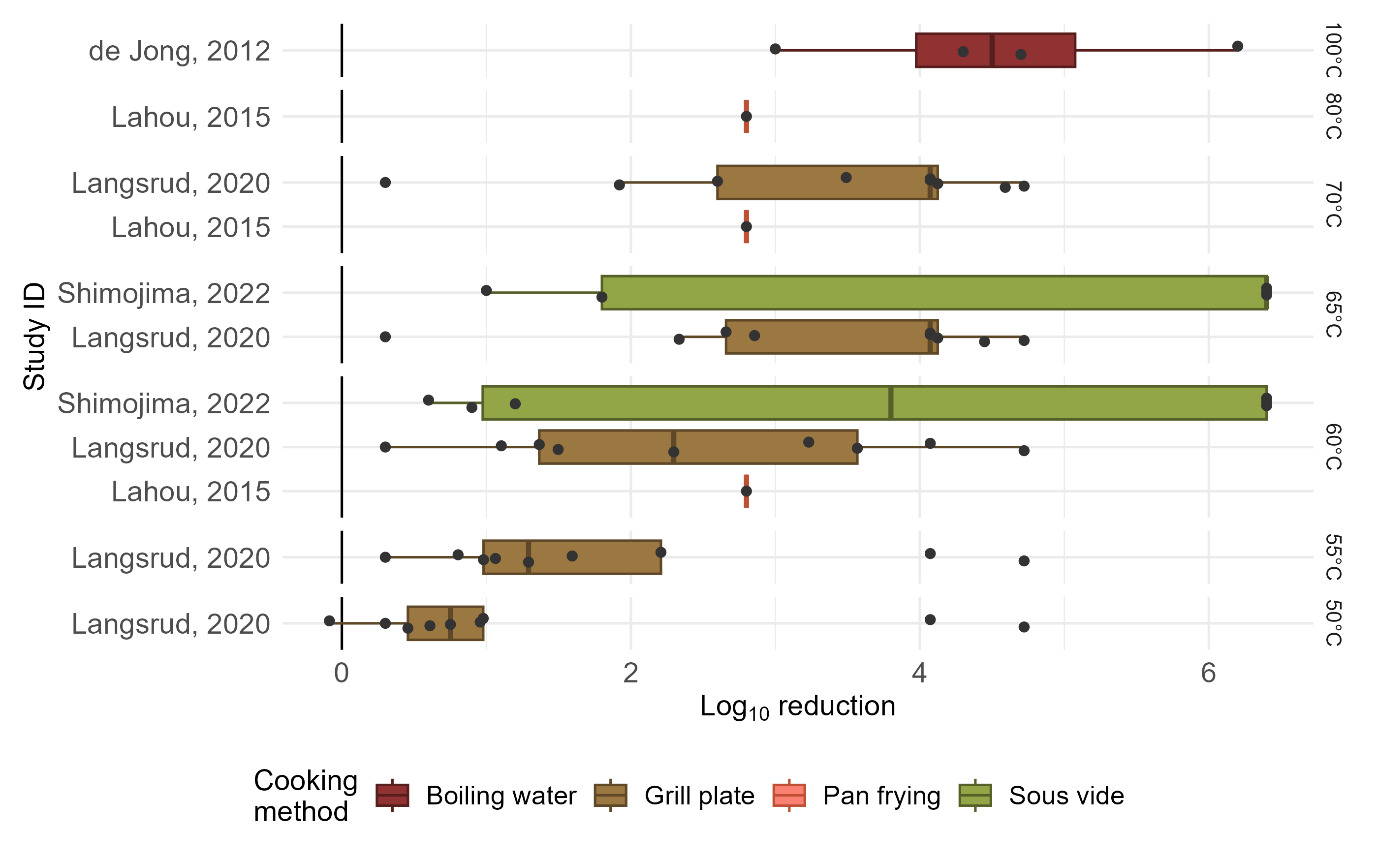
Seven studies investigated the effect of heat treatment on the reduction of Campylobacter spp. on/in chicken meat. Four of these investigated cooking temperatures between 50°C and 70°C, and three publications studied temperatures of 100°C or higher.
The log10 reductions per publication/cooking temperature for 4 out of 7 studies included in this review are shown in Figure 6; three of the studies did not provide quantitative data, only summaries. The summary statistics used for the graphs are provided in Annex I, along with information on experimental conditions. Higher cooking temperatures achieved higher reductions of Campylobacter load (Figure 6). However, both the within and between study variability were large as can be seen by the overlapping boxplots in Figure 6. The IQR for within study variability ranged from 0.52 to 5.43 for those studies with a number of trials equal to or more than 4. This is some of the largest variability we have seen in the data discussed in this report. This is indicative of the sensitivity of the results to experimental conditions such as cooking temperature and duration and also strains used or other differences such as in sampling and detection techniques.
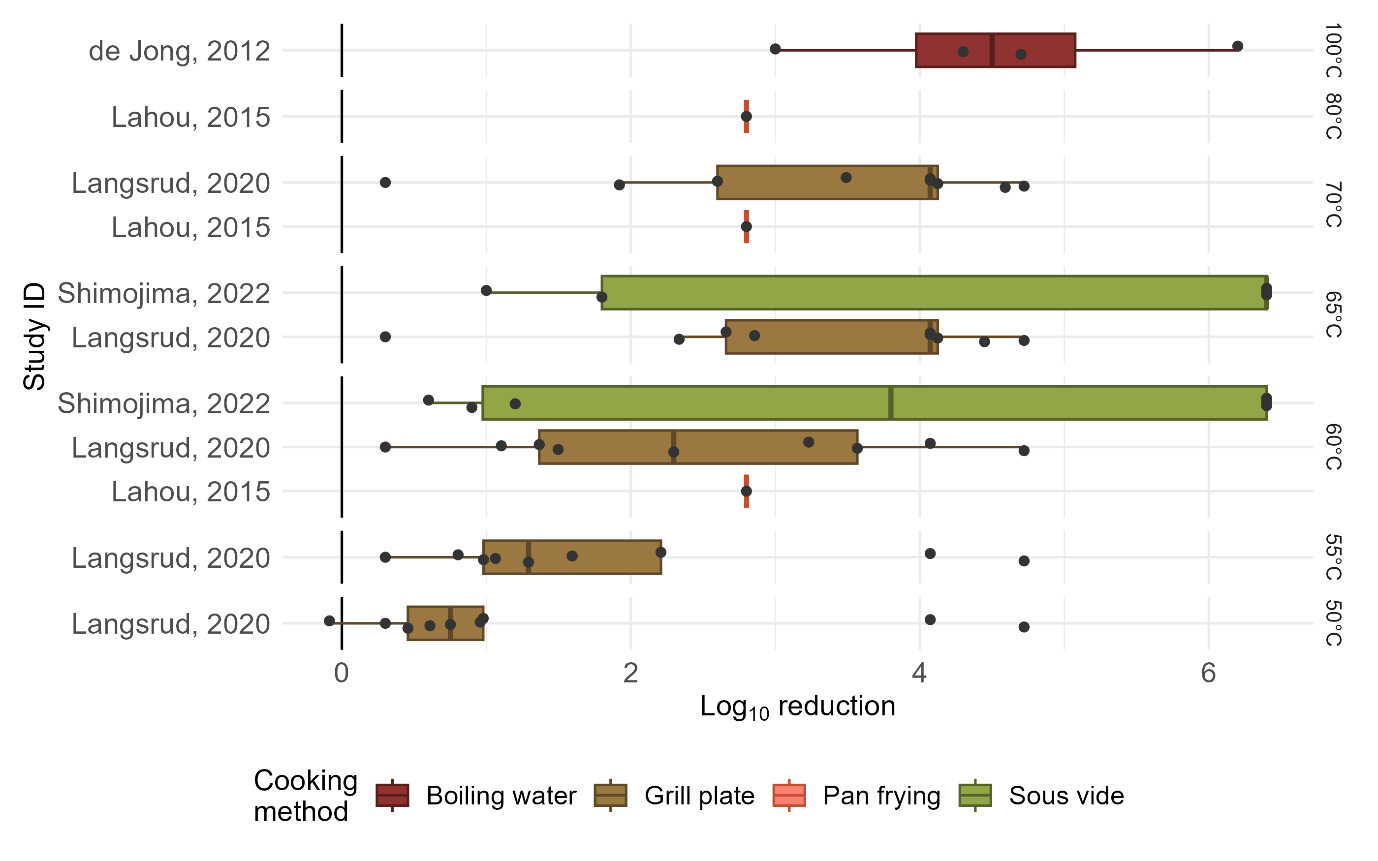
For Shimojima, 2022 and de Jong, 2012, the temperature recorded was the cooking temperature. For Langsrud, 2020 and Lahou, 2015, the temperature recorded was the temperature reached at the core of the meat.
5.4.1. Below 100°C
Shimojima et al. (2022) researched sous vide cooking of chicken breast meat at cooking temperatures of 60°C and 65°C, for 15, 30, 60, 90 and 120 minutes. Sous vide cooking is defined as a low-temperature and long-time process during which meat is sealed in a bag and cooked in water at a temperature of around 60°C. Campylobacter jejuni strain CA21-1 was inoculated onto the meat at an approximate level of 7.4 to 8.4 log10 CFU/g. It survived for up to 30 minutes at 60°C and 65°C (Shimojima et al., 2022). This may not be an issue for consumers as sous vide cooking generally takes place for more than one hour.
Pan-frying studies by Sampers et al. (2010) on Campylobacter survival in chicken burgers showed rapid Campylobacter decline to below detectable levels (<10 CFU/g) from an approximate level of 6 log10 CFU/g after 4 min of frying, even when the core temperatures were only 57.5°C and 52.1°C. This occurred before the burger could be described as “cooked through” visually. Campylobacter jejuni strain LFMFP 595 was used in this experiment.
Langsrud et al. (2020) grilled chicken breast on a grill plate to core temperatures of 50, 55, 60, 65 and 70˚C. The chicken was inoculated with a mixture of 6 Campylobacter strains at a level of 6.3 log10 CFU/g. When the predetermined core temperature was reached, the chicken was removed from the grill and samples were taken immediately for microbial analyses. Campylobacter levels in the chicken breast core decreased by more than 4 log10 when the core temperature reached 65 and 70˚C. Levels of bacteria were below the limit of detection at 70˚C. However, only 5% of retail chicken is contaminated with Campylobacter spp. with more than 3 log10 CFU/g (Kintz et al., 2024); therefore, complete elimination of naturally occurring Campylobacter in chicken meat should be achievable in most cases.
Lahou et al. (2015) simulated home pan-frying of raw meat based on visual doneness to replicate typical practice at home and then tested the core temperature using a thermometer. Inoculation of the chicken meat was done with 3 strains of Campylobacter jejuni (595, 866 and 867) to achieve a level of 4 log10 CFU/g, then stored for 18 hours at 7°C. They showed that core temperatures in the chicken fillets did not always reach 70°C when cooking each side for 10 minutes. This suggests that a time/temperature combination that would have been equivalent to 2 min at 70°C may not be reached even when the meat is being visually judged as fully cooked (Lahou et al., 2015). On the other hand, the temperature in the core of the chicken hamburger and chicken strips did reach 70°C or more after 12 minutes and 7 minutes, respectively. No Campylobacter could be detected from any of the cooked chicken meats.
These examples suggest that core temperature alone does not necessarily indicate whether effective elimination of the bacteria is achieved and the structure of the chicken – fillet vs burger - may play a role.
5.4.2. 100°C and above
Bergsma et al. (2007) observed D-values (the time taken to achieve a 1-log10 reduction) of around 2 min and 1 min at mean meat surface temperatures of 127°C and 109°C for whole and diced fillets fried in margarine. The level of Campylobacter recovered from the fried chicken (initially inoculated with a 5-strain Campylobacter cocktail of 8 to 9 log10 CFU/fillet) declined with increasing frying times and dropped below detection levels after 9 min for whole chicken breast, and 3 min for diced chicken pieces. The authors judged that visually, the chicken breast looked “done” after 10 minutes and the chicken pieces after 4 minutes of cooking (Bergsma et al., 2007).
De Jong et al. (2012) found that cooking chicken breast fillet in boiling water achieved a 1 log10 reduction after 2 minutes, with a decimal reduction time of 1.9 minutes. A 5-strain Campylobacter cocktail was used. The temperature on the chicken breast surface (4°C at time zero) reached 85°C within 1 minute. The bacterial levels in the whole fillet were below the limit of detection after 15 minutes from a starting point of 7 to 8 log10 CFU/chicken. They also developed a risk assessment model with a predicted 55 illnesses per 1,000,000 portions of chicken breast boiled for 10 minutes (de Jong et al., 2012).
de Jonge, 2019, also boiled chicken breast in water and recorded a tenfold reduction time of 2.9 minutes for a 5-cocktail Campylobacter strain (de Jonge, 2019).
6. Discussion
6.1. Cross-contamination
Most Campylobacter contamination is present on the surface of chicken meat, and very little is present in the interior (Luber & Bartelt, 2007), and therefore reducing cross-contamination may be key to minimising the risk of campylobacteriosis. While guidelines on how to minimise the risk of cross-contamination are available (FDA, 2025; FSA, 2024), the extent to which consumers follow such guidelines varies. For instance, while washing chicken may reduce contamination on the chicken, it can increase the spread of bacteria around the kitchen (Lai et al., 2022). Contamination present on the chicken can be effectively reduced by proper cooking, and hence the general recommendation is to avoid washing chicken. Some individuals ignore this advice (Kasza et al., 2022), particularly older consumers (Al-Sakkaf, 2021). Such consumers are also more vulnerable to infection than the general population. Behavioural research to understand patterns of compliance with advice, and particularly any covariance with factors influencing vulnerability, is a key part of any consumer education campaign. However, this approach is further complicated by the fact that observational studies and self-reported data reveal discrepancies between what consumers say they do and what they practice. This is commonly known as a social desirability bias (where participants have a tendency to answer questions to present themselves in socially acceptable terms) (Nikolopoulou, 2022).
Most research agrees that washing hands, utensils, surfaces and chopping boards with hot water and soap or detergent is most effective at reducing Campylobacter contamination (Bai et al., 2021; Cogan et al., 1999; Lai et al., 2023), although studies find that rinsing with cold water or hot water without soap/detergent offers some reduction in Campylobacter (Bai et al., 2021; Redmond et al., 2001). However, thorough washing of hands after handling raw poultry was not frequently observed in surveys (Harrison et al., 2001; Kasza et al., 2022). This was despite 92% of participants in a survey reporting that they always wash their hands immediately after handling raw meat, poultry, or fish (FSA, 2025). As the former study was conducted more than two decades ago and the second relied on self-reported behaviour, it is difficult to know whether this represents a genuine improvement without a more recent observational study to allow comparison.
Behavioural interventions have shown mixed results. While providing risk information can increase consumer intention to adopt safer practices, it does not always translate into measurable reductions in contamination (Nauta et al., 2008). Community education initiatives have demonstrated short-term improvements, but these gains were not sustained beyond six weeks (Redmond et al., 2001). This suggests that awareness campaigns alone may be insufficient to influence long-term behavioural changes. Given the persistence of outdated habits and the complexity of consumer behaviour, long-term solutions may require integrating food safety education into early learning and reinforcing it through ongoing public health messaging.
Cross-contamination pathways are well documented, with transfer of Campylobacter shown from raw chicken to hands, knives, boards, and ready-to-eat foods (Bai et al., 2021; Cardoso et al., 2021; Lai et al., 2023; Luber et al., 2006). Although survival on surfaces is limited, the risk of cross-contamination is higher if ready-to-eat foods are handled immediately after preparation of raw chicken, particularly without adequate hand/utensil washing.
Modelling approaches can help quantify the relative benefits of different hygienic behaviours and identify which interventions most effectively reduce the cross-contamination risk. Studies such as Van Asselt et al. (2008) and Mylius et al. (2007) model different scenarios, such as washing hands, utensils, and boards with varying methods, and predict their impact on contamination levels and infection risk. This approach enables the prioritisation of interventions that deliver the greatest risk reduction, supporting both the development of guidance for consumers and food business operators and policy development. Modelling studies generally conclude that the contribution of cross-contamination to cases of campylobacteriosis is greater than the undercooking of meat (Luber, 2009).
The interplay between exposure to Campylobacter and immunity is important and poorly understood – exposure to low levels of Campylobacter may result in a boost to immunity rather than infection in some cases. Tribble et al. (2010) demonstrated strong short-term immunity in a controlled human challenge model: individuals re-exposed within 28–49 days were completely protected from illness and showed reduced colonisation, while those re-challenged after one-year experienced attenuated illness, indicating that immunity declines over time (Tribble et al., 2010). Cawthraw et al. (2002) supports this with serological evidence, showing that IgG antibodies (produced during re-exposure to infection, providing long-lasting immunity) persist for up to one-year post-infection, whereas IgA (provide first line of defence) responses diminish earlier (Cawthraw et al., 2002). In contrast, Nelson and Harris (2018) propose an unusually long immunity window based on epidemiological patterns, hypothesizing that initial childhood exposure confers protection for approximately 20 years, with subsequent infections inducing stronger, possibly lifelong immunity through combined antibody and cellular mechanisms (Nelson & Harris, 2018). Finally, Barker et al. (2020) highlights an important exception: in immunocompromised individuals, infection can persist for years, allowing bacterial adaptation and the development of resistance, underscoring the critical role of host immunity in clearing infection (Barker et al., 2020). This highlights the complexity of infection patterns and why exposure alone may not be sufficient to explain the incidence of campylobacteriosis observed in the UK population.
6.2. Refrigeration and freezing
Refrigeration plays an important role in controlling Campylobacter spp. levels in chicken meat, as the pathogen cannot grow at cold temperatures, but these do not greatly decrease levels or eliminate Campylobacter.
Refrigeration generally resulted in reductions up to 2 log10, with higher reductions seen after 7 days of storage. However, for storage up to 3 days, which is more realistic of consumer practices, reductions did not exceed 0.5 log10 on average. Variability in the effect size is large, due to the natural biological variation expected in bacterial populations. Some studies used refrigeration as the control for other processing steps rather than as an isolated intervention, which may bias them to downplay the effects of refrigeration.
Freezing (-20°C to 0°C) generally resulted in more pronounced reductions in Campylobacter spp. levels compared to refrigeration, with studies reporting decreases ranging from 0.3 to 4.4 log₁₀ CFU/g over several weeks. However, Campylobacter survival was still observed, and the level of survival varied in different studies. This aligns with FAO and WHO (2024), who noted considerable variability in the survival resistance of different Campylobacter strains under freezing conditions, but still recommended it as an effective control method. Freezing for a longer duration (21 days-220 days) consistently produced larger reductions in Campylobacter levels. Freezing was one of several risk management interventions implemented by Iceland which is thought to have significantly reduced domestic campylobacteriosis levels (Tustin et al., 2011).
6.3. Cooking
Cooking remains a consistently effective and accessible intervention for eliminating Campylobacter spp. in poultry. All studies reviewed reported complete elimination of Campylobacter spp. once internal meat temperature reached 70°C. Higher temperatures and longer cooking durations consistently result in greater bacterial reductions, with temperatures at 100°C or higher—such as those achieved through boiling or oven roasting—eliminating Campylobacter within minutes (de Jong et al., 2012).
Studies using lower temperatures (50–70°C) produced mixed results (Sampers et al., 2010; Shimojima et al., 2022); gradual heating scenarios, such as water baths, may allow bacteria to survive longer, particularly when initial load is high (Close et al., 2015). FAO and WHO (2024) recommend cooking to at least 70°C, and preferably above 74°C, to ensure safety.
The variability observed may be due to the type of cooking (e.g. frying, sous vide, boiling), or whether the researchers measured the meat core temperature or the cooking temperature (the core temperature is usually slightly lower than the cooking temperature). The cut of chicken used can also have an effect - for instance, chicken strips for stir frying reached 70°C faster than chicken breast fillets and thus likely pose a lower risk of undercooking (Lahou et al., 2015). The studies also used different Campylobacter strains, some of which may be more heat resistant than others and different inoculation levels at the start. Additionally, cooking durations and heating profiles (i.e. how quickly temperature increases) vary across studies. Close et al. (2015) highlighted this heterogeneity in their systematic review, noting inconsistencies in both the temperature profiles used and the methods for recovering Campylobacter post-treatment (Close et al., 2015).
Cooking is important for eliminating foodborne pathogens in general, including Campylobacter spp. (Bergsma et al., 2007; de Jong et al., 2012). Thorough cooking is considered the most reliable control measure because it eliminates contamination that may occur during production, handling, or storage. Consumers generally report thoroughly cooking chicken (Langsrud et al., 2020) and it is not a protein generally served rare in restaurants; undercooking is thought to typically be associated with barbecues (Harrison et al., 2001; MacDonald et al., 2015).
6.4. Consumer perceptions
Consumer beliefs, behaviours, and preferences play a critical role in the real-world adoption of food safety interventions. While cooking remains the most consistently effective method for reducing Campylobacter spp., and is sufficient for eliminating it, other interventions—such as freezing— could reduce the levels of Campylobacter and therefore the risks from cross-contamination or undercooking. However, some consumers prefer fresh rather than frozen chicken, which could limit the uptake of freezing as a preventive measure. A survey indicated that 43.49% of correspondences considered freezing chicken had no effect on the quality, while 56.51% consumers though freezing had either positive or negative effect on the chicken quality (Benli, 2016).
6.5. Knowledge gaps and key uncertainties
Offal (liver, kidney, heart etc.) was excluded as a category from this report. Although undercooked liver pâté in particular is linked with Campylobacter outbreaks (Little et al., 2010; UKHSA, 2019, 2025), the amount of offal consumed is much lower proportionally than chicken meat consumption. In the National Diet and Nutrition Survey (NDNS), 56% of the general adult population reported that they consume chicken and 8.3% consumed unspecified animal offal.
This report summarises a large number of scientific studies, with different study designs, methods, sampling types and ways of reporting, which may influence their outcomes. Differences in inoculation methods and the lack of standardised protocols contributed to the uncertainty of the outcomes of this review. For example, Shimojima (2022) employed a complex method of artificial contamination involving sulphated paper placed on chicken meat, which may produce different results to other methods. It is unclear which method gives results most comparable to real-world conditions.
Researchers studying cooking interventions used artificial inoculation with a fixed amount of Campylobacter, and usually estimated the resulting concentration, rather than measuring the true value immediately before cooking. Therefore, the original bacterial load could have been misrepresented, resulting in uncertain efficacy conclusions. In some cases, the chicken was left chilling overnight following inoculation, which may have affected the Campylobacter levels (Lahou et al., 2015; Langsrud et al., 2020). Some of the reductions seen after cooking could be attributed to the prior cold storage instead. De Jong (2012) used both fresh and thawed fillets stored overnight at 4°C, but the variability in sample handling and lack of measurement of Campylobacter levels just before cooking further contribute to uncertainty.
The artificial levels of Campylobacter used when examining the effects of refrigeration, freezing and cooking are not representative of natural Campylobacter levels found in raw chicken. They are much higher (6-8 log10 CFU/g) than levels measured at retail, where 95% of samples are typically below 3 log10 CFU/g (Kintz et al., 2024).
Often, studies did not publish the full raw data, which made calculating statistical values such as standard error and confidence intervals challenging. They often reported summary statistics instead, leaving out metadata such as sample sizes, standard deviation, standard error, covariance or exact parameters used. Further quantitative analysis or meta-analysis is recommended to overcome this limitation, allowing more robust conclusions to be drawn about the relative effectiveness of the interventions.
Many studies reviewed in this report were underpowered, the small sample sizes or trial numbers limiting the conclusions that could be drawn from the findings. These limitations have impacted on the statistical confidence with which conclusions could be reached in this report. Regarding cooking interventions in particular, a limitation was that there were only a limited number of studies available for review.
A list of specific uncertainties, variabilities and limitations per topic is provided below:
1. Chilling
-
Methodological variability made it difficult to compare results across studies.
-
Limited reduction: Studies reported a large variation in reduction levels, ranging from -0.53 to 3.4 log10 but most were below 1 log10.
-
Practicality: Chilling beyond 7 days may be more effective but may not be feasible in consumer, restaurant or catering settings due to quality and safety concerns.
2. Freezing
- Inconsistent outcomes: Reported reductions vary (0.3 to 4 log₁₀ CFU/g), depending on inoculation level, freezing duration, and study design. Most (20/23) median reductions are, however, above 1 log10.
3. Cooking
-
Temperature and time variability: Studies using 50–70°C showed mixed results.
-
Methodological diversity: Variations in cooking method (frying, sous vide, pan), meat type, and temperature monitoring affects conclusions.
4. Cross-contamination
-
The contribution of cross-contamination to campylobacteriosis illnesses in humans has been modelled but is not well understood.
-
Disparities between what consumers report (self-reported surveys) and what they do (observational studies).
-
Variations in hygiene practices occur across different regions, age and gender.
-
Modelling results have not been validated by sampling/experimental data.
-
Fewer studies carried out at restaurant/catering level – most observational/sampling studies involve consumers preparing their own chicken meals.
-
Immunity against Campylobacter spp. not well understood.
7. Recommendations for future research
-
Review the evidence on interventions in relation to chicken offal as these continue to be involved in Campylobacter outbreaks according to the UKHSA report on human illnesses (UKHSA, 2025).
-
A key limitation for analysis across the literature is the lack of detail in reporting of raw data and metadata. Uncertainties around these hinder the comparability of results and limit the ability to draw conclusions. Raw data from scientific studies, especially, should be published or uploaded to a database for full transparency and replicability. Therefore, the recommendation is to influence improvements to methodology e.g. reporting raw data, testing of bacterial levels before and after interventions, confirmation of modelling with experimental studies. Community guidelines for reporting inactivation studies in food microbiology, similar to those developed for other fields in biology (e.g. STROBE, MIQE) might be helpful.
-
When more information is needed on how consumers cook chicken in a way that contributes to cross-contamination/undercooking, observational studies are particularly useful.
8. Acknowledgements
We wish to acknowledge the Food Standards Agency Statistics Team for their contributions to this work. In particular, we extend our thanks to Mark Jitlal for his expert statistical guidance and review, which enhanced the analytical quality of this review.